Avicenna J Environ Health Eng. 11(2):82-90.
doi: 10.34172/ajehe.5370
Original Article
Carcinogenicity and Non-carcinogenicity Effects of Heavy Metals in Consumed Bread in Zahedan, Iran
Fatemeh Tabatabae 1  , Seyed Davoud Ashrafi 2 , Reza Ghanbari 3 , Hossein Ansari 1 , Hossein Kamani 4, * , Leili Mohammadi 5, * , Muhammad Nadeem Zafar 6 , Abdollah Dargahi 7, * , Mojdeh Jahantigh 5
Author information:
1Vice-Chancellor of research and Technology, Birjand University of Medical Sciences, Birjand, Iran
2Department of Environmental Health, Research Center of Health and Environment, School of Health, Guilan University of Medical Sciences, Rasht, Iran
3Department of Environmental Health Engineering, School of Health, Qazvin University of Medical Sciences, Qazvin, Iran
4Health Promotion Research Center, Zahedan University of Medical Sciences, Zahedan, Iran
5Infectious Diseases and Tropical Medicine Research Center, Research Institute of Cellular and Molecular Sciences in Infectious Diseases, Zahedan University of Medical Sciences, Zahedan, Iran
6Department of Chemistry, University of Gujrat, Gujrat 50700, Pakistan
7Department of Environmental Health Engineering, Khalkhal University of Medical Sciences, Khalkhal, Iran
Abstract
The effect of environmental pollution on contamination and the safety of foods for human consumption is a serious global issue, which has been widely addressed. Heavy metals are among the most frequent environmental pollutants that are extremely health-threatening. This cross-sectional study aimed at investigating the heavy metal content in different types of bread used in Zahedan, Southeastern Iran. A total of 36 different bread types, such as Sangak, Lavash, and Taftoon, baked by bakeries in Zahedan, were examined for various heavy metals (cadmium, lead, chromium, arsenic, copper, cobalt, mercury, zinc, and nickel) by inductively coupled plasma-optical emission spectrometry. The hazard quotient (HQ) of Taftoon, Lavash, and Sangak was<1 in males, females, and children. In addition, the total health risk of the nine studied heavy metals had a ranking order of HIchildren>HIfemales>HImales>1, demonstrating an increasing potential. The total carcinogenic risk factor for bread was 9.98×10⁻⁵ and 3.26×10⁻³ in males and females, respectively. Regarding the carcinogenicity of heavy metals in bread samples collected in Zahedan, it is highly recommended that measures, such as implementing a food control system, proper flour storage, and training farmers, should promptly be taken to reduce contamination.
Keywords: Metals, Bread, Risk factors, Carcinogens, Humans,
Copyright and License Information
© 2024 The Author(s); Published by Hamadan University of Medical Sciences.
This is an open-access article distributed under the terms of the Creative Commons Attribution License (
https://creativecommons.org/licenses/by/4.0), which permits unrestricted use, distribution, and reproduction in any medium, provided the original work is properly cited.
Please cite this article as follows: Tabatabae F, Ashrafi SD, Ghanbari R, Ansari H, Mohammadi L, Kamani H, et al. Carcinogenicity and non-carcinogenicity effects of heavy metals in consumed bread in Zahedan, Iran. Avicenna J Environ Health Eng. 2024; 11(2):82-90. doi:10.34172/ajehe.5370
1. Introduction
The quality and safety of food are essential to all societies. The effect of contaminants on the quality and safety of foods for humans is one of the serious global issues widely considered by researchers. Among the contaminants, heavy metals are very important and raise much attention due to their long biological half-life, highly persistent, destructive, and non-biodegradable properties. The routes of exposure to heavy metals are ingestion, skin contact, and inhalation, although the main route is food consumption (1). Heavy metals enter the environment through natural and anthropogenic sources, such as weathering of the earth’s crust, erosion of soil, runoff, industrial effluent discharge, pesticides, contaminated dust fall, and the like. Some heavy metals are essential to plant growth at low concentrations in agricultural soils, but others are highly toxic to humans and can be absorbed and accumulated in crops and eventually enter the human body through ingestion. The possible adverse effects of toxic heavy metals on human health are skeletal disorders, metabolic and gastrointestinal diseases, kidney failure, and cancers (2-5). Heavy metal pollution in food, which is in the form of primary and secondary pollution, is related to environmental pollution and food preparation, processing, and cooking. In recent years, the concentration of heavy metals has considerably increased in the environment. To assess the health risks of heavy metals, it is of great importance to have information about their concentrations in foods and diet. Contamination of bread, the main fraction of the human diet, is highly important and causes health risks (6,7).
According to the National Research Council, health risk assessment includes four steps, namely, hazard identification, exposure assessment, dose/response assessment, and risk characterization (8-10). Given the accumulation of heavy metals in crops, the health and life of humans and beings are threatened by the food chain. Therefore, food safety is one of the most serious health and environmental concerns. In this regard, for the safe consumption and reduction of the health effects of foodstuffs, monitoring these toxic metals increased over the past decades (3,11).
Among foodstuffs and diets, bread provides energy and nutrients, such as vitamins, proteins, lipids, and minerals that are essential to humans (12). Bread is considered a valuable and sacred food in the Iranians’ food basket. Based on the consumption pattern of the households, the average consumption of bread (per capita) in Iranian households is 320 g/d, which is five times greater than that of Europeans (60 g/d). The low cost and wide accessibility make the bread play an important role in satiating and supplying a major part of the energy demand in Iranian households (13). Lavash, Taftoon, and Sangak are high-consumption traditional Iranian bread types, made from soft white flour with a higher extraction level compared to Western ones (14). The present study seeks to assess the health risks (carcinogenicity and non-carcinogenicity) of heavy metals, including cadmium (Cd), lead (Pb), chromium (Cr), arsenic (As), copper (Cu), cobalt (Co), mercury (Hg), zinc (Zn), and nickel (Ni), in commonly consumed bread types in Zahedan, Iran.
1.1. Human Health Risk Assessment
It is a method for estimating the probable adverse health effects of exposure to carcinogenic and non-carcinogenic chemicals (15,16). The health risk assessment includes four basic steps, namely, (a) the identification of risk sources and receptors, (b) exposure assessment, (c) risk assessment or toxicity analysis, and (d) risk characterization (17,18). Hazard identification investigates chemicals with possible hazards at any given location, concentration, and spatial distribution. In the study area, As, Pb, Hg, Cd, Cr, Co, Ni, Cu, and Zn were identified as possible hazards for the community.
Exposure assessment helps estimate and measure the intensity, frequency, and duration of human exposure to an environmental contaminant. In the study, exposure assessment was performed by measuring the average daily intake (18) of heavy metals in Iranian traditional bread types (Lavash, Taftoon, and Sangak) collected from the study area. The daily intake of metals depends on both concentration amount and daily consumption of food. In addition, body weight can affect pollutant tolerance. Exposure through ingestion is calculated using Eq. (1) (15,19):
Eq. (1)
Table 1 presents the parameters of heavy metal exposure assessment.
Table 1.
Exposure Assessment Parameters
|
Parameters
|
Unit
|
Values
|
|
Non-Carcinogen
|
Carcinogen
|
|
Males
|
Females
|
Children
|
Males
|
Females
|
| Average daily dose (ingestion) |
mg/kg/d |
|
|
|
|
|
| Concentration of trace (C) |
mg/kg |
|
|
|
|
|
| Exposure duration (ED) |
Year |
30 |
30 |
15 |
70 |
70 |
| Exposure frequency (11) |
Day |
365 |
365 |
365 |
365 |
365 |
| Average time (20) |
Day |
ED × 365 |
ED × 365 |
ED × 365 |
70 × 365 |
70 × 365 |
| Ingestion rate |
g/d |
450 |
450 |
150 |
450 |
450 |
| Body weight |
kg |
70 |
60 |
15 |
70 |
60 |
Risk or dose-response assessment estimates toxicity caused by the level of exposure to chemicals. According to the International Agency for Research on Cancer, heavy metals are classified into two dangerous categories (carcinogenic and non-carcinogenic) based on their carcinogenic risks (15,21).
Non-carcinogenic hazard assessment is typically conducted to estimate the potential risk of metal-contaminated food to human health using the hazard quotient (HQ), which is a unitless number representing the probability of an adverse effect and a ratio between the calculated exposure dose and the reference dose (RfD). The HQ of the consumption of foodstuffs by local inhabitants can be measured for each heavy metal and is defined as the quotient of ADI divided by the toxicity threshold value, which is referred to as the RfD of a specific heavy metal (22,23), as shown in Eq. (2):
where RfD (µg/kg/d) is defined as the maximum tolerable daily intake of a specific heavy metal that does not result in any deleterious health effects, according to the United States Environmental Protection Agency’s (US EPA’s) Integrated Risk Information System. HQ < 1 serves as the absence of adverse effects on the specified population, while HQ > 1 implies that the specified population is at non-carcinogenic risk (24).
Since exposure to two or more pollutants may result in increasing and/or interactive effects, to estimate the total potential non-carcinogenic risks caused by exposure to a mixture of heavy metals, the hazard index (HI) (11) for a specific receptor/pathway combination (e.g., diet) is calculated by the sum of each metal HQ computed according to the EPA guidelines for health risk assessment (25) using Eq. (3).
Eq. (3)
If the computed HI is < 1, the exposed population is unlikely to experience evident harmful effects, and if HI is > 1, there may be an increased concern for the adverse effects of non-carcinogenic compounds (25).
Carcinogenic risk assessment is estimated as the incremental probability of an individual developing cancer over a lifetime as a result of exposure to the potential carcinogen (15). Eq. (4) is used to calculate the excess lifetime cancer risk (ELCR):
where, the incremental lifetime cancer risk (ELCR) is defined as the incremental probability of an individual to develop any type of cancer over his lifetime as a result of 24-hour per day exposure to a given daily amount of a carcinogenic element for seventy years. The cancer slope factor (CSF) is a carcinogen potency predictor defined as the risk generated by a lifetime average amount of a carcinogen substance and is specific for each contaminant (25). Thus, the probable cancer risk caused by exposure to a specified dose of heavy metal in eating bread can be computed using the ELCR.
The total ELCR is commonly utilized to measure the lifetime cancer risk of several heavy metals that are considered carcinogenic hazards. This value is obtained by calculating the sum of the ELCR values related to the studied carcinogenic chemicals (26) using Eq. (5).
Eq. (5)
According to the US EPA’s guidance for acceptable or tolerable carcinogenic risks, CR ranges from 10−6 to 10−4. In general, CR values < 10−6 indicate negligible cancer risks, and those > 10−4 are referred to as unacceptable cancer risks (21). Another method for the description of risk is the Delphi method. According to the obtained results and the Delphi method, ELCR is classified into seven grades (Table 2) for estimating carcinogenicity (26).
Table 2.
The Grades of Excess Lifetime Cancer Risk Based on the Delphi Method
|
Grade I
|
Extremely Low Risk
|
<E-06
|
Completely Acceptable
|
| Grade II |
Low risk |
E-06, E-05 |
Not willing to care about the risk |
| Grade III |
Low-medium risk |
E-05, 5E-05 |
Not caring about the risk |
| Grade IV |
Medium risk |
5E-05, E-4 |
Caring about the risk |
| Grade V |
Medium-high risk |
E-04, 5E-04 |
Caring about the risk and willing to invest |
| Grade VI |
High risk |
5E-04, E-03 |
Paying attention to the risk and taking action to solve it |
| Grade VII |
Extremely high risk |
> E-03 |
Rejecting the risk and insisting on solving it |
Risk characterization predicts the potential carcinogenicity and non-carcinogenicity in the specified group of the study area by integrating and interpreting all data gathered and information processed to achieve the quantitative predictions of health problems and hazard indices (15).
2. Materials and Methods
The present study was performed in Zahedan (Fig. 1), the capital of Sistan and Baluchistan Province, Southeastern Iran (60.52° East, 29.32° North; 1384 m AMSL), with a population of more than 800 000, which is considered a moderately urbanized area with several small industries (26,27).
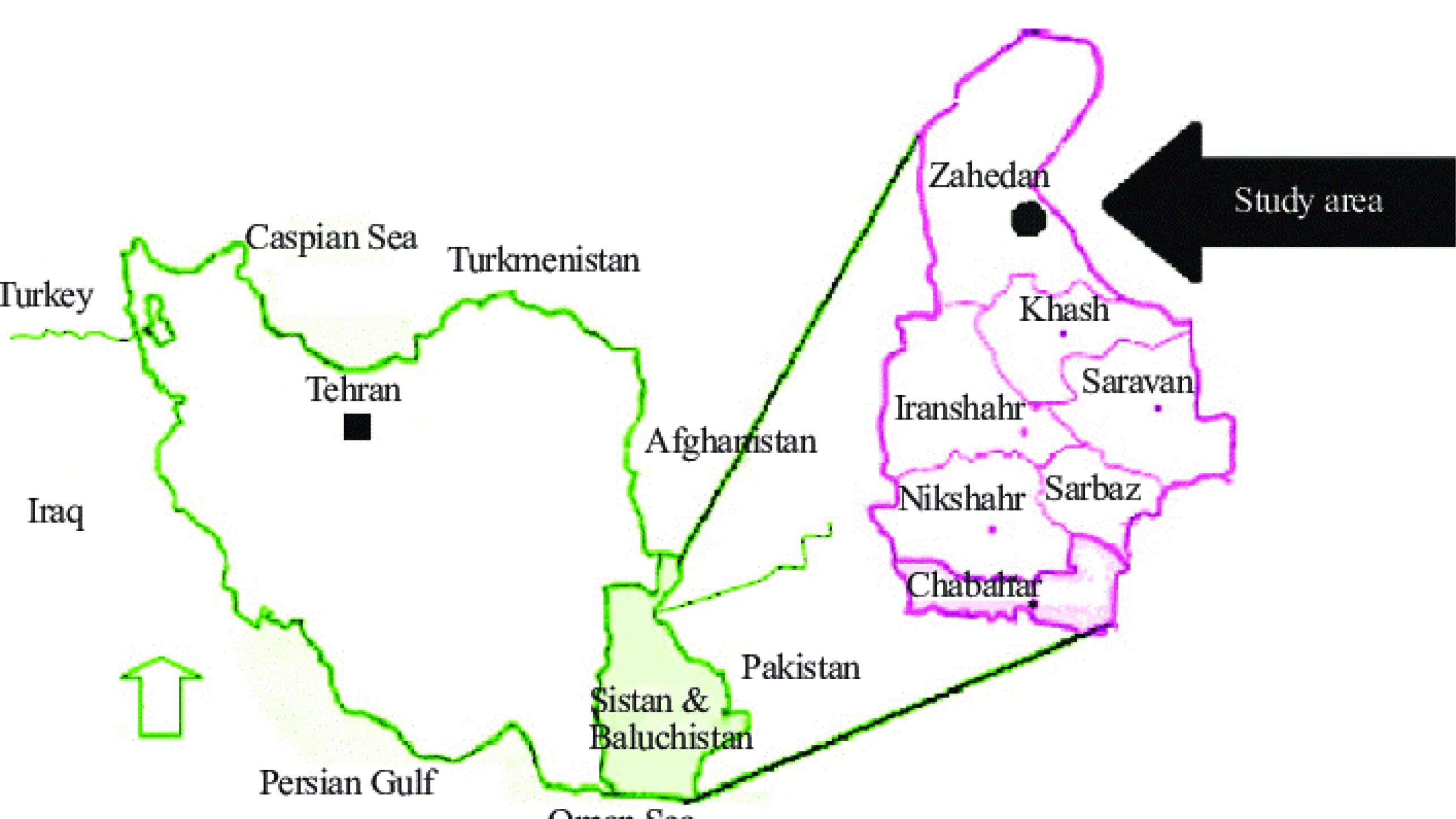
Fig. 1.
Location of the Studied Region
.
Location of the Studied Region
2.1. Sample Collection
The health hazards of heavy metals in bread were assessed in the present cross-sectional study in Zahedan. Overall, 36 samples of wheat bread, including Sangak, Taftoon, and Lavash, were randomly collected from traditional bakeries in the city in June 2020 (according to the number of districts in Zahedan municipality, 6 districts were selected, and 6 samples were taken from 6 bakeries in each district).
2.2. Sample Preparation and Analysis
To avoid contamination after production, the oven-fresh loaves were purchased directly from the bakeries. All the collected samples were stored in clean polythene bags, according to their types, and then transferred to the laboratory for analysis.
Wheat bread samples were cut into small pieces and dried in an oven at a temperature of 50 °C for 48 hours, and finally, all samples were ground in a blender with a stainless-steel blade and then sieved with mesh No. 60 ( < 0.25 mm). Next, 1 g of each sample was weighed using a digital scale and transferred to a 50-mL Erlenmeyer flask; then, 10 mL of 65% nitric acid and 2 mL of hydrogen peroxide were added to it. The samples were stored overnight at room temperature and then heated up to 70°C for at least eight hours on a hot plate until a clear residue was obtained. Next, the digested samples were filtered into a 25-mL volumetric flask using Whatman filter paper with double-distilled water (6). All samples were analyzed by inductively coupled plasma-optical emission spectrometry (Spector Arcos Model, Germany) to determine the heavy metals content.
For quality control and quality assurance of analysis, all samples and standard solutions were analyzed twice, and the coefficient of variation of repeated analysis was less than 3% for each heavy metal.
All digested samples, laboratory blanks, and standard spiked samples were analyzed for quality control and quality assurance. The laboratory blank values for each target element were significantly lower than the samples and were used to adjust the metal concentration in the bread samples. Then, the standard deviation was calculated, and the detection limit (MDL) of the method was estimated as follows:
The MDL range was between 0.01 Lg/kg (Cd) and 9.5 mg/kg (Zn). The recovery percentage of heavy metals in standard spiked samples was between 98% and 103%. Further, the coefficient of variation of repeated analysis, as analytical precision, was less than 3% for each of the six analytes. The integrated pollution index was assigned as the average value of all the pollution indices of all the investigated metals.
3. Results and Discussion
The standard values of heavy metals in bread are listed in Table 3.
Table 3.
Standard Values of Heavy Metals in Bread
|
Metal
|
Reference Value (mg/kg)
|
|
INSO
|
FAO/WHO
|
| Al |
NM* |
5 |
| As |
NM* |
0.1 |
| B |
NM* |
NM |
| Cd |
0.03 |
0.05 |
| Fe |
85 |
5 |
| Hg |
NM* |
0.03 |
| Mg |
NM* |
1000 |
| Na |
NM* |
1200 |
| Pb |
0.15 |
2.5 |
| Zn |
NM* |
50 |
Note. INSO: Iranian National Standards Organization; FAO: Food and Agriculture Organization; WHO: World Health Organization; Al: Aluminum; As: Arsenic; B: Boron; Cd: Cadmium; Fe: Iron; Hg: Mercury; Mg: Magnesium; Na: Sodium; Pb: Lead; Zn: Zinc. *Not mentioned.
The heavy metal content measured in 36 bread samples is provided in Table 4.
Table 4.
Heavy Metal Contents in the Studied Bread Types (mg/kg)
|
Metal
|
Taftoon
|
Lavash
|
Sangak
|
Recovery (%)
|
|
Mean
|
Min.
|
Max.
|
Mean
|
Min.
|
Max.
|
Mean
|
Min.
|
Max.
|
| As |
6.284 |
1.79 |
15.04 |
4.25 |
1.79 |
6.88 |
4.078 |
2.45 |
6.0579 |
88 |
| Cd |
10.351 |
1.09 |
28.56 |
10.040 |
5.77 |
15.78 |
3.663 |
2.35 |
5.59 |
94 |
| Co |
5.295 |
1.76 |
9.34 |
1.6025 |
0.43 |
2.64 |
4.17 |
0.43 |
6.61 |
89 |
| Cr |
148.21 |
108.57 |
204.89 |
230.138 |
180.41 |
302.11 |
252.358 |
201.94 |
305.11 |
93 |
| Cu |
733.690 |
477.79 |
1063.58 |
496.797 |
391.69 |
593.89 |
459.85 |
405.62 |
521.77 |
90 |
| Hg |
3.908 |
1.49 |
6.53 |
3.476 |
2.66 |
4.33 |
3.881 |
2.44 |
5.22 |
87 |
| Ni |
258.044 |
132.51 |
710.78 |
237.375 |
121.17 |
354.64 |
170.081 |
106.64 |
221.04 |
86 |
| Pb |
173.045 |
113.82 |
221.85 |
39.926 |
21.66 |
55.3 |
34.055 |
21.66 |
45.51 |
90 |
| Zn |
7281.166 |
5216.02 |
11291.4 |
4463.44 |
3420.81 |
5301.64 |
3898.76 |
3132.58 |
4558.21 |
98 |
Note. As: Arsenic; Cd: Cadmium; Co: Cobalt; Cr: Chromium; Cu: Copper; Hg: Mercury; Ni: Nickel; Pb: Lead; Zn: Zinc; Min.: Minimum; Max.: Maximum.
3.1. Non-carcinogenic Risk Analysis
The present study assessed the heavy metal exposure and daily intake hazards of bread types as the main part of Iranian food, based on the US EPA methodology. As the first step in the non-carcinogenic analysis, the ADI and HQ underwent calculation. The results of the non-carcinogenicity of trace elements in bread samples for males, females, and children are summarized in Tables 5, 6, and 7. The non-carcinogenicity of trace elements in bread samples is presented in Table 7, 8.
Table 5.
Non-carcinogenicity of Trace Elements in Bread Samples for Males
|
Metal
|
ADI
|
RfDa
|
HQ
|
|
Taftoon
|
Lavash
|
Sangak
|
|
Taftoon
|
Lavash
|
Sangak
|
| As |
4.04E-05 |
2.73E-05 |
2.62E-05 |
0.0003 |
1.35E-01 |
9.11E-02 |
8.74E-02 |
| Cd |
6.65E-05 |
6.45E-05 |
2.35E-05 |
0.001 |
6.65E-02 |
6.45E-02 |
2.35E-02 |
| Co |
3.40E-05 |
1.03E-05 |
2.68E-05 |
0.0003 |
1.13E-01 |
3.43E-02 |
8.94E-02 |
| Cr |
9.53E-04 |
1.48E-03 |
1.62E-03 |
0.003 |
3.18E-01 |
4.93E-01 |
5.41E-01 |
| Cu |
4.72E-03 |
3.19E-03 |
2.96E-03 |
0.04 |
1.18E-01 |
7.98E-02 |
7.39E-02 |
| Hg |
2.51E-05 |
2.24E-05 |
2.50E-05 |
0.0003 |
8.37E-02 |
7.45E-02 |
8.32E-02 |
| Ni |
1.66E-03 |
1.53E-03 |
1.09E-03 |
0.02 |
8.29E-02 |
7.63E-02 |
5.47E-02 |
| Pb |
1.11E-03 |
2.57E-04 |
2.19E-04 |
0.0035 |
3.18E-01 |
7.33E-02 |
6.26E-02 |
| Zn |
4.68E-02 |
2.87E-02 |
2.51E-02 |
0.3 |
1.56E-01 |
9.56E-02 |
8.35E-02 |
| HI |
|
|
|
|
1.39E + 00 |
1.08E + 00 |
1.10E + 00 |
Note. As: Arsenic; Cd: Cadmium; Co: Cobalt; Cr: Chromium; Cu: Copper; Hg: Mercury; Ni: Nickel; Pb: Lead; Zn: Zinc; HI: Hazard index; ADI: Average daily dose; RfD: Reference dose; HQ: Hazard quotient; EPA: Environmental Protection Agency. aObtained from Integrated Risk Information System, EPA, US.
Table 6.
Non-carcinogenicity of Trace Elements in Bread Samples for Females
|
Metal
|
ADI
|
RfDa
|
HQ
|
|
Taftoon
|
Lavash
|
Sangak
|
|
Taftoon
|
Lavash
|
Sangak
|
| As |
4.71E-05 |
3.19E-05 |
3.06E-05 |
0.0003 |
1.57E-01 |
1.06E-01 |
1.02E-01 |
| Cd |
7.76E-05 |
7.53E-05 |
2.75E-05 |
0.001 |
7.76E-02 |
7.53E-02 |
2.75E-02 |
| Co |
3.97E-05 |
1.20E-05 |
3.13E-05 |
0.0003 |
1.32E-01 |
4.01E-02 |
1.04E-01 |
| Cr |
1.11E-03 |
1.73E-03 |
1.89E-03 |
0.003 |
3.71E-01 |
5.75E-01 |
6.31E-01 |
| Cu |
5.50E-03 |
3.73E-03 |
3.45E-03 |
0.04 |
1.38E-01 |
9.31E-02 |
8.62E-02 |
| Hg |
2.93E-05 |
2.61E-05 |
2.91E-05 |
0.0003 |
9.77E-02 |
8.69E-02 |
9.70E-02 |
| Ni |
1.94E-03 |
1.78E-03 |
1.28E-03 |
0.02 |
9.68E-02 |
8.90E-02 |
6.38E-02 |
| Pb |
1.30E-03 |
2.99E-04 |
2.55E-04 |
0.0035 |
3.71E-01 |
8.56E-02 |
7.30E-02 |
| Zn |
5.46E-02 |
3.35E-02 |
2.92E-02 |
0.3 |
1.82E-01 |
1.12E-01 |
9.75E-02 |
| HI |
|
|
|
|
1.62E + 00 |
1.26E + 00 |
1.28E + 00 |
Table 7.
Non-carcinogenicity of Trace Elements in Bread Samples for Children
|
Metal
|
ADI
|
RfDa
|
HQ
|
|
Taftoon
|
Lavash
|
Sangak
|
|
Taftoon
|
Lavash
|
Sangak
|
| As |
6.28E-05 |
4.25E-05 |
4.08E-05 |
0.0003 |
2.09E-01 |
1.42E-01 |
1.36E-01 |
| Cd |
1.04E-04 |
1.00E-04 |
3.66E-05 |
0.001 |
1.04E-01 |
1.00E-01 |
3.66E-02 |
| Co |
5.30E-05 |
1.60E-05 |
4.17E-05 |
0.0003 |
1.77E-01 |
5.34E-02 |
1.39E-01 |
| Cr |
1.48E-03 |
2.30E-03 |
2.52E-03 |
0.003 |
4.94E-01 |
7.67E-01 |
8.41E-01 |
| Cu |
7.34E-03 |
4.97E-03 |
4.60E-03 |
0.04 |
1.83E-01 |
1.24E-01 |
1.15E-01 |
| Hg |
3.91E-05 |
3.48E-05 |
3.88E-05 |
0.0003 |
1.30E-01 |
1.16E-01 |
1.29E-01 |
| Ni |
2.58E-03 |
2.37E-03 |
1.70E-03 |
0.02 |
1.29E-01 |
1.19E-01 |
8.50E-02 |
| Pb |
1.73E-03 |
3.99E-04 |
3.41E-04 |
0.0035 |
4.94E-01 |
1.14E-01 |
9.73E-02 |
| Zn |
7.28E-02 |
4.46E-02 |
3.90E-02 |
0.3 |
2.43E-01 |
1.49E-01 |
1.30E-01 |
| HI |
|
|
|
|
2.16E + 00 |
1.68E + 00 |
1.71E + 00 |
Note. As: Arsenic; Cd: Cadmium; Co: Cobalt; Cr: Chromium; Cu: Copper; Hg: Mercury; Ni: Nickel; Pb: Lead; Zn: Zinc; HI: Hazard index; ADI: Average daily dose; RfD: Reference dose; HQ: Hazard quotient; EPA: Environmental Protection Agency.
Table 8.
Non-Carcinogenicity of Trace Elements in Bread Samples
|
Metal
|
ADI
|
RfDa
|
HQ
|
|
Children
|
Female
|
Male
|
|
Children
|
Female
|
Male
|
| As |
4.87E-05 |
3.65E-05 |
3.13E-05 |
0.0003 |
1.62E-01 |
1.22E-01 |
1.04E-01 |
| Cd |
8.02E-05 |
6.01E-05 |
5.15E-05 |
0.001 |
8.02E-02 |
6.01E-02 |
5.15E-02 |
| Co |
3.69E-05 |
2.77E-05 |
2.37E-05 |
0.0003 |
1.23E-01 |
9.22E-02 |
7.91E-02 |
| Cr |
2.10E-03 |
1.58E-03 |
1.35E-03 |
0.003 |
7.01E-01 |
5.26E-01 |
4.51E-01 |
| Cu |
5.63E-03 |
4.23E-03 |
3.62E-03 |
0.04 |
1.41E-01 |
1.06E-01 |
9.06E-02 |
| Hg |
3.76E-05 |
2.82E-05 |
2.41E-05 |
0.0003 |
1.25E-01 |
9.39E-02 |
8.05E-02 |
| Ni |
2.22E-03 |
1.66E-03 |
1.43E-03 |
0.02 |
1.11E-01 |
8.32E-02 |
7.13E-02 |
| Pb |
8.23E-04 |
6.18E-04 |
5.29E-04 |
0.0035 |
2.35E-01 |
1.76E-01 |
1.51E-01 |
| Zn |
5.21E-02 |
3.91E-02 |
3.35E-02 |
0.3 |
1.74E-01 |
1.30E-01 |
1.12E-01 |
| HI |
|
|
|
|
1.85E + 00 |
1.39E + 00 |
1.19E + 00 |
Note. As: Arsenic; Cd: Cadmium; Co: Cobalt; Cr: Chromium; Cu: Copper; Hg: Mercury; Ni: Nickel; Pb: Lead; Zn: Zinc; HI: Hazard index; ADI: Average daily dose; RfD: Reference dose; HQ: Hazard quotient; EPA: Environmental Protection Agency.
The HQ results using Eqs. (1) and (2) revealed that exposure to As, Co, Cd, Cr, Cu, Hg, Ni, Pb, and Zn in bread samples collected in Zahedan was < 1 for all males, females, and children. Comparing these values with the standards mentioned in Table 3, it was found that they are lower than the standard for heavy metals in bread. According to Table 7, the highest and lowest HQ amounts among the studied elements in bread belonged to Cr (males: 0.451, females: 0.526, and children: 0.701) and Cd (males: 0.0155, females: 0.0601, and children: 0.0802), respectively.
The highest HI amount for the samples collected in Zahedan was observed in Taftoon (males: 1.39, females: 1.62, and children: 2.16), while the lowest HI amount belonged to Lavash (males: 1.08, females: 1.26, and children: 1.68). Based on the findings (Table 7), the HI of bread samples was 1.19, 1.39, and 1.85 for males, females, and children, respectively. The mean HI of the three studied bread types was > 1. The HI ranking order of the studied bread types for males, females, and children was as follows:
1 ˂ HILavash ˂ HISangak ˂ HITaftoon
According to the results of the study by Ghoreishy et al, HQ levels of Pb in Sangak and Taftoon bread samples collected in Isfahan, Iran, were 0.19 and 1.62, respectively. The HQ of Pb in Sangak (males: 6.26 × 10⁻², females: 7.30 × 10⁻², and children: 9.73 × 10⁻²) and Taftoon (males: 0.318, females: 0.371, and children: 0.494) in the above-mentioned study was higher than that in the present research, indicating the higher amount of Pb in bread baked in Isfahan compared to that in Zahedan. Naghipour et al found that the ADI of As, Cd, Pb, Cr, Ni, and Cr in the studied bread types was 0, 0.5, 4.2, 6.4, 7.4, and 1.6 μg/kg, respectively. The total daily intake of the studied heavy metals was 17.5 μg/kg. In addition, the highest Cd amount (0.8 μg/kg) was detected in Sangak (28). Zolfaghari et al demonstrated that the total HQ of wheat consumption for Pb, Cd, and As was 0.08, 0.07, and 0.0005, respectively. In the present study, after Cr, the highest HQ amount belonged to Pb. In line with the results of the study by Zolfaghari et al (29), those of the present study confirmed that the HQ of none of the elements was > 1. Ghanati et al compared the HQ of heavy metals between rural and urban samples and reported a ranking order of Cu > As > Zn > Co > Ni > Cd > Pb > Hg > Cr. The HQ in the rural population was higher than in the urban population. HI for rural and urban samples were 1.83 and 2.28, respectively (23).
The HQ in the present study had the following ranking orders:
HQ ranking orders of Taftoon for males and children:
HQCd ˂ HQNi ˂ HQHg ˂ HQCo ˂ HQCu ˂ HQAs ˂ HQZn ˂ HQPb = HQCr
HQ ranking orders of Taftoon for females:
HQCd ˂ HQNi ˂ HQHg ˂ HQCo ˂ HQCu ˂ HQAs ˂ HQZn ˂ HQCr = HQPb
HQ ranking orders of Lavash for males, females, and children:
HQCo ˂ HQCd ˂ HQPb ˂ HQHg ˂ HQNi ˂ HQCu ˂ HQAs ˂ HQZn ˂ HQCr
HQ ranking orders of Sangak for males, females, and children:
HQCd ˂ HQNi ˂ HQPb ˂ HQCu ˂ HQHg ˂ HQZn ˂ HQAs ˂ HQCo ˂ HQCr
Ghoreishy et al revealed that the Pb weekly intake following the consumption of Sangak and Taftoon bread by inhabitants in Isfahan was 4.77 mg/kg of bw and 40.93 mg/kg of bw, respectively, while it was much higher in Taftoon than the provisional tolerable weekly intake (25 mg/kg of bw). In most cases in the present study, the target risk coefficient values were > 1 (6).
3.2. Carcinogenic Risk Analysis
Long-term exposure to even very small amounts of some toxic metals (e.g., AS, Pb, Cr, Cd, or Ni) is a risk factor for cancer. The total amount of these elements in different bread samples and the CSF for different metals are presented in Table 9.
Table 9.
Carcinogenicity of Trace Elements in Bread Samples
|
Metal
|
CSFa
|
Risk
|
|
Male
|
Female
|
|
Taftoon
|
Lavash
|
Sangak
|
Taftoon
|
Lavash
|
Sangak
|
| As |
1.5 |
6.06E-05 |
4.10E-05 |
3.93E-05 |
7.07E-05 |
4.78E-05 |
4.59E-05 |
| Cd |
15 |
9.98E-04 |
9.68E-04 |
3.53E-04 |
1.16E-03 |
1.13E-03 |
4.12E-04 |
| Cr |
0.5 |
4.76E-04 |
7.40E-04 |
8.11E-04 |
5.56E-04 |
8.63E-04 |
9.46E-04 |
| Ni |
0.91 |
1.51E-03 |
1.39E-03 |
9.95E-04 |
1.76E-03 |
1.62E-03 |
1.16E-03 |
| Pb |
0.0085 |
9.46E-06 |
2.18E-06 |
1.86E-06 |
1.10E-05 |
2.55E-06 |
2.17E-06 |
| Total ELCR |
|
3.05E-03 |
3.14E-03 |
2.20E-03 |
3.56E-03 |
3.66E-03 |
2.57E-03 |
Note. As: Arsenic; Cd: Cadmium; Cr: Chromium; Ni: Nickel; Pb: Lead; ELCR: Excess lifetime cancer risk; CSF: Cancer slope factor. aObtained from California Environmental Protection Agency, US.
The carcinogenicity ranking order of bread types collected in Zahedan for males and females was as follows:
Total ELCRTaftoon ˂ Total ELCRSangak ˂ Total ELCRLavash
Based on the results (Table 8), the highest carcinogenicity (above 1 × 10⁻⁴ - 1 × 10⁻⁶) belonged to Ni in Taftoon (1.5 × 10⁻³ for males and 1.76 × 10⁻³ for females), followed by Cd (9.98 × 10⁻⁴ for males and 1.16 × 10⁻³ for females). Conversely, the lowest carcinogenicity was related to Pb in Sangak (1.86 × 10⁻⁶ for males and 2.17 × 10⁻⁶ for females) among carcinogens. It was also observed that the estimated ELCR was grade VII (very high risk), not within the accepted range of E−04 to E−06.
The total carcinogenicity for Taftoon, Lavash, and Sangak was 2.20E-03, 3.14E-03, and 3.05E-03 in males and 2.57E-03, 3.66E-03, and 3.56E-03 in females. Among the studied heavy metals, Ni and Pb had the highest and lowest carcinogenicity, respectively. The results of the present study showed that there was a slight increase in the carcinogenicity of heavy metals in the most consumed bread types in Zahedan. It can be due to different factors affecting the heavy metal contamination of food and bread.
Unexpectedly, heavy metals were found in all the samples with the ranking orders as follows (according to the sample results of Table 3):
Taftoon: CZn > CCu > CNi > CPb > CCr > CCd > CAs > CCo > CHg
Lavash: CZn > CCu > CNi > CCr > CPb > CCd > CAs > CHg > CCo
Sangak: CZn > CCu > CCr > CNi > CPb > CCo > CAs > CHg > CCd
The overall ranking order of the traced elements was as follows:
CZn > CCu > CNi > CCr > CPb > CCd > CAs > CHg > CCo
Although the results of the analysis of variance demonstrated a significant difference in the mean concentrations of Cd, Co, Cr, Cu, Pb, and Zn among the three bread types (P ˂ 0.05), no significant differences were found for As, Hg, and Ni. The mean As content in bread samples ranged from 6.284 μg/kg to 4.078 μg/kg, and As content in 100% of the samples was lower than the permissible limit in food (100 μg/kg) (30). Thus, all the studied samples were safe for As content. Naghipour et al (28) reported an As content lower than that of the present study for all the bread samples. As regards Pb, the highest content in Taftoon bread was 173.045 µg/kg, which was higher than that of the study performed in Yazd, Iran (101.27 ± 28.40 µg/kg) (31). The results of the above-mentioned study showed that the Pb content of all samples was lower than the permissible limit in food (200-250 µg/kg) (30).
Comparing the results of this study with the standards listed in Table 3, it was found that the Pb content in all samples exceeded the permissible limit in food (between 200 μg/kg and 2500 μg/kg). The mean detected level of Cd in the bread samples ranged from 10.351 μg/kg to 3.663 μg/kg. The permissible limit for Cd in food is 50 μg/kg (30). According to the results, Cd content in all the studied samples was lower than the permissible limit. Ghoreishy et al (6) reported that the Cd content in Sangak and Taftoon was less than that detected in all bread samples. The mean Hg content in the studied bread types was 3.755 μg/kg, which was lower than that reported by Feyzi et al (30) and Ghanati et al (23).
The highest amounts of Ni and Cu in Taftoon bread were 258.044 μg/kg and 733.69 μg/kg, respectively. According to the recommendation of the World Health Organization, 26-300 μg/kg of bw Ni is permissible for daily intake (oral absorption). The obtained contents were far below the permissible limit of Cu in food (10000 μg/kg) (30). The obtained Ni and Cu contents in the present study were higher than those of the study by Ghanati et al and Alomary and Wedian (23,32). The average Co content in the collected bread samples was 3.689 μg/kg. The LD50 for soluble Co salt was estimated between 150 mg/kg and 500 mg/kg (25). Moreover, the Zn content in bread samples ranged from 11291.400 μg/kg to 3132.58 μg/kg, which was lower than the permissible limiting foods (50 000 μg/kg) (30). In addition, Zn values were lower than the permissible limit in foods (50 000 μg/kg). The highest Zn and Co contents in Taftoon were 5.259 μg/kg and 7281.166 μg/kg, respectively. Further, the average Cr content in the bread samples was 210.235 μg/kg. The highest Cr amount in Sangak was 252.358 µg/kg, which is lower than that of the study by Ghanati (0.354 mg/kg) (23). Zn content found in the present study was higher than that reported by Das et al and Ahmed et al (33,34). Co content measured in the current study samples was lower than that reported by Naghipour et al and Ghanati et al (23,28). The mean content of all trace elements in the present study was lower than the permissible limits advised for daily intake. Based on the obtained data, the consumption of this mostly used traditional bread in Zahedan was safe. However, knowledge of the adverse effects of trace elements on body health is limited, and even small amounts of such elements may cause different levels of tissue damage.
3.3. Different Factors Affecting the Heavy Metal Contamination of Foodstuff and Bread
The environment, especially agricultural soils, is one of the main sources of the contamination of bread with heavy metals. In such regions, heavy metals in the soil are transferred to the roots of crops, such as wheat, rice, and the like. The preparation and process of bread are the other routes of heavy metal contamination. During processing and preparation, some contents, such as water, salt, yeast, flour, and baking soda, may contaminate bread with heavy metals (28,29). In addition, metal trays, contaminated bakery ovens due to the lack of supervision, and heavy metal-contaminated fuels are effective parameters in the contamination of bread with heavy metals (28). Food processing equipment and containers have long been recognized as the sources of contamination with trace metals, such as Fe, Cu, Pb, and Cr. According to the research by Alomary and Wedian, bakeries that use heavy and light oils as energy sources should work to reduce bread contamination by changing the use of electricity or taking special care when baking bread (32).
Based on the results of the present study, it is recommended that bakeries using heavy and light oils as energy sources attempt to minimize bread contamination by either switching the electricity as the energy source or applying hygiene standards for the bakery. The secondary contamination of bread includes packaging and air pollution in the bakery (28).
4. Conclusion
Human health and food safety are very closely linked to each other. The increased concentration of heavy metals in recent decades urges the need to pay more attention to eliminating the potential sources of these toxins and preventing their entry into the human body, especially through food and water ingestion. According to the cancer risk assessment, while the concentrations were safe, the bread was carcinogenic in the end. It was also revealed that the widely used bread types in Zahedan are not generally safe from carcinogenicity aspects but are acceptable for non-carcinogenic determinants. Moreover, the trace element hazards are remarkable in children. It is also suggested that further studies examine heavy metal contamination at different stages of bread preparation and determine factors contributing to heavy metal contamination. It is highly recommended that controlling measures, such as the implementation of a food control system, proper storage of flour, and training farmers, should promptly be taken to reduce contamination possibility.
Acknowledgments
The researchers of this study would like to thank the laboratory workers of the Faculty of Health, Zahedan University of Medical Sciences, for their cooperation in reviewing this study.
Authors’ Contribution
Conceptualization: Seyed Davoud Ashrafi, Reza Ghanbari.
Data curation: Hossein Kamani, Leili Mohammadi.
Formal analysis: Abdollah Dargahi, Mojdeh Jahantigh.
Funding acquisition: Hossein Kamani, Leili Mohammadi.
Investigation: Methodology: Fatemeh Tabatabae, Abdollah Dargahi, Hossein Ansari.
Project administration: Hossein Kamani, Leili Mohammadi.
Resources: Muhammad Nadeem Zafar, Abdollah Dargahi.
Software: Muhammad Nadeem Zafar, Abdollah Dargahi.
Supervision: Hossein Kamani, Leili Mohammadi.
Validation: Reza Ghanbari, Hossein Ansari.
Visualization: Fatemeh Tabatabae, Seyed Davoud Ashrafi.
Writing – original draft: Fatemeh Tabatabae, Seyed Davoud Ashrafi, Reza Ghanbari, Hossein Ansari, Hossein Kamani, Leili Mohammadi, Muhammad Nadeem Zafar, Abdollah Dargahi, Mojdeh Jahantigh.
Writing – review & editing: Fatemeh Tabatabae, Seyed Davoud Ashrafi, Reza Ghanbari, Hossein Ansari, Hossein Kamani, Leili Mohammadi, Muhammad Nadeem Zafar, Abdollah Dargahi, Mojdeh Jahantigh.
Competing Interests
The authors have no relevant financial or non-financial interests to disclose.
Consent to Participate
Not applicable.
Consent to Publish
All the authors have read and approved the manuscript and accorded the consent for publication.
Ethical Approval
This work was approved by the ethical committee of Zahedan University of Medical Sciences (Ethical code: IR.ZAUMS.REC.1398.409).
Funding
This work was supported by a research grant from Zahedan University of Medical Sciences, Iran.
References
- Voica C, Dehelean A, Kovacs MH. The use of inductively coupled plasma mass spectrometry (ICP-MS) for the determination of toxic and essential elements in different types of food samples. AIP Conf Proc 2012; 1425(1):110-3. doi: 10.1063/1.3681979 [Crossref] [ Google Scholar]
- Zeng F, Wei W, Li M, Huang R, Yang F, Duan Y. Heavy metal contamination in rice-producing soils of Hunan province, China and potential health risks. Int J Environ Res Public Health 2015; 12(12):15584-93. doi: 10.3390/ijerph121215005 [Crossref] [ Google Scholar]
- Ismail A, Riaz M, Akhtar S, Goodwill JE, Sun J. Heavy metals in milk: global prevalence and health risk assessment. Toxin Rev 2019; 38(1):1-12. doi: 10.1080/15569543.2017.1399276 [Crossref] [ Google Scholar]
- Yavarian H, Dehghani Ghanatghestani M, Kamani H, Khalil Aria A. Spatial distribution and health risk assessment of heavy metals in drinking water in Nikshahr and Iranshahr cities of Iran. Int J Environ Anal Chem. 2024:1-17. doi: 10.1080/03067319.2024.2357751.
- Dashtizadeh M, Kamani H, Ashrafi SD, Panahi AH, Mahvi AH, Balarak D. Human health risk assessment of trace elements in drinking tap water in Zahedan city, Iran. J Environ Health Sci Eng 2019; 17(2):1163-9. doi: 10.1007/s40201-019-00430-6 [Crossref] [ Google Scholar]
- Ghoreishy F, Salehi M, Fallahzade J. Cadmium and lead in rice grains and wheat breads in Isfahan (Iran) and human health risk assessment. Hum Ecol Risk Assess 2019; 25(4):924-34. doi: 10.1080/10807039.2018.1456898 [Crossref] [ Google Scholar]
- Baghaie AH. Effect of organic nano-materials on heavy metals concentration of wheat plants inoculated with Piriformospora indica fungus and irrigated with wastewater of plating industry. Avicenna J Environ Health Eng 2020; 7(1):20-8. doi: 10.34172/ajehe.2020.04 [Crossref] [ Google Scholar]
- Qaiyum MS, Shaharudin MS, Syazwan AI, Muhaimin A. Health risk assessment after exposure to aluminium in drinking water between two different villages. J Water Resour Prot 2011; 3(4):268-74. doi: 10.4236/jwarp.2011.34034 [Crossref] [ Google Scholar]
- Khan S, Cao Q, Zheng YM, Huang YZ, Zhu YG. Health risks of heavy metals in contaminated soils and food crops irrigated with wastewater in Beijing, China. Environ Pollut 2008; 152(3):686-92. doi: 10.1016/j.envpol.2007.06.056 [Crossref] [ Google Scholar]
- Kamani H, Hosseini A, Mohebi S, Keshtkar M, Mohammadpour A, Khodadadi N. Evaluation of water quality of Chahnimeh as natural reservoirs from Sistan region in southwestern Iran: a Monte Carlo simulation and Sobol sensitivity assessment. Environ Sci Pollut Res Int 2023; 30(24):65618-30. doi: 10.1007/s11356-023-26879-5 [Crossref] [ Google Scholar]
- Kharazi A, Leili M, Khazaei M, Alikhani MY, Shokoohi R, Mahmoudi H. Contamination of selective vegetables of Hamadan with heavy metals: non-carcinogenic risk assessment. Avicenna J Environ Health Eng 2021; 8(1):43-51. doi: 10.34172/ajehe.2021.07 [Crossref] [ Google Scholar]
- Udowelle NA, Igweze ZN, Asomugha RN, Orisakwe OE. Health risk assessment and dietary exposure of polycyclic aromatic hydrocarbons (PAHs), lead and cadmium from bread consumed in Nigeria. Rocz Państw Zakł Hig 2017; 68(3):269-80. [ Google Scholar]
- Ahamadabadi M, Saeidi M, Rahdar S, Narooie MR, Salimi A, Alipour V. Amount of baking soda and salt in the bread baked in city of Zabol. IIOAB Journal 2016; 7 Suppl 2:518-22. [ Google Scholar]
- Jahed-Khaniki G, Yunesian M, Mahvi AH, Nazmara S. Trace metal contaminants in Iranian flat breads. J Agric Soc Sci 2005; 1(4):301-3. [ Google Scholar]
- Kamunda C, Mathuthu M, Madhuku M. Health risk assessment of heavy metals in soils from Witwatersrand Gold Mining Basin, South Africa. Int J Environ Res Public Health 2016; 13(7):663. doi: 10.3390/ijerph13070663 [Crossref] [ Google Scholar]
- Sobhan Ardakani S, Kianpour M. Heavy metal levels and potential health risk assessment in honey consumed in the west of Iran. Avicenna J Environ Health Eng 2016; 3(2):7795. doi: 10.5812/ajehe.7795 [Crossref] [ Google Scholar]
- Li F, Qiu Z, Zhang J, Liu C, Cai Y, Xiao M. Spatial distribution and fuzzy health risk assessment of trace elements in surface water from Honghu Lake. Int J Environ Res Public Health 2017; 14(9):1011. doi: 10.3390/ijerph14091011 [Crossref] [ Google Scholar]
- Alidadi H, Zamand S, Najafpoor A, Heidarian H, Dehghan A, Sarkhosh M. Health impacts of exposure to heavy metals in some selected lipstick products available in Mashhad, Iran. Avicenna J Environ Health Eng 2019; 6(2):113-8. doi: 10.34172/ajehe.2019.15 [Crossref] [ Google Scholar]
- Nejabat M, Kahe H, Shirani K, Ghorbannejad P, Hadizadeh F, Karimi G. Health risk assessment of heavy metals via dietary intake of wheat in Golestan province, Iran. Hum Ecol Risk Assess 2017; 23(5):1193-201. doi: 10.1080/10807039.2017.1309265 [Crossref] [ Google Scholar]
- Amfo-Otu R, Agyenim JB, Adzraku S. Meat contamination through singeing with scrap tyres in Akropong-Akuapem abattoir, Ghana. Appl Res J 2014; 1(1):12-9. [ Google Scholar]
- Huang X, He L, Li J, Yang F, Tan H. Different choices of drinking water source and different health risks in a rural population living near a lead/zinc mine in Chenzhou city, southern China. Int J Environ Res Public Health 2015; 12(11):14364-81. doi: 10.3390/ijerph121114364 [Crossref] [ Google Scholar]
- Aluko T, Njoku K, Adesuyi A, Akinola M. Health risk assessment of heavy metals in soil from the iron mines of Itakpe and Agbaja, Kogi state, Nigeria. Pollution 2018; 4(3):527-38. doi: 10.22059/poll.2018.243543.330 [Crossref] [ Google Scholar]
- Ghanati K, Zayeri F, Hosseini H. Potential health risk assessment of different heavy metals in wheat products. Iran J Pharm Res 2019; 18(4):2093-100. doi: 10.22037/ijpr.2019.1100865 [Crossref] [ Google Scholar]
- Saha N, Zaman MR. Evaluation of possible health risks of heavy metals by consumption of foodstuffs available in the central market of Rajshahi city, Bangladesh. Environ Monit Assess 2013; 185(5):3867-78. doi: 10.1007/s10661-012-2835-2 [Crossref] [ Google Scholar]
- Mohammadi AA, Zarei A, Majidi S, Ghaderpoury A, Hashempour Y, Saghi MH. Carcinogenic and non-carcinogenic health risk assessment of heavy metals in drinking water of Khorramabad, Iran. MethodsX 2019; 6:1642-51. doi: 10.1016/j.mex.2019.07.017 [Crossref] [ Google Scholar]
- Dashtizadeh M, Kamani H, Ashrafi SD, Panahi AH, Mahvi AH, Balarak D. Human health risk assessment of trace elements in drinking tap water in Zahedan city, Iran. J Environ Health Sci Eng 2019; 17(2):1163-9. doi: 10.1007/s40201-019-00430-6 [Crossref] [ Google Scholar]
- Najafi A, Hallaji SM, Saleh E, Hashemolhosseini N, Pootehrigi M. Analysis of waste management in Zahedan city and assessment of the municipality’s performance (case region: Zahedan). J Appl Environ Biol Sci 2017; 7(7):9-18. [ Google Scholar]
- Naghipour D, Amouei A, Nazmara S. A comparative evaluation of heavy metals in the different breads in Iran: a case study of Rasht city 2014;3(4):e18175. doi: 10.17795/jhealthscope-18175.
- Zolfaghari G, Delsouz M, Sazgar A, Akhgari Z. Study of some of heavy metals in Poaceae Triticum, Zea maize, and Hordeum vulgare and non-carcinogenic quantitative risk assessment: Kashafroud river, Mashhad. J Environ Sci Technol 2020;22(2):225-39. [Persian].
- Feyzi Y, Malekirad A, Fazilati M, Salavati H, Habibollahi S, Rezaei M. Metals that are important for food safety control of bread product. Adv Biores 2017; 8(1):111-6. doi: 10.15515/abr.0976-4585.8.1.111116 [Crossref] [ Google Scholar]
- Hajimohammadi B, Mali A, Mossadegh Mehrjardi MH, Mozafari Khosravi H, Yasini Ardakani SA, Jahed-Khaniki GR, et al. A survey on lead and cadmium content in bread produced in Yazd. Toloo-e-Behdasht 2015;14(4):36-44. [Persian].
- Alomary A, Wedian F. The influence of baking fuel types on the residues of some heavy metals in Jordanian bread. Jordan J Chem 2012; 7(1):81-5. [ Google Scholar]
- Ahmed MT, Abdel Hadi el S, el-Samahy S, Youssof K. The influence of baking fuel on residues of polycyclic aromatic hydrocarbons and heavy metals in bread. J Hazard Mater 2000; 80(1-3):1-8. doi: 10.1016/s0304-3894(00)00300-9 [Crossref] [ Google Scholar]
- Das J, Das S, Bakar AM, Biswas A, Uddin M. Evaluation of essential and toxic metals in bakery foods consumed in Chittaqgong (Bangladesh) Anal. Chem Indian J 2013; 13(3):118-25. [ Google Scholar]