Avicenna J Environ Health Eng. 12(1):10-20.
doi: 10.34172/ajehe.5544
Original Article
Environmental Risk Assessment of Petrochemical Complexes Using a Fuzzy Systematic Analysis Approach
Morteza Ghobadi Conceptualization, Data curation, Formal analysis, Funding acquisition, Methodology, Project administration, Software, Supervision, Visualization, Writing – original draft, Writing – review & editing, 1 
Noushin Birjandi Conceptualization, Data curation, Funding acquisition, Investigation, Methodology, Resources, Validation, Writing – original draft, Writing – review & editing, 1, *
Author information:
1Department of Environmental Engineering, Faculty of Natural Resources, Lorestan University, Khorramabad, Iran
Abstract
Petrochemical complexes play a pivotal role in industrial economies but present substantial environmental risks, including pollution of air, water, and soil, as well as ecological disturbances. This study applied fuzzy failure mode and effects analysis (FMEA) to perform an environmental risk assessment (ERA) of petrochemical operations. By incorporating fuzzy logic into the conventional FMEA framework, the approach effectively quantifies key risk dimensions—occurrence, severity, and detectability—using linguistic variables to reduce ambiguity. The data were obtained from operational records, environmental monitoring systems, and expert consultations to assess and prioritize risks. The main findings revealed several high-risk failure modes. It was concluded that major equipment leaks pose significant risks to soil and water, with a fuzzy risk priority number (RPN) of 0.778, necessitating measures such as advanced leak detection systems and regular maintenance. Toxic gas releases, impacting air quality, exhibited an RPN of 0.700, warranting enhanced gas monitoring and emergency response protocols. Based on the results, wastewater discharge non-compliance, with an RPN of 0.620, contributes substantially to water pollution, calling for upgraded treatment systems and stricter monitoring. The results demonstrated that water pollution accounts for the highest environmental impact (36.4%), followed by soil (31.8%) and air pollution (27.3%). Noise pollution was the least significant risk (4.5%). Mitigation strategies include advanced monitoring technologies, improved maintenance schedules, and targeted safety protocols. This study highlights fuzzy FMEA’s ability to enhance risk management in complex industrial systems and recommends its broader implementation to address environmental challenges in petrochemical operations.
Keywords: Environmental risk assessment, Fuzzy logic, FMEA, Lorestan petrochemical complex
Copyright and License Information
© 2025 The Author(s); Published by Hamadan University of Medical Sciences.
This is an open-access article distributed under the terms of the Creative Commons Attribution License (
https://creativecommons.org/licenses/by/4.0), which permits unrestricted use, distribution, and reproduction in any medium, provided the original work is properly cited.
Please cite this article as follows: Ghobadi M, Birjandi N. Environmental Risk Assessment of Petrochemical Complexes Using a Fuzzy Systematic Analysis Approach. Avicenna J Environ Health Eng. 2025;12(1):10-20. doi:10.34172/ajehe.5544
1. Introduction
The rapid advancement of industrialization has undoubtedly fueled economic growth and technological progress, although it has brought about significant environmental challenges (1). Among the most notable industrial sectors, the petrochemical industry stands out due to its extensive impact on both the environment and human health (2). Petrochemical factories, which produce essential chemicals and materials used across various industries, are often associated with the release of hazardous substances, greenhouse gases, and other pollutants (3). Consequently, understanding and mitigating the environmental risks associated with these facilities are of paramount importance. Environmental risk assessment (ERA) serves as a critical tool in evaluating the potential adverse effects that petrochemical factories may have on the environment. This systematic process involves identifying, analyzing, and quantifying the environmental hazards posed by the operations of such facilities (4). By assessing these risks, stakeholders can develop strategies to manage and mitigate adverse impacts, ensuring regulatory compliance and promoting sustainable practices. ERA is crucial for petrochemical factories due to their substantial environmental and public health implications (5). By systematically identifying and mitigating potential hazards, ERA ensures compliance with stringent national and international environmental regulations, which is essential for maintaining operational permits and avoiding legal penalties. This process not only protects air, water, and soil quality but also safeguards biodiversity and ecosystem services (6). Effective risk management through ERA prevents environmental disasters and minimizes the health risks posed to nearby communities by hazardous emissions, thus preventing respiratory illnesses, cardiovascular diseases, and other health problems associated with pollution (7). Furthermore, ERA promotes sustainable industrial practices by encouraging the adoption of cleaner technologies, efficient resource use, and effective waste management strategies (8). These sustainable practices enhance the long-term viability of the petrochemical industry by ensuring resource availability for future generations and contributing to global environmental goals, such as those outlined in the Paris Agreement (9). Demonstrating a commitment to environmental stewardship through rigorous ERA processes also builds trust with stakeholders, enhances corporate reputation, and provides a competitive market advantage (10). In essence, ERA not only helps petrochemical companies avoid costly environmental damage and health issues but also drives innovation, fosters economic benefits, and aligns the industry with global sustainability efforts. The ERA of petrochemical factories employs various methods to systematically evaluate and manage potential environmental hazards (10-14). Among these, qualitative methods, such as checklists and expert judgment, offer a straightforward approach to identifying potential risks based on historical data and expert opinions (15). Quantitative methods, including statistical analysis and mathematical modeling, provide detailed numerical insights into the likelihood and impact of specific hazards by analyzing data on emissions, exposure levels, and environmental impacts (16). Semi-quantitative methods, such as failure modes and effects analysis (FMEA), use a combination of qualitative and quantitative techniques to assess risk by evaluating the severity, likelihood, and detectability of potential failure modes (17). Scenario analysis explores the potential outcomes of various environmental incidents under different conditions, helping to understand the broader implications of risk events. Additionally, fuzzy logic methods, such as fuzzy FMEA, address uncertainties in risk assessments by translating qualitative evaluations into fuzzy sets, allowing for a more nuanced risk prioritization (18). The fuzzy FMEA method enhances ERA for petrochemical factories by integrating traditional FMEA with fuzzy logic to handle the uncertainties and complexities associated with environmental hazards. In fuzzy FMEA, potential failure modes—such as chemical leaks or equipment malfunctions—are identified, and their effects on the environment are evaluated (14). Unlike traditional FMEA, which uses precise numerical ratings for severity, occurrence, and detection, fuzzy FMEA employs fuzzy logic to assess these factors, allowing for more nuanced and flexible risk prioritization (18). This approach translates qualitative assessments into fuzzy sets, which are then processed to determine a risk priority number (RPN) that more accurately reflects real-world uncertainties. By accommodating vagueness and subjectivity in expert judgments, fuzzy FMEA provides a more robust and realistic framework for prioritizing and mitigating environmental risks in petrochemical operations, leading to more effective risk management strategies (19). This study sets the stage for a comprehensive examination of the environmental risks linked to petrochemical factories. It underscores the necessity of ERA in fostering informed decision-making and safeguarding ecological and public health. Through rigorous analysis and proactive management, it is aimed to balance industrial progress with environmental stewardship, ensuring a sustainable future for generations to come. This study introduces an innovative application of fuzzy FMEA for assessing environmental risks in petrochemical complexes, addressing the challenges of uncertainty and subjectivity that traditional risk assessment methods face. The existing literature primarily focuses on conventional FMEA or qualitative assessments, which often lack precision in prioritizing complex, multifaceted risks. By integrating fuzzy logic into the FMEA framework, this study bridges this gap, offering a quantitative, systematic, and refined approach to evaluating failure modes. The innovation lies in using linguistic variables and fuzzy logic to quantify and mitigate ambiguities in risk evaluation, thereby enhancing the reliability and applicability of risk prioritization. This research goes beyond the state-of-the-art by providing a comprehensive, data-driven analysis of environmental risks specific to petrochemical operations, supported by insights from expert consultations and environmental monitoring. It also proposes targeted mitigation strategies for the identified high-risk failure modes, emphasizing practical, actionable solutions. This study contributes to the body of knowledge by demonstrating how fuzzy methodologies can optimize risk management practices in industries characterized by high uncertainty and environmental impact. Integrating fuzzy logic into the FMEA framework significantly improves the accuracy and reliability of ERAs in petrochemical complexes, enabling better prioritization and mitigation of risks compared to traditional methods.
2. Materials and Methods
2.1. Case Study
Lorestan Petrochemical Company is strategically located in Lorestan Province, 12 kilometers along the Khorramabad–Kuhdasht road, encompassing an area of 130 hectares (Fig. 1). This facility is entirely owned by Bakhtar Petrochemical Company and operates under licenses from renowned licensors Basell and Axens. The engineering and procurement for the process section were managed by a consortium of Tecnimont and Nargan. The project, initiated in 2009, officially began operations in 2013 (20). Lorestan Petrochemical Company produces essential feedstock for various downstream industrial units and a wide range of plastic products, including pipes, cables, and films. The establishment of this company has had profound social and economic impacts on the region. By increasing exports and adding significant value, it contributes to the national economy and promotes self-sufficiency in domestic production. The company plays a crucial role in preventing the outflow of local economic capital and fostering regional economic prosperity, thereby aiding in poverty alleviation. Additionally, it curtails migration by providing substantial employment opportunities. During the implementation phase, the project created up to 2000 jobs per day, and in the operational phase, it maintains around 300 jobs daily. Furthermore, it generates over 5000 jobs per day in the downstream industries, making it a pivotal player in regional development. By driving economic growth and offering consistent employment, Lorestan Petrochemical Company not only boosts the local economy but also enhances the quality of life for the residents, ensuring a sustainable future for the community. This comprehensive approach underscores its importance as a cornerstone in the region’s industrial landscape.
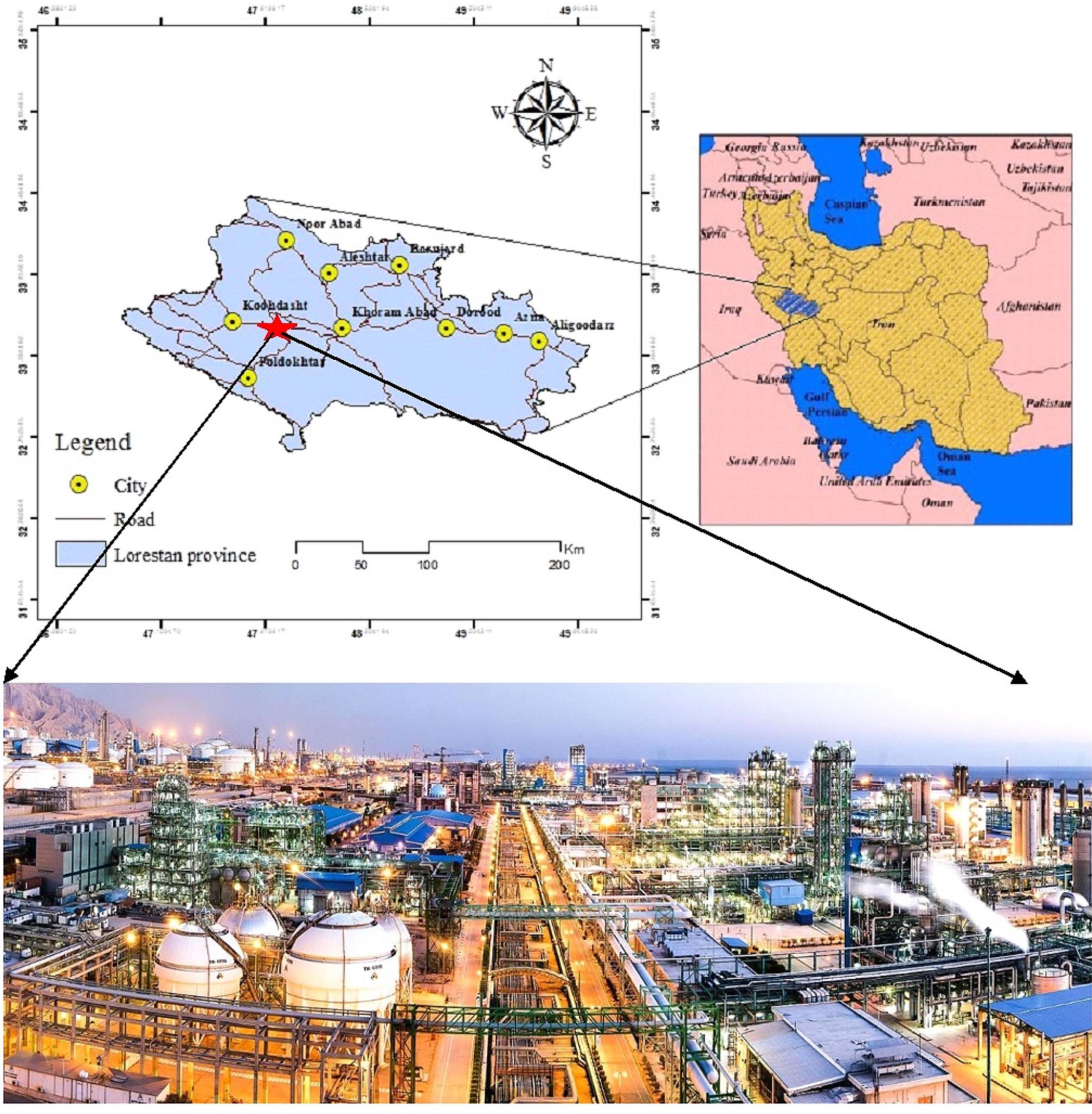
Fig. 1.
The Location of Lorestan Petrochemical Complex
.
The Location of Lorestan Petrochemical Complex
2.2. Methodology
In this study, an ERA of the petrochemical complex was conducted using the fuzzy FMEA approach (Fig. 2). This method involves using fuzzy logic to handle inherent uncertainties and complexities in evaluating potential environmental risks (21). This approach begins by identifying key environmental risk factors. Each factor is then assigned a fuzzy variable, typically with linguistic values such as “low”, “medium”, or “high”, based on expert judgment or historical data (22). These variables are processed through a fuzzy inference system that applies a set of fuzzy rules to assess the overall environmental risk. The output is a fuzzy risk score that quantifies the likelihood and severity of potential environmental risks, allowing for more nuanced and flexible decision-making compared to traditional deterministic methods (23). This method helps in making informed decisions for risk mitigation and regulatory compliance by incorporating the vagueness and subjectivity inherent in environmental assessments. Fuzzy FMEA for the ERA of Lorestan Petrochemical Factory involves the following steps:
-
Defining the scope and objectives: Clearly outlining the boundaries of the assessment and the specific environmental aspects to be evaluated.
-
Identifyingenvironmental failure modes: Listing potential failure modes that could lead to environmental impacts, such as equipment leaks, accidental spills, or emissions.
-
Determining FMEA parameters: Defining the three primary FMEA parameters, namely, severity (S), occurrence (O), and detection (D). In a fuzzy FMEA, these parameters are described using linguistic terms (e.g., low, medium, or high).
-
Developing fuzzy rating scales: Creating fuzzy scales for each FMEA parameter using linguistic variables. These can be represented by triangular or trapezoidal fuzzy numbers to capture the uncertainty and subjectivity in the assessment (Table 1).
-
Assigning fuzzy ratings: Assigning fuzzy ratings to the severity, occurrence, and detection parameters based on expert knowledge, historical data, and relevant regulations for each identified failure mode.
-
Constructing fuzzy rule base: Developing a set of fuzzy if-then rules to combine the fuzzy ratings of severity, occurrence, and detection. These rules help infer the overall environmental risk for each failure mode.
-
Using fuzzy inference system: Utilizing this system to process the input fuzzy ratings and apply the fuzzy rules. This involves the fuzzification of inputs, application of fuzzy rules, aggregation of rule outputs, and defuzzification to obtain a crisp RPN for each failure mode.
-
Calculating fuzzy risk priority number: Calculating the fuzzy RPN by combining the fuzzy severity, occurrence, and detection ratings. The result is a defuzzified score that indicates the environmental risk level.
-
Prioritizing risks: Ranking the failure modes based on their fuzzy RPNs. Higher RPN values denote higher environmental risks and therefore higher priority for mitigation measures.
-
Developing mitigation strategies: Proposing and implementing mitigation strategies for high-priority failure modes to reduce their environmental impact. This may include equipment upgrades, process changes, or enhanced monitoring.
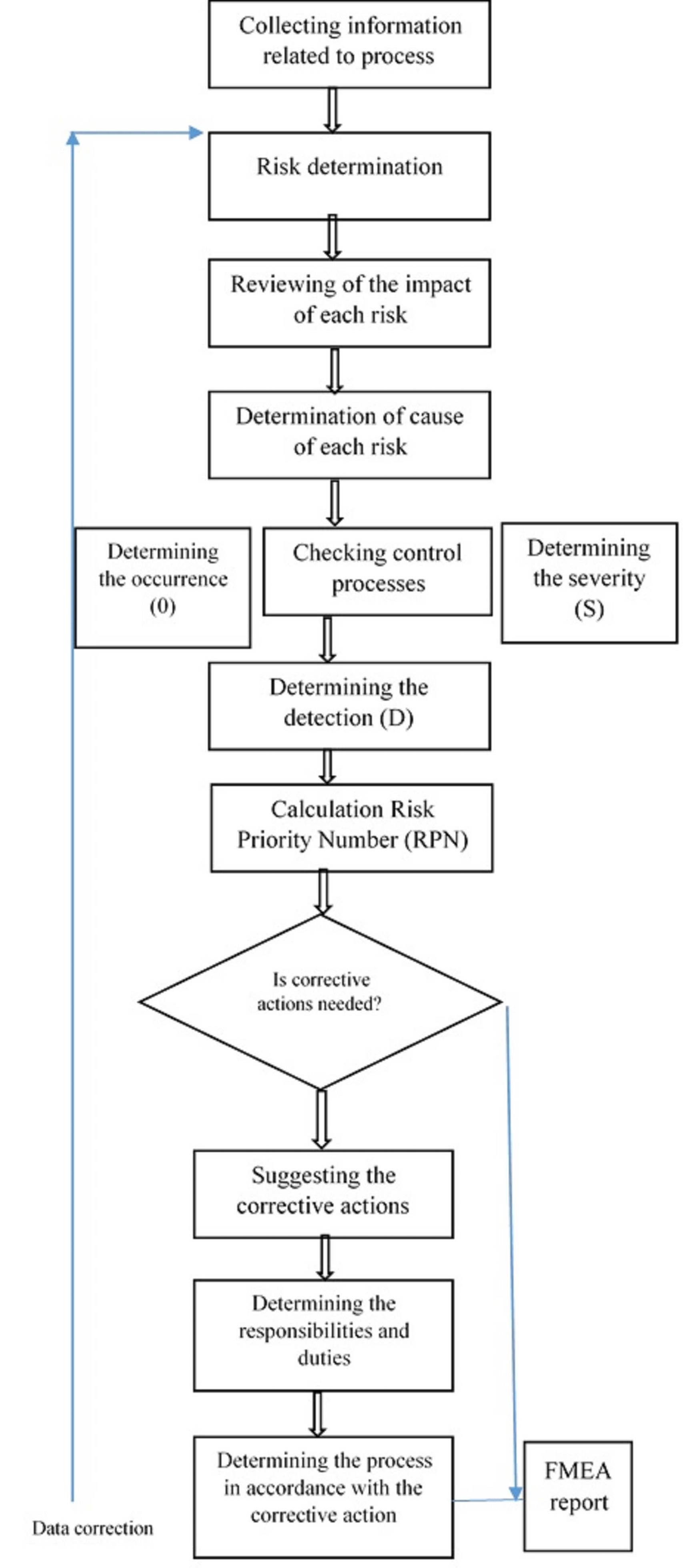
Fig. 2.
Steps of Implementing the Systematic Method. Note. FMEA: Failure mode and effects analysis
.
Steps of Implementing the Systematic Method. Note. FMEA: Failure mode and effects analysis
Table 1.
Description of Severity, Occurrence, and Detection Indices
|
Severity
|
Occurrence
|
Detection
|
Fuzzy Score
|
|
Uncertain realization
|
Minimal effect, hard to notice
|
Highly unlikely
|
Incident or failure every 10 years or more
|
Unidentifiable
|
No tracking systems, no operator oversight
|
(1,1,2)
|
| Very slight |
Minor impact, negligible consequences |
Very rare |
Incident or failure every 5-10 years |
Almost unidentifiable |
Detected only by very precise and rare tests |
(1,2,3) |
| Slight |
Low impact, minor inconvenience or disruption |
Rare |
Incident or failure every 3-5 years |
Low detectability |
Detected through periodic, detailed analyses |
(2,3,4) |
| Very low |
Slight impact on operations, minimal downtime |
Very low |
Incident or failure annually |
Detectable |
Detected with regular and simple routine tests |
(3,4,5) |
| Low |
Noticeable impact, moderate inconvenience, manageable within the team |
Low |
Incident or failure every 6 months to 1 year |
Moderately detectable |
50-50 chance of detection |
(4,5,6) |
| Moderate |
Clear impact on operations, possible delays or downtime |
Moderate |
Incident or failure every 3 months |
Detectable |
Detected in routine inspections and standard procedures |
(5,6,7) |
| Moderate to high |
Significant impact, affecting multiple processes or teams |
Moderately high |
Incident or failure every month |
High detectability |
Detected with daily visual and auditory alarms |
(6,7,8) |
| High |
Major impact on operations, significant downtime, affecting overall performance |
High |
Incident or failure every week |
Very high detectability |
Detected almost always with alarms |
(7,8,9) |
| Very high |
Severe impact, critical operations are compromised, substantial downtime |
Very high |
Incident or failure every 3-4 days |
Almost certain detectability |
Detected without the need for special tools or tests |
(8,9,10) |
| Almost certain |
Catastrophic impact, operations halted, severe safety, or environmental consequences |
Almost certain |
Incident or failure daily |
Fully detectable |
Completely identifiable and trackable |
(9,10,10) |
In this study, the probability of risk occurrence or its severity is represented using triangular fuzzy distributions (Fig. 3) as equation (1):
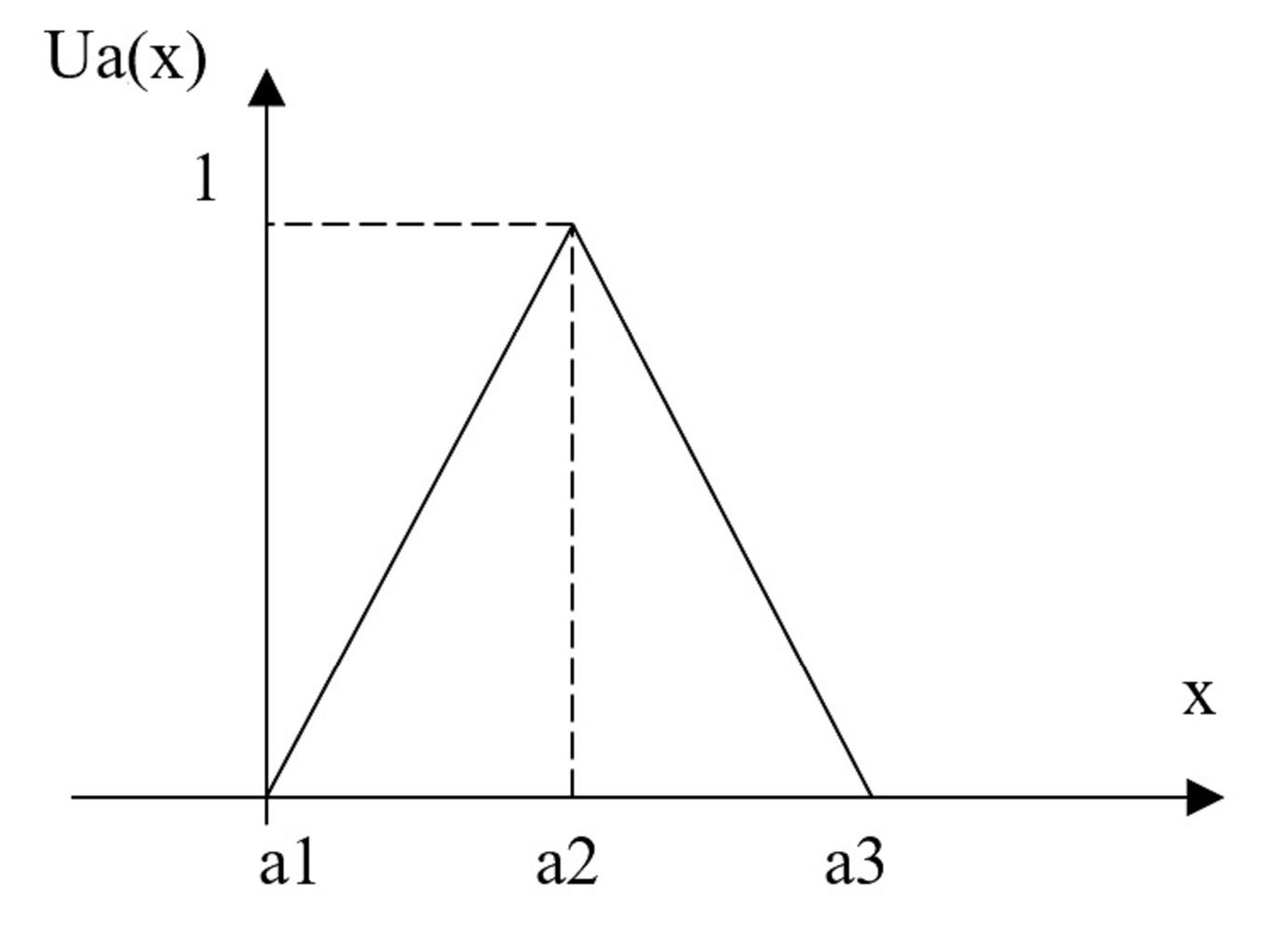
Fig. 3.
Triangular Fuzzy Membership Function
.
Triangular Fuzzy Membership Function
This approach allows for the best estimates of environmental risks to be made based on accessible and known data. Additionally, fuzzification can be beneficial in making decisions related to environmental risk management.
3. Results and Discussion
The ERA of the Khorramabad Petrochemical Plant revealed significant risks associated with various failure modes (Table 2). The first major risk identified in this regard was a major equipment leak, which can lead to soil and water pollution. This failure mode is primarily caused by corrosion or wear and tear of equipment, faulty seals or gaskets, improper maintenance practices, overpressure or stress on equipment, and manufacturing defects. The severity (S), occurrence (O), and detection (D) scores for this risk are (8,9,10), (6,7,8), and (5,6,7) respectively, resulting in a high-risk level with a fuzzy FMEA output of 0.778. To mitigate this risk, it is recommended that researchers install advanced leak detection systems, conduct regular maintenance checks, and implement secondary containment systems. Another significant risk is the toxic gas release, which poses a threat to air quality. This failure mode can result from process upsets or failures, equipment malfunctions such as valve failures, incorrect handling or storage of chemicals, human error during operations, and inadequate safety systems or protocols. The S, O, and D scores for this risk are (9,10,10), (5,6,7), and (4,5,6), leading to a high-risk level with a fuzzy FMEA output of 0.700. Recommended actions include enhancing gas monitoring systems, installing scrubbers, and implementing comprehensive emergency response plans. The risk of a chemical spill is also high, with potential effects on soil and water pollution. This failure mode is caused by improper handling or transfer of chemicals, equipment failure (e.g., pumps or hoses), accidental releases during loading/unloading, inadequate containment measures, and human error or procedural lapses. The S, O, and D scores are (7,8,9), (4,5,6), and (6,7,8), resulting in a fuzzy FMEA output of 0.580. Mitigation measures encompass using spill containment pallets, training staff on spill response, and storing chemicals in appropriate containment units. Wastewater discharge poses a high risk of water pollution due to the failure of wastewater treatment systems, overloading of treatment facilities, equipment malfunctions, chemical imbalances in treatment processes, and insufficient monitoring or maintenance. The S, O, and D scores are (6,7,8), (5,6,7), and (7,8,9), with a fuzzy FMEA output of 0.636. Suggested actions consist of upgrading wastewater treatment facilities, monitoring discharge quality, and implementing recycling processes. Noise pollution from equipment is another significant concern, primarily caused by aging or poorly maintained machinery, lack of proper noise control measures, equipment operating outside design specifications, inadequate insulation or soundproofing, and improper installation or alignment of machinery. The S, O, and D scores are (5,6,7), (6,7,8), and (4,5,6), leading to a fuzzy FMEA output of 0.510. Mitigation strategies include installing soundproofing around noisy equipment, scheduling noisy operations during less sensitive times, and regularly maintaining equipment. Minor leaks can lead to soil pollution and are caused by small cracks or fractures in equipment, faulty seals or gaskets, routine wear and tear, poorly executed repairs or maintenance, and equipment vibration causing the loosening of components. The S, O, and D scores are (2,3,4), (7,8,9), and (3,4,5), resulting in a low-risk level with a fuzzy FMEA output of 0.286. Mitigation actions consist of conducting regular inspections, using leak-proof fittings, and implementing a prompt leak repair program. Fugitive emissions, which contribute to air pollution, are caused by leaks in piping or fittings, inefficient process controls, equipment malfunctions, aging infrastructure, and inadequate maintenance or inspection routines. The S, O, and D scores are (4,5,6), (5,6,7), and (5,6,7), leading to a medium-risk level with a fuzzy FMEA output of 0.340. Recommended actions encompass improving sealing on equipment, utilizing emissions capture technologies, and regularly monitoring emission points. Stormwater runoff can lead to soil and water pollution, primarily due to insufficient stormwater management systems, heavy rainfall events exceeding design capacity, improper containment of potential contaminants, erosion or damage to containment areas, and clogging or blockage in drainage systems. The S, O, and D scores are (5,6,7), (4,5,6), and (6,7,8), with a high-risk level and a fuzzy FMEA output of 0.510. Mitigation measures include implementing stormwater management systems, employing permeable surfaces, and creating retention basins. Flare stack emissions contribute to air pollution and result from process upsets, resulting in flaring, equipment failure, inefficient combustion in the flare stack, excessive gas production beyond handling capacity, and poorly maintained flare systems. The S, O, and D scores are (6,7,8), (3,4,5), and (7,8,9), leading to a high-risk level with a fuzzy FMEA output of 0.524. Suggested actions consist of using low-emission flare tips, optimizing combustion efficiency, and monitoring flare performance. Odor emissions, which affect air quality, are caused by volatile organic compounds from processes, improper handling or storage of odor-causing substances, equipment leaks or malfunctions, inefficient odor control systems, and poor ventilation in processing areas. The S, O, and D scores are (3,4,5), (6,7,8), and (5,6,7), leading to a medium-risk level with a fuzzy FMEA output of 0.428. Mitigation strategies encompass installing odor control systems, improving process ventilation, and monitoring odor sources. Solid waste mismanagement can lead to soil and water pollution due to inadequate waste handling procedures, improper segregation of hazardous and non-hazardous waste, failure of containment systems, illegal dumping or accidental spills, and lack of regular waste audits and inspections. The S, O, and D scores are (4,5,6), (4,5,6), and (6,7,8), resulting in a medium-risk level with a fuzzy FMEA output of 0.445. Recommended actions include implementing waste segregation, ensuring proper disposal, and recycling waste where possible. Pipeline rupture poses a medium risk of soil and water pollution, caused by corrosion or material degradation, external damage, overpressure or stress on pipelines, manufacturing defects in pipeline materials, and inadequate monitoring and maintenance. The S, O, and D scores are (8,9,10), (3,4,5), and (4,5,6), with a fuzzy FMEA output of 0.460. Mitigation measures consist of regularly inspecting pipelines, using corrosion-resistant materials, and installing pressure monitoring systems. Cooling tower drift can lead to air and water pollution due to poor maintenance of cooling tower systems, inefficient drift eliminators, excessive water flow rates, high wind conditions affecting drift, and chemical imbalances in cooling water. The S, O, and D scores are (4,5,6), (5,6,7), and (6,7,8), resulting in a high-risk level with a fuzzy FMEA output of 0.580. Recommended actions include employing drift eliminators, optimizing cooling tower operation, and treating cooling water properly. Effluent discharge non-compliance poses a high risk of water pollution, caused by failure of effluent treatment processes, overloading of treatment facilities, human errors in monitoring or reporting, equipment malfunctions, and insufficient regulatory compliance checks. The S, O, and D scores are (7,8,9), (4,5,6), and (6,7,8), with a fuzzy FMEA output of 0.620. Mitigation measures encompass regularly testing effluent quality, upgrading treatment processes, and ensuring compliance with regulations. Explosive release poses a medium risk of soil and air pollution, caused by chemical reactions or process upsets, equipment failure, improper handling or storage of explosive materials, human error or procedural lapses, and inadequate safety systems or protocols. The S, O, and D scores are (9,10,10), (2,3,4), and (4,5,6), leading to a fuzzy FMEA output of 0.400. Recommended actions consist of implementing explosion-proof equipment, conducting risk assessments, and having emergency response plans in place. The ERA of the Khorramabad Petrochemical Plant revealed several high and medium risks that require immediate attention and mitigation. Our findings highlight the importance of regular maintenance, advanced monitoring systems, proper training, and adherence to safety protocols to minimize the environmental impact of the plant’s operations.
Table 2.
Fuzzy FMEA Results for the Consequences and Effects of Environmental Risks
|
Potential Failure Modes
|
Effects of Failure
|
Potential Failure Causes
|
S *
|
O *
|
D *
|
Fuzzy FMEA Output
|
Risk Level
|
Actions for Evidence
|
| Major equipment leak |
Soil pollution and water pollution |
simple
-
o Corrosion or wear and tear of equipment
-
o Faulty seals or gaskets
-
o Improper maintenance practices
-
o Overpressure or stress on equipment
-
|
(8,9,10) |
(6,7,8) |
(5,6,7) |
0.778 |
H |
Installing advanced leak detection systems, conducting regular maintenance checks, and implementing secondary containment systems |
| Toxic gas release |
Air pollution |
simple
-
o Process upsets or failures
-
o Equipment malfunction (e.g., valve failure)
-
o Incorrect handling or storage of chemicals
-
o Human errors during operations
-
o Inadequate safety systems or protocols
|
(9,10,10) |
(5,6,7) |
(4,5,6) |
0.700 |
H |
Enhancing gas monitoring systems, installing scrubbers, and implementing emergency response plans |
| Chemical spill |
Soil pollution and water pollution |
simple
-
o Improper handling or transfer of chemicals
-
o Equipment failure (e.g., pumps and hoses)
-
o Accidental releases during loading/unloading
-
o Inadequate containment measures
-
o Human errors or procedural lapses
|
(7,8,9) |
(4,5,6) |
(6,7,8) |
0.580 |
H |
Using spill containment pallets, training staff on spill response, and storing chemicals in appropriate containment units |
| Wastewater discharge |
Water pollution |
simple
-
o Failure of wastewater treatment systems
-
o Overloading of treatment facilities
-
o Equipment malfunction (e.g., pumps or filters)
-
o Chemical imbalance in treatment processes
-
o Insufficient monitoring or maintenance
|
(6,7,8) |
(5,6,7) |
(7,8,9) |
0.636 |
H |
Upgrading wastewater treatment facilities, monitoring discharge quality, and implementing recycling processes |
| Noise pollution from equipment |
Noise pollution |
simple
-
o Aging or poorly maintained machinery
-
o Lack of proper noise control measures
-
o Equipment operating outside design specifications
-
o Inadequate insulation or soundproofing
-
o Improper installation or alignment of machinery
|
(5,6,7) |
(6,7,8) |
(4,5,6) |
0.510 |
H |
Installing soundproofing around noisy equipment, scheduling noisy operations during less sensitive times, and regularly maintaining equipment |
| Minor leak |
Soil pollution |
simple
-
o Small cracks or fractures in equipment
-
o Faulty seals or gaskets
-
-
o Poorly executed repairs or maintenance
-
o Equipment vibration causing loosening of components
|
(2,3,4) |
(7,8,9) |
(3,4,5) |
0.286 |
L |
Conducting regular inspections, using leak-proof fittings, and implementing a prompt leak repair program |
| Fugitive emissions |
Air pollution |
simple
-
o Leaks in piping or fittings
-
o Inefficient process controls
-
o Equipment malfunction (e.g., valves or flanges)
-
-
o Inadequate maintenance or inspection routines
|
(4,5,6) |
(5,6,7) |
(5,6,7) |
0.340 |
M |
Improving sealing on equipment, using emissions capture technologies, and regularly monitoring emission points |
| Stormwater runoff |
Soil pollution and water pollution |
simple
-
o Insufficient stormwater management systems
-
o Heavy rainfall events exceeding design capacity
-
o Improper containment of potential contaminants
-
o Erosion or damage to containment areas
-
o Clogging or blockage in drainage systems
|
(5,6,7) |
(4,5,6) |
(6,7,8) |
0.510 |
H |
Implementing stormwater management systems, using permeable surfaces, and creating retention basins |
| Flare stack emissions |
Air pollution |
simple
-
o Process upsets leading to flaring
-
o Equipment failure (e.g., flare tips or gas flow control)
-
o Inefficient combustion in the flare stack
-
o Excessive gas production beyond handling capacity
-
o Poorly maintained flare systems
|
(6,7,8) |
(3,4,5) |
(7,8,9) |
0.524 |
H |
Utilizing low-emission flare tips, optimizing combustion efficiency, and monitoring flare performance |
| Odor emissions |
Air pollution |
simple
-
o Volatile organic compounds from processes
-
o Improper handling or storage of odor-causing substances
-
o Equipment leaks or malfunctions
-
o Inefficient odor control systems
-
o Poor ventilation in processing areas
|
(3,4,5) |
(6,7,8) |
(5,6,7) |
0.428 |
M |
Installing odor control systems, improving process ventilation, and monitoring odor sources |
| Solid waste mismanagement |
Soil pollution and water pollution |
simple
-
o Inadequate waste handling procedures
-
o Improper segregation of hazardous and non-hazardous waste
-
o Failure of containment systems (e.g., liners or barriers)
-
o Illegal dumping or accidental spills
-
o Lack of regular waste audits and inspections
|
(4,5,6) |
(4,5,6) |
(6,7,8) |
0.445 |
M |
Implementing waste segregation, ensuring proper disposal, and recycling waste where possible |
| Pipeline rupture |
Soil pollution and water pollution |
simple
-
o Corrosion or material degradation
-
o External damage (e.g., excavation or vehicular impact)
-
o Overpressure or stress on pipelines
-
o Manufacturing of defects in pipeline materials
-
o Inadequate monitoring and maintenance
|
(8,9,10) |
(3,4,5) |
(4,5,6) |
0.460 |
M |
Regularly inspecting pipelines, using corrosion-resistant materials, and installing pressure monitoring systems |
| Cooling tower drift |
Air pollution and water pollution |
simple
-
o Poor maintenance of cooling tower systems
-
o Inefficient drift eliminators
-
o Excessive water flow rates
-
o High wind conditions affecting drift
-
o Chemical imbalances in cooling water
|
(4,5,6) |
(5,6,7) |
(6,7,8) |
0.580 |
H |
Using drift eliminators, optimizing cooling tower operation, and treating cooling water properly |
| Effluent discharge non-compliance |
Water pollution |
simple
-
o Failure of effluent treatment processes
-
o Overloading of treatment facilities
-
o Human errors in monitoring or reporting
-
o Equipment malfunction (e.g., pumps or sensors)
-
o Insufficient regulatory compliance checks
|
(7,8,9) |
(4,5,6) |
(6,7,8) |
0.620 |
H |
Regularly testing effluent quality, upgrading treatment processes, and ensuring compliance with regulations |
| Explosive release |
Soil pollution and air pollution |
simple
-
o Chemical reactions or process upsets
-
o Equipment failure (e.g., pressure vessels or reactors)
-
o Improper handling or storage of explosive materials
-
o Human errors or procedural lapses
-
o Inadequate safety systems or protocols
|
(9,10,10) |
(2,3,4) |
(4,5,6) |
0.400 |
M |
Implementing explosion-proof equipment, conducting risk assessments, and having emergency response plans in place |
Note. FMEA: Failure mode and effects analysis. * S: Severity; O: Occurrence; D: Detection.
The results of the ERA for petrochemical complexes demonstrated a varied distribution of potential effects on different environmental components (Fig. 4). Water pollution emerged as the most significant risk, with a notable impact factor of 36.4%, indicating that petrochemical activities pose a substantial threat to aquatic ecosystems through the discharge of contaminants. Soil pollution followed closely, accounting for 31.8% of the risk, which underscores the potential for hazardous substances to affect soil quality and, subsequently, agricultural and natural land use. Air pollution, with an impact factor of 27.3%, represents a considerable concern as emissions from petrochemical processes can degrade air quality and contribute to health problems and environmental issues. In contrast, noise pollution was identified as the least significant risk, with an impact factor of only 4.5%. This implies that while noise pollution is a factor, it poses a relatively lower threat compared to the other types of pollution. These results highlight the need for targeted mitigation strategies that address the most critical areas of concern—particularly water and soil pollution—while still considering the overall environmental impact of petrochemical complexes.
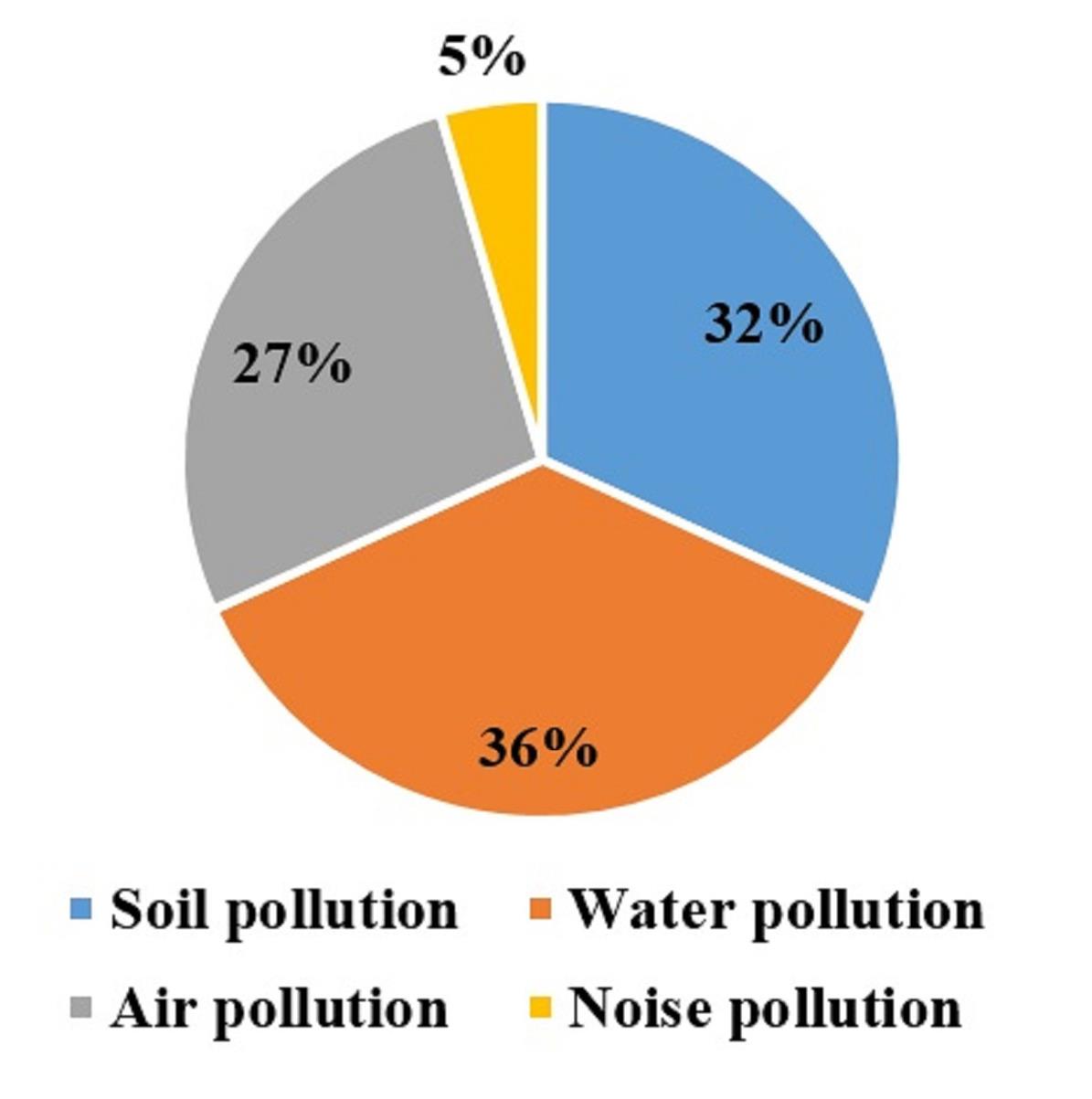
Fig. 4.
Distribution of Potential Effects of Risks on the Environment Component
.
Distribution of Potential Effects of Risks on the Environment Component
The ERA of the Khorramabad Petrochemical Plant, conducted using a fuzzy FMEA approach, underscores significant environmental hazards inherent in petrochemical operations. The results of this study not only reveal critical risks but also offer a comparative perspective with similar studies in the field, emphasizing the complex interplay of factors contributing to environmental degradation. The fuzzy FMEA method, characterized by its ability to handle uncertainty and vagueness in risk assessment, provides a nuanced understanding of these risks and their potential consequences, enabling a more informed decision-making process for mitigation strategies. The study identified several high-risk scenarios, with major equipment leaks emerging as a top concern. The fuzzy FMEA output of 0.778 for this failure mode, resulting from factors such as corrosion, equipment wear, and faulty maintenance, aligns with the findings of other studies in the field. For instance, the results of a study by Reniers (24) on chemical plants in Belgium also highlighted equipment failure due to corrosion and inadequate maintenance as a primary source of environmental risk, emphasizing the global relevance of such risks in the petrochemical industry. The recommended mitigation strategies, including advanced leak detection systems and regular maintenance, resonate with suggestions from other studies that advocate for proactive measures to prevent catastrophic environmental incidents. Toxic gas release, with a fuzzy FMEA output of 0.700, represents another significant risk, particularly in terms of air quality. This corroborates the findings of the study of Khan and Abbasi (25), identifying gas releases as a critical environmental hazard in their assessment of process plants. The high severity and occurrence scores in both studies underline the potential for widespread environmental and health impacts, necessitating robust gas monitoring systems and comprehensive emergency response plans. The conformity of these findings with those of previous research underscores the persistent challenge of managing toxic emissions in petrochemical complexes, where the consequences of failure are often severe and far-reaching. Chemical spills, with an FMEA output of 0.580, present a major threat to soil and water resources. The study’s findings are consistent with those of Djemai et al (26), reporting chemical spills as a significant risk in their environmental assessment of industrial sites. The similarity in risk factors, such as equipment failure and improper handling of chemicals, suggests a commonality in the underlying causes across different petrochemical operations. The recommendation for using spill containment pallets and training staff on spill response is supported by these prior studies, emphasizing the importance of preparedness and containment in mitigating the impact of chemical spills. The risk associated with wastewater discharge, with a fuzzy FMEA output of 0.636, is particularly concerning, given the potential for water pollution. The study’s results regarding the identification of overloading and equipment malfunctions as key contributors to this risk conform to the findings of a similar assessment in the context of oil refineries conducted by Waqar et al (27). Both studies highlight the critical need for upgrading wastewater treatment facilities and ensuring continuous monitoring to prevent environmental contamination. This shared emphasis on the importance of robust wastewater management systems reflects a broader consensus in the literature regarding the risks associated with petrochemical effluents. Noise pollution from equipment, with a fuzzy FMEA output of 0.510, also poses a significant environmental and occupational hazard. This issue, often overlooked in favor of more immediate chemical risks, is gaining attention in recent studies. For instance, the findings of Jo and Baek (28) on environmental noise in industrial settings emphasize similar concerns, with aging equipment and inadequate noise control measures being primary contributors. The recommended strategies in the current study, such as soundproofing and regular maintenance, are consistent with broader industry practices aimed at reducing noise pollution and protecting both workers and the environment. Interestingly, the study identifies minor leaks, with a low-risk FMEA output of 0.286, as relatively less critical in comparison to other failure modes. However, the recognition of even low-risk scenarios is crucial, as these can accumulate over time and lead to significant environmental impacts. This observation is supported by a study performed by Khan et al (29), arguing that the cumulative effect of minor leaks, if not properly managed, can contribute to substantial environmental degradation over time. The current study’s recommendation for regular inspections and prompt leak repair underscores the importance of vigilance, even in seemingly minor issues. Fugitive emissions, stormwater runoff, and flare stack emissions, with fuzzy FMEA outputs of 0.340, 0.510, and 0.524, respectively, highlight the multifaceted nature of environmental risks in petrochemical plants. These findings corroborate the results of a study conducted by Gormley and Stewart (30), identifying these failure modes as significant contributors to air and water pollution in industrial complexes. The comparative analysis revealed a consistent pattern of risks across different studies, with similar causes and recommended mitigation strategies, such as improving sealing on equipment and optimizing stormwater management systems. Moreover, the study’s findings on solid waste mismanagement and pipeline rupture, with FMEA outputs of 0.445 and 0.460, are in line with global concerns regarding waste handling and pipeline integrity. These issues have been extensively discussed in the literature in studies such as the one performed by Mustafa et al (31), highlighting the environmental risks associated with improper waste segregation and pipeline failures in industrial settings. The recommendations for proper waste disposal, recycling, and regular pipeline inspections in the current study echo the best practices suggested in these earlier works. The risk of effluent discharge non-compliance and cooling tower drift, with fuzzy FMEA outputs of 0.620 and 0.580, respectively, emphasizes the ongoing challenges in maintaining regulatory compliance and controlling pollution in petrochemical operations. Studies, such as the one conducted by Akingbasote et al (32), have similarly highlighted these risks, particularly in the context of increasingly stringent environmental regulations. The current study’s focus on upgrading treatment processes and optimizing cooling tower operations reflects the broader industry trend toward enhancing compliance and reducing environmental footprints. This comparative analysis not only validates the study’s conclusions but also contributes to a growing body of knowledge aimed at minimizing the environmental impact of industrial operations. The findings of this study reinforce the broader understanding that environmental risk management in petrochemical complexes is a dynamic and ongoing process requiring a multifaceted approach. The complexities of operating in an environment where multiple factors, such as equipment wear, human errors, and process inefficiencies, converge to create significant risks cannot be understated. The use of a fuzzy FMEA approach allows for the incorporation of uncertainties and variabilities in assessing these risks, making the analysis more robust and adaptable to real-world conditions. The alignment of this study with existing research highlights the global nature of these challenges and the universal applicability of the proposed mitigation strategies. As environmental regulations become increasingly stringent worldwide, the findings emphasize the necessity for industries to adopt proactive measures that go beyond mere compliance. This includes investing in technology upgrades, enhancing training programs, and fostering a culture of safety and environmental stewardship. Moreover, this study contributes to the growing recognition that addressing even low to medium risks is essential in preventing cumulative environmental damage. The research underscores the critical importance of an integrated and systematic approach to environmental risk management in safeguarding both the environment and public health in the face of industrial activities.
4. Conclusion
The ERA of the Khorramabad Petrochemical Plant, employing a fuzzy FMEA approach, has provided critical insights into the significant environmental risks associated with petrochemical operations. The analysis revealed that the plant is subject to several high- and medium-risk failure modes. The study’s use of fuzzy logic within the FMEA framework has proven to be a valuable tool in handling the inherent uncertainties in risk assessment, offering a more comprehensive understanding of the potential consequences of each failure mode. This methodological approach allows for a more nuanced risk prioritization, aiding decision-makers in developing targeted mitigation strategies. This approach addresses the inherent uncertainties and complexities associated with petrochemical operations by integrating fuzzy logic into the risk assessment framework, thus allowing for a more nuanced evaluation of potential environmental hazards. The incorporation of fuzzy logic enables the model to handle imprecise and qualitative data more effectively, providing a more comprehensive and adaptable risk analysis compared to traditional methods. By employing fuzzy FMEA, this study not only identified and prioritized potential failure modes with greater accuracy but also facilitated the development of targeted mitigation strategies. The results underscore the importance of incorporating advanced analytical techniques to enhance the robustness of ERAs, particularly in industries characterized by high levels of complexity and uncertainty. Moreover, the application of this approach demonstrates its potential to improve decision-making processes by offering a clearer understanding of risk levels and their implications for environmental safety. Future research should continue to explore the integration of fuzzy logic with other risk assessment tools and methodologies, aiming to refine the approach and broaden its applicability across various industrial contexts. The findings of this study also contribute valuable insights into the optimization of environmental risk management practices, ultimately supporting the goal of minimizing adverse impacts on the environment while maintaining operational efficiency in petrochemical complexes. Recommendations for future research aimed at enhancing the practical impact of this study by promoting interdisciplinary approaches, scalable solutions, and real-time applications of the fuzzy FMEA framework across various industrial sectors are as follows:
-
Integration of advanced predictive models: Future research could explore the integration of fuzzy logic with advanced machine-learning algorithms to enhance the predictive accuracy of ERAs. Such hybrid models could analyze large datasets from petrochemical operations, including real-time monitoring systems, to provide dynamic and adaptive risk evaluation frameworks.
-
Cross-sector application and validation: While this study focused on petrochemical complexes, extending the methodology to other industries with high environmental risks (e.g., chemical manufacturing, mining, and power generation) would validate the approach’s versatility. Comparative studies across different sectors could refine the model’s applicability and improve generalizability.
-
Stakeholder-centric models: Future research could incorporate the perspectives of diverse stakeholders, including community members, regulatory bodies, and environmental organizations, into the risk assessment process. This would ensure a more holistic evaluation of risks and improve the acceptance and implementation of mitigation strategies.
-
Environmental and health impact synergy: Future research could investigate the interconnectedness between environmental risks and their direct or indirect impacts on human health. By integrating health risk assessment with environmental risk frameworks, researchers could provide a more comprehensive evaluation of petrochemical operations’ broader societal impacts.
-
Development of user-friendly tools: Developing software tools or platforms that implement the fuzzy FMEA framework with user-friendly interfaces could facilitate adoption in the industry. Research could focus on creating automated systems that simplify data input, analysis, and interpretation for industry practitioners.
Acknowledgments
The authors would like to acknowledge the staff and authorities of Lorestan University for their invaluable support throughout the current study.
Competing Interests
The authors declare no conflicts of interest.
Funding
This study was supported by Lorestan University.
References
- Sarker B, Keya KN, Mahir FI, Nahiun KM, Shahida S, Khan RA. Surface and ground water pollution: causes and effects of urbanization and industrialization in South Asia. Sci Rev 2021; 7(3):32-41. doi: 10.32861/sr.73.32.41 [Crossref] [ Google Scholar]
- Hung HC, Li CF, Hung CH. Risk communication and local perceptions of petrochemical pollution risk: a comparison of the petrochemical industry complexes at different development stages. Environ Sci Policy 2020; 114:549-59. doi: 10.1016/j.envsci.2020.09.014 [Crossref] [ Google Scholar]
- Singh N, Ogunseitan OA, Wong MH, Tang Y. Sustainable materials alternative to petrochemical plastics pollution: a review analysis. Sustain Horizons 2022; 2:100016. doi: 10.1016/j.horiz.2022.100016 [Crossref] [ Google Scholar]
- Lv Z, Liu X, Bai H, Nie L, Li G. Process-specific volatile organic compounds emission characteristics, environmental impact and health risk assessments of the petrochemical industry in the Beijing-Tianjin-Hebei region. Environ Sci Pollut Res Int 2024; 31(3):3938-50. doi: 10.1007/s11356-023-31351-5 [Crossref] [ Google Scholar]
- Wang H, Liu D, Lv Y, Wang W, Wu Q, Huang L. Ecological and health risk assessments of polycyclic aromatic hydrocarbons (PAHs) in soils around a petroleum refining plant in China: a quantitative method based on the improved hybrid model. J Hazard Mater 2024; 461:132476. doi: 10.1016/j.jhazmat.2023.132476 [Crossref] [ Google Scholar]
- Majemite MT, Dada MA, Obaigbena A, Oliha JS, Biu PW, Henry DO. A review of data analytics techniques in enhancing environmental risk assessments in the US Geology Sector. World J Adv Res Rev 2024; 21(1):1395-411. doi: 10.30574/wjarr.2024.21.1.0169 [Crossref] [ Google Scholar]
- Musavi SH, Davoodi B. Risk assessment for hazardous lubricants in machining industry. Environ Sci Pollut Res Int 2021; 28(1):625-34. doi: 10.1007/s11356-020-10472-1 [Crossref] [ Google Scholar]
- Okoro HK, Orosun MM, Oriade FA, Momoh-Salami TM, Ogunkunle CO, Adeniyi AG. Potentially toxic elements in pharmaceutical industrial effluents: a review on risk assessment, treatment, and management for human health. Sustainability 2023; 15(8):6974. doi: 10.3390/su15086974 [Crossref] [ Google Scholar]
- Kaikkonen L, Parviainen T, Rahikainen M, Uusitalo L, Lehikoinen A. Bayesian networks in environmental risk assessment: a review. Integr Environ Assess Manag 2021; 17(1):62-78. doi: 10.1002/ieam.4332 [Crossref] [ Google Scholar]
- Guan W, Liu Q, Dong C. Risk assessment method for industrial accident consequences and human vulnerability in urban areas. J Loss Prev Process Ind 2022; 76:104745. doi: 10.1016/j.jlp.2022.104745 [Crossref] [ Google Scholar]
- Saisandhiya NR, Babu MK. Hazard identification and risk assessment in petrochemical industry. Int J Res Appl Sci Eng Technol 2020; 8(9):778-83. doi: 10.22214/ijraset.2020.31583 [Crossref] [ Google Scholar]
- Rovira J, Nadal M, Schuhmacher M, Domingo JL. Environmental impact and human health risks of air pollutants near a large chemical/petrochemical complex: case study in Tarragona, Spain. Sci Total Environ 2021; 787:147550. doi: 10.1016/j.scitotenv.2021.147550 [Crossref] [ Google Scholar]
- He R, Zhu J, Chen G, Tian Z. A real-time probabilistic risk assessment method for the petrochemical industry based on data monitoring. Reliab Eng Syst Saf 2022; 226:108700. doi: 10.1016/j.ress.2022.108700 [Crossref] [ Google Scholar]
- Ebadzadeh F, Monavari SM, Jozi SA, Robati M, Rahimi R. An integrated of fuzzy-WASPAS and E-FMEA methods for environmental risk assessment: a case study of petrochemical industry, Iran. Environ Sci Pollut Res Int 2023; 30(14):40315-26. doi: 10.1007/s11356-022-25088-w [Crossref] [ Google Scholar]
- Jahanvand B, Bagher Mortazavi S, Asilian Mahabadi H, Ahmadi O. Determining essential criteria for selection of risk assessment techniques in occupational health and safety: a hybrid framework of fuzzy Delphi method. Saf Sci 2023; 167:106253. doi: 10.1016/j.ssci.2023.106253 [Crossref] [ Google Scholar]
- Tian L, Hu L, Wang D, Cao X. Site-scale groundwater pollution risk assessment using surrogate models and statistical analysis. J Contam Hyedrol 2024; 261:104288. doi: 10.1016/j.jconhyd.2023.104288 [Crossref] [ Google Scholar]
- Mandal CS, Agarwal DM. A review on quantitative risk assessments for oil and gas installations and changes in risk evaluation techniques. Mater Today Proc 2024; 99:145-53. doi: 10.1016/j.matpr.2023.07.059 [Crossref] [ Google Scholar]
- Priharanto YE, Yaqin RI, Marjianto G, Siahaan JP, Abrori MZ. Risk assessment of the fishing vessel main engine by fuzzy-FMEA approach. J Fail Anal Prev 2023; 23(2):822-36. doi: 10.1007/s11668-023-01607-w [Crossref] [ Google Scholar]
- Aydin N, Seker S, Şen C. A new risk assessment framework for safety in oil and gas industry: application of FMEA and BWM based picture fuzzy MABAC. J Pet Sci Eng 2022; 219:111059. doi: 10.1016/j.petrol.2022.111059 [Crossref] [ Google Scholar]
- Ghobadi M, Jafari HR, Nabi Bidhendi G, Yavari AR. Environmental impact assessment of petrochemical industry using fuzzy rapid impact assessment matrix. J Pet Environ Biotechnol 2015; 6(6):247. doi: 10.4172/2157-7463.1000247 [Crossref] [ Google Scholar]
- Beiranvand B. Environmental risk assessment of earth dams in the construction and operation phases using the modified fuzzy FMEA method. Model Earth Syst Environ 2024; 10(5):6051-64. doi: 10.1007/s40808-024-02085-1 [Crossref] [ Google Scholar]
- Liu P, Wu Y, Li Y, Wu X. An improved FMEA method based on the expert trust network for maritime transportation risk management. Expert Syst Appl 2024; 238:121705. doi: 10.1016/j.eswa.2023.121705 [Crossref] [ Google Scholar]
- Al-Mhdawi MK, Qazi A, Karakhan AA, Rahimian FP, Abualqumboz M, Al Mhdawi AK. Implementation of a combined fuzzy controller model to enhance risk assessment in oil and gas construction projects. IEEE Access 2024; 12:68319-33. doi: 10.1109/access.2024.3399129 [Crossref] [ Google Scholar]
- Reniers G. Investigating the factors facilitating safety and security collaboration in the chemicals sector. Int J Saf Secur Eng 2011; 1(1):18-32. doi: 10.2495/safe-v1-n1-18-32 [Crossref] [ Google Scholar]
- Khan FI, Abbasi SA. HAZDIG: a new software package for assessing the risks of accidental release of toxic chemicals. J Loss Prev Process Ind 1999; 12(2):167-81. doi: 10.1016/s0950-4230(97)00043-0 [Crossref] [ Google Scholar]
- Djemai Z, Aissani N, Bekrar A, Lounis Z. Risk analysis of petroleum storage tank based on uncertain data incorporated into mapped bow-tie to Bayesian network. Process Saf Environ Prot 2024; 190:1202-21. doi: 10.1016/j.psep.2024.07.114 [Crossref] [ Google Scholar]
- Waqar A, Othman I, Shafiq N, Mansoor MS. Evaluating the critical safety factors causing accidents in downstream oil and gas construction projects in Malaysia. Ain Shams Eng J 2024; 15(1):102300. doi: 10.1016/j.asej.2023.102300 [Crossref] [ Google Scholar]
- Jo H, Baek EM. The sound of safety: exploring the determinants of prevention intention in noisy industrial workplaces. BMC Public Health 2024; 24(1):90. doi: 10.1186/s12889-023-17618-z [Crossref] [ Google Scholar]
- Khan F, Rathnayaka S, Ahmed S. Methods and models in process safety and risk management: past, present and future. Process Saf Environ Prot 2015; 98:116-47. doi: 10.1016/j.psep.2015.07.005 [Crossref] [ Google Scholar]
- Gormley M, Stewart C. Design methodologies for sizing of drainage stacks and vent lines in high-rise buildings. Buildings 2023; 13(6):1458. doi: 10.3390/buildings13061458 [Crossref] [ Google Scholar]
- Mustafa FE, Ahmed I, Basit A, Alvi UE, Malik SH, Mahmood A. A review on effective alarm management systems for industrial process control: barriers and opportunities. Int J Crit Infrastruct Prot 2023; 41:100599. doi: 10.1016/j.ijcip.2023.100599 [Crossref] [ Google Scholar]
- Akingbasote J, Szlapinski S, Charrette A, Hilmas CJ, Guthrie N. Safety of cannabis- and hemp-derived constituents in reproduction and development. In: Gupta RC, ed. Reproductive and Developmental Toxicology. 3rd ed. Academic Press; 2022. p. 455-87. doi: 10.1016/b978-0-323-89773-0.00024-2.