Avicenna J Environ Health Eng. 12(2):146-155.
doi: 10.34172/ajehe.5445
Review Article
Hazardous Waste Management Practices in Malaysia: Current Status, Regulatory Framework, and Future Directions
Mohammad Adam Adman Conceptualization, Investigation, Writing – original draft, 1 
Noridayu Mah Hashim Conceptualization, Investigation, Project administration, Supervision, Writing – original draft, 2, *
Norazwina Zainol Conceptualization, Funding acquisition, Investigation, Methodology, Supervision, Writing – original draft, 3
Nor Hazwani Aziz Investigation, Visualization, Writing – original draft, Writing – review & editing, 3
Author information:
1Faculty of Civil Engineering Technology, Universiti Malaysia Pahang, Al-Sultan Abdullah, Lebuh Persiaran Tun Khalil Yaakob, 26300, Kuantan, Pahang, Malaysia
2Faculty of Industrial Management, Universiti Malaysia Pahang, Al-Sultan Abdullah, Lebuh Persiaran Tun Khalil Yaakob, 26300, Kuantan, Pahang, Malaysia
3Faculty of Chemical and Process Engineering Technology, Universiti Malaysia Pahang Al-Sultan Abdullah, Lebuh Persiaran Tun Khalil Yaakob, 26300, Kuantan, Pahang, Malaysia
Abstract
Poor hazardous waste management (HWM) poses a significant impact on the environment and human health. Although Malaysia has established policies and regulations governing the framework and outlining future directions for sustainable WM, implementing and monitoring the regulations are complex and rigorous. The need for continuous enhancement and renewal of regulations arises to keep pace with evolving technologies and changing circumstances associated with HW production. Therefore, this review critically examines HWM in Malaysia by synthesizing current regulations, relevant literature, and case studies, with an emphasis on recent technological and strategic developments. This study also delves into the current state of HWM practices in Malaysia, scrutinizing the existing regulatory framework and outlining future directions for sustainable WM. Moreover, this review aims to explore potential innovations and technologies that can shape the future landscape of HWM in Malaysia, thus ensuring a harmonious coexistence between industrial progress and environmental stewardship. Eventually, this work will provide a holistic overview of Malaysia’s HW landscape and offer forward-looking recommendations for strengthening environmental resilience, governance, and sustainability.
Keywords: Hazardous waste, Regulatory framework, Waste management, Waste recycling, Waste reuse
Copyright and License Information
© 2025 The Author(s); Published by Hamadan University of Medical Sciences.
This is an open-access article distributed under the terms of the Creative Commons Attribution License (
https://creativecommons.org/licenses/by/4.0), which permits unrestricted use, distribution, and reproduction in any medium, provided the original work is properly cited.
Please cite this article as follows: Adman MA, Hashim NM, Zainol N, Aziz NH. Hazardous waste management practices in Malaysia: current status, regulatory framework, and future directions. Avicenna J Environ Health Eng. 2025;12(2):146-155. doi:10.34172/ajehe.5445
1. Introduction
Hazardous waste management (HWM) stands as a critical aspect of environmental sustainability, particularly in growing economies like Malaysia. According to the U.S. Environmental Protection Agency (U.S. EPA), HW is a waste having characteristics that are physically, chemically, or toxicologically dangerous and harmful to the environment and human health. In Malaysia, HW can be defined as waste that falls within the First Schedule of the Environmental Quality (Scheduled Wastes: SW) Regulations 2005 lists (1). Currently, the lists hold 77 SW types with five main groups (Table 1).
Table 1.
Five Groups of the First Schedule of the Environmental Quality (Schedule Wastes) Regulations 2005 (
1)
|
Group
|
Waste Categories
|
| SW 1 |
Metal and metal-bearing wastes |
| SW 2 |
Wastes containing principally inorganic constituents that may include metals and organic materials |
| SW 3 |
Wastes encompassing principally organic constituents that may have inorganic materials and metals |
| SW 4 |
Wastes that may contain either inorganic or organic constituents |
| SW 5 |
The other types of wastes, which comprise any residues from treatment or recovery of scheduled wastes |
HW is defined by four characteristics: ignitability, corrosivity, reactivity, and toxicity (Fig. 1). Industrial growth has driven an increase in its generation (2,3), requiring a strong framework for safe handling, treatment, and disposal. It is noteworthy that the weak enforcement of regulations poses serious risks to the environment and human health (4,5). The impacts of improper disposal vary by source, scale, and waste properties (2,6), influenced by policies, technology, enforcement, and industry compliance (2,7-8). Effective HWM is, therefore, vital to prevent pollution, protect health, and support sustainable resource use.
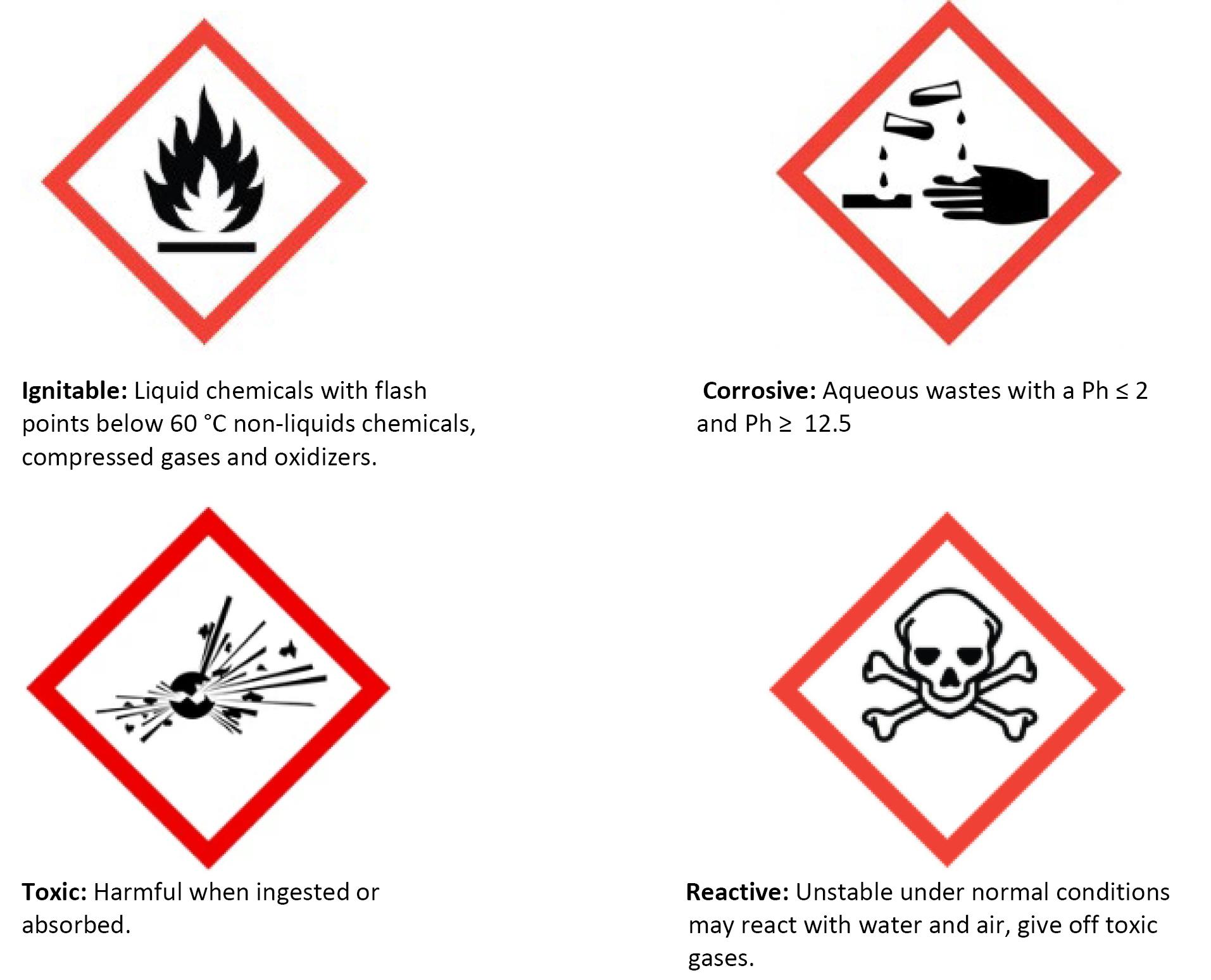
Fig. 1.
Characteristics of Hazardous Waste and Symbols
.
Characteristics of Hazardous Waste and Symbols
To address these issues, this paper aims to provide a comprehensive overview of the current status of HWM in Malaysia, evaluating the existing regulatory landscape governing such practices. It is worth mentioning that the review extends beyond a general assessment, examining policy structures, implementation, enforcement mechanisms, and the challenges faced by regulatory bodies. Additionally, the introduction sets the stage for contemplating future directions on HWM, exploring innovative approaches, technologies, and strategies that can propel Malaysia toward a more sustainable and resilient WM system. More importantly, this review serves as a beneficial reference (guidance) for parties involved in policy-making for sustainable HWM.
2. Current Hazardous Waste Management Practices
HWM is a critical aspect of environmental protection and public health. Effective HW regulation and management are essential to prevent environmental contamination and ensure the safety of communities (9). In the context of current HWM practices, it is necessary to discuss the Amendment to the Environmental Quality Act (EQA) of 1974 and the subsequent regulations to address HW handling, transportation, and disposal in various countries (10).
2.1. Amendment to the Environmental Quality Act 1974 and Regulations
Regulation amendments refer to changes or modifications made to existing regulatory frameworks, rules, or laws governing various aspects of society, such as business practices, environmental protection, safety standards, or other regulated areas. These amendments are typically introduced to address evolving circumstances, correct deficiencies, improve effectiveness, or adapt to changing needs within the regulated domain (1). In many countries, the EQA of 1974 serves as the foundation for environmental protection and HWM (11). Over time, as our understanding of the environmental impact of HW has deepened, amendments to the EQA have become necessary to align with evolving environmental standards and technologies. These amendments typically focus on strengthening the legal framework for HWM, enhancing regulatory authority, and incorporating international best practices (12).
Regulations are the practical tools through which governments enforce environmental laws and policies. In the context of HWM, regulations play a pivotal role in ensuring that HW is generated, handled, transported, and disposed of in a manner that minimizes risks to human health and the environment. Some key aspects of modern HWM regulations include waste classification, generator requirements, transportation, treatment and disposal, recordkeeping and reporting, and international agreements and best practices (3,13).
In terms of waste classification, regulations define what constitutes HW and provide guidelines for its classification based on its physical, chemical, and toxicological properties. Proper classification is essential to determine the appropriate handling and disposal procedures (14). Regulations further outline the responsibilities of waste generators, including requirements for waste minimization, labeling, storage, and reporting, which are aimed at promoting responsible waste generation. Transportation regulations ensure the safe movement of HW by mandating the use of suitable containers, proper labeling, manifest systems, and training for transport personnel, thereby preventing spills or releases during transit. Moreover, regulations set standards for waste treatment and disposal facilities, including landfills, incinerators, and recycling facilities, thereby ensuring that HW is processed or disposed of in a manner that reduces environmental harm.
As regards record-keeping and reporting, regulations often require detailed documentation from generators, transporters, and disposal facilities (15). This transparency helps regulatory authorities to monitor compliance and respond to potential violations. Various countries have adopted international agreements and best practices in HWM, such as the Basel Convention on the Control of Transboundary Movements of HW and Their Disposal (16). These agreements promote international cooperation and help prevent the export of HW to countries with weaker regulatory frameworks.
In Malaysia, the EQA 1974 serves as the legislative backbone for environmental protection, providing the legal basis for controlling and preventing pollution. The Act empowers the Director General of Environmental Quality to take action against individuals or companies responsible for pollution or improper waste handling. Section 34B of the EQA provides one of the key amendments to HWM, which prohibits the unauthorized placement or disposal of SW, where the offenders may face a fine or imprisonment, or both. This amendment emphasizes the importance of proper HWM and acts as a preventive measure against illegal dumping (14).
Additionally, the Environmental Quality (Scheduled Wastes) Regulations 2005, enacted under the EQA 1974, introduced comprehensive definitions and classifications for scheduled wastes, aligning Malaysia’s practices with the Basel Convention. These regulations outline the responsibilities of waste generators, transporters, and receivers, including labeling, record-keeping, and storage requirements. The EQA further enables the development of supporting guidelines and policies, such as the Scheduled Waste Guidelines and the Malaysia Environmental Management System, which further strengthen regulatory control and enforcement mechanisms for HW (17).
Overall, the amendment to the EQA 1974 and subsequent regulations are the essential components of modern environmental protection efforts, reflecting a commitment to reducing the environmental and public health risks, promoting sustainable practices, and ensuring compliance with international standards. Considering that our knowledge of HWM continues to evolve, these regulations will continue to evolve to address emerging challenges.
2.2. Current Practices in Malaysia
HWM in Malaysia has become a significant concern due to the country’s industrial growth and economic development. HW generation has risen with increased industrialization and urbanization, thereby necessitating the implementation of advanced technologies and practices for effective management. HW in Malaysia mainly originates from various industries, including petrochemical, chemical, electronics, manufacturing, and healthcare sectors, as well as construction and demolition activities (12).
Advanced technologies have been employed in HW collection and transportation. Specialized vehicles and equipment guarantee safe handling and prevent leaks or spills during transport. Malaysia has also invested in various treatment technologies, such as incineration, chemical treatment, biological treatment, and stabilization/solidification processes. Incineration, for example, is used to dispose specific waste through high-temperature combustion, thus reducing its volume and toxicity (3). Waste that cannot be treated or recycled is disposed of in engineered landfills, which are designed to prevent leachate and contamination of surrounding soil and groundwater (3).
HWM remains a global concern, and Malaysia, similar to many other countries, continues to improve its practices. Contemporary approaches increasingly emphasize sustainability, focusing on waste minimization, cleaner production, recycling and recovery, and innovative technology adoption.
2.2.1. Waste Minimization and Cleaner Production
One notable approach toward modern HWM is adopting waste minimization strategies so as to emphasize source reduction and develop cleaner production processes (18). These strategies aim to reduce HW generation at its source while promoting environmentally friendly production methods. In Malaysia, such approaches have recently gained significance due to their potential to address environmental concerns and regulatory requirements.
Waste minimization is a core principle of HWM, which focuses on reducing the volume and toxicity of waste generated by industries, households, and other sources. The primary goal is to prevent or reduce HW creation through a variety of measures, including process improvements, product reformulation, and material substitution (19). Key practices encompass process optimization, recycling and reuse, hazardous material substitution, and environmental awareness and education.
Industries in Malaysia are encouraged to optimize production processes to reduce waste generation. This optimization includes adopting efficient manufacturing techniques that reduce HW while improving resource utilization. Recycling and reusing materials within industrial operations, upon approval from the Department of Energy (DOE) under the special WM provisions of Regulation 7, Environmental Quality (SW) Regulations 2005, can significantly reduce HW output. Substituting hazardous substances with safer alternatives is another effective strategy, involving the identification and replacement of materials that pose environmental or health risks. Likewise, raising awareness about waste minimization among industries, government bodies, and the public is equally important. Moreover, education campaigns and workshops can help disseminate knowledge about best practices (20).
Cleaner production, while being closely related to waste minimization, takes a broader approach by focusing on the design and operation of processes and products with environmental sustainability in mind. It aims to reduce pollution and resource consumption while increasing efficiency. The key elements of cleaner production include resource efficiency, eco-friendly technology adoption, green product design, environmental audits and certification, and regulatory frameworks. Industries are encouraged to optimize energy and raw material use, adopt renewable energy, and design recyclable or biodegradable products to reduce HW throughput in their lifecycle (21). Environmental audit and certification programs recognize compliance, while updated regulations make adherence mandatory in certain sectors (20). The DOE actively supports these efforts through developing industry-specific guidelines and environmental management systems.
In 2021, Malaysian industries invested approximately RM3.1 billion in environmental protection, marking a 4.8% increase from the previous year, with 25.8% (RM803.7 million) allocated to WM. These investments highlight a growing commitment to cleaner production, which protects the environment, safeguards public health, and delivers economic benefits—positioning Malaysia toward more sustainable HWM (22).
2.2.2. Recycling and Recovery
Malaysia has made significant strides in promoting HW recycling and recovery, with many industries adopting recycling and reclamation techniques to recover valuable materials from waste streams. This reduces the volume requiring final disposal, which lowers environmental impacts and offers economic benefits (23). Such practices are crucial as industrial waste volumes rise, though managing this waste sustainably remains an ongoing challenge.
In Malaysia, HW is classified by chemical composition and physical characteristics to determine suitable recycling and recovery methods. Common categories include spent solvents, heavy metals, and electronic waste (11). Several key initiatives have been implemented, including electronic waste (e-waste) recycling to recover metals and plastics, lead-acid battery recycling to extract usable lead and ensure safe disposal of toxic components, and oil recycling, where used oils are re-refined to conserve resources and reduce environmental harm.
According to the DOE 2022 Annual Report, Malaysia generated approximately 1.36 million metric tons of SW, with a 33.2% national recycling rate. The 12th Malaysia Plan targets a 40% recycling rate by 2025 (24). However, progress has been gradual, partly due to challenges, such as logistical constraints, technological limitations, and uneven distribution of licensed recovery facilities. Notably, the states of Selangor and Johor contribute to the highest volume of scheduled waste, given their industrial density (24). These states also house the majority of the country’s licensed recovery and treatment facilities, centralizing much of the recycling activity in Malaysia.
While Malaysia has progressed in waste recycling and recovery, challenges remain, and illegal dumping continues to pose risks to the environment and public health (10,25). Despite the EQA 1974, gaps in monitoring and limited infrastructure hinder compliance, particularly in less-developed areas (26). Addressing these issues requires stricter enforcement, public awareness campaigns, and strengthened technical and human capacity. Malaysia could benefit from international collaborations in terms of knowledge exchange and technology transfer to enhance its HW recycling and recovery capabilities (10,25). Overall, Malaysia is actively addressing HWM challenges through recycling and recovery initiatives. By enforcing regulations, fostering partnerships, and investing in technology, Malaysia is moving toward sustainable HWM, though continued efforts are needed to curb illegal dumping and ensure responsible practices nationwide.
2.2.3. Technological Advancements
Advancements in technology are improving HW treatment in Malaysia through various methods, such as thermal treatment, bioremediation, and chemical stabilization, supported by geographic information systems and data analytics for tracking and compliance (27-29). The country is adopting pyrolysis and gasification to convert hazardous organic waste into energy, thereby reducing toxic residues (30). In addition, research is developing nano-adsorbents with high capacity for removing heavy metals and persistent pollutants (31). Artificial intelligence-powered classification and the internet of things-based tracking system enhance traceability (32-33), while bioaugmentation and bioremediation using bacterial-fungal consortia effectively remove metals from contaminated soils (34-35). These innovations strengthen Malaysia’s waste infrastructure and advance its sustainability goals.
2.3. Hazardous Waste Management Strategies
Several critical aspects of HWM in Malaysia include its regulatory framework, licensing and permits, treatment and disposal facilities, and monitoring systems. The DOE, under the Ministry of Environment and Water, is the main authority responsible for developing policies, enforcing laws, and ensuring industrial compliance, guided by the National Strategic Plan for Solid Waste Management (10). Designated facilities, such as Kualiti Alam Sdn. Bhd., hold exclusive rights for the nationwide collection, treatment, and disposal of scheduled waste. Compliance is enforced through inspections, audits, and monitoring. Nevertheless, illegal dumping remains a challenge, revealing gaps in enforcement and oversight. Ongoing improvements in practices, stricter enforcement, and proactive responses to emerging issues are essential, as HWM challenges have persisted for decades (36).
3. Regulatory and Strategic Framework for Hazardous Waste and Disaster Waste Management in Malaysia
This section outlines both the regulatory framework governing HW in Malaysia and the strategic approaches to managing such waste during disaster scenarios. The inclusion of disaster waste (DW) preparedness reflects the recognition that environmental emergencies can significantly increase HW volumes. Integrating preparedness into regulatory systems offers a complete view of the nation’s WM capabilities. Malaysia adopts a phased approach to DW management (DWM), encompassing prevention, preparedness, response, and recovery. During emergencies, agencies such as the DOE, the National Disaster Management Agency, and local authorities work in coordination to ensure the safe handling of chemical and industrial waste, thereby minimizing secondary environmental and public health impacts (37).
In general, for waste to pose a risk to the environment or human health, three conditions must be met: (i) the waste is hazardous or capable of causing harm; (ii) there is a pathway for exposure, and (iii) there is a receptor, such as a person or a water source (38). Waste meeting these criteria should be prioritized for management. The initial detection generally follows a structured process, including waste generation and identification, waste analysis, comparison to the lists generated by the EPA, documentation and record keeping, labeling and storage, regulatory and compliance, and disposal or treatment. Abiding by these steps can help ensure that the waste is precisely detected and securely managed, which can minimize the hazard to the environment and human health. Based on this framework, disaster response and preparedness can be divided into emergency (phase 1), early recovery (phase 2), recovery (phase 3), and contingency planning (phase 4) phases.
3.1. Phase 1: Emergency Phase
Phase 1 tackles the most critical waste issues that must be resolved to prevent death, reduce suffering, and enable rescue operations. At this stage, any additional factors are considered secondary. Activities undertaken in this phase can be separated into short-term (beginning after 72 hours) and immediate (beginning after 72 hours) categories. Immediate actions are usually taken within hours, with priorities determined based on hazard ranking principles. These steps are summarized in Fig. 2 (38). Conversely, immediate actions (up to 72 hours later) are frequently initiated within the first few days. When possible, household waste should be collected from those who choose to stay in the disaster region. A quick DW assessment ought to be performed to support future decision-making. While precise data are unnecessary, it is advisable to provide a reasonable assessment of the waste issue, the capacity of local authorities to manage it, and whether external assistance is necessary (38).
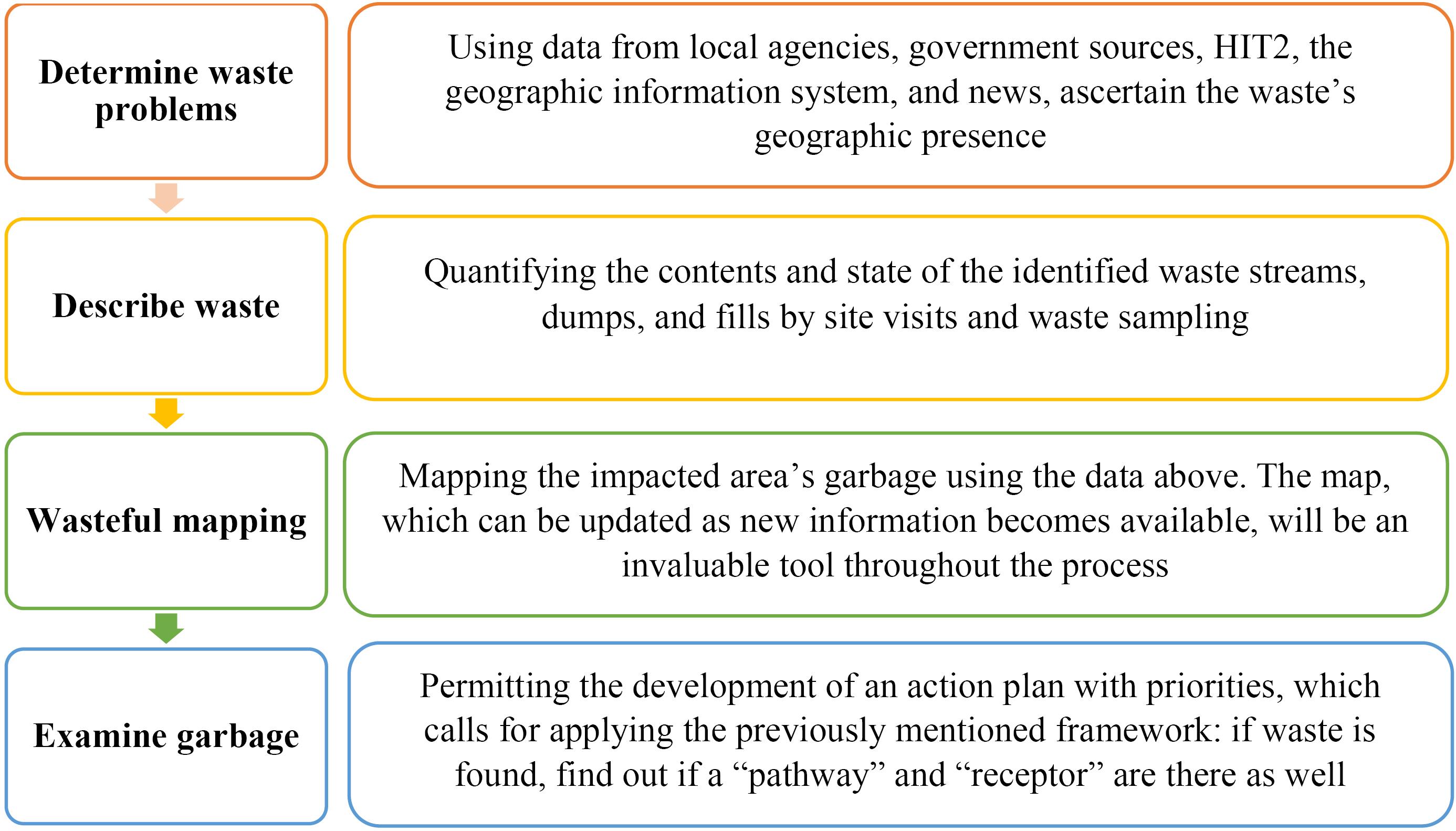
Fig. 2.
Steps for Hazard Ranking Principles. Source. Kurdve et al (39). HIT2, Hazard Identification Tool 2
.
Steps for Hazard Ranking Principles. Source. Kurdve et al (39). HIT2, Hazard Identification Tool 2
3.2. Phase 2: Early Recovery Phase
This phase establishes the framework for implementing a DWM program during the recovery phase, focusing on identifying suitable disposal sites for various waste types and improving logistics for collection, transportation, and reuse/recycling. Although efforts in this phase expand upon the initial Phase 1 evaluation, they focus on deeper analysis and long-term solutions. Typical activities include assessments, operational planning, communication strategies, and reporting (38).
3.3. Phase 3: Recovery Phase
Phase 3 involves executing the DWM initiatives developed in Phase 2, alongside continuous monitoring of waste conditions. The primary actions encompass implementing a communication plan for engaging key stakeholders and ensuring alignment with community needs, securing or repairing essential machinery and facilities, and providing targeted training to WM operators. It should be noted that collaboration with local authorities and service providers is vital for a coordinated response. Ultimately, this phase aims to transit from emergency measures to a standardized, resilient, solid WM system, thus ensuring long-term efficiency and sustainability (38).
3.4. Phase 4: Contingency Planning
In a strict sense, Phase 4 is not related to emergency response. It is a valuable investment that bridges the gap between response, recovery, and long-term development. Contingency planning can be undertaken before or during the recovery process. The goal is to develop a DWM contingency plan that enables communities to choose the most effective WM strategies before the occurrence of a disaster. The plan might also be used as a reference document when negotiating for financial and technical support. A successful DWM contingency plan tackles problems beyond their initial elimination and ought to incorporate a plan for recycling and reusing materials (38).
4. Development of Policy and Regulations for Hazardous Waste Management in Malaysia
4.1. Framework for Sustainable Solid Waste Management in Malaysia
This section outlines the framework for sustainable SW management (SWM) in Malaysia, serving as a reference for policies and regulations related to HWM. Currently, the adoption of SWM faces challenges, such as inappropriate disposal practices (40), the absence of a centralized database, low recycling rates, and significant data gaps. Stakeholder responsibility remains limited, while inadequate funding, resource constraints, and poor coordination among agencies further hinder progress. The lack of monitoring mechanisms prevents effective evaluation and timely action.
Primary issues identified in SWM and HWM include limited practical applications of existing regulations, insufficient resources, financial constraints, a shortage of skilled labour, and a lack of technical expertise. Delays in fund disbursement further postpone the execution of the national SWM plan, while the mismatch between revenue and costs makes the current funding model unsustainable, thereby requiring federal government support. The authorization of new waste facilities is restricted by financial and personnel limitations. Data management practices exhibit inadequacies, including improper systems, data obsolescence, challenging handover processes, and a lack of supporting infrastructure. The recyclables market remains largely unregulated, leading to the undervaluation of its economic potential (10).
Addressing these challenges requires strategies, including minimizing waste generation and developing waste recovery facilities, to improve planning, execution, and implementation (10,41). Adopting the 3Rs (reduce, reuse, and recycle) and incorporating elements (e.g., recovery, treatment, and disposal) are essential components of this enhancement. Establishing a dedicated regulatory committee for governance is vital for coordinating planning, problem-solving, execution, and oversight functions (42). Reforming policies and introducing facilitators and measures to reduce the financial burden on the government are critical for long-term stability (41,43).
Fig. 3 displays a potential framework for sustainable SWM in Malaysia, which sets 2020 targets of a 40% decrease in landfilled waste and a 22% increase in recycling rates. Although designed for 2020, it remains relevant for evaluating policy progress. Since its introduction, Malaysia has improved institutional coordination, recycling infrastructure, and public-private partnerships (41). However, targets, such as nationwide waste segregation and landfill diversion, remain ongoing, thus making the framework a continuing benchmark for evaluating progress and identifying priority areas.
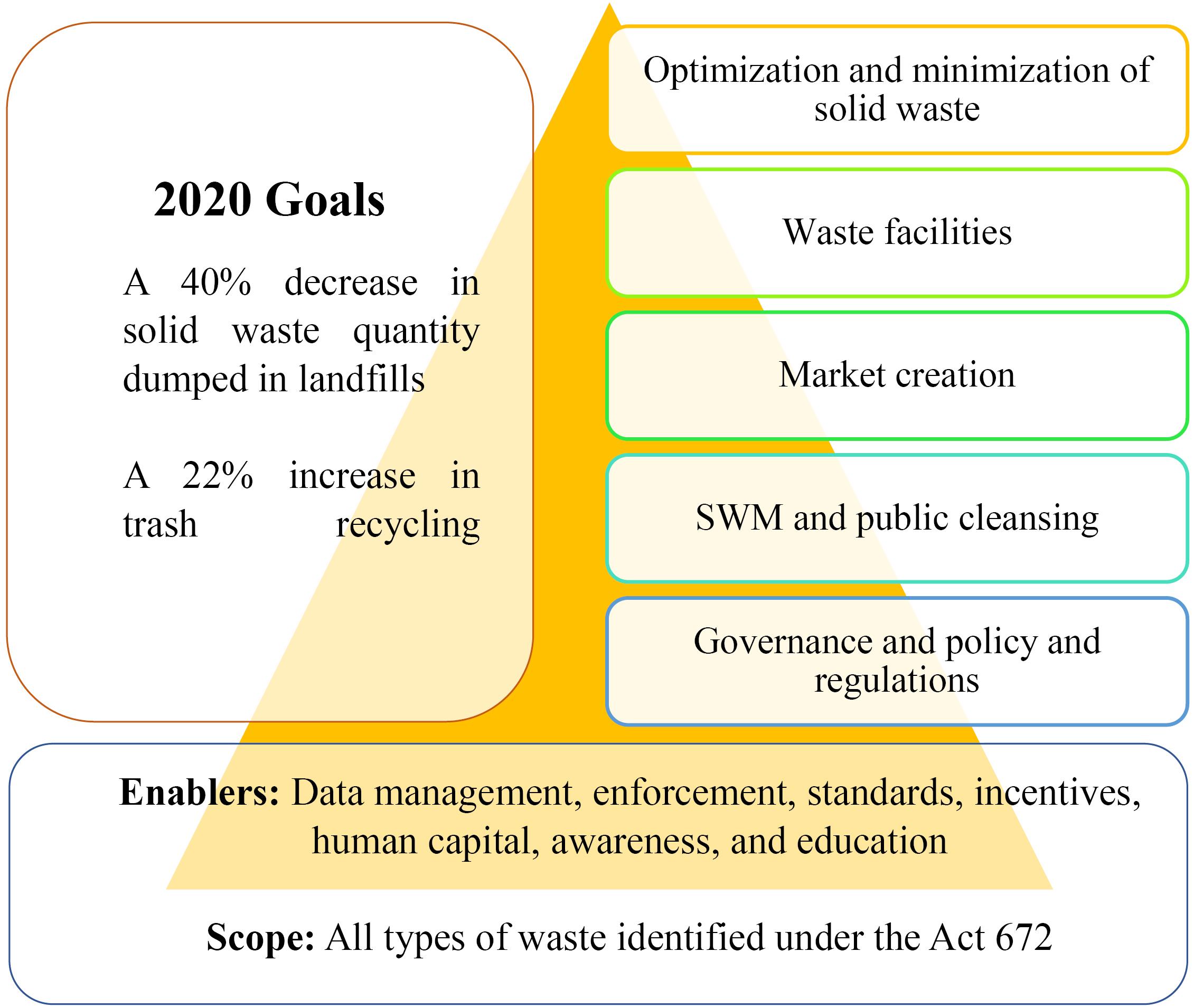
Fig. 3.
Framework for SWM in Malaysia, With Target Year 2020. Note. SWM: Solid waste management. Source. Zainu (10)
.
Framework for SWM in Malaysia, With Target Year 2020. Note. SWM: Solid waste management. Source. Zainu (10)
4.2. Health Risk Assessment
The technique used by the U.S. EPA (44) served as the basis for the health risk assessment framework used in this study (Fig. 4). In addition, issue identification was based on the case of illicit toxic waste dumping in Pasir Gudang, Malaysia. To identify the hazards, the chemical agents detected at the disposal site were evaluated using toxicological, epidemiological, in vitro, and mechanistic research to ascertain their potential impacts on human health. Moreover, both acute and long-term health risks were taken into consideration, along with the evidence on relevant exposure-related disorders. Furthermore, exposure assessment was performed by recognizing the routes of exposure, the sources of exposure, the period of exposure, and the number of impacted people.
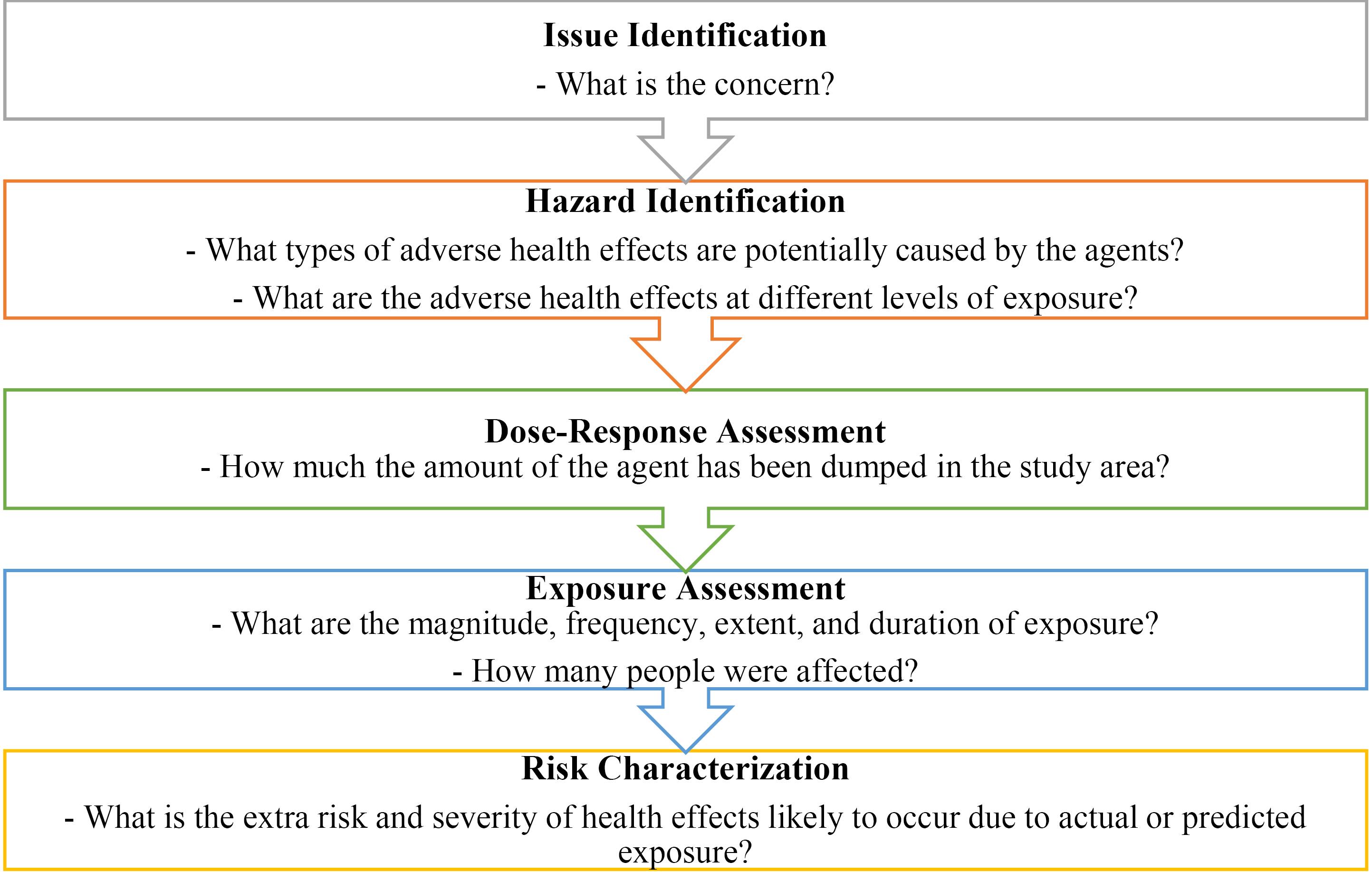
Fig. 4.
Framework for Health Risk Assessment in Malaysia. Source. Ibrahim et al (2)
.
Framework for Health Risk Assessment in Malaysia. Source. Ibrahim et al (2)
During the risk characterization phase, the potential health impacts of the incident were estimated using data from exposure assessments and hazard identification. The environmental destiny of the chemicals was assessed to ascertain the extent of those impacts on human health and the ecosystem.
5. Future Direction and Technological Innovation
HW is a significant environmental and public health concern in Malaysia; therefore, to efficiently address this issue, future strategies should focus on sustainable, circular approaches that prioritize the minimization and prevention of waste and the development of innovative treatment and disposal technologies. Emerging technologies, such as pyrolysis, nanotechnology-based remediation processes, and plasma gasification, were introduced to treat HW streams in a much safer way. Pyrolysis converts waste into energy-rich products (e.g., char, oil, and combustible gases) through thermal degradation in the absence of oxygen (45,46), a method historically used for charcoal production for thousands of years (47). Nanotechnology-based remediation, though still limited in real-world applications, offers considerable potential. Several classes of nano-materials can be applied, such as nano-adsorbents, nano-catalysts, and nano-membranes (48).
The integration of artificial intelligence and robotics can improve precision in waste sorting, thus enabling better waste segregation and reducing hazardous residues (49). In addition, blockchain and digital tracking technology offer transparent, immutable recordings of HW movement, thereby improving traceability, reporting, and regulatory compliance (50). Moreover, advanced monitoring tools (e.g., drones, remote sensing, and sensor networks) can help map waste sources, types, and distribution. Accordingly, more investment in research on next-generation waste-to-energy technologies should be made to maximize energy recovery while minimizing emissions and environmental impacts (51).
A shift toward circular economy principles can remarkably reduce HW generation (3). Keeping materials in use through strategies such as “reuse, reduce, and recycle” can help minimize the environmental and economic costs of extraction, production, and disposal (52). Further, implementing these strategies reduces the growing demand for natural resources and minimizes waste, both of which are associated with significant environmental damage and economic costs. The transformation from a linear economic model into a circular approach could significantly reduce the burden on the environment, since the waste materials could also be reduced with respect to reuse and recycling practices (3).
In some cases, HW can be turned into a value-added product under the recycling practices and treatment processes. For example, heavy metals (e.g., mercury, cadmium, and lead) generated from e-waste can be recycled and reused to manufacture new products, such as the production of new batteries using lead recovered from the applied, car battery (53). Additionally, once purified with distillation and purification processes, spent solvents can be reused for different or the same purposes/cases (54). Furthermore, organic solvents and waste oils can be reused as fuels in incinerators to produce energy (55).
Circular economic goals include increasing the life cycle of raw materials and waste and facilitating their reuse. A circular economy is not limited to WM but starts with developing and producing the product, its consumption, or its use as a secondary material (56). Developing sustainable products and packaging to reduce HW generation could also encourage the circular economy.
Considering that e-waste is one of the alarming issues in managing HW, developing specialized methods to handle this waste is urgently required. Advanced recycling for valuable materials and the safe disposal of toxic components can be used for managing these wastes (57). In addition, bioremediation and bioaugmentation techniques should be expanded for the natural breakdown of hazardous contaminants in soil and water. Additionally, green chemistry practices designed to minimize the use and production of hazardous substances should be mandated for industrial processes (58).
Future improvements should include the implementation of specific disposal protocols and recycling programs for expired or unused medications, which are growing sources of environmental contamination. Furthermore, regulations and incentives for waste minimization and pollution prevention should be enforced, and all businesses should be encouraged to adopt cleaner production practices (59). Further, the “Zero Waste Initiatives” program should be promoted to industries and communities in order to minimize waste generation through better design, product stewardship, and sustainable practices (60). Moreover, the requirement for comprehensive environmental impact assessments for HW facilities should be strengthened to ensure a thorough evaluation of potential ecological and health impacts. Financial incentives and penalties can encourage compliance, while collaboration with neighboring countries and international organizations can help address transboundary waste issues through shared expertise and technology (61).
Public awareness and engagement are the most crucial matters for the success of HWM. Education campaigns on responsible disposal and safe handling practices can prevent environmental contamination more effectively than remediation alone (62). By combining technological innovation, strong regulatory frameworks, and active public participation, Malaysia can transition toward an integrated, sustainable, and circular HWM system that minimizes environmental risks while optimizing resource use.
6. Conclusion
In general, HWM practices in Malaysia have undergone substantial development, spurred by both industrial growth and environmental awareness. The regulatory framework, while exhibiting strengths, faces challenges in terms of enforcing and adapting to emerging waste streams. The future of HWM in Malaysia centres on a proactive approach that integrates advanced technologies, public-private partnerships, and continuous regulatory enhancements. As the nation navigates toward sustainable development, implementing comprehensive WM strategies will be crucial. By embracing innovative solutions, fostering collaboration, and staying up-to-date with global best practices, Malaysia can forge a path toward a more environmentally responsible and resilient HWM paradigm. This review serves as a foundation for informed decision-making and policy evolution in the dynamic landscape of HWM in Malaysia.
Acknowledgements
The authors would like to thank Universiti Malaysia Pahang Al-Sultan Abdullah (UMPSA) for providing financial support under the UMPSA Distinguished Research Grant Scheme (RDU233006) and for laboratory facilities.
Competing Interests
The authors declare that they have no conflict of interests.
Ethical Approval
Ethical approval was not required for this study as it did not involve human participants, animals, or confidential data. All information used was obtained from publicly available or authorized institutional sources.
Funding
This study was supported by the Universiti Malaysia Pahang Al-Sultan Abdullah (UMPSA) under the UMPSA Distinguished Research Grant Scheme (RDU 233006).
References
-
Aja OC, Al-Kayiem HH, Zewge MG, Joo MS. Overview of hazardous waste management status in Malaysia. In: Saleh HE, Abdel Rahman RO, eds. Management of Hazardous Wastes. IntechOpen. 2016. doi: 10.5772/63682.
- Ibrahim MF, Hod R, Toha HR, Mohammed Nawi A, Idris IB, Mohd Yusoff H. The impacts of illegal toxic waste dumping on children’s health: a review and case study from Pasir Gudang, Malaysia. Int J Environ Res Public Health 2021; 18(5):2221. doi: 10.3390/ijerph18052221 [Crossref] [ Google Scholar]
- Kumar A, Thakur AK, Gaurav GK, Klemeš JJ, Sandhwar VK, Pant KK. A critical review on sustainable hazardous waste management strategies: a step towards a circular economy. Environ Sci Pollut Res Int 2023; 30(48):105030-55. doi: 10.1007/s11356-023-29511-8 [Crossref] [ Google Scholar]
- Ziraba AK, Haregu TN, Mberu B. A review and framework for understanding the potential impact of poor solid waste management on health in developing countries. Arch Public Health 2016; 74:55. doi: 10.1186/s13690-016-0166-4 [Crossref] [ Google Scholar]
- Khan BA, Cheng L, Khan AA, Ahmed H. Healthcare waste management in Asian developing countries: a mini review. Waste Manag Res 2019; 37(9):863-75. doi: 10.1177/0734242x19857470 [Crossref] [ Google Scholar]
- Fazzo L, Minichilli F, Santoro M, Ceccarini A, Della Seta M, Bianchi F. Hazardous waste and health impact: a systematic review of the scientific literature. Environ Health 2017; 16(1):107. doi: 10.1186/s12940-017-0311-8 [Crossref] [ Google Scholar]
- Karthikeyan L, Suresh VM, Krishnan V, Tudor T, Varshini V. The management of hazardous solid waste in India: an overview. Environments 2018; 5(9):103. doi: 10.3390/environments5090103 [Crossref] [ Google Scholar]
- Jafarzadeh N, Maleki H. Medical waste increase during COVID-19 pandemic in Asia: a meta-analysis. Avicenna J Environ Health Eng 2023; 10(1):65-71. doi: 10.34172/ajehe.2023.5381 [Crossref] [ Google Scholar]
- Saleh HM, Hassan AI, Aglan RF. Introductory chapter: foundations and challenges in hazardous waste management. In: Saleh HM, Hassan AI, Aglan DR, eds. Advances and Challenges in Hazardous Waste Management. IntechOpen. 2024. doi: 10.5772/intechopen.1003971.
- Zainu ZA. Development of policy and regulations for hazardous waste management in Malaysia. J Sci Technol Innov Policy 2019; 5(2):34-42. doi: 10.11113/jostip.v5n2.45 [Crossref] [ Google Scholar]
- Yong YS, Lim YA, Ilankoon IM. An analysis of electronic waste management strategies and recycling operations in Malaysia: challenges and future prospects. J Clean Prod 2019; 224:151-66. doi: 10.1016/j.jclepro.2019.03.205 [Crossref] [ Google Scholar]
-
Rosli NA, Aziz HA, Pueh LLL, Othman IB, Zawawi MH, Hung YT. Management of various sources of hazardous waste. In: Wang LK, Sung Wang MH, Hung YT, eds. Waste Treatment in the Biotechnology, Agricultural and Food Industries. Cham: Springer International Publishing. 2024. p. 19-64. doi: 10.1007/978-3-031-44768-6_2.
- Najjari A, Shayesteh K. Site selection for hazardous waste using fuzzy logic combined with analytic hierarchy process: a case study in Nahavand, Iran. Avicenna J Environ Health Eng 2019; 6(1):8-15. doi: 10.34172/ajehe.2019.02 [Crossref] [ Google Scholar]
- Department of Environment Malaysia. Environmental Quality Act 1974.
- Oguge N, Malcolm RN, Steenmans K, O’Meara N, Oremo F, Peacock M. Gap Analysis on Waste Data Management Under the Sustainable Waste Management Act (2022) and Draft Extended Producer Responsibility Regulations (2023): Gap Analysis Report. Kenya: National Environmental Management Authority, Kenya; 2014.
- Islam M. The Basel Convention on the control of transboundary movements of hazardous wastes and their disposal: critical analysis. Int J Multidiscip Res Growth Eval 2020; 1(2):11-6. [ Google Scholar]
- Department of Environment Malaysia. Environmental Quality Act 1974 (Act 127): Incorporating Latest Amendments Up to 1 January 2006. 2020. Available from: https://ewaste.doe.gov.my/wp-content/uploads/2020/12/Environmental_Quality_Act_1974_-_ACT_127.pdf.
- Department of Environment Malaysia. Cleaner Production Blueprint for Malaysia, 2023.
- Mallak SK, Ishak MB, Mohamed AF. Waste minimization benefits and obstacles for solid industrial wastes in Malaysia. IOSR J Environ Sci Toxicol Food Technol 2014; 8(2):43-52. [ Google Scholar]
- Mostaghimi K, Behnamian J. Waste minimization towards waste management and cleaner production strategies: a literature review. Environ Dev Sustain 2023; 25(11):12119-66. doi: 10.1007/s10668-022-02599-7 [Crossref] [ Google Scholar]
- Aziz HA, Aziz SQ, Aziz Q. Cleaner production approaches for sustainable development. In: International Engineering for Sustainability Conference. iNESCO. 2011. p. 26-37.
- Au Yong HN, Chin YH. Cleaner production and sustainability: stakeholder pressure and the adoption of pollution prevention measures of industrial hazardous waste in Malaysia. IOP Conf Ser Earth Environ Sci 2019; 268(1):012027. doi: 10.1088/1755-1315/268/1/012027 [Crossref] [ Google Scholar]
- United Nations Environment Programme (UNEP). Basel Convention on the Control of Transboundary Movements of Hazardous Wastes and Their Disposal. UNEP; 1989.
- Rangga JU, Ismail SN, Rasdi I, Karuppiah K. Waste management costs reduction and the recycling profit estimation from the segregation programme in Malaysia. Pertanika J Sci Technol 2022; 30(2):1457-78. doi: 10.47836/pjst.30.2.34 [Crossref] [ Google Scholar]
-
Sari NM, Mokhtar MB. Hazardous waste management in Malaysia: the needs of environmental forensic. In: Aris A, Tengku Ismail T, Harun R, Abdullah A, Ishak M, eds. From Sources to Solution: Proceedings of the International Conference on Environmental Forensics. Singapore: Springer. 2014. p. 61-6. doi: 10.1007/978-981-4560-70-2_12.
- Noor Artika H, Yusof MZ, Nor Faiza MT. An Overview of Scheduled Wastes Management in Malaysia. Journal of Wastes and Biomass Management 2019; 1(2):1-4. doi: 10.26480/jwbm.02.2019.01.04 [Crossref] [ Google Scholar]
- Asefa EM, Barasa KB, Mengistu DA. Application of Geographic Information System in Solid Waste Management. IntechOpen; 2022.
- Onyeaka H, Tamasiga P, Nwauzoma UM, Miri T, Juliet UC, Nwaiwu O. Using artificial intelligence to tackle food waste and enhance the circular economy: maximising resource efficiency and minimising environmental impact: a review. Sustainability 2023; 15(13):10482. doi: 10.3390/su151310482 [Crossref] [ Google Scholar]
- Pasgar AA, Malakootian M. Spatial distribution of lead in the soil of urban areas under different land-use types. Avicenna J Environ Health Eng 2023; 10(1):18-31. doi: 10.34172/ajehe.2023.4228 [Crossref] [ Google Scholar]
- Yek PN, Chan YH, Foong SY, Wan Mahari WA, Chen X, Peng W, et al. Co-Processing of Biomass and Plastics Waste Via Integrated Pyrolysis-Gasification Approach: Recent Advances, Challenges, and Opportunities. 2022. Available from: https://ssrn.com/abstract=4074339.
- Awang NA, Wan Salleh WN, Aziz F, Yusof N, Ismail AF. A review on preparation, surface enhancement and adsorption mechanism of biochar-supported nano zero-valent iron adsorbent for hazardous heavy metals. J Chem Technol Biotechnol 2023; 98(1):22-44. doi: 10.1002/jctb.7182 [Crossref] [ Google Scholar]
- Yi CJ, Kim CF. AI-powered waste classification using convolutional neural networks (CNNs). Int J Adv Comput Sci Appl 2024; 15(10):67-75. doi: 10.14569/ijacsa.2024.0151009 [Crossref] [ Google Scholar]
- Kang KD, Kang H, Ilankoon IM, Chong CY. Electronic waste collection systems using Internet of Things (IoT): household electronic waste management in Malaysia. J Clean Prod 2020; 252:119801. doi: 10.1016/j.jclepro.2019.119801 [Crossref] [ Google Scholar]
- Hassan A, Pariatamby A, Ossai IC, Ahmed A, Muda MA, Wen TZ. Bioaugmentation-assisted bioremediation and kinetics modelling of heavy metal-polluted landfill soil. Int J Environ Sci Technol 2022; 19(7):6729-54. doi: 10.1007/s13762-021-03626-2 [Crossref] [ Google Scholar]
- Qattan SY. Harnessing bacterial consortia for effective bioremediation: targeted removal of heavy metals, hydrocarbons, and persistent pollutants. Environ Sci Eur 2025; 37(1):85. doi: 10.1186/s12302-025-01103-y [Crossref] [ Google Scholar]
- Jayaraman K, Vejayon S, Raman S, Mostafiz I. The proposed e-waste management model from the conviction of individual laptop disposal practices-an empirical study in Malaysia. J Clean Prod 2019; 208:688-96. doi: 10.1016/j.jclepro.2018.10.125 [Crossref] [ Google Scholar]
- Zawawi EMA, Yusof NS, Ismail Z. Adoption of post-disaster waste management plan into disaster management guidelines for Malaysia. J Mater Cycles Waste Manag 2018; 20(1):223-36. doi: 10.1007/s10163-016-0569-x [Crossref] [ Google Scholar]
- Disaster Waste Management Guidelines. United Nations Office for the Coordination of Humanitarian Affairs Emergency Preparedness Section. Switzerland: UNEP/OCHA Joint Environment Unit; 2011.
- Kurdve M, Shahbazi S, Wendin M, Bengtsson C, Wiktorsson M, Amprazis P. Waste Flow Mapping: Handbook. Eskilstuna, Sweden: Mälardalen University; 2017.
- Ghobadi M. Environmental monitoring and assessment for landfill site selection using GIS-based SWARA and rapid impact assessment matrix. Avicenna J Environ Health Eng 2023; 10(1):57-64. doi: 10.34172/ajehe.2023.5378 [Crossref] [ Google Scholar]
- Pariatamby A, Tanaka M, Islam A, Rasul G, Manandhar P, Parveen JA, et al. Municipal solid waste management in Asia and the Pacific Islands. In: Environmental Science. Singapore: Springer; 2014. p. 201.
- Kamaruddin MA, Yusoff MS, Rui LM, Isa AM, Zawawi MH, Alrozi R. An overview of municipal solid waste management and landfill leachate treatment: Malaysia and Asian perspectives. Environ Sci Pollut Res Int 2017; 24(35):26988-7020. doi: 10.1007/s11356-017-0303-9 [Crossref] [ Google Scholar]
- Abd Manaf LA, Abu Samah MA, Mohd Zukki NI. Municipal solid waste management in Malaysia: practices and challenges. Waste Manag 2009; 29(11):2902-6. doi: 10.1016/j.wasman.2008.07.015 [Crossref] [ Google Scholar]
- USEPA. Conducting a Human Health Risk Assessment. Available from: https://www.epa.gov/risk/conducting-human-health-risk-assessment\. Accessed January 24, 2021.
- Rehan M, Miandad R, Barakat MA, Ismail IMI, Almeelbi T, Gardy J. Effect of zeolite catalysts on pyrolysis liquid oil. Int Biodeterior Biodegradation 2017; 119:162-75. doi: 10.1016/j.ibiod.2016.11.015 [Crossref] [ Google Scholar]
- Miandad R, Rehan M, Barakat MA, Aburiazaiza AS, Khan H, Ismail IM. Catalytic pyrolysis of plastic waste: moving toward pyrolysis based biorefineries. Front Energy Res 2019; 7:437000. doi: 10.3389/fenrg.2019.00027 [Crossref] [ Google Scholar]
- Chen D, Yin L, Wang H, He P. Pyrolysis technologies for municipal solid waste: a review. Waste Manag 2014; 34(12):2466-86. doi: 10.1016/j.wasman.2014.08.004 [Crossref] [ Google Scholar]
- Anjum M, Miandad R, Waqas M, Gehany F, Barakat MA. Remediation of wastewater using various nano-materials. Arab J Chem 2019; 12(8):4897-919. doi: 10.1016/j.arabjc.2016.10.004 [Crossref] [ Google Scholar]
- Rodzalan SA, Mohd Jasni NS, Mohd Noor NN, Saat MM, Hasan M. Foresight study on artificial intelligence in smart dustbin. J Adv Res Appl Mech 2023; 109(1):17-34. doi: 10.37934/aram.109.1.1734 [Crossref] [ Google Scholar]
- Kumar M, Mehra R, Saini M. Blockchain in waste tracking: enhancing transparency and accountability. In: Municipal Solid Waste Management and Recycling Technologies. IGI Global. 2024. p. 57-70.
- Spyridis Y, Argyriou V, Sarigiannidis A, Radoglou P, Sarigiannidis P. Autonomous AI-enabled industrial sorting pipeline for advanced textile recycling. In: 2024 20th International Conference on Distributed Computing in Smart Systems and the Internet of Things (DCOSS-IoT). Abu Dhabi: IEEE. 2024. p. 455-61. doi: 10.1109/DCOSS-IoT61029.2024.00073.
- Kirchherr J, Reike D, Hekkert M. Conceptualizing the circular economy: an analysis of 114 definitions. Resour Conserv Recycl 2017; 127:221-32. doi: 10.1016/j.resconrec.2017.09.005 [Crossref] [ Google Scholar]
- Varshney K, Varshney PK, Gautam K, Tanwar M, Chaudhary M. Current trends and future perspectives in the recycling of spent lead acid batteries in India. Mater Today Proc 2020; 26(Pt 2):592-602. doi: 10.1016/j.matpr.2019.12.168 [Crossref] [ Google Scholar]
- Quah HB, Liu X, Chia SR, Nomanbhay S, Show PL. Recyclability and reusability of the solvents. In: Chew K, Chia S, Show P, eds. Principles of Multiple-Liquid Separation Systems. Elsevier. 2023. p. 133-70. doi: 10.1016/b978-0-323-91728-5.00004-4.
- Karpan B, Abdul Raman AA, Taieb Aroua MK. Waste-to-energy: coal-like refuse derived fuel from hazardous waste and biomass mixture. Process Saf Environ Prot 2021; 149:655-64. doi: 10.1016/j.psep.2021.03.009 [Crossref] [ Google Scholar]
- Guo Z, Yan N, Lapkin AA. Towards circular economy: integration of bio-waste into chemical supply chain. Curr Opin Chem Eng 2019; 26:148-56. doi: 10.1016/j.coche.2019.09.010 [Crossref] [ Google Scholar]
- Zeng X, Duan H, Wang F, Li J. Examining environmental management of e-waste: China’s experience and lessons. Renew Sustain Energy Rev 2017; 72:1076-82. doi: 10.1016/j.rser.2016.10.015 [Crossref] [ Google Scholar]
- Azubuike CC, Chikere CB, Okpokwasili GC. Bioremediation techniques-classification based on site of application: principles, advantages, limitations and prospects. World J Microbiol Biotechnol 2016; 32(11):180. doi: 10.1007/s11274-016-2137-x [Crossref] [ Google Scholar]
- Kümmerer K. The presence of pharmaceuticals in the environment due to human use--present knowledge and future challenges. J Environ Manage 2009; 90(8):2354-66. doi: 10.1016/j.jenvman.2009.01.023 [Crossref] [ Google Scholar]
- Zaman AU, Lehmann S. Challenges and opportunities in transforming a city into a “zero waste city”. Challenges 2011; 2(4):73-93. doi: 10.3390/challe2040073 [Crossref] [ Google Scholar]
- Morrissey AJ, Browne J. Waste management models and their application to sustainable waste management. Waste Manag 2004; 24(3):297-308. doi: 10.1016/j.wasman.2003.09.005 [Crossref] [ Google Scholar]
- Giusti L. A review of waste management practices and their impact on human health. Waste Manag 2009; 29(8):2227-39. doi: 10.1016/j.wasman.2009.03.028 [Crossref] [ Google Scholar]