Avicenna J Environ Health Eng. 12(2):108-118.
doi: 10.34172/ajehe.5618
Systematic Review
Microplastics in Commercial Milk for Human Consumption: Evidence From a Systematic Review and Meta-Analysis
Mahdi Asadi-Ghalhari Project administration, Writing – review & editing, 1 
Mohammad-Ebrahim Ghaffari Formal analysis, Methodology, Project administration, Software, Supervision, Writing – original draft, Writing – review & editing, 2
Azam Nadali Data curation, Investigation, Methodology, Writing – original draft, Writing – review & editing, 3, 4
Fatemeh Sadat Tabatabaei Investigation, Writing – review & editing, 5
Nasim Ghafouri Conceptualization, Investigation, 6
Roqiyeh Mostafaloo Conceptualization, 7
Fatemeh Piroozfar Data curation, Investigation, Writing – original draft, Writing – review & editing, 3, 4, *
Author information:
1Department of Environmental Health Engineering, Faculty of Health, Research Center for Environmental Pollutants, Qom University of Medical Sciences, Qom, Iran
2Department of Epidemiology and Biostatistics, Faculty of Health, Qom University of Medical Sciences, Qom, Iran,
3Research Center for Environmental Pollutants, Qom University of Medical Sciences, Qom, Iran
4Student Research Committee, Qom University of Medical Sciences, Qom, Iran
5Department of Environmental Health Engineering, Faculty of Health, Qom University of Medical Sciences, Qom, Iran
6Department of Environmental Health Engineering, Alborz University of Medical Sciences, Alborz, Iran
7Department of Environmental Health Engineering, School of Public Health and Research Center for Health Sciences, Student Research Committee, Hamadan University of Medical Sciences, Hamadan, Iran
Abstract
The global increase in plastics production and consumption has heightened human exposure to microplastics (MPs), raising widespread concern. Food represents a major route of human exposure. Since milk is a vital component of the human diet throughout life, its contamination warrants close attention. The current study is the first meta-analysis focusing on MP contamination in commercial milk. Three databases (PubMed, Embase, Scholar, and Web of Science) were searched up to June 2023, following the PRISMA guideline. Four relevant studies were included based on specific inclusion and exclusion criteria. The risk of bias (RoB) was assessed using the Office of Health Assessment and Translation (NTP/OHAT) tool. Four low-RoB studies were included in the meta-analysis. The results indicated that MP concentrations in the analyzed studies ranged from 16 to 10040 particles per sample. Given that milk contamination can occur at all stages (from farm to consumer), future studies should investigate how processing and packaging contribute to the presence and diversity of MPs in milk and their potential health effects. Additionally, standardized sampling and detection protocols should be developed to accurately detect and minimize MP contamination in milk. Preventive strategies are needed to limit the release of MPs into the environment and, consequently, the human body.
Keywords: Microplastics, Dairy processing, Human exposure, Food safety, Packaging degradation
Copyright and License Information
© 2025 The Author(s); Published by Hamadan University of Medical Sciences.
This is an open-access article distributed under the terms of the Creative Commons Attribution License (
https://creativecommons.org/licenses/by/4.0), which permits unrestricted use, distribution, and reproduction in any medium, provided the original work is properly cited.
Please cite this article as follows: Asadi-Ghalhari M, Ghaffari ME, Nadali A, Tabatabaei FS, Ghafouri N, Mostafaloo R, et al. Microplastics in commercial milk for human consumption: evidence from a systematic review and meta-analysis. Avicenna J Environ Health Eng. 2025;12(2):108-118. doi:10.34172/ajehe.5618
1. Introduction
The increasing production, consumption, and improper disposal of plastics have led to the introduction of large amounts of plastic into the environment, where they break down into smaller particles (1,2). Microplastics (MPs) are plastic particles less than 5 mm to 1 µm in size (3,4). Due to characteristics such as light weight, durability, buoyancy, and non-biodegradability, MPs can be transported by wind and water, becoming widely dispersed throughout ecosystems (5-7). Recent studies have confirmed the contamination of water, soil, atmosphere, and various foods with MPs. Evidence suggests that MPs have entered the bodies of organisms and humans through breathing and swallowing (8-16). Moreover, due to the apparent properties of MPs, these particles have the potential to transport a wide range of toxins, microorganisms, and heavy metals (17,18).
Breathing, swallowing, and skin contact cause these substances to enter the human body and may cause potential complications such as toxicity, oxidative stress, carcinogenesis, immune system disorders, metabolic processes, and the like (19-21). Based on the results of previous studies, the presence of MPs has been confirmed in several foods, including seafood, meat, and milk (22-24). For example, Kedzierski et al reported the contamination of packaged meat with polystyrene (PS) MPs. They stated that these MPs probably originate from PS trays, which are difficult to remove by rinsing and strongly adhere to the surface of the meat (15). In another similar study, Li et al found that feeding bottles made of propylene release high amounts of MPs (16,200,000 particles/L). According to the results of their study, increasing temperature significantly increases the release of MPs from these containers (25). Additionally, the results of the study by Da Costa Filho et al confirmed the low amounts of MPs in fresh raw milk. They reported that both pasteurized milk and raw milk are contaminated with MPs (26). Since milk is one of the vital nutrients for human nutrition from birth, its contamination is an important factor affecting human health (27). Due to the different methods of milk processing, the possibility of MP contamination may be caused by washing equipment, packaging material, the surrounding environment, and the source of water supply (11). Therefore, milk contamination with MPs can occur during production, from fresh milk to packaged milk (27).
Despite increasing attention to MPs in food, water, and other beverages, milk as a vital dietary staple has not yet been comprehensively evaluated in a meta-analytical framework. Therefore, the present study investigated the presence of MPs in milk through a systematic review and meta-analysis.
2. Methods
2.1. Study Protocol
The present study was conducted and reported based on the Preferred Reporting Items for Systematic reviews and Meta-Analysis (PRISMA) statement. PRISMA is a well-established framework for conducting systematic reviews that outlines the process of selecting and critically appraising previous studies on a specific topic using a standardized methodology (28). The study protocol was registered in the International Prospective Register of Systematic Reviews (PROSPERO) (CRD42023396918).
2.2. Search Strategy
A systematic search was conducted by two researchers (N.Gh and F.P) in electronic databases, including PubMed, Embase, Scholar, and Web of Science, up to April 1, 2023. The search was performed based on Medical Subject Headings (MeSH) using the following terms: “Microplastics”, “MP”, “milk”, “food”, “dairy”, “liquid food”, “beverages”, “plastic contaminants”, “hygiene”, “food safety”, “textiles”, “polysulfone”, “polyethylene”, and “polypropylene”. The search queries were constructed using Boolean operators (“AND” and “OR”), and the search terms were applied to titles and abstracts in the English language.
2.3. Study Selection and Data Extraction
Studies providing a comprehensive definition of MPs as particles sized between 1 µm and 5 mm were considered eligible. Studies that utilized validated guidelines from previous research for the isolation and identification of MPs and the reported MP concentrations in drinking milk samples were included. Studies investigating both the quantity and quality of MPs in commercial drinking milk samples were included in the current study, whereas studies not written in English were excluded. Studies presented only at the conference, studies without available full texts, conference studies, published books, and review articles were excluded. Most importantly, studies conducted on breast milk and non-commercial milk were excluded. Similarly, papers lacking quantitative data reporting, such as qualitative results without adequate explanation, insufficient data reporting (e.g., sample size or extraction method), or poor identification methods were excluded from the study.
Literature data such as publication year, authors’ names, country of origin, study type, number and volume of milk samples, packaging type, analysis methods, and characteristics of identified MPs (e.g., concentration, color, polymer type, shape, and size) were extracted independently by two authors (N.Gh and F. P). A third author (F. S. T) reviewed all studies to resolve any ambiguity or disagreement in data extraction between the first two authors (N. Gh and F. P).
2.4. Quality Assessments and Risk of Bias
Risk of bias (RoB) assessment of the included studies was conducted using the Office of Health Assessment and Translation (NTP/OHAT) risk-of-bias rating tool. The tool provides criteria for evaluating the strength and quality of research evidence and is aligned with Bradford Hill’s criteria for causality. Briefly, the RoB bias (29) was evaluated across four domains: study design, sampling, reporting, and analysis. Two authors independently categorized the certainty of evidence in four sub-domains as “high”, “moderate”, “low”, or “very low”. Subsequently, the overall levels of evidence were classified as “high”, “moderate”, “low”, “evidence of no health effect”, or “insufficient evidence” (30).
2.5. Meta-analysis
Qualitative data were summarized using frequencies and percentages, while the quantitative data were expressed as mean values and standard deviations. The generic inverse variance method was utilized for estimation. Statistical heterogeneity was assessed with Cochran’s Q test and I2 statistic, with a low P value for Cochran’s Q indicating the presence of heterogeneity. All statistical analyses were performed using MedCalc software (version 20.02). A significance level of 5% was established for all statistical tests.
3. Results and Discussion
3.1. Search Results
Based on the databases and search strategy mentioned above, a total of 667 studies were initially identified. After removing 60 duplicates, 607 studies remained for screening. These studies were then assessed for eligibility using predefined inclusion and exclusion criteria. Ultimately, 21 studies were independently screened and evaluated for eligibility by three authors (F. P., N. Gh., and A. N). The screening process involved reviewing the titles and abstracts, followed by full-text assessment when exclusion criteria were not met. Any discrepancies were resolved through consultation with the corresponding author (M. A.). Finally, four research articles were selected for data extraction (Fig. 1).
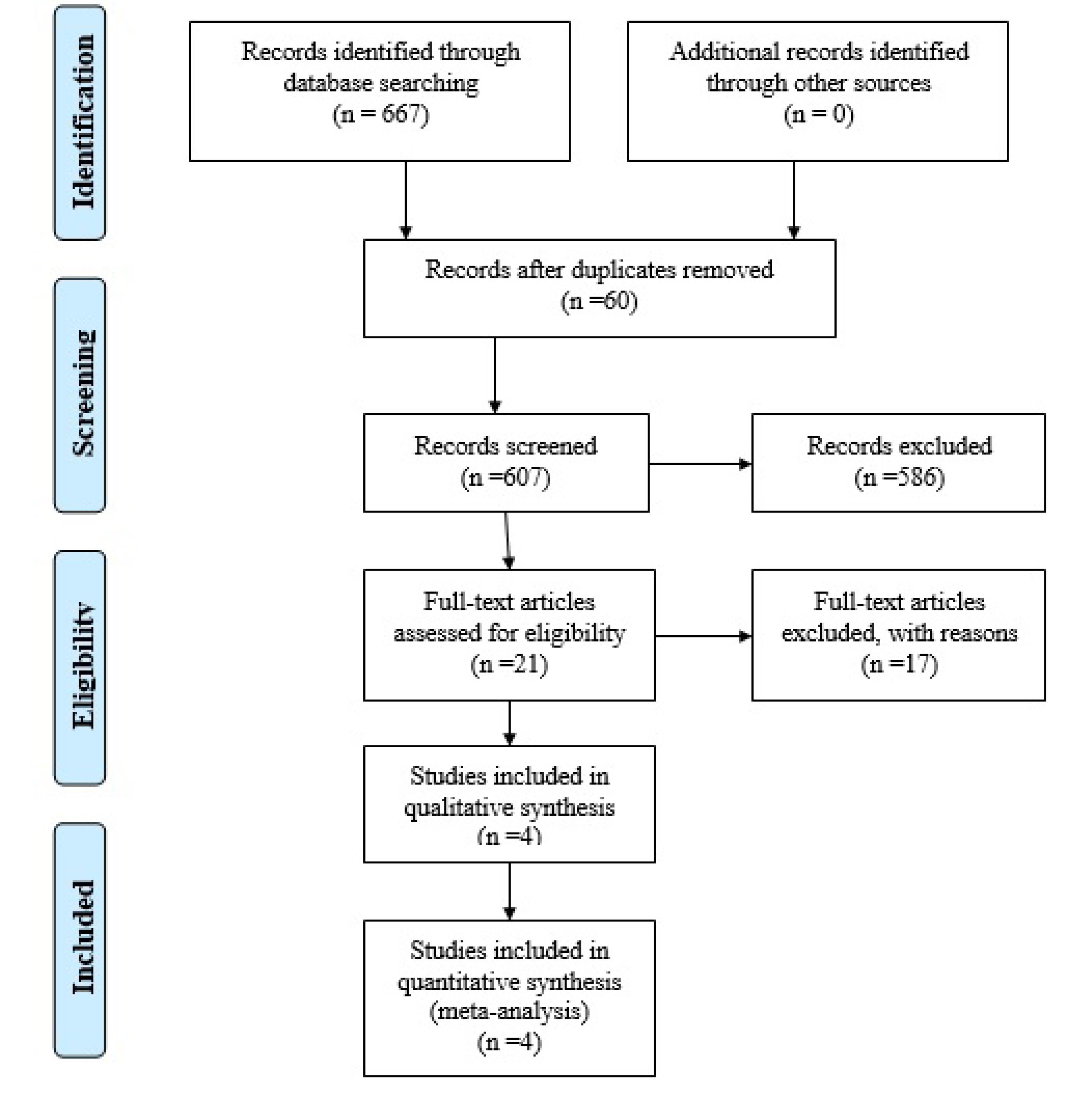
Fig. 1.
PRISMA Flow Diagram of the Study Selection Process
.
PRISMA Flow Diagram of the Study Selection Process
3.2. Characteristics of Included Study
Four descriptive-analytical studies were eligible for systematic review. The studies were conducted in Switzerland (31), Mexico (17), India (32), and Ecuador (33). Various types of milk (e.g., fresh, raw, industrial, and powdered) were investigated in the studies conducted in Switzerland. Milk packaging was predominantly recyclable packaging (Tetrapak aseptic cartons composed of approximately 75% paper), except in the study conducted in Mexico. In addition, milk packaged in plastic was investigated in studies from India and Ecuador.
Two studies employed sample heating to prevent filter blockage caused by fats and casein in milk. The removal of milk components was achieved using a rapid digestion method combining enzymes and alkaline reagents. This process effectively targeted hydrolyzable proteins (e.g., whey and casein), lipids (e.g., triglycerides), and carbohydrates (e.g., lactose), ultimately improving the microfiltration efficiency of the samples. The main characteristics of the included studies are listed in Table 1.
Table 1.
Characteristics of Studies
|
Location
|
Sample Type
|
Sample Size
|
Sample Volume
|
Packing Type
|
Study
|
| Mexico |
Whole milk, lactose-free, half-fat, light, and lactose-free light |
23 |
1000 |
Cartons (75% paper, PE) |
(17) |
| Ecuador |
Fat < 1% |
10 |
500 |
PE |
(34) |
| Switzerland |
Whole milk, skimmed liquid milk, and skimmed milk powders |
9 |
100 |
PE, PP |
(31) |
| India |
Whole milk |
16 |
1000 |
PE, PP |
(33) |
Note. PE: Polyethylene; PP: Polypropylene.
Table 2 presents the methods used in the included studies to identify MPs in milk. Kutralam-Muniasamy and Pérez-Guevara (17) used a conventional filtration method to extract MPs. Briefly, vacuum filtration was used to separate MPs from heated milk samples. Then, filters were dried at room temperature (20 ℃), and MPs retained on the filters were counted using a Nikon H6000L epifluorescence microscope at 100 × magnification. The MPs were subsequently classified based on their color and shape. In addition, scanning electron microscopy (SEM) was used to examine the surface morphology and the chemical and elemental composition of the MPs, while micro-Raman (µ-Raman) spectroscopy was applied to identify polymer types. The resulting spectra were analyzed using reference databases and Bio-Rad KnowItAll software.
Table 2.
Method Used in the Included Studies for MP Extraction and Identification
|
Study
|
Filter Pore Size (µm)
|
Visual Method (References)
|
Visual Tools
|
Chemical Composition Identification
|
QA/QC
|
| (34) |
11 |
(35) |
Epifluorescence microscope H6000L (4-100 × ),
ImageJ software,
SEM |
µ-Raman |
Air purifier, blank runs |
| (31) |
1 |
(36) |
Microscope (10 × ) |
µ-FTIR |
Air purifier, pre-filtered solutions, particle counter, blank runs, cleaning surfaces (using alcohol), method recovery and polymer integrity after food matrix digestion, validation of Raman methodology |
| (33) |
5 |
- |
optical microscope, SEM, EDX |
µ-Raman |
Surface cleaning with alcohol, blank runs, doors and windows kept closed,
Restricted foot traffic |
| (17) |
1 |
(37) |
Epifluorescence microscope H6000L (10-100 × ) |
µ-FTIR |
Doors and windows were kept closed, restricted foot traffic, surface cleaning with alcohol |
Note. MPs: Microplastics; SEM: Scanning electron microscopy; EDX: Energy-dispersive X-ray spectroscopy; µ-FTIR: Micro–Fourier transform infrared spectroscopy; µ-Raman: Micro-Raman spectroscopy; QA/QC: Quality assurance/quality control. In all studies, traditional filtration was employed as the extraction method.
In another study, Kiruba et al (32) applied Fourier-transform infrared (FTIR) spectroscopy to identify MPs following milk filtration using the aforementioned method. The obtained spectra were compared with reference spectra of known polymers for identification. In the study conducted by Diaz-Basantes et al (33), MPs were initially identified by visual observation of particles under a 10x optical microscope after multiple filtration steps following sample preparation using hydrogen peroxide (H2O2; 200 mL for 72 hours) and alcohol (25 mL for 1 hour). Subsequently, the chemical composition of the particles was determined using FTIR analysis.
In a studies conducted in Switzerland, Da Costa Filho et al (31) used more advanced methods to isolate and identify MPs in milk samples. These studies used filtration of hot digested milk solutions treated with reagents such as multi-enzymatic detergent (2 mL), the calcium chelating agent sodium ethylenediaminetetraacetate (10 mL), an alkaline solution of tetramethylammonium hydroxide (2 mL), and microwave-assisted digestion. They examined the surface morphology and chemical and elemental composition of MPs using SEM. Finally, µ-Raman spectroscopy was used to identify the polymer types of the MPs.
3.3. Microplastics in Milk
The present study is the first systematic review and meta-analysis to examine the presence of MPs in milk. The findings of the current meta-analysis confirm that MPs are present in all investigated types of milk. For instance, studies conducted in India and Mexico analyzed four and five international milk brands of milk, respectively, all of which contained MPs (17,32).
Details of the MPs identified in the included studies are summarized in Table 3. In the study conducted by Kiruba et al (32), MP concentrations ranged from 164 to 512 MPs/L in milk samples, with fragment, blue-colored particles, and polyethylene (PE) identified as the dominant characteristics. In Ecuador, µ-FTIR analysis showed that 12% of the particles identified in milk samples were present as fibers and fragments. The concentration of MPs in milk samples (n = 10) ranged from 16 to 53 MPs/L. High-density polyethylene (HDPE) and low-density polyethylene (LDPE), predominantly observed in green, yellow, red, purple, and blue colors, were the most abundant identified polymer types in these samples (33).
Table 3.
Results of Studies the Included and Characteristics of Identified MPs
|
Study
|
Concentration of MPs (per Liter)
|
MP Size (µm)
|
Shape
|
Polymers
|
Colors
|
| (17) |
150 ± 54.76 |
< 500-2000 |
Fib > Fra |
PES > PSU |
Blue, Red, Pink, Brown |
| (34) |
16-53 |
Fra: 2.48–247.54
Fib: 13.45–6742.48 |
Fra > Fib |
HDPE, LDPE > PPAm > PP |
Green, Yellow, Red, Violet, Blue |
| (31) |
2040-10040 |
≤ 7 |
Not specified |
PE > PP > PTFE > PES > PS |
Not specified |
| (33) |
164-512 (L-1) |
Fib: 159-48
Fra: 271-97 |
Fra > Fib |
PP > PE > PA |
Blue, Purple, Pink |
Note. MPs: Microplastics; Fra: Fragments; Fib: Fiber; PES: Polyester; PSU: Polysulfone; HDPE: High density polyethylene; LDPE: Low density polyethylene; PPAm: Polyacrylamide; PA: Polyamide.
In another study conducted in Mexico, the frequency of MPs in milk samples (n = 23) varied from 3 to 11 MPs/L. Fibrous MPs larger than 500 µm and predominantly blue in color were the most frequently identified particles (33). Likewise, the number of MPs detected in milk samples in Switzerland was reported in the range of 2040-10040 MPs/L, with most particles exhibiting a surface area of ≤ 50 µm2 (31).
The dominant polymer types were identified to be PE, polyester (PES), polypropylene (PP), polytetrafluoroethylene (PTFE), and polystyrene (27,31). Likewise, in the study by Da Costa Filho (31), MP concentrations in raw and powdered milk ranged from 960 to 9680 MPs/L. According to their findings, PE and PTFE polymers were the most abundant in raw milk samples and powdered milk, respectively. Due to the differences in sample preparation methods in a studies conducted in Switzerland, a higher number of MP concentrations were observed in a smaller sample volume compared with those analyzed in other studies (31).
The investigation into the presence of MPs in various food products, including bottled drinking water, packaged meat, honey, seafood, salt, beverages, sugar, and milk, began in 2009 (11,15-17,31,37,38) and has significantly increased between 2020 and 2023, particularly with respect to milk (39). Due to their small size, MPs can enter the human food chain (40). Recently, advances in analytical techniques have enabled researchers to detect significant MP levels in a wide range of common foods and beverages. Among these, milk is particularly important for health, as it is a major beverage in the human diet (39).
However, further studies are required to draw more reliable conclusions about the significant relationship between milk type and MP abundance. Meta-analytical evidence from Danopoulos et al demonstrated the widespread presence of MPs in seafood, including mollusks, fish, crustaceans, and Echinodermata, with concentrations ranging from 0 to 10.5 MPs/g (41). Similarly, Danopoulos et al reported substantial variability in MP levels in sea salt, lake salt, rock salt, and well salt (42). The predominance of PP and PE in most milk samples, except those from Mexico, indicates that packaging is a significant source of MPs in milk. However, the absence of PE in some PE-packaged samples (17) indicates the potential contribution of alternative sources, such as water additives or industrial filtration systems. This finding aligns with the findings of Da Costa Filho et al, who attributed the presence of PE in raw milk to components of the milking systems (31). Notably, Mexico’s reliance on paper-based packaging may account for its distinct polymer profile, highlighting the potential role of packaging innovation in reducing MP contamination. Nevertheless, evidence from other published studies indicates that packaging materials such as glass and aluminum do not effectively prevent MP contamination in beverages, including beer (33), indicating that MPs in milk and other beverages may not necessarily originate from packaging. Although environmental plastic waste is considered the primary source of MPs in seafood and drinking water (16), the possibility of MP contamination in milk directly originating from plastic waste is low (11).
The levels of MP contamination and the distribution of polymer types in milk can vary across regions and production systems, from farm-level practices to consumer handling. This variation may stem from multiple potential sources such as milking equipment, operators’ clothing and gloves, protective materials, regulatory frameworks, analytical methods, as well as processing machinery, transportation, storage, and packaging (40,43).
Several important contamination routes have been identified and categorized as follows:
3.3.1. Contaminated Water Added to Milk
Water is often added to liquid milk to replace vegetable fats, resulting in dilution and potential milk adulteration. Various types of polymers can be introduced into milk through this added water (17,32,33). For example, the use of groundwater, which generally contains lower levels of MPs, in Mexico, compared with the use of surface water, which typically contains higher MP concentrations, in India, can change the MP contamination level and the associated polymer profile (33).
3.3.2. Filters Used in Milk Filtration
Filters are employed to remove particles and microorganisms from milk; however, storage and transfer processes within the dairy industry can also contribute to MP contamination. For example, the presence of polyethersulfone and polysulfone in milk samples indicates the degradation of ceramic or polymer membrane filters used in the milk industry (17,31). In addition, Visentin et al reported that the presence of gray–colored MPs in milk samples may result from the wear and tear of materials and equipment used during processing and packaging (43).
3.3.3. Packaging Materials
It has been estimated that nearly 70% of MPs detected in milk are associated with packaging materials, while approximately 30% originate from production processes (44). A study by Badwanache et al analyzed various milk samples and confirmed that packaging contributes substantially to MP contamination in milk (45). In Switzerland, most MPs identified in powdered milk samples were attributed to the drying process and the packaging materials used for milk powders (31). Particles smaller than 15410 μm are considered potential sources of milk contamination due to factors such as packaging damage, airborne MP particles, or malfunctions in milk processing equipment (43).
The abundance of fibers and fragments and the variety of MP types reported across the included studies indicate that milk-processing equipment, storage facilities, and operators’ protective clothing are major sources of MP contamination in milk (43). These results are consistent with those found by Visentin et al (43) and Buyukunal et al (46). A review study investigating MPs in drinking water further revealed that bottled water samples (both plastic and glass) contained higher MP concentrations than tap water. On average, disposable plastic bottles had 2,649 MPs/L, reusable bottles contained 4,889 MPs /L, cardboard packaging had 11 MPs/L, and glass bottles contained 50 MPs/L. The reviewers concluded that differences in the number and types of polymers detected were influenced by water source, industrial processes, and packaging type (48).
3.3.4. Methodology
Detection method and sample preparation can substantially affect the results. In Switzerland, the use of µ-Raman spectroscopy, which detects MPs < 1 µm, resulted in higher MP counts (31). In contrast, optical microscopy techniques used in studies from Mexico and India, which detect MPs < 5–500 µm, led to an underestimation of smaller MPs. Likewise, enzymatic-alkaline digestion protocols employed in Swiss studies enabled efficient removal of organic matter, thereby improving the recovery of MPs (31). However, the use of basic filtration methods to address casein and fat clogging in studies from India caused MP loss during sample preparation (32).
Therefore, the observed MP ranges (Switzerland > India > Mexico) reflect differences in industrial complexity (e.g., automation level and packaging practices), regulatory frameworks, and methodological capabilities, rather than true contamination levels. Additionally, storage temperature conditions for beverage containers have been reported to play a significant role (47).
Research on the relationship between air pollution, population density, and human activities near food-processing industries has reported no significant correlation with MP contamination in food products (33). However, relatively low ambient particulate matter (PM2.5) levels in Switzerland (approximately 7 µg/m³) may contribute to reduced airborne MP deposition (31). In contrast, high air pollution levels in India, where PM2.5 concentrations can reach 100 µg/m³, may increase the risk of MP contamination during open-air processing practices.
3.3. Risk of Bias Assessment
The RoB for all four included studies was evaluated using the Office of Health Assessment and Translation (NTP/OHAT) RoB rating tool across four domains: study design, sampling, reporting, and analysis. Evidence within each domain was rated as high, moderate, low, or very low certainty.
Three of the four studies (17,31,33) were rated as having a low overall RoB, indicating strong methodological quality. One study (33) was rated as having a high overall RoB due to missing or incomplete information in the sampling and reporting domains. Consequently, this study was excluded from the meta-analysis to minimize bias in the pooled estimates.
Detailed RoB ratings for each domain are summarized in Table 4. Overall, the predominance of studies with low RoB supports a high level of confidence in the findings of the present meta-analysis.
Table 4.
Risk of Bias Assessment of Milk Studies
|
Authors (publication year)
|
Study Design
|
Sampling
|
Reporting
|
Analysis
|
Overall Rating
|
References
|
| Kutralam-Muniasamy et al (2020) |
Low |
Low |
Low |
Low |
Low |
(17) |
| Kiruba et al(2022) |
Low |
Low |
Low |
Low |
Low |
(33) |
| Da Costa Filho et al (2021) |
Low |
Low |
Low |
Low |
Low |
(31) |
| Diaz-Basantes et al (2020) |
Low |
High |
High |
Low |
High |
(34) |
Legend:
= Low RoB,
= Unclear RoB,
= High RoB
The results of the meta-analysis are presented in Table 5. Milk samples were classified into five categories: whole milk, lactose-free milk, lactose-free light milk, half-fat milk, low-fat milk. Since the assumptions required for a fixed-effects model were not met, results from the random-effects model were considered acceptable. The estimated mean concentrations of MPs in whole milk (95% CI = -42.70 - 392.86, P = 0.115), lactose-free milk (95% CI = 2.838 - 8.690, P < 0.001), lactose-free light (95% CI = 2.479-5.809, P < 0.001), half-fat milk (95% CI = 4.124 -11.224, P < 0.001), low-fat milk (95% CI = 1.707 8.915, P = 0.004), were significantly different from zero.
Table 5.
Meta-analysis Results for All Milk Types
|
Type of Milk
|
Authors (publication year)
|
Estimate (MPs/L)
|
SD (MPs/L)
|
95% CI (MPs/L)
|
z
|
P
|
Ref.
|
| Whole milk |
Kutralam-Muniasamy et al (2020) |
7.026 |
1.105 |
4.860 - 9.192 |
|
|
(17) |
| Kiruba et al (2022) |
301.000 |
99.188 |
106.591 - 495.409 |
|
|
(33) |
| Da Costa Filho et al (2021) |
259.000 |
74.931 |
112.135 - 405.865 |
|
|
(31) |
| Total (random effects) |
175.080 |
111.12 |
-42.70 - 392.86 |
1.58 |
0.115 |
|
| Lactose free |
Kutralam-Muniasamy et al (2020) |
5.000 |
2.830 |
-0.547 - 10.547 |
|
|
(17) |
| 3.000 |
2.000 |
-0.920 - 6.920 |
|
|
| 4.000 |
1.410 |
1.236 - 6.764 |
|
|
| 6.000 |
2.140 |
1.806 - 10.194 |
|
|
| 10.000 |
1.340 |
7.374 - 12.626 |
|
|
| Total (random effects) |
5.764 |
1.493 |
2.838 - 8.690 |
3.861 |
< 0.001 |
|
| Lactose free light |
Kutralam-Muniasamy et al (2020) |
4.000 |
1.380 |
1.295 - 6.705 |
|
|
(17) |
| 4.000 |
1.230 |
1.589 - 6.411 |
|
|
| 5.000 |
2.240 |
0.610 - 9.390 |
|
|
| Total (fixed effects) |
4.144 |
0.850 |
2.479 - 5.809 |
4.877 |
< 0.001 |
|
| Half fat |
Kutralam-Muniasamy et al (2020) |
8.000 |
4.240 |
-0.310 - 16.310 |
|
|
(17) |
| 6.000 |
2.430 |
1.237 - 10.763 |
|
|
| 11.000 |
3.540 |
4.062 - 17.938 |
|
|
| Total (fixed effects) |
7.674 |
1.811 |
4.124 - 11.224 |
4.237 |
< 0.001 |
|
| Low fat |
Kutralam-Muniasamy et al (2020) |
7.000 |
4.660 |
-2.134 - 16.134 |
|
|
(17) |
| 4.000 |
2.830 |
-1.547 - 9.547 |
|
|
| 6.000 |
2.830 |
0.453 - 11.547 |
|
|
| Total (fixed effects) |
5.311 |
1.839 |
1.707 - 8.915 |
2.889 |
0.004 |
|
Note. MP: Microplastics; MPs/L: Microplastic particles per liter; SD: Standard deviation; CI: Confidence interval; z: Z-statistic from meta-analysis; P: Probability value.
Meta-analysis findings for the seven milk categories are illustrated in Fig. 2. All milk types, including whole milk, lactose-free milk, lactose-free light milk, half-fat milk, low-fat milk, exhibited mean MP concentrations that were significantly greater than zero (P < 0.05 for all categories). Estimated concentrations ranged from fewer than 10 MPs/L in some low-fat and lactose-free products to more than 175 MPs/L in powdered and raw milk. The logarithmic forest plot (Fig. 2) highlights differences across milk types without obscuring lower values.
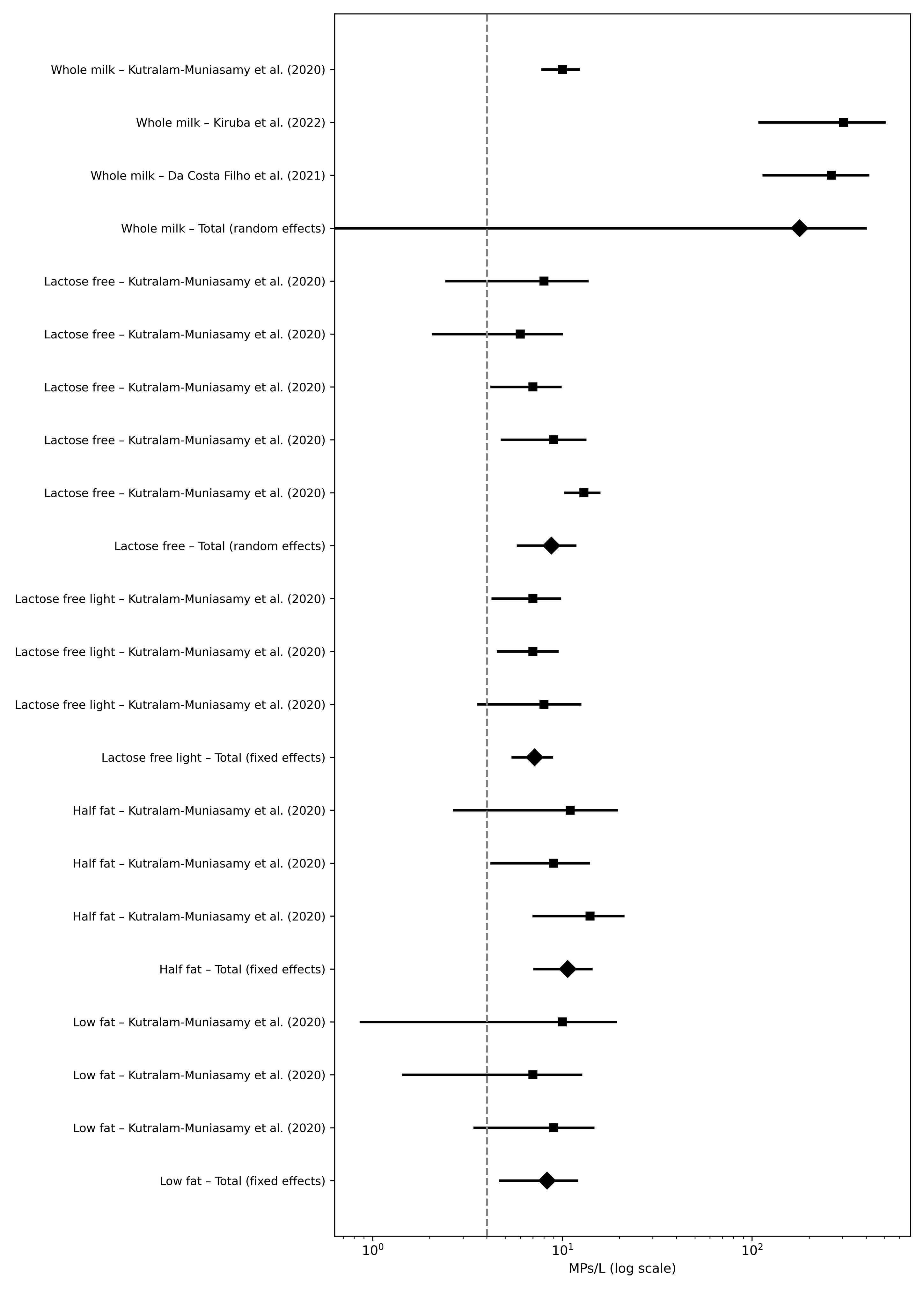
Fig. 2.
Forest Plot of Mean Microplastic Concentrations in Different Milk Types Based on Random-/Fixed-Effects Meta-Analysis. Note. Different milk types include whole milk, lactose-free milk, lactose-free light milk, half-fat milk, low-fat milk, cow’s milk powder, and raw milk. Data are presented with 95% confidence intervals. A logarithmic scale is applied to better visualize differences across milk types
.
Forest Plot of Mean Microplastic Concentrations in Different Milk Types Based on Random-/Fixed-Effects Meta-Analysis. Note. Different milk types include whole milk, lactose-free milk, lactose-free light milk, half-fat milk, low-fat milk, cow’s milk powder, and raw milk. Data are presented with 95% confidence intervals. A logarithmic scale is applied to better visualize differences across milk types
3.4. Health Effects of Microplastics
Although the complete health effects of MPs on humans are not yet fully understood, available evidence indicates that these pollutants may accumulate in the digestive tract and are associated with adverse pregnancy outcomes, cancer, and the formation of blood clots in individuals with kidney disorders (40). MPs can induce inflammatory responses in humans due to their persistence, hydrophobic nature, and chemical composition (49). For instance, particles smaller than 20 µm can cross biological membranes, leading to inflammation, oxidative stress, and DNA damage, which ultimately results in cellular damage (50,51). Studies conducted on fish and invertebrates have demonstrated that ingestion of MPs can cause intestinal obstruction, decreased reproductive success, and altered immune responses, which may subsequently disrupt food webs (52,53). MPs have been found in human blood, lung tissue, and placental samples, raising concerns about their potential to cause inflammation, cytotoxicity, and genotoxicity (54-56). Furthermore, the accumulation of MPs in living organisms may facilitate the transfer of harmful additives, such as phthalates and bisphenol A, which are linked to endocrine disruption and an increased risk of chronic diseases, including cancer, cardiovascular disorders, obesity, and metabolic disorders (29,51,57).
The current systematic review confirmed the presence of MPs in all analyzed milk samples, indicating the potential health risks associated with direct human exposure through consumption. The size and type of MPs in food are toxicologically important factors (58). In Mexico, energy-dispersive spectroscopy (EDS) analysis revealed the presence of metals (Si, Al, Ti, Pb, Mg, Na, Cl, and Fe) on the surface of MPs, most of which are used to improve the quality of plastics in the industry (17). These metals can cause physiological damage, including oxidative stress and carcinogenesis (59). Similarly, studies from India have reported daily MP intake from milk consumption ranging from 30.6 to 79.5 (MPs/day) per person (32). In Mexico, annual intake has been estimated at approximately 858 MPs/L per person through milk consumption (17). The current meta-analysis indicates that milk samples contain between 16 and 10,040 MPs per sample (Table 5), resulting in highly variable intake rates depending on consumption patterns; for example, powdered and raw milk generally exhibit higher MP levels. MP intake from seafood can reach up to 55,000 MPs per year (41), while salt intake varies from 0 to 110 MPs annually (42). For milk specifically, estimated intake ranges from 214 to 20,000 MPs per year, which is lower than that for seafood but still contributes to total dietary exposure. Currently, no safe intake limit for MPs has been established, as insufficient human data are available to define a “safe” threshold for MP consumption (49).
Toxicity observed in rodent studies was found at levels greater than 104 to 106 MPs per day (13,22). Estimates of milk-derived MPs intake range from 55 to 214 MPs per day, which are below these experimental thresholds but indicate chronic low-dose exposure. Given the current milk-derived intake (55–214 MPs/day), exposure levels are unlikely to cause acute adverse effects based on the identified experimental thresholds. However, chronic risks cannot be excluded due to the cumulative bioaccumulation of plastic-associated additives and metals over decades. Additionally, vulnerable populations, including infants and immunocompromised individuals, may be at higher risk of susceptibility. MPs smaller than 1.5 µm can cross the intestinal epithelium and enter the blood, including the placenta (60,61). One study reported maximum daily intake levels of total chromium derived from MPs for different age groups ranging from 0.50 to 1.18 µg/day (62).
3.5. Knowledge Gaps and Limitations
Although the specific sources of MPs in milk have not yet been clearly identified, several factors may contribute to their contamination, including animal feed, water used during production, and the materials employed in milk processing and packaging. These factors may influence the chemical and physical characteristics of the MPs found in milk. Therefore, future research should aim to quantify the relative contribution of these items.
Due to the substantial variation in methods used for MP quantification and qualification, there is an urgent need for standardized MP detection protocols to facilitate reliable comparisons across studies. (46).
Data on the absorption, distribution, specific accumulation, and mechanisms of action of MP in the human body remain limited; consequently, toxicokinetic studies are recommended for future research (50,51).
It was recommended to use environmentally friendly materials, such as biodegradable packaging materials (46).
Nano-sized MPs smaller than 1 µm were not confirmed in this review due to methodological limitations. However, given their significant health risks and probable presence, particularly from degraded packaging or food processing, future studies should prioritize the detection of nanoparticles in milk using advanced analytical techniques. Until evidence is available, the lack of evidence should not be interpreted as evidence of absence.
Smaller MPs (≤ 1.5 µm), which pose higher health risks, were rarely measured. It is suggested that future studies focus specifically on nanoplastics in milk.
A key limitation of this analysis is the search cutoff date of April 1, 2023, which was determined by the original study timeline. Although more recent studies may provide further insights, this review offers a comprehensive synthesis of the evidence available up to that date. Periodic updates are recommended to include any subsequent research.
4. Conclusion
The current systematic review and meta-analysis provide clear evidence of widespread MP contamination in commercial milk products intended for human consumption. The synthesis of global data confirms the presence of MPs in 100% of tested commercial milk samples, with concentrations ranging from 16 to 10,040 particles per sample, indicating a significant and unavoidable exposure route for human populations. Importantly, the meta-analysis shows that MP abundance varies significantly across milk type (P < 0.05). This directly implicates industrial processing and packaging as major sources of contamination. The dominant polymers identified (PE, PP, and PET) are primarily associated with packaging degradation, filtration systems, and water adulteration.
Given the challenge associated with completely removing MPs from the current food system, the implementation of globally harmonized MP threshold values for dairy products is recommended. In addition, the use of non-plastic packaging materials, such as glass or biodegradable polymers, should be encouraged. Moreover, it is recommended to replace plastic-based equipment in milk processing with stainless steel or ceramic alternatives. Rigorous filtration should be applied to water used during milk processing. Finally, there is also a need to prioritize toxicokinetic studies on MP absorption in humans and the development of standardized analytical protocols for MP detection.
Competing Interests
The authors declared no conflict of interests regarding this paper.
Funding
The authors received no financial support for the research, authorship, and/or publication of this article.
Supplementary Files
Supplementary file 1 contains Fig. S1.
(pdf)
References
- Browne MA, Crump P, Niven SJ, Teuten E, Tonkin A, Galloway T. Accumulation of microplastic on shorelines woldwide: sources and sinks. Environ Sci Technol 2011; 45(21):9175-9. doi: 10.1021/es201811s [Crossref] [ Google Scholar]
- Yurtsever M. Glitters as a source of primary microplastics: an approach to environmental responsibility and ethics. J Agric Environ Ethics 2019; 32(3):459-78. doi: 10.1007/s10806-019-09785-0 [Crossref] [ Google Scholar]
- Mirzabayati F, Hamidian AH. Microplastics and their distribution in soil at municipal solid waste landfills: a review. Avicenna J Environ Health Eng 2024; 11(2):126-36. doi: 10.34172/ajehe.5569 [Crossref] [ Google Scholar]
- Brahney J, Hallerud M, Heim E, Hahnenberger M, Sukumaran S. Plastic rain in protected areas of the United States. Science 2020; 368(6496):1257-60. doi: 10.1126/science.aaz5819 [Crossref] [ Google Scholar]
- Duis K, Coors A. Microplastics in the aquatic and terrestrial environment: sources (with a specific focus on personal care products), fate and effects. Environ Sci Eur 2016; 28(1):2. doi: 10.1186/s12302-015-0069-y [Crossref] [ Google Scholar]
- He P, Chen L, Shao L, Zhang H, Lü F. Municipal solid waste (MSW) landfill: a source of microplastics? -Evidence of microplastics in landfill leachate. Water Res 2019; 159:38-45. doi: 10.1016/j.watres.2019.04.060 [Crossref] [ Google Scholar]
- Lechner A, Ramler D. The discharge of certain amounts of industrial microplastic from a production plant into the River Danube is permitted by the Austrian legislation. Environ Pollut 2015; 200:159-60. doi: 10.1016/j.envpol.2015.02.019 [Crossref] [ Google Scholar]
- Chai B, Wei Q, She Y, Lu G, Dang Z, Yin H. Soil microplastic pollution in an e-waste dismantling zone of China. Waste Manag 2020; 118:291-301. doi: 10.1016/j.wasman.2020.08.048 [Crossref] [ Google Scholar]
- Du C, Liang H, Li Z, Gong J. Pollution characteristics of microplastics in soils in southeastern suburbs of Baoding city, China. Int J Environ Res Public Health 2020; 17(3):845. doi: 10.3390/ijerph17030845 [Crossref] [ Google Scholar]
- Everaert G, De Rijcke M, Lonneville B, Janssen CR, Backhaus T, Mees J. Risks of floating microplastic in the global ocean. Environ Pollut 2020; 267:115499. doi: 10.1016/j.envpol.2020.115499 [Crossref] [ Google Scholar]
- Kedzierski M, Lechat B, Sire O, Le Maguer G, Le Tilly V, Bruzaud S. Microplastic contamination of packaged meat: occurrence and associated risks. Food Packag Shelf Life 2020; 24:100489. doi: 10.1016/j.fpsl.2020.100489 [Crossref] [ Google Scholar]
- Kutralam-Muniasamy G, Shruti VC, Pérez-Guevara F, Roy PD. Microplastic diagnostics in humans: “The 3Ps” progress, problems, and prospects. Sci Total Environ 2023; 856(Pt 2):159164. doi: 10.1016/j.scitotenv.2022.159164 [Crossref] [ Google Scholar]
- Pittroff M, Müller YK, Witzig CS, Scheurer M, Storck FR, Zumbülte N. Microplastic analysis in drinking water based on fractionated filtration sampling and Raman microspectroscopy. Environ Sci Pollut Res Int 2021; 28(42):59439-51. doi: 10.1007/s11356-021-12467-y [Crossref] [ Google Scholar]
- Tiwari M, Rathod TD, Ajmal PY, Bhangare RC, Sahu SK. Distribution and characterization of microplastics in beach sand from three different Indian coastal environments. Mar Pollut Bull 2019; 140:262-73. doi: 10.1016/j.marpolbul.2019.01.055 [Crossref] [ Google Scholar]
- Vidyasakar A, Krishnakumar S, Kumar KS, Neelavannan K, Anbalagan S, Kasilingam K. Microplastic contamination in edible sea salt from the largest salt-producing states of India. Mar Pollut Bull 2021; 171:112728. doi: 10.1016/j.marpolbul.2021.112728 [Crossref] [ Google Scholar]
- Vital SA, Cardoso C, Avio C, Pittura L, Regoli F, Bebianno MJ. Do microplastic contaminated seafood consumption pose a potential risk to human health?. Mar Pollut Bull 2021; 171:112769. doi: 10.1016/j.marpolbul.2021.112769 [Crossref] [ Google Scholar]
- Kutralam-Muniasamy G, Pérez-Guevara F, Elizalde-Martínez I, Shruti VC. Branded milks - are they immune from microplastics contamination?. Sci Total Environ 2020; 714:136823. doi: 10.1016/j.scitotenv.2020.136823 [Crossref] [ Google Scholar]
- Thiel M, Luna-Jorquera G, Álvarez-Varas R, Gallardo C, Hinojosa IA, Luna N. Impacts of marine plastic pollution from continental coasts to subtropical gyres—fish, seabirds, and other vertebrates in the SE Pacific. Front Mar Sci 2018; 5:238. doi: 10.3389/fmars.2018.00238 [Crossref] [ Google Scholar]
- Rillig MC. Microplastic in terrestrial ecosystems and the soil?. Environ Sci Technol 2012; 46(12):6453-4. doi: 10.1021/es302011r [Crossref] [ Google Scholar]
- Hernandez LM, Xu EG, Larsson HC, Tahara R, Maisuria VB, Tufenkji N. Plastic teabags release billions of microparticles and nanoparticles into tea. Environ Sci Technol 2019; 53(21):12300-10. doi: 10.1021/acs.est.9b02540 [Crossref] [ Google Scholar]
- Galloway TS, Cole M, Lewis C. Interactions of microplastic debris throughout the marine ecosystem. Nat Ecol Evol 2017; 1(5):116. doi: 10.1038/s41559-017-0116 [Crossref] [ Google Scholar]
- Schirinzi GF, Pérez-Pomeda I, Sanchís J, Rossini C, Farré M, Barceló D. Cytotoxic effects of commonly used nanomaterials and microplastics on cerebral and epithelial human cells. Environ Res 2017; 159:579-87. doi: 10.1016/j.envres.2017.08.043 [Crossref] [ Google Scholar]
- Setälä O, Fleming-Lehtinen V, Lehtiniemi M. Ingestion and transfer of microplastics in the planktonic food web. Environ Pollut 2014; 185:77-83. doi: 10.1016/j.envpol.2013.10.013 [Crossref] [ Google Scholar]
- Tu C, Liu Y, Li L, Li Y, Vogts A, Luo Y. Structural and functional characteristics of microplastic associated biofilms in response to temporal dynamics and polymer types. Bull Environ Contam Toxicol 2021; 107(4):633-9. doi: 10.1007/s00128-021-03333-1 [Crossref] [ Google Scholar]
- Akhbarizadeh R, Moore F, Keshavarzi B. Investigating a probable relationship between microplastics and potentially toxic elements in fish muscles from northeast of Persian Gulf. Environ Pollut 2018; 232:154-63. doi: 10.1016/j.envpol.2017.09.028 [Crossref] [ Google Scholar]
- Cho Y, Shim WJ, Jang M, Han GM, Hong SH. Abundance and characteristics of microplastics in market bivalves from South Korea. Environ Pollut 2019; 245:1107-16. doi: 10.1016/j.envpol.2018.11.091 [Crossref] [ Google Scholar]
- Thompson LA, Darwish WS. Environmental chemical contaminants in food: review of a global problem. J Toxicol 2019; 2019:2345283. doi: 10.1155/2019/2345283 [Crossref] [ Google Scholar]
- Maleki Roveshti M, Khajehnasiri F, Akhlaghi Pirposhteh E, Amanat N, Salehi Sahlabadi A, Vatani J. A systematic review on the climate and ecosystem change associated with the COVID-19 epidemic: global challenges. Avicenna J Environ Health Eng 2022; 9(2):117-23. doi: 10.34172/ajehe.2022.4209 [Crossref] [ Google Scholar]
- Parolini M, Stucchi M, Ambrosini R, Romano A. A global perspective on microplastic bioaccumulation in marine organisms. Ecol Indic 2023; 149:110179. doi: 10.1016/j.ecolind.2023.110179 [Crossref] [ Google Scholar]
- Ye JJ, Wang SS, Fang Y, Zhang XJ, Hu CY. Ambient air pollution exposure and risk of chronic kidney disease: a systematic review of the literature and meta-analysis. Environ Res 2021; 195:110867. doi: 10.1016/j.envres.2021.110867 [Crossref] [ Google Scholar]
- Da Costa Filho PA, Andrey D, Eriksen B, Peixoto RP, Carreres BM, Ambühl ME. Detection and characterization of small-sized microplastics ( < 5 µm) in milk products. Sci Rep 2021; 11(1):24046. doi: 10.1038/s41598-021-03458-7 [Crossref] [ Google Scholar]
- Kiruba R, Preethi M, Aganasteen R, Rithick Raj M, Hannah Thabitha C, Monica P. Identification of microplastics as emerging contaminant in branded milk of Tamil Nadu state, India. Asian J Biol Life Sci 2022; 11(1):181-7. doi: 10.5530/ajbls.2022.11.25 [Crossref] [ Google Scholar]
- Diaz-Basantes MF, Conesa JA, Fullana A. Microplastics in honey, beer, milk and refreshments in Ecuador as emerging contaminants. Sustainability 2020; 12(14):5514. doi: 10.3390/su12145514 [Crossref] [ Google Scholar]
-
Masura J, Baker J, Foster G, Arthur C. Laboratory Methods for the Analysis of Microplastics in the Marine Environment: Recommendations for Quantifying Synthetic Particles in Waters and Sediments. Siver Spring, MD: NOAA Marine Debris Division; 2015. doi: 10.25607/obp-604.
- Bonet Aracil MA. Propiedades geométricas de las fibras. 2018. Available from: https://riunet.upv.es/handle/10251/103898.
- Heddagaard FE, Møller P. Hazard assessment of small-size plastic particles: is the conceptual framework of particle toxicology useful?. Food Chem Toxicol 2020; 136:111106. doi: 10.1016/j.fct.2019.111106 [Crossref] [ Google Scholar]
- Tong H, Jiang Q, Hu X, Zhong X. Occurrence and identification of microplastics in tap water from China. Chemosphere 2020; 252:126493. doi: 10.1016/j.chemosphere.2020.126493 [Crossref] [ Google Scholar]
- Al Naggar Y, Brinkmann M, Sayes CM, Al-Kahtani SN, Dar SA, El-Seedi HR. Are honey bees at risk from microplastics?. Toxics 2021; 9(5):109. doi: 10.3390/toxics9050109 [Crossref] [ Google Scholar]
- Baeza-Martínez C, Zamora-Molina L, Garcia-Pachon E, Masiá M, Hernandez-Blasco L, Bayo J. Environmental microplastics in the lower airway of shoe manufacturing workers. Open Respir Arch 2022; 4(4):100209. doi: 10.1016/j.opresp.2022.100209 [Crossref] [ Google Scholar]
- Adjama I, Dave H, Balarabe BY, Masiyambiri V, Marycleopha M. Microplastics in dairy products and human breast milk: contamination status and greenness analysis of available analytical methods. J Hazard Mater Lett 2024; 5:100120. doi: 10.1016/j.hazl.2024.100120 [Crossref] [ Google Scholar]
- Anika F, Rahman MA, Anik AH, Tareq SM. Dairy under the microscope: a study on microplastic pollution in commercially available milk in Bangladesh. J Food Compost Anal 2025; 147:108037. doi: 10.1016/j.jfca.2025.108037 [Crossref] [ Google Scholar]
- Danopoulos E, Jenner LC, Twiddy M, Rotchell JM. Microplastic contamination of seafood intended for human consumption: a systematic review and meta-analysis. Environ Health Perspect 2020; 128(12):126002. doi: 10.1289/ehp7171 [Crossref] [ Google Scholar]
- Danopoulos E, Jenner L, Twiddy M, Rotchell JM. Microplastic contamination of salt intended for human consumption: a systematic review and meta-analysis. SN Appl Sci 2020; 2(12):1950. doi: 10.1007/s42452-020-03749-0 [Crossref] [ Google Scholar]
- Visentin E, Niero G, Benetti F, O’Donnell C, De Marchi M. Assessing microplastic contamination in milk and dairy products. NPJ Sci Food 2025; 9(1):135. doi: 10.1038/s41538-025-00506-8 [Crossref] [ Google Scholar]
- Binelli A, Tognetto M, Cremonesi C, Della Torre C, Caorsi G, Magni S. Dietary exposure and risk assessment of plastic particles in cow’s milk stored in various packaging materials. J Hazard Mater 2025; 492:138052. doi: 10.1016/j.jhazmat.2025.138052 [Crossref] [ Google Scholar]
- Badwanache P, Dodamani S. Qualitative and quantitative analysis of microplastics in milk samples. Indian J Health Sci Biomed Res KLEU 2024; 17(2):150-4. doi: 10.4103/kleuhsj.kleuhsj_343_23 [Crossref] [ Google Scholar]
- Buyukunal SK, Rbaibi Zipak S, Muratoglu K. Microplastics in a traditional Turkish dairy product: Ayran. Pol J Food Nutr Sci 2023; 73(2):139-50. doi: 10.31883/pjfns/163061 [Crossref] [ Google Scholar]
- Danopoulos E, Twiddy M, Rotchell JM. Microplastic contamination of drinking water: a systematic review. PLoS One 2020; 15(7):e0236838. doi: 10.1371/journal.pone.0236838 [Crossref] [ Google Scholar]
- Yuan Z, Nag R, Cummins E. Human health concerns regarding microplastics in the aquatic environment - from marine to food systems. Sci Total Environ 2022; 823:153730. doi: 10.1016/j.scitotenv.2022.153730 [Crossref] [ Google Scholar]
- Dzierżyński E, Gawlik PJ, Puźniak D, Flieger W, Jóźwik K, Teresiński G. Microplastics in the human body: exposure, detection, and risk of carcinogenesis: a state-of-the-art review. Cancers (Basel) 2024; 16(21):3703. doi: 10.3390/cancers16213703 [Crossref] [ Google Scholar]
- Kannan K, Vimalkumar K. A review of human exposure to microplastics and insights into microplastics as obesogens. Front Endocrinol (Lausanne) 2021; 12:724989. doi: 10.3389/fendo.2021.724989 [Crossref] [ Google Scholar]
- Zink L, Wood CM. The effects of microplastics on ionoregulatory processes in the gills of freshwater fish and invertebrates: a prospective review. Comp Biochem Physiol A Mol Integr Physiol 2024; 295:111669. doi: 10.1016/j.cbpa.2024.111669 [Crossref] [ Google Scholar]
- Karlsson TM, Vethaak AD, Almroth BC, Ariese F, van Velzen M, Hassellöv M. Screening for microplastics in sediment, water, marine invertebrates and fish: method development and microplastic accumulation. Mar Pollut Bull 2017; 122(1-2):403-8. doi: 10.1016/j.marpolbul.2017.06.081 [Crossref] [ Google Scholar]
- Zhu L, Ma M, Sun X, Wu Z, Yu Y, Kang Y. Microplastics entry into the blood by infusion therapy: few but a direct pathway. Environ Sci Technol Lett 2024; 11(2):67-72. doi: 10.1021/acs.estlett.3c00905 [Crossref] [ Google Scholar]
- Amato-Lourenço LF, Carvalho-Oliveira R, Júnior GR, Dos Santos Galvão L, Ando RA, Mauad T. Presence of airborne microplastics in human lung tissue. J Hazard Mater 2021; 416:126124. doi: 10.1016/j.jhazmat.2021.126124 [Crossref] [ Google Scholar]
- Liu S, Liu X, Guo J, Yang R, Wang H, Sun Y. The association between microplastics and microbiota in placentas and meconium: the first evidence in humans. Environ Sci Technol 2023; 57(46):17774-85. doi: 10.1021/acs.est.2c04706 [Crossref] [ Google Scholar]
- Li S, Keenan JI, Shaw IC, Frizelle FA. Could microplastics be a driver for early onset colorectal cancer?. Cancers (Basel) 2023; 15(13):3323. doi: 10.3390/cancers15133323 [Crossref] [ Google Scholar]
- Wang T, Hu M, Xu G, Shi H, Leung JYS, Wang Y. Microplastic accumulation via trophic transfer: can a predatory crab counter the adverse effects of microplastics by body defence?. Sci Total Environ 2021; 754:142099. doi: 10.1016/j.scitotenv.2020.142099 [Crossref] [ Google Scholar]
- Wang F, Wong CS, Chen D, Lu X, Wang F, Zeng EY. Interaction of toxic chemicals with microplastics: a critical review. Water Res 2018; 139:208-19. doi: 10.1016/j.watres.2018.04.003 [Crossref] [ Google Scholar]
- Wang J, Peng C, Li H, Zhang P, Liu X. The impact of microplastic-microbe interactions on animal health and biogeochemical cycles: a mini-review. Sci Total Environ 2021; 773:145697. doi: 10.1016/j.scitotenv.2021.145697 [Crossref] [ Google Scholar]
- Barboza LG, Dick Vethaak A, Lavorante B, Lundebye AK, Guilhermino L. Marine microplastic debris: an emerging issue for food security, food safety and human health. Mar Pollut Bull 2018; 133:336-48. doi: 10.1016/j.marpolbul.2018.05.047 [Crossref] [ Google Scholar]
- Liao YL, Yang JY. Microplastic serves as a potential vector for Cr in an in-vitro human digestive model. Sci Total Environ 2020; 703:134805. doi: 10.1016/j.scitotenv.2019.134805 [Crossref] [ Google Scholar]