Avicenna J Environ Health Eng. 11(2):126-136.
doi: 10.34172/ajehe.5569
Review Article
Microplastics and Their Distribution in Soil at Municipal Solid Waste Landfills: A Review
Farzaneh Mirzabayati 1  , Amir Hossein Hamidian 1, *
Author information:
1Department of Environmental Science and Engineering, Faculty of Natural Resources, University College of Agriculture & Natural Resources, University of Tehran, P.O. BOX.4314, Karaj, Iran
Abstract
Microplastics (MPs) are persistent pollutants that pose significant long-term environmental risks, particularly in urban landfill soils, which have received less attention than aquatic environments. This review sought to address this gap by investigating microplastic contamination across various soil layers at landfill sites. The results indicated that factors such as landfill age and waste composition significantly influence the types and concentrations of MPs. Concentrations varied with soil depth, with higher levels observed in older landfills containing substantial quantities of plastic waste. Regions characterized by extensively weathered plastic waste exhibited a greater prevalence of smaller microplastic particles. The extensive production of plastic waste, coupled with its associated health and environmental risks, highlights the urgent need for policies to reduce plastic consumption and enhance recycling efforts. Given the critical role of soil in the food chain and its connections to air and water pollution, ongoing monitoring of soil contamination by MPs is essential. Additionally, identifying sources of microplastic pollution and implementing strategies to mitigate their entry into the environment are crucial to addressing this growing environmental concern.
Keywords: Microplastic, Soil, Landfill, Waste, Polymer,
Copyright and License Information
© 2024 The Author(s); Published by Hamadan University of Medical Sciences.
This is an open-access article distributed under the terms of the Creative Commons Attribution License (
https://creativecommons.org/licenses/by/4.0), which permits unrestricted use, distribution, and reproduction in any medium, provided the original work is properly cited.
Please cite this article as follows: Mirzabayati F, Hamidian AH. Microplastics and their distribution in soil at municipal solid waste landfills: a review. Avicenna J Environ Health Eng. 2024;11(2):126-136. doi:10.34172/ajehe.5569
1. Introduction
Plastics, a diverse group of synthetic polymers, have become an integral part of modern life due to their versatility, durability, lightweight nature, and cost-effective production (1-3). These properties have facilitated the widespread replacement of natural materials across various industries, increasing dependence on plastic products. Consequently, global demand for plastics continues to rise (4). Plastic pollution has emerged as one of the most pressing environmental challenges of the 21st century (3,5). In 2015, global plastic production reached 4.9 billion tons, with projections indicating it will increase to 12 billion tons per year by 2050 (6). Unfortunately, approximately 80% of all produced plastics are either landfilled or released into the open environment, resulting in a rapidly growing environmental concern (4).
Plastics can be categorized by size into macroplastics (greater than 25 mm), mesoplastics (25–5 mm), microplastic (5 mm to 1 µm), and nanoplastics (less than 1 µm) (7-9). Microplastic particles are primarily generated through the fragmentation of larger plastics due to mechanical forces, ultraviolet (UV) radiation, weathering, and biological degradation processes (10-14). Microplastics (MPs) have garnered significant attention in both scientific and social contexts due to their widespread presence in the environment and their potential health risks (15).
Landfills, as the most common solid waste management system (16), serve as both reservoirs and sources of MPs (3,10,17-19). Plastic waste in landfills is subjected to harsh environmental conditions, which facilitate complex biochemical reactions and physical transformations. These conditions, which include fluctuations in leachate pH (ranging from 4.5 to 9), high salinity, temperature variations, gas emissions (e.g., CO₂ and CH₄), physical stress, and microbial activity, contribute to the degradation of plastics into MPs (20). This suggests that plastic decomposition in landfills is a significant source of MPs (21).
Although MPs have not been the primary focus of traditional landfill pollution studies, their potential for transport via leachate pathways is an emerging concern. Research on landfill emissions indicates that the physicochemical characteristics of waste, along with landfill age and environmental conditions, influence the leaching behavior of pollutants. Leachate from landfills contains various pollutants, including heavy metals and organic contaminants (22). MPs transported via leachate can infiltrate groundwater and accumulate in agricultural soils, here they may act as carriers of other pollutants, exacerbating environmental damage (23,24). Additionally, MPs can disperse from landfills through airborne pathways, driven by wind and precipitation, thereby contributing to their spread into surrounding ecosystems (25).
Plastic waste enters the soil through multiple pathways, including agricultural and industrial waste, urban activities, and improper disposal practices (26,27). Soil, as a vital renewable resource, underpins ecosystems and human societies, playing a crucial role in sustaining life (28). However, the slow rate of soil formation compared to its rapid rate of degradation highlights the need for urgent soil conservation measures (10).
Soil serves as a crucial medium for pollutant transfer between air and water systems. The risks associated with MPs in soil extend beyond pollution, as these particles may infiltrate food chains, posing potential threats to human health (26). While studies on microplastic contamination in aquatic ecosystems have been conducted for over a decade, research on MPs in soil has received less attention due to the challenges associated with their detection and assessment, as soil contamination is less visible and more difficult to quantify (29).
Given the essential role of soil in food production and its interconnectivity with air and water systems, further research into the potential spread of MPs from landfills is necessary (13). Studies indicate significant variation in the composition, shape, color, and concentration of MPs present in landfill soil (25). Moreover, the presence of MPs in soil can alter its structure, fertility, and water retention capacity, ultimately affecting plant growth and microbial communities (30-33).
According to the Globally Harmonized System of Classification and Labeling of Chemicals (GHS), more than 50% of plastics contain hazardous monomers, additives, and chemical byproducts, which can have severe environmental consequences (34,35). Prolonged exposure to MPs may pose significant health risks to humans due to the presence of organic and inorganic pollutants (2,36-38). For instance, organic pigments (e.g., chromophores) and inorganic pigments (e.g., metals) used in colored plastics can negatively impact the nervous and reproductive systems of both humans and animals (39). Once ingested, MPs can release toxins, additives, and monomers, some of which have been linked to carcinogenic effects (40). Furthermore, human ingestion of MPs has been associated with lung damage and altered liver function (41,42). Organisms that consume MPs may be preyed upon by higher trophic-level species, leading to the biomagnification of these particles within the food chain. MPs can persist in living organisms, causing liver inflammation, fat accumulation, increased toxicity, and inhibited growth. Additionally, they can act as carriers for chemical pollutants and heavy metals, thereby exacerbating their toxic effects (43).
These findings raise concerns regarding the long-term environmental impact of MPs, underscoring the need for continuous soil quality monitoring and improved plastic waste management practices to mitigate their adverse effects. A comprehensive understanding of the sources, pathways, and degradation mechanisms of MPs is essential for effectively addressing plastic pollution (44). While solid waste remains the predominant source of MPs in the environment, their fate, treatment, and breakdown across various solid waste streams remain poorly understood. This knowledge gap hinders the development of effective mitigation strategies. Extensive research is necessary to elucidate these processes and enhance our ability to manage and reduce microplastic pollution.
2. Methods
2.1. Search Strategies and Data Collection
The search strategies for this study were developed by reviewing similar previous studies to achieve the research objective, which centers on examining microplastic pollution in the soils of urban landfill sites. To identify relevant studies, key terms and their synonyms were used, including “Microplastic”, “Soil”, “Landfill”, and “Waste Disposal”. A comprehensive search was conducted across several international electronic databases, including Scopus, Science Direct, Web of Science, and PubMed, as well as domestic databases such as Magiran, Civilica, and the Scientific Information Database (SID). The search was not restricted by time, covering studies available up to 2025 (Fig. 1). The extracted data from the reviewed studies included the study location, year of publication, detection methods, concentration levels, size of MPs, sample numbers, as well as the shape and composition of the MPs. The findings are summarized in Table 1.
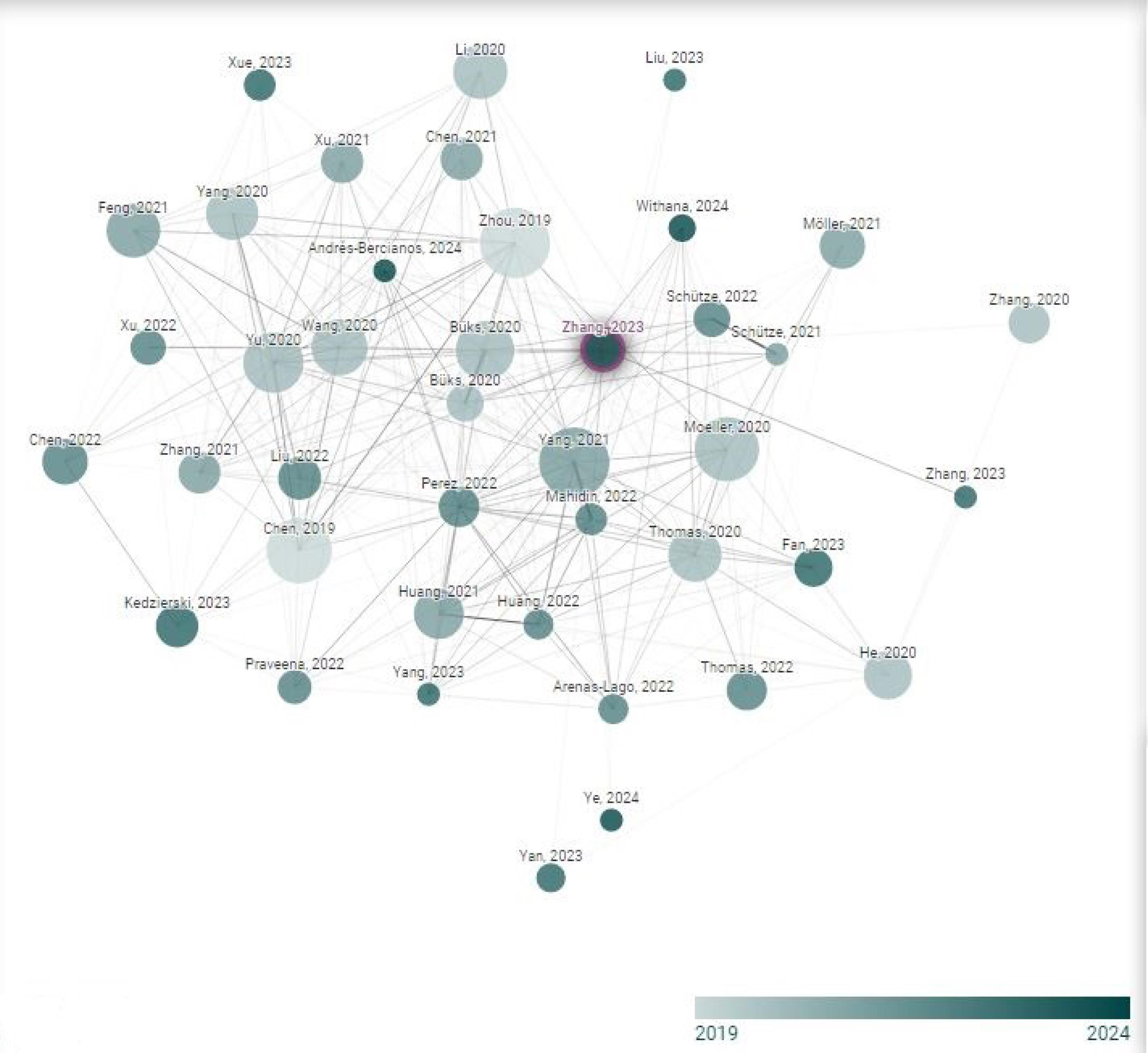
Fig. 1.
Network of Related Studies on Microplastic Contamination in Soil at MSW Landfills
.
Network of Related Studies on Microplastic Contamination in Soil at MSW Landfills
Table 1.
Characteristics of Microplastics in Landfill Soils
|
Location
|
Polymer
|
Samples
|
Extraction
|
Particle Size
|
Abundance (Particles/kg)
|
Particle Shape
|
Detection Methods
|
Year
|
Ref.
|
| Indonesia |
PE, PVC, PS, PP, PET,PA |
6 |
N/A |
N/A |
60,111 p/kg |
Fiber, fragment, film, pellet |
FTIR |
2024 |
(3) |
| China |
N/A |
7 |
ZnCl2 |
< 10 µm - 5 mm |
3573 g-1 |
Pellet, fiber |
Fluorescence microscope |
2024 |
(5) |
| Bangladesh |
LDPE, HDPE |
10 |
NaCl |
10-200 μm |
N/A |
Film, fiber, fragment |
FTIR |
2020 |
(17) |
| Korea |
PP, PE, PET, PS, PVC |
2 landfills |
LMT |
1-5 mm |
73.4-97.8 MPs/kg |
Film, fiber, fragment |
FTIR, Stereo microplastic |
2023 |
(20) |
| China |
PET, PVC, PA, PE, PU, PS, PP |
N/A |
N/A |
< 100 µm - 5 mm |
4000-168000 |
Film, fiber, fragment |
μ-FTIR, SEM |
2022 |
(27) |
| China |
PE, PP, PET |
10 |
N/A |
30-1000 μm |
570-14200 |
Film, fiber, fragment |
FTIR, SEM, Stereo microplastic |
2022 |
(28) |
| Pakistan |
N/A |
40 |
N/A |
50 µm - 5 mm |
1750-12200 |
Fragment, fiber, foam, film |
Stereo microscope |
2020 |
(45) |
| Lithuania |
PE, PP |
3 Age sections |
N/A |
1-5 mm |
55000 |
Film |
FTIR |
2023 |
(46) |
| Iran |
LDPE, HDPE, PE, PS, PET |
6 |
ZnCl2 |
0.4 µm - 5 mm |
3160- 76513 |
Film, fragment, fiber, pellet |
FTIR, Stereo microplastic |
2023 |
(47) |
| Iran |
LDPE, PP, PS, PET, PA, PVC |
56 |
NaCl, ZnCl2 |
0.1- 2 mm |
225- 863 |
Film, fiber, fragment |
FTIR, SEM, Stereo microplastic |
2023 |
(48) |
| Thailand |
PE, PP, PET |
12 |
NaCl, ZnCl2 |
N/A |
686.45 to 2278.44 |
Sphere, granule, fiber, films, irregular |
FTIR |
2019 |
(49) |
| UK |
PS, PET, PP, PE |
6 |
N/A |
25 µm - > 567 µm |
120-420 |
Fiber, fragment, foam |
ATR-FTIR, μ-FTIR, GC–MS |
2023 |
(50) |
| China |
PE, PP, PS |
30 |
N/A |
0.5 mm - 1 mm |
5.49-7.62 kg/ton |
Fiber, film, fragment, granule |
Py-GC/MS |
2023 |
(51) |
| China |
PE, PP, PS |
9 |
NaCl |
0.23–4.97 mm |
20000–91000 |
Fragment, fiber, film, granule |
μ-FTIR |
2019 |
(52) |
| India |
PP |
7 |
NaCl |
1 µm-2 mm |
370-410 |
Fiber, fragment |
FTIR, SEM |
2022 |
(53) |
| India |
PP, PE |
10 |
NaCl |
600 µm -1 mm |
180-1120 |
Fragment, fiber, film, foam |
FTIR, SEM, Stereo microplastic, EDS |
2023 |
(54) |
| Kazakhstan |
N/A |
6 |
NaCl, ZnCl2 |
< 5 mm |
810 |
Fiber, film, pellet |
Microscope |
2023 |
(55) |
| Portugal |
PE, PP, PS |
10 |
ZnCl2 |
50 µm - 250 µm |
106000 |
Films, fiber, fragment, pellet |
μ-FTIR, Stereo microscope |
2023 |
(56) |
| Indonesia |
PE, PP |
6 |
NaCl, ZnCl2 |
N/A |
16600-21900 |
Fragment, film |
FTIR, Image-J |
2024 |
(57) |
| Iran |
N/A |
12 |
ZnCl2 |
100 µm- 1 mm |
1872 |
fragment, film, fiber, foam, sphere |
Stereomicroscope/ Binocular, SEM |
2022 |
(58) |
| India |
PP, PE, PET, PA |
3
Landfills |
N/A |
> 425 µm |
25950-41110 |
Fiber, fragment |
FTIR, SEM |
2024 |
(59) |
| Turkey |
PE, PP |
3
Landfills |
K2CO3 |
> 500 µm |
311-463 |
Fiber, fragment |
FTIR |
2025 |
(60) |
| Iran |
PP, PS, PA, PVC |
22 |
ZnCl2 |
0.3-4.75 |
470 |
Fiber, fragment |
Raman, SEM |
2025 |
(61) |
| Indonesia |
PE, PP, PS |
12 |
NaCl |
N/A |
920- 2340 |
Fiber, fragment, film, pellet |
FTIR |
2025 |
(62) |
| China |
PET, PP, PU, PS |
18 |
ZnCl2 |
20-100 µm |
592-47819 |
Fiber, fragment |
N/A |
2025 |
(63) |
Note. μ-FTIR: Micro Fourier transform infrared spectrometer; SEM: Scanning electron microscopy; EDS: Energy dispersive spectroscopy; GC–MS: Gas chromatography−Mass spectrometer; Image-J: Image processing and analysis in Java; PP: Polypropylene; PS: Polystyrene; PE: Polyethylene; PVC: Polyvinyl chloride; PA: Polyamide; PET: Polyethylene terephthalate; PS: Polyurethane; LDPE: Low-density polyethylene; HDPE: High density polyethylene.
3. Results and Discussion
3.1. Microplastic Pollution in Urban Landfills
In most studies, the improper management of municipal solid waste landfills has been identified as a primary pathway for the release of microplastic particles in urban areas. The MPs discharged into landfill sites may pose additional risks to human health and the environment. They can absorb hazardous, toxic, and persistent chemicals such as heavy metals, which are known as carcinogenic substances. These heavy metals can exert toxic effects on the central nervous system, liver, kidneys, heart, lungs, skin, and reproductive system, depending on the level and duration of exposure (64). Additionally, MPs have the potential to accumulate these toxic substances on their surfaces, thereby amplifying their harmful effects multiple times.
The role of landfills as a source of MPs in terrestrial environments requires further investigation. Given the simultaneous occurrence of chemical, physical, and biological processes in landfills, these sites represent practical intervention points for MP removal and for preventing exposure to both the environment and humans effectively. To date, no effective strategy for the removal of MPs has been implemented in landfills (65). Understanding the occurrence, fate, and degradation pathways of MPs within solid waste is essential for the development of effective control and reduction strategies (26). The abundance of MPs in landfills is attributed to the volume of plastic waste, the waste management practices at these sites, and the age of the landfills. The concentration and characteristics of MPs vary; smaller MPs are typically more prevalent in older landfills, while larger MPs tend to dominate in newer landfills. Landfills can also generate secondary MPs through fragmentation and degradation processes (66). Consequently, the abundance of MP particles in landfills is higher than in agricultural soils, sediments, sewage sludge, and urban areas, establishing landfills as significant sources of MPs in terrestrial environments.
A study by Rafique et al (45) collected samples from various land use types, including agricultural areas, new and old waste disposal sites, industrial zones, and green spaces. The results indicated that microplastic contamination in Lahore is closely associated with human activities and environmental conditions, with the emergence of this pollutant linked to plastic production, plastic use, as well as waste management practices. Additionally, lower concentrations of MPs were found in newer landfill sites compared to older ones, which could be attributed to the relative freshness of the solid waste deposited in these locations. This suggests that the degradation of larger plastics into microplastic particles requires a significant amount of time. Similarly, Sholokhova et al (46) found that approximately one-quarter of plastic produced in Europe ends up in landfills. In addition to the loss of valuable resources, this leads to the generation and accumulation of MPs in landfill sites. The study examined changes in the abundance and characteristics of MPs in landfill waste from the Lepiš region of Lithuania across three age categories and two depths. The lowest abundance of MPs was observed in the older sections, while the highest levels were found in the younger sections. Furthermore, the abundance of smaller MPs increased with the age of the buried waste, indicating the degradation and transport of MPs over time. In a separate study, Rahmani et al (47) investigated the abundance and characteristics of MPs in various old and active landfill areas in Hamadan. The results clearly demonstrated that MPs were significantly more abundant in the sludge and old waste sites compared to active and pristine locations.
In summary, the improper management of municipal solid waste landfills significantly contributes to the release and accumulation of MPs in terrestrial environments, posing considerable risks to human health and ecosystems. Several studies highlight that older landfill sites exhibit higher concentrations of MPs compared to newer sites, indicating the prolonged degradation of larger plastics into MPs. Furthermore, the spatial distribution of MPs is closely linked to human activities and waste management practices. Overall, there is an urgent need for further research to understand the dynamics of MPs in landfills and to develop effective strategies for their removal and mitigation. Such strategies are crucial for improving waste management practices and protecting environmental health.
3.2. Sampling Methods and Preparation
The methods employed for sampling MPs in soil vary significantly depending on multiple factors, including soil depth, proximity to landfills, and specific research objectives. These methods can be broadly categorized into two primary approaches: surface soil sampling and deep soil sampling, typically extending to a maximum depth of 30 cm.
3.2.1. Surface Soil Sampling
Surface soil sampling is commonly employed to assess the immediate impacts of microplastic contamination in areas directly influenced by anthropogenic activities such as urbanization and landfill sites. This method typically involves collecting soil from the uppermost layers, where MPs tend to accumulate due to their lightweight nature. Surface sampling is particularly useful for evaluating contamination in residential areas, agricultural fields, and public green spaces adjacent to landfills (5,45,48).
3.2.2. Deep Soil Sampling
In addition to surface sampling, deeper soil sampling is frequently used to investigate the vertical distribution of MPs. Sampling at depths of up to 30 cm provides a comprehensive understanding of microplastic migration through soil profiles over time. This method is crucial for assessing the potential long-term impacts of microplastic contamination on soil health and ecosystem functioning. Typically, samples are collected at predetermined depth intervals (e.g., every 10 cm) to analyze variations in microplastic concentrations at different soil depths (5,27,46).
3.2.3. Influence of Landfill Proximity
Sampling strategies are also influenced by the type and age of the landfill under investigation. Research often differentiates between new and old landfills, as the age and condition of waste can significantly affect the degradation of plastics and the subsequent formation of MPs. Newer landfills may exhibit different microplastic profiles compared to older sites, where waste has undergone extensive physical and chemical breakdown over time (27,46,47,49).
3.2.4. Geographical and Environmental Variability
Sampling is often conducted across diverse geographical locations to account for environmental variations. High-risk sites such as those near landfills or industrial zones are often prioritized due to their potential health hazards. Sampling locations may include residential areas, agricultural lands, and public spaces that are likely to be affected by plastic pollution. The primary objective of these sampling efforts is to assess the extent of contamination and its possible implications for human health and environmental integrity (45,48,50).
3.2.5. Challenges Due to Lack of Standardization
Despite the significance of these sampling strategies, there is currently no standardized methodology for collecting MPs from soil environments. The selection of a sampling technique is largely determined by the specific research objectives, the types of samples being analyzed, and the expected outcomes. Researchers must carefully design their sampling protocols to ensure reliability and validity, as these factors directly affect policy recommendations and remediation strategies. The establishment of standardized protocols is crucial for enhancing the comparability of research findings and improving the overall understanding of microplastic pollution.
Sholokhova et al (46) collected samples in three landfill sections of different ages, with samples taken at depths of 10 and 20 cm. The results indicated that the lowest frequency of MPs occurred in the older landfill sections, whereas the highest concentration was found in the younger sections. This suggests that microplastic abundance increases with the age of the buried waste, potentially reflecting the degradation and subsequent transport of MPs over time. Similarly, Shirazi et al (48) employed soil sampling at the surface level, combining three subsamples taken from a depth of 0 to 3 cm. For deeper soil sampling followed the same approach, they collected approximately one kilogram of soil per site, with a total of 20 samples taken from both surface (0–3 cm) and deeper (3–6 cm) layers. Furthermore, Lou et al (51) examined both new and old landfills, finding that older landfills contained a higher frequency of smaller microplastic particles compared to newer sites. These variations in findings across different studies may be attributed to differences in sampling methodologies, the depths at which samples were collected, and the number of samples analyzed over time.
In sum, soil sampling methods for MPs are diverse and heavily influenced by factors such as depth, proximity to landfills, and the research objectives. Surface sampling provides insights into immediate contamination, while deep soil sampling helps understand vertical distribution and long-term environmental effects. The age and condition of landfills also play a crucial role in shaping microplastic profiles. Additionally, geographical and environmental factors necessitate targeted sampling in high-risk areas. However, the lack of standardized methods presents a major challenge, potentially undermining the reliability of data and affecting subsequent policy decisions. The establishment of uniform sampling protocols is critical for improving the comparability of research findings and advancing our understanding of microplastic pollution in soil ecosystems.
3.3. Characteristics of Microplastics in Landfill Soil
The characteristics of MPs are critical in determining their distribution and transfer within the environment. Generally, MPs are categorized based on their shape, color, size, and polymer type. This classification helps identify the source, transfer pathways, fate, degradation status, and potential for MPs to act as carriers for toxic chemicals and microbes. Furthermore, understanding these characteristics is essential for assessing the interactions of MPs with living organisms and their overall impact on the environment (45). The characteristics of MPs in landfill soils, based on studies, are summarized in Table 1.
3.3.1 Size of Microplastics
The size of MPs is a complex parameter because it is influenced by researchers’ definitions of MPs and the sensitivity of the extraction and analytical methods employed (45). Studies have identified microplastic particles ranging in size from 1 μm to 5 mm. However, most research indicates that MPs identified in landfill soils are generally smaller than 100 μm. These smaller particles may result from the aging of the landfill and the increased physical degradation of plastic waste due to exposure to environmental factors and weathering (67). Specifically, over time, plastics in landfills are subjected to various factors such as UV light, moisture, and temperature, which can lead to both physical and chemical degradation of the plastics. This process results in the reduction of plastic sizes, producing smaller microplastic particles that can easily disperse into the soil and surrounding environment (68). The reporting of microplastic size distribution is challenging due to the variation in sampling strategies and analytical methods employed by researchers, making cross-study comparisons difficult. Therefore, it is essential to develop standardized and harmonized protocols and guidelines for the analysis of MPs and the reporting of their size distribution. Such guidelines would facilitate the optimal utilization of size distribution data.
3.3.2 Polymer Composition of Microplastics
Analyzing the polymer composition of MPs provides valuable insights into the characteristics of each particle. In many cases, polymer-related information alone can help identify the sources and origins of the MPs (44). The polymer composition found in landfills can vary significantly depending on regional factors, the types of waste being disposed of, and consumer behavior (3). Based on findings from various studies in this field, Table 1 indicates that the most commonly identified polymers in landfill soils include polyethylene (PE), polypropylene (PP), polyethylene terephthalate (PET), and polyvinyl chloride (PVC), as depicted in Fig. 2. PET is commonly utilized in bottles containing water, juices, and cleaning products, while polystyrene (PS) is found in items such as packaging materials and food containers. PE is primarily used for reusable bags, trays, containers, agricultural films, food packaging, toys, and pipes (1). In a study by Kim et al (20), the highest frequency of MPs in landfill samples was attributed to PP and PE, which constituted a significant percentage of the samples. In their study conducted in a landfill in England, Billings et al (50) identified several polymers, including PE, PP, and PS. Similarly, Shirazi et al (48) found that over 90% of MPs were composed of low-density PE (LDPE), PP, and PS, which are commonly used in single-use and daily consumer products.
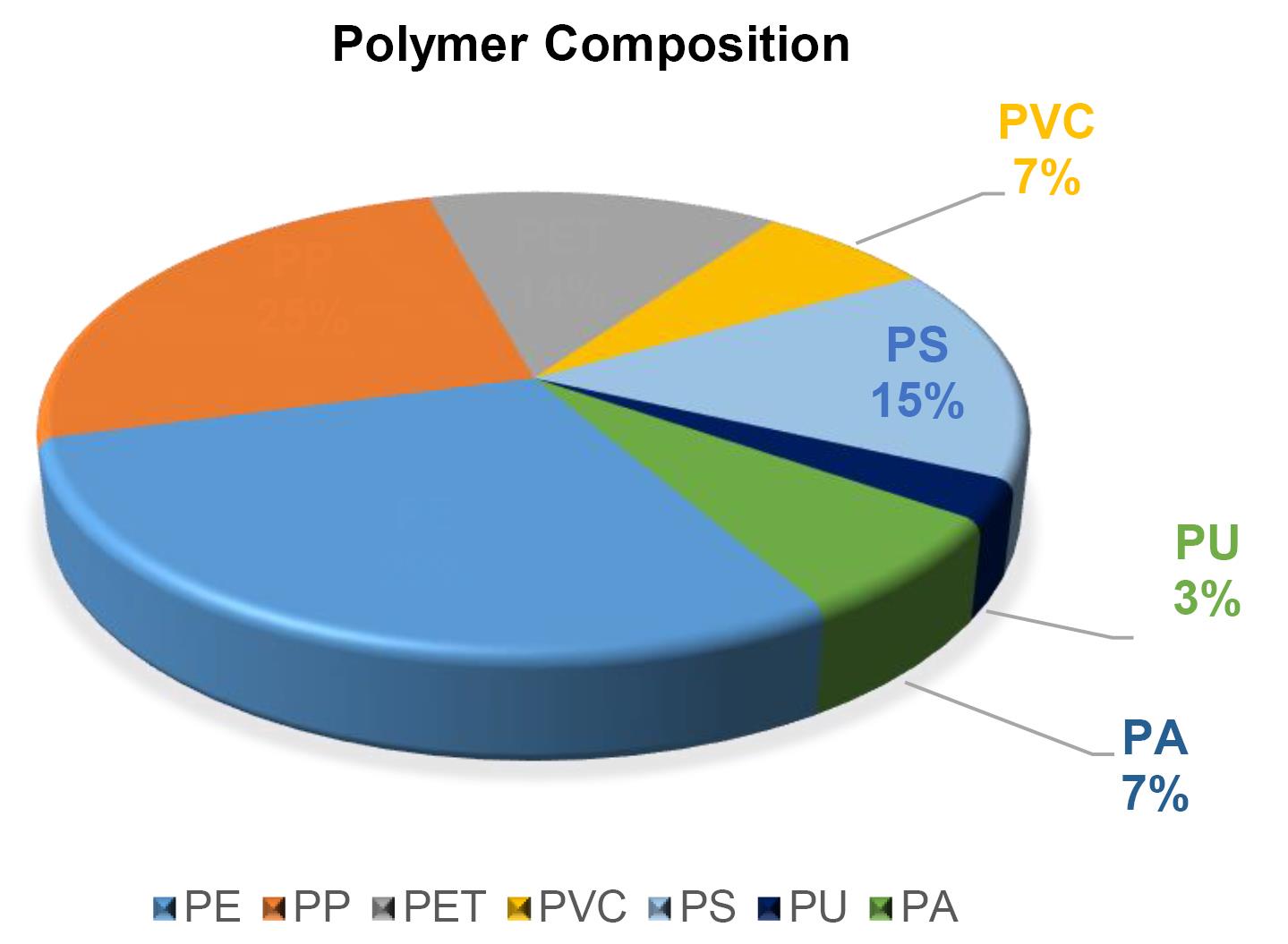
Fig. 2.
Frequency Percentage of Microplastic Particle Polymer Composition in Studies
.
Frequency Percentage of Microplastic Particle Polymer Composition in Studies
All varieties of microplastic polymers can adversely affect both the environment and public health, especially when they accumulate in ecosystems and the food chain. Certain microplastic types are regarded as more dangerous than others, particularly those that contain harmful substances such as bisphenol A (BPA), PVC, and PS. In the landfill of Depok city, the presence of different microplastic polymers such as PE, PVC, PS, PP, PET, and polyamide presents considerable risks to the environment and human health. These materials have the potential to accumulate in soil and water, contaminate ecosystems, and eventually be ingested by living organisms, including humans. While PE, PP, and PET are generally stable and can remain in the environment for long periods, making them resistant to natural biodegradation, PVC is particularly concerning due to its toxic additives such as cadmium and lead. These harmful substances can leach into the environment over long periods, causing significant damage to ecosystems (3).
3.3.3 Color and Shape of Microplastics
MP particles exhibit a wide range of colors, including white, green, blue, yellow, black, transparent, and red, with transparent and black MPs being the most prevalent. Transparent MPs are commonly found in everyday plastic products such as plastic bags, packaging, and disposable containers (69), while black MPs are frequently used in various applications, including textiles, packaging, rubber, ropes, and flooring (10,20,68). Colors are widely utilized by industries for the production of colored macroplastics. Given the diversity of particle colors reported in the literature, it is essential to implement a color classification system for MPs to facilitate standardization and consistency in future studies. However, identifying the type or source of plastic based solely on particle color is not straightforward. Moreover, color-related data may be subject to visual biases, as brighter colors are more easily discernible during identification processes. This can lead to the oversight of darker colors, ultimately reducing the accuracy of results (45).
Moreover, the types of found MPs can indicate local waste management practices and consumer behavior. For instance, regions with high plastic consumption and inadequate waste disposal systems are likely to exhibit greater diversity and abundance of MPs. Studies demonstrate (Table 1) that a higher percentage of microplastic forms, including fibers, films, and fragments (Fig. 3), are more prevalent in these areas due to several factors. These forms predominantly originate from various sources of plastic waste found in urban environments and consumer products (3). Films and fibers are often derived from packaging materials and textiles (1,70,71), which are widely used and frequently discarded. Additionally, fragments result from the gradual degradation of larger plastic items over time (72). This degradation process that requires significant periods for complete breakdown leads to the persistence of smaller microplastic forms in the environment, making them more prevalent in landfill sites and surrounding areas. The lightweight nature of these materials also facilitates their dispersion by wind, leading to their accumulation in surface soils and urban landscapes. The variation in microplastic shapes may be attributed to differences in the composition of plastic waste and the weathering processes occurring in landfills (69,73). Understanding the composition, shape, and color of MPs is crucial for assessing their environmental impacts, as variations in shape and size can influence their behavior in ecosystems and their potential harm to wildlife. Additionally, this information can inform the development of targeted strategies for waste management and pollution reduction.
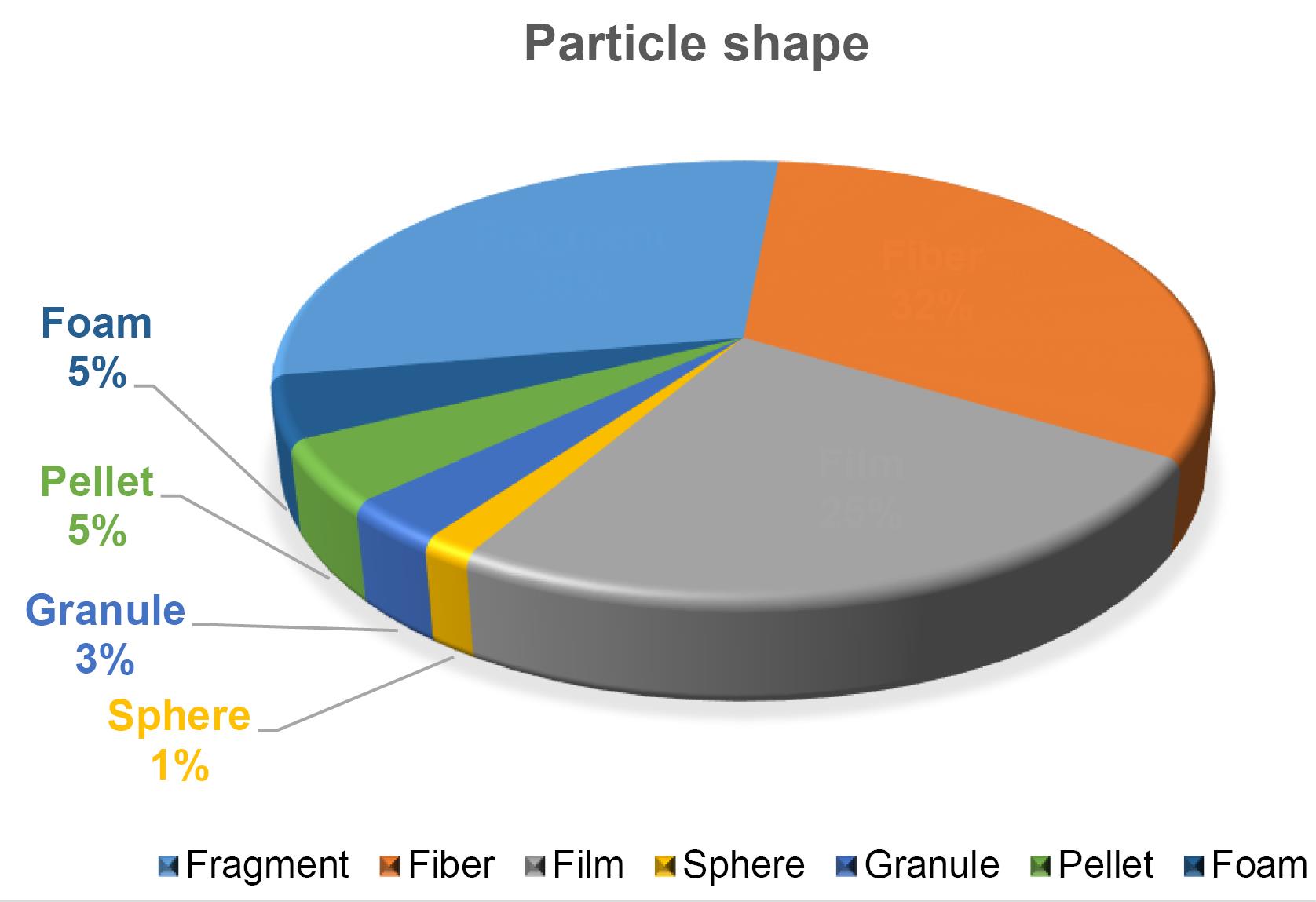
Fig. 3.
Frequency Percentage of Microplastic Particle Shape in Studies
.
Frequency Percentage of Microplastic Particle Shape in Studies
In conclusion, the characteristics of MPs such as size, polymer composition, color, and shape are critical in understanding their distribution and environmental impact. MPs typically range in size from 1 μm to 5 mm, with smaller particles being more prevalent in landfill soils due to degradation processes. The predominant polymers found in landfill MPs include PE, PP, and PET terephthalate, which reflect common consumer products and waste management practices. The diversity of colors in MPs suggests multiple sources of pollution, but reliance on color alone for identification can result in inaccuracies. Furthermore, the prevalence of MPs in landfill sites varies with soil depth and is influenced by factors such as waste history and surrounding human activities. Overall, a comprehensive understanding of microplastic characteristics is vital for developing effective waste management and pollution reduction strategies.
3.4. Prevalence of Microplastics in Landfill Sites
The prevalence of MPs at varying soil depths can be influenced by the extent of microplastic pollution, their transfer through leachate, and the structure of the soil. Rahmani et al (47) and Shirazi et al (48) reported that the abundance of identified MPs in soil samples extracted from landfills ranged from 3160 to 76 513 and 225 to 863 particles per kilogram, respectively. These findings indicate the considerable variability in the frequency of MPs in landfill soils, which can be linked to factors such as the history of waste disposal, the characteristics of the waste, soil properties, and the collection sites. Additionally, some MPs may also originate from other human activities in the vicinity such as vehicle traffic.
As illustrated in Table 1, the concentration of MPs in landfill soil is influenced by several factors. Research by Shirazi et al (48) conducted around the Tehran landfill demonstrated that microplastic concentration varies with sampling depth, revealing a significant difference in abundance between surface and deeper soils. This study exhibited a higher density of MPs in surface soils, likely due to the atmospheric deposition of plastics and their accumulation in upper soil layers. Smaller MPs are generally more prevalent in landfills where plastic waste has undergone weathering, and the diversity of microbial communities also plays a crucial role in the degradation of MPs (74,75). Consequently, it can be inferred that the concentration of MPs tends to increase with the age of the landfill and the plastics themselves. Moreover, MPs consistently migrate and accumulate in the surrounding soil of landfill sites. The review of existing literature indicated that MP concentrations in Bangladesh (17), Thailand (49), and two landfills in China (52) were measured at 220, 1458, 18 760, and 91 000 particles per kilogram of soil, respectively. These results demonstrate significant differences in the prevalence of MPs across these locations, which may be attributed to several factors, including the depth at which soil samples were collected, seasonal fluctuations, the implementation of plastic consumption regulations, the presence of recycling facilities, and the techniques used for extracting and identifying MPs (17).
Leachate from landfills also contains MPs, and its acidic properties can accelerate the degradation of plastics, facilitating their transfer into groundwater. MPs found in leachate and groundwater samples are typically smaller than those in landfill soil (76). This observation suggests that smaller MPs are more likely to migrate into landfill leachate and groundwater, while larger MPs may remain trapped in waste or in soil pores (25).
To summarize, the prevalence of MPs in landfill soils is significantly influenced by various factors, including pollution levels, leachate transfer, soil structure, and the age of the landfill. Studies have indicated a wide range of microplastic concentrations, with higher concentrations typically found in surface soils due to atmospheric deposition and accumulation. The degradation of plastics over time, along with the diversity of microbial communities, further contributes to the increased microplastic concentrations. Furthermore, leachate from landfills contributes to the complexity, often containing smaller MPs that can migrate into groundwater. This underscores the need for comprehensive monitoring and management strategies to address microplastic pollution in and around landfill sites.
4. Conclusion
Landfills remain one of the most common methods for managing solid waste. According to conducted studies, MPs are abundantly found in both active and closed landfills. The type and abundance of MPs vary across geographical locations due to differences in environmental conditions and landfill management practices. PE and PP are recognized as the most prevalent polymer types in these sites. In terms of morphology, films, fibers, and fragments are the most abundant forms. The variation in size classification methods and the lack of standardized color classification make it challenging to compare results across various studies. Additionally, the migration of MPs from these sites into groundwater is a continuous process that persists even after landfill operations have ceased.
A significant gap in most of the studies conducted in this field is that most studies have primarily focused on the analysis of engineered landfills, while open dumping systems are still prevalent in many developing countries for waste management. The lack of proper infrastructure in these countries exacerbates the dispersion of microplastic particles through air, leachate, and soil. Therefore, addressing the presence and impacts of MPs in developing countries is of paramount importance and warrants more comprehensive and rigorous research. Given the significance of microplastic pollution, it is recommended to place greater emphasis on the presence of MPs in soil. Moreover, the adoption of innovative waste management practices, including source separation and recycling, is essential.
Reducing microplastic pollution may also be partially achieved through the establishment of stricter regulations and their effective enforcement. The United Nations has published a report titled “Legal Restrictions on Single-Use Plastics and Microplastics,” which outlines measures such as bans, taxes, and waste management to improve disposal methods, encourage reuse and recycling, and promote alternatives to plastic products. Notably, plastic bags, other single-use plastics, and microbeads are particularly highlighted. In developed countries such as the United States, Canada, the Netherlands, and New Zealand, the use of microbeads in personal care products has been prohibited, representing a swift and effective approach to reducing microplastic sources.
Authors’ Contribution
Conceptualization: Amir Hossein Hamidian.
Data curation: Farzaneh Mirzabayati.
Investigation: Farzaneh Mirzabayati.
Methodology: Farzaneh Mirzabayati.
Resources: Farzaneh Mirzabayati.
Supervision: Amir Hossein Hamidian.
Visualization: Farzaneh Mirzabayati.
Writing–original draft: Farzaneh Mirzabayati.
Writing–review & editing: Amir Hossein Hamidian.
Ethical Approval
Not applicable.
Competing Interests
The authors declare that they have no competing interests
Funding
This research was supported by the Tehran Urban Planning and Research Center.
References
- Razeghi N, Hamidian AH, Wu C, Zhang Y, Yang M. Scientific studies on microplastics pollution in Iran: an in-depth review of the published articles. Mar Pollut Bull 2021; 162:111901. doi: 10.1016/j.marpolbul.2020.111901 [Crossref] [ Google Scholar]
- Mozafarjalali M, Hamidian AH, Sayadi MH. Microplastics as carriers of iron and copper nanoparticles in aqueous solution. Chemosphere 2023; 324:138332. doi: 10.1016/j.chemosphere.2023.138332 [Crossref] [ Google Scholar]
- Pratiwi OA, Achmadi UF, Kurniawan R. Microplastic pollution in landfill soil: emerging threats the environmental and public health. Environ Anal Health Toxicol 2024; 39(1):e2024009-0. doi: 10.5620/eaht.2024009 [Crossref] [ Google Scholar]
- Shafea L, Yap J, Beriot N, Felde VJ, Okoffo ED, Enyoh CE. Microplastics in agroecosystems: a review of effects on soil biota and key soil functions. J Plant Nutr Soil Sci 2023; 186(1):5-22. doi: 10.1002/jpln.202200136 [Crossref] [ Google Scholar]
- Guo S, Wu Z, Li X, Shen D, Shentu J, Lu L. Microplastic, a possible trigger of landfill sulfate reduction process. Sci Total Environ 2024; 906:167662. doi: 10.1016/j.scitotenv.2023.167662 [Crossref] [ Google Scholar]
- Geyer R, Jambeck JR, Law KL. Production, use, and fate of all plastics ever made. Sci Adv 2017; 3(7):e1700782. doi: 10.1126/sciadv.1700782 [Crossref] [ Google Scholar]
- Feizi F, Akhbarizadeh R, Hamidian AH. Microplastics in urban water systems, Tehran Metropolitan, Iran. Environ Monit Assess 2024; 196(7):643. doi: 10.1007/s10661-024-12815-8 [Crossref] [ Google Scholar]
- Khoshnamvand M, Hamidian AH, Ashtiani S, Ali J, Pei DS. Combined toxic effects of polystyrene nanoplastics and lead on Chlorella vulgaris growth, membrane lipid peroxidation, antioxidant capacity, and morphological alterations. Environ Sci Pollut Res Int 2024; 31(19):28620-31. doi: 10.1007/s11356-024-33084-5 [Crossref] [ Google Scholar]
- Hanachi P, Khoshnamvand M, Walker TR, Hamidian AH. Nano-sized polystyrene plastics toxicity to microalgae Chlorella vulgaris: toxicity mitigation using humic acid. Aquat Toxicol 2022; 245:106123. doi: 10.1016/j.aquatox.2022.106123 [Crossref] [ Google Scholar]
- He P, Chen L, Shao L, Zhang H, Lü F. Municipal solid waste (MSW) landfill: a source of microplastics? -Evidence of microplastics in landfill leachate. Water Res 2019; 159:38-45. doi: 10.1016/j.watres.2019.04.060 [Crossref] [ Google Scholar]
- Hamidian AH, Dalvand M. Main pathways for microplastics in freshwater systems: a review on potential sources and drivers of microplastic pollution in rivers. Int J Aquat Biol 2023; 11(6):583-604. doi: 10.22034/ijab.v11i6.1625 [Crossref] [ Google Scholar]
- Razeghi N, Hamidian AH, Wu C, Zhang Y, Yang M. Correction to: microplastic sampling techniques in freshwaters and sediments: a review. Environ Chem Lett 2021; 19(6):4655. doi: 10.1007/s10311-021-01303-x [Crossref] [ Google Scholar]
- Zheng S, Zhou B, Guo N, Li N, Wu J, Chen Y. Optimization and application of pretreatment method of microplastics detection in municipal solid waste landfills. Waste Manag 2024; 183:260-70. doi: 10.1016/j.wasman.2024.05.013 [Crossref] [ Google Scholar]
- Razeghi N, Hamidian AH, Mirzajani A, Abbasi S, Wu C, Zhang Y. Sample preparation methods for the analysis of microplastics in freshwater ecosystems: a review. Environ Chem Lett 2022; 20(1):417-43. doi: 10.1007/s10311-021-01341-5 [Crossref] [ Google Scholar]
- Razeghi N, Hamidian AH, Abbasi S, Mirzajani A. Distribution, flux, and risk assessment of microplastics at the Anzali Wetland, Iran, and its tributaries. Environ Sci Pollut Res Int 2024; 31(42):54815-31. doi: 10.1007/s11356-024-34847-w [Crossref] [ Google Scholar]
- Torkashvand J, Azarian G, Leili M, Godini K, Younesi S, Godini H. Projection of environmental pollutant emissions from different final waste disposal methods based on life cycle assessment studies in Qazvin city. Avicenna J Environ Health Eng 2015; 2(2):e4653. doi: 10.17795/ajehe-4653 [Crossref] [ Google Scholar]
- Afrin S, Uddin MK, Rahman MM. Microplastics contamination in the soil from urban landfill site, Dhaka, Bangladesh. Heliyon 2020; 6(11):e05572. doi: 10.1016/j.heliyon.2020.e05572 [Crossref] [ Google Scholar]
- Karimian S, Shekoohiyan S, Moussavi G. Health and ecological risk assessment and simulation of heavy metal-contaminated soil of Tehran landfill. RSC Adv 2021; 11(14):8080-95. doi: 10.1039/d0ra08833a [Crossref] [ Google Scholar]
- Chamanee G, Sewwandi M, Wijesekara H, Vithanage M. Occurrence and abundance of microplastics and plasticizers in landfill leachate from open dumpsites in Sri Lanka. Environ Pollut 2024; 350:123944. doi: 10.1016/j.envpol.2024.123944 [Crossref] [ Google Scholar]
- Kim WK, Park H, Ishii K, Ham GY. Investigation on microplastics in soil near landfills in the Republic of Korea. Sustainability 2023; 15(15):12057. doi: 10.3390/su151512057 [Crossref] [ Google Scholar]
- Shen M, Xiong W, Song B, Zhou C, Almatrafi E, Zeng G. Microplastics in landfill and leachate: occurrence, environmental behavior and removal strategies. Chemosphere 2022; 305:135325. doi: 10.1016/j.chemosphere.2022.135325 [Crossref] [ Google Scholar]
- Javanmardi Z, Alighadri M, Parastar S, Sadeghi T. Effects of the municipal solid waste landfill on the quality of water resources in Khalkhal: a case study. Avicenna J Environ Health Eng 2022; 9(1):25-34. doi: 10.34172/ajehe.2022.04 [Crossref] [ Google Scholar]
- Narevski AC, Novaković MI, Petrović MZ, Mihajlović IJ, Maoduš NB, Vujić GV. Occurrence of bisphenol A and microplastics in landfill leachate: lessons from South East Europe. Environ Sci Pollut Res Int 2021; 28(31):42196-203. doi: 10.1007/s11356-021-13705-z [Crossref] [ Google Scholar]
- Mortazavi M, Shahryari T, Fanaei F, Barikbin B. Safety assessment of supply and distribution management of drinking water in Torbat Jam using WSP-QA TOOL software. Iran J Res Environ Health 2019;5(3):230-8. [Persian].
- Wan Y, Chen X, Liu Q, Hu H, Wu C, Xue Q. Informal landfill contributes to the pollution of microplastics in the surrounding environment. Environ Pollut 2022; 293:118586. doi: 10.1016/j.envpol.2021.118586 [Crossref] [ Google Scholar]
- Golwala H, Zhang X, Iskander SM, Smith AL. Solid waste: an overlooked source of microplastics to the environment. Sci Total Environ 2021; 769:144581. doi: 10.1016/j.scitotenv.2020.144581 [Crossref] [ Google Scholar]
- Li J, Song Y, Cai Y. Focus topics on microplastics in soil: analytical methods, occurrence, transport, and ecological risks. Environ Pollut 2020; 257:113570. doi: 10.1016/j.envpol.2019.113570 [Crossref] [ Google Scholar]
- Iqbal S, Xu J, Allen SD, Khan S, Nadir S, Arif MS. Unraveling consequences of soil micro- and nano-plastic pollution on soil-plant system: implications for nitrogen (N) cycling and soil microbial activity. Chemosphere 2020; 260:127578. doi: 10.1016/j.chemosphere.2020.127578 [Crossref] [ Google Scholar]
- Canopoli L, Fidalgo B, Coulon F, Wagland ST. Physico-chemical properties of excavated plastic from landfill mining and current recycling routes. Waste Manag 2018; 76:55-67. doi: 10.1016/j.wasman.2018.03.043 [Crossref] [ Google Scholar]
- de Souza Machado AA, Lau CW, Kloas W, Bergmann J, Bachelier JB, Faltin E. Microplastics can change soil properties and affect plant performance. Environ Sci Technol 2019; 53(10):6044-52. doi: 10.1021/acs.est.9b01339 [Crossref] [ Google Scholar]
- Zhao T, Lozano YM, Rillig MC. Microplastics increase soil pH and decrease microbial activities as a function of microplastic shape, polymer type, and exposure time Front Environ. Sci 2021; 9:675803. doi: 10.3389/fenvs.2021.675803 [Crossref] [ Google Scholar]
- Lozano YM, Lehnert T, Linck LT, Lehmann A, Rillig MC. Microplastic shape, polymer type, and concentration affect soil properties and plant biomass. Front Plant Sci 2021; 12:616645. doi: 10.3389/fpls.2021.616645 [Crossref] [ Google Scholar]
- Ingraffia R, Amato G, Iovino M, Rillig MC, Giambalvo D, Frenda AS. Polyester microplastic fibers in soil increase nitrogen loss via leaching and decrease plant biomass production and N uptake. Environ Res Lett 2022; 17(5):054012. doi: 10.1088/1748-9326/ac652d [Crossref] [ Google Scholar]
- Lithner D, Larsson Å, Dave G. Environmental and health hazard ranking and assessment of plastic polymers based on chemical composition. Sci Total Environ 2011; 409(18):3309-24. doi: 10.1016/j.scitotenv.2011.04.038 [Crossref] [ Google Scholar]
- Wu C, Xiong X, Hamidian AH, Zhang Y, Xu X. A review on source, occurrence, and impacts of microplastics in freshwater aquaculture systems in China. Water Biol Secur 2022; 1(3):100040. doi: 10.1016/j.watbs.2022.100040 [Crossref] [ Google Scholar]
- Rist S, Carney Almroth B, Hartmann NB, Karlsson TM. A critical perspective on early communications concerning human health aspects of microplastics. Sci Total Environ 2018; 626:720-6. doi: 10.1016/j.scitotenv.2018.01.092 [Crossref] [ Google Scholar]
- Wright SL, Kelly FJ. Plastic and human health: a micro issue?. Environ Sci Technol 2017; 51(12):6634-47. doi: 10.1021/acs.est.7b00423 [Crossref] [ Google Scholar]
- Zhang X, Dayton EA, Basta NT. Predicting the modifying effect of soils on arsenic phytotoxicity and phytoaccumulation using soil properties or soil extraction methods. Environ Pollut 2020; 263(Pt B):114501. doi: 10.1016/j.envpol.2020.114501 [Crossref] [ Google Scholar]
- Campanale C, Massarelli C, Savino I, Locaputo V, Uricchio VF. A detailed review study on potential effects of microplastics and additives of concern on human health. Int J Environ Res Public Health 2020; 17(4):1212. doi: 10.3390/ijerph17041212 [Crossref] [ Google Scholar]
- Wang F, Wong CS, Chen D, Lu X, Wang F, Zeng EY. Interaction of toxic chemicals with microplastics: a critical review. Water Res 2018; 139:208-19. doi: 10.1016/j.watres.2018.04.003 [Crossref] [ Google Scholar]
- Karbalaei S, Hanachi P, Walker TR, Cole M. Occurrence, sources, human health impacts and mitigation of microplastic pollution. Environ Sci Pollut Res Int 2018; 25(36):36046-63. doi: 10.1007/s11356-018-3508-7 [Crossref] [ Google Scholar]
- Prata JC, da Costa JP, Lopes I, Duarte AC, Rocha-Santos T. Environmental exposure to microplastics: an overview on possible human health effects. Sci Total Environ 2020; 702:134455. doi: 10.1016/j.scitotenv.2019.134455 [Crossref] [ Google Scholar]
- Scherer C, Brennholt N, Reifferscheid G, Wagner M. Feeding type and development drive the ingestion of microplastics by freshwater invertebrates. Sci Rep 2017; 7(1):17006. doi: 10.1038/s41598-017-17191-7 [Crossref] [ Google Scholar]
- Silva AL, Prata JC, Duarte AC, Soares AM, Barceló D, Rocha-Santos T. Microplastics in landfill leachates: The need for reconnaissance studies and remediation technologies. Case Stud Chem Environ Eng 2021; 3:100072. doi: 10.1016/j.cscee.2020.100072 [Crossref] [ Google Scholar]
- Rafique A, Irfan M, Mumtaz M, Qadir A. Spatial distribution of microplastics in soil with context to human activities: a case study from the urban center. Environ Monit Assess 2020; 192(11):671. doi: 10.1007/s10661-020-08641-3 [Crossref] [ Google Scholar]
- Sholokhova A, Denafas G, Ceponkus J, Omelianenko T. Microplastics in landfill bodies: abundance, spatial distribution and effect of landfill age. Sustainability 2023; 15(6):5017. doi: 10.3390/su15065017 [Crossref] [ Google Scholar]
- Rahmani A, Nasrollah Boroojerdi M, Seid-Mohammadi A, Shabanloo A, Zabihollahi S, Zafari D. Abundance and characteristics of microplastics in different zones of waste landfill site: a case study of Hamadan, Iran. Case Stud Chem Environ Eng 2023; 8:100494. doi: 10.1016/j.cscee.2023.100494 [Crossref] [ Google Scholar]
- Ghorbaninejad Fard Shirazi MM, Shekoohiyan S, Moussavi SG, Heidari M. Frequency and ecological risk of microplastics and mesoplastics in the soil of residential areas near Tehran landfill in 2021. Iran J Health Environ 2022;15(1):49-72. [Persian].
- Puthcharoen A, Leungprasert S. Determination of microplastics in soil and leachate from the landfills. Thai Environ Eng J 2019; 33(3):39-46. [ Google Scholar]
- Billings A, Carter H, Cross RK, Jones KC, Pereira MG, Spurgeon DJ. Co-occurrence of macroplastics, microplastics, and legacy and emerging plasticisers in UK soils. Sci Total Environ 2023; 880:163258. doi: 10.1016/j.scitotenv.2023.163258 [Crossref] [ Google Scholar]
- Lou F, Wang J, Sima J, Lei J, Huang Q. Mass concentration and distribution characteristics of microplastics in landfill mineralized refuse using efficient quantitative detection based on Py-GC/MS. J Hazard Mater 2023; 459:132098. doi: 10.1016/j.jhazmat.2023.132098 [Crossref] [ Google Scholar]
- Su Y, Zhang Z, Wu D, Zhan L, Shi H, Xie B. Occurrence of microplastics in landfill systems and their fate with landfill age. Water Res 2019; 164:114968. doi: 10.1016/j.watres.2019.114968 [Crossref] [ Google Scholar]
- Gowda NK, Kattimani RR, Triveni R, Mahesh S, Sahana M. Identification of microplastics in contaminated urban informal landfill soil with removal methods. Int J Eng Res Technol 2022; 10(11):502-6. doi: 10.17577/ijertconv10is11117 [Crossref] [ Google Scholar]
- Mahesh S, Gowda NK, Mahesh S. Identification of microplastics from urban informal solid waste landfill soil; MP associations with COD and chloride. Water Sci Technol 2023; 87(1):115-29. doi: 10.2166/wst.2022.412 [Crossref] [ Google Scholar]
- Salikova NS, Rodrigo-Ilarri J, Rodrigo-Clavero ME, Urazbayeva SE, Askarova AZ, Magzhanov KM. Environmental assessment of microplastic pollution induced by solid waste landfills in the Akmola region (North Kazakhstan). Water 2023; 15(16):2889. doi: 10.3390/w15162889 [Crossref] [ Google Scholar]
- Leitão IA, van Schaik L, Ferreira AJ, Alexandre N, Geissen V. The spatial distribution of microplastics in topsoils of an urban environment - Coimbra city case-study. Environ Res 2023; 218:114961. doi: 10.1016/j.envres.2022.114961 [Crossref] [ Google Scholar]
- Walenna MA, Hanami ZA, Hidayat R, Damayanti AD, Notodarmojo S, Caroles L. Examining soil microplastics: prevalence and consequences across varied land use contexts. Civ Eng J 2024; 10(4):1265-91. doi: 10.28991/cej-2024-010-04-017 [Crossref] [ Google Scholar]
- Mahdavi Soltani Z, Cheraghi M, Jaafarzadeh N, Tavakkoli H. Microplastics and microrubbers in soils around Two landfills and a municipal solid waste transfer station in Ahvaz metropolis, Iran. J Adv Environ Health Res 2022; 10(4):279-90. doi: 10.32598/jaehr.10.4.1234 [Crossref] [ Google Scholar]
- Haritwal DK, Singh P, Ramana GV, Datta M. Microplastic migration from landfill-mined soil through earth filling operations and ecological risk assessment: a case study in New Delhi, India. Environ Sci Pollut Res Int 2024; 31(56):65002-21. doi: 10.1007/s11356-024-35545-3 [Crossref] [ Google Scholar]
- Akca MO. Microplastic accumulation in soils around open dumping and scrapyard sites in Türkiye. Soil Use Manag 2025; 41(1):e70021. doi: 10.1111/sum.70021 [Crossref] [ Google Scholar]
- Asadi MJ, Ghayebzadeh M, Seyed Mousavi SM, Taghipour H, Aslani H. Investigating the amount of macro, meso, and microplastics in the surface soil around the landfill of Tabriz and the effect of the prevailing wind on their distribution. Heliyon 2025; 11(2):e42143. doi: 10.1016/j.heliyon.2025.e42143 [Crossref] [ Google Scholar]
- Hartini E, Hadiyanto Hadiyanto, Warsito B. Distribution and ecological risk of microplastics in soil at the Jatibarang landfill in Semarang, Indonesia. J Ecol Eng 2025; 26(2):272-85. doi: 10.12911/22998993/197043 [Crossref] [ Google Scholar]
- Ma J, Ma M, Li J, Yang Q, Wan Y, Zhao K. Distribution and characteristics of microplastics in leachate and underneath soil of two informal landfills. Waste Manag 2025; 195:155-66. doi: 10.1016/j.wasman.2025.02.002 [Crossref] [ Google Scholar]
- Kumari P, Gupta NC, Kaur A. A review of groundwater pollution potential threats from municipal solid waste landfill sites: assessing the impact on human health. Avicenna J Environ Health Eng 2017; 4(1):e11525. doi: 10.5812/ajehe.11525 [Crossref] [ Google Scholar]
- Zhang Z, Chen Y. Effects of microplastics on wastewater and sewage sludge treatment and their removal: a review. Chem Eng J 2020; 382:122955. doi: 10.1016/j.cej.2019.122955 [Crossref] [ Google Scholar]
- Upadhyay K, Bajpai S. Microplastics in landfills: a comprehensive review on occurrence, characteristics and pathways to the aquatic environment. Nat Environ Pollut Technol 2021; 20(5):1935-45. doi: 10.46488/NEPT.2021.v20i05.009 [Crossref] [ Google Scholar]
- Yang L, Zhang Y, Kang S, Wang Z, Wu C. Microplastics in soil: a review on methods, occurrence, sources, and potential risk. Sci Total Environ 2021; 780:146546. doi: 10.1016/j.scitotenv.2021.146546 [Crossref] [ Google Scholar]
- Zhao S, Zhang Z, Chen L, Cui Q, Cui Y, Song D. Review on migration, transformation and ecological impacts of microplastics in soil. Appl Soil Ecol 2022; 176:104486. doi: 10.1016/j.apsoil.2022.104486 [Crossref] [ Google Scholar]
- Imanian S, Mostafaloo R, Fanaei F, Sahragard S. Investigation of type and frequency of microplastics in municipal solid waste landfills soil: a systematic review. J Health Res Commun 2024;10(1):95-108. [Persian].
- Hamidian AH, Jafari Ozumchelouei E, Feizi F, Wu C, Zhang Y, Yang M. A review on the characteristics of microplastics in wastewater treatment plants: a source for toxic chemicals. J Clean Prod 2021; 295:126480. doi: 10.1016/j.jclepro.2021.126480 [Crossref] [ Google Scholar]
- Harrison JP, Ojeda JJ, Romero-González ME. The applicability of reflectance micro-Fourier-transform infrared spectroscopy for the detection of synthetic microplastics in marine sediments. Sci Total Environ 2012; 416:455-63. doi: 10.1016/j.scitotenv.2011.11.078 [Crossref] [ Google Scholar]
- Nel HA, Hean JW, Noundou XS, Froneman PW. Do microplastic loads reflect the population demographics along the southern African coastline?. Mar Pollut Bull 2017; 115(1-2):115-9. doi: 10.1016/j.marpolbul.2016.11.056 [Crossref] [ Google Scholar]
- Wu X, Lu J, Du M, Xu X, Beiyuan J, Sarkar B. Particulate plastics-plant interaction in soil and its implications: a review. Sci Total Environ 2021; 792:148337. doi: 10.1016/j.scitotenv.2021.148337 [Crossref] [ Google Scholar]
- Yu M, van der Ploeg M, Lwanga EH, Yang X, Zhang S, Ma X. Leaching of microplastics by preferential flow in earthworm (Lumbricusterrestris) burrows. Environ Chem 2019; 16(1):31-40. doi: 10.1071/en18161 [Crossref] [ Google Scholar]
- Huerta Lwanga E, Gertsen H, Gooren H, Peters P, Salánki T, van der Ploeg M. Microplastics in the terrestrial ecosystem: implications for Lumbricusterrestris (Oligochaeta, Lumbricidae). Environ Sci Technol 2016; 50(5):2685-91. doi: 10.1021/acs.est.5b05478 [Crossref] [ Google Scholar]
- Manikanda Bharath K, Natesan U, Vaikunth R, Praveen Kumar R, Ruthra R, Srinivasalu S. Spatial distribution of microplastic concentration around landfill sites and its potential risk on groundwater. Chemosphere 2021; 277:130263. doi: 10.1016/j.chemosphere.2021.130263 [Crossref] [ Google Scholar]