Avicenna J Environ Health Eng. 12(1):51-57.
doi: 10.34172/ajehe.5558
Original Article
Assessment of Dust Particles in the Air in Rajshahi City, Bangladesh
Mohammad Zakir Hossain Khan 1, * 
Author information:
1Department of Civil Engineering, Bangladesh Army University of Engineering and Technology, Qadirabad, Natore-6431, Bangladesh
Abstract
Airborne particulate matter was monitored in Rajshahi city, Bangladesh, focusing on five specific locations during 2022 and 2023. Data collection covered both the dry and wet seasons. According to Bangladesh’s Air Pollution Control guidelines, the annual average concentration of PM2.5 should remain below 35 µg/m³, and the daily average should not exceed 65 µg/m³. Additionally, the daily average for PM10 should remain below 50 µg/m³ and 150 µg/m³, respectively. However, during the study period, PM2.5 concentrations were notably higher in all selected areas during the dry season. The peak PM2.5 concentration measured was 97 µg/m³ at Talaimari in November 2023. Likewise, PM10 levels peaked at 246 µg/m³ during the same month. Both PM2.5 and PM10 concentrations exceeded the limits set by the BAPCR 2022, indicating significant air pollution in Rajshahi. The elevated levels of these particulates pose serious risks to public health. The research also noted unregulated construction activities and a reduction in water bodies within the city. Consequently, strict enforcement of BAPCR 2022 and the Environmental Conservation Rules 2023 is crucial to mitigating the issue.
Keywords: Urban air pollution, Environmental degradation, Sustainable development, Environmental pollution
Copyright and License Information
© 2025 The Author(s); Published by Hamadan University of Medical Sciences.
This is an open-access article distributed under the terms of the Creative Commons Attribution License (
https://creativecommons.org/licenses/by/4.0), which permits unrestricted use, distribution, and reproduction in any medium, provided the original work is properly cited.
Please cite this article as follows: Khan MZH. Assessment of dust particles in the air in Rajshahi city, Bangladesh. Avicenna J Environ Health Eng. 2025;12(1):51-57. doi:10.34172/ajehe.5558
1. Introduction
Several major cities in Bangladesh have been experiencing increasing air pollution over the past few years, and Rajshahi is one of them. According to the US AQI, air quality in Rajshahi ranged from moderate to high during the dry season, with PM2.5 identified as the primary pollutant. As one of the divisional cities of Bangladesh, Rajshahi has undergone rapid urban development driven by uncontrolled construction activities, motor vehicle emissions, and other human-related activities. This rapid increase in population density has led to significant atmospheric and environmental pollution.
In India, the main contributors to ambient particulate matter (PM) pollution are the burning of biomass for residential and commercial purposes, industrial emissions, and construction activities (1). Fine dust concentration in ambient air is influenced by emission changes across Asia (2). Considering the health effects of PM2.5 on human beings, China has implemented policy measures aimed at reducing its levels (3).
Air pollution is now recognized as one of the most serious threats to human well-being globally. It contributes to life-threatening conditions such as lung cancer, heart disease, strokes, and both acute and chronic respiratory illnesses, including asthma. Effective control of air pollution can significantly reduce the prevalence of these diseases. Today, air pollution is a major cause of premature mortality and is regarded as the leading environmental health threat worldwide (4).
In a low-income country like Bangladesh, ambient air pollution remains a significant environmental health issue, especially due to unregulated industrial activities. It is also a major concern in middle and high-income countries. PM is widely recognized as an important measure of air pollution, with fine particulate matter (PM2.5) being particularly detrimental to human health. Numerous studies have demonstrated that exposure to PM2.5 negatively impacts health. Even at low exposure levels, PM2.5 is associated with a range of serious health effects. PM2.5 refers to particles with diameters less than 2.5 microns, whereas coarse particulate matter (PM10) includes particles with diameters ranging from 2.5 to 10 microns.
Air pollution, resulting from particulates, chemicals, or biological substances, leads to human discomfort, illness, and can even result in loss of life (5). It adversely affects not only human health and but also other living organisms, including food crops, and causes damage to both natural and built environments. Furthermore, it plays a significant role in altering biodiversity. Factors such as unplanned construction, brick kilns, factories, outdated and unfit vehicles, and improper solid waste disposal contribute substantial amounts of pollutants to the atmosphere daily.
In 2020, the Sustainable Development Goals (SDGs) set by the World Health Organization (WHO) for household energy emphasized the need to reduce deaths and illnesses caused by air pollution. Air pollution, especially in metropolitan regions, is a complex and evolving issue due to multiple simultaneous factors, with pollutant levels fluctuating significantly across different locations and time periods (6). The negative health effects of air pollution have been increasingly documented in India (7). In recent years, a number of studies have provided evidence regarding links between a range of diseases and exposure to PM2.5 along with its toxic components. These fine particulates can lead to various negative health effects in humans because they contain organic substances such as polycyclic aromatic hydrocarbons (PAHs) and inorganic elements such as heavy metals, which contribute to various health diseases, including respiratory symptoms, decreased lung function, and the like (8-12). Epidemiological studies over the last decade demonstrated that climate change exacerbates air pollution, thereby increasing the risk of death due to respiratory and cardiovascular diseases (13-18).
Given the environmental challenges in Bangladesh and the rapid pace of unplanned urbanization, numerous studies have been conducted on air pollution. One such study focused on air pollution in Dhaka during the winter of 1995-1996 (19). Bangladesh introduced its most recent legislation on air pollution in 2022 (20), titled the Bangladesh Air Pollution Control Rules (BAPCR). According to BAPCR 2022 (S.R.O. 255-law/2022), the average concentration of PM2.5 in ambient air should not exceed 35 µg/m³ annually and 65 µg/m³ daily. Similarly, the annual and daily limits for PM10 should remain below 50 µg/m³ and 150 µg/m³, respectively.
In recent years, air pollution has turned into a critical environmental issue in Bangladesh. As with many other cities, Rajshahi City Corporation is particularly concerned about elevated PM2.5 concentrations. This study monitored PM2.5 and PM10 concentrations during the dry and wet seasons of 2022 and 2023. Fig. 1 displays a map of Rajshahi City Corporation, located along the banks of the Padma River.
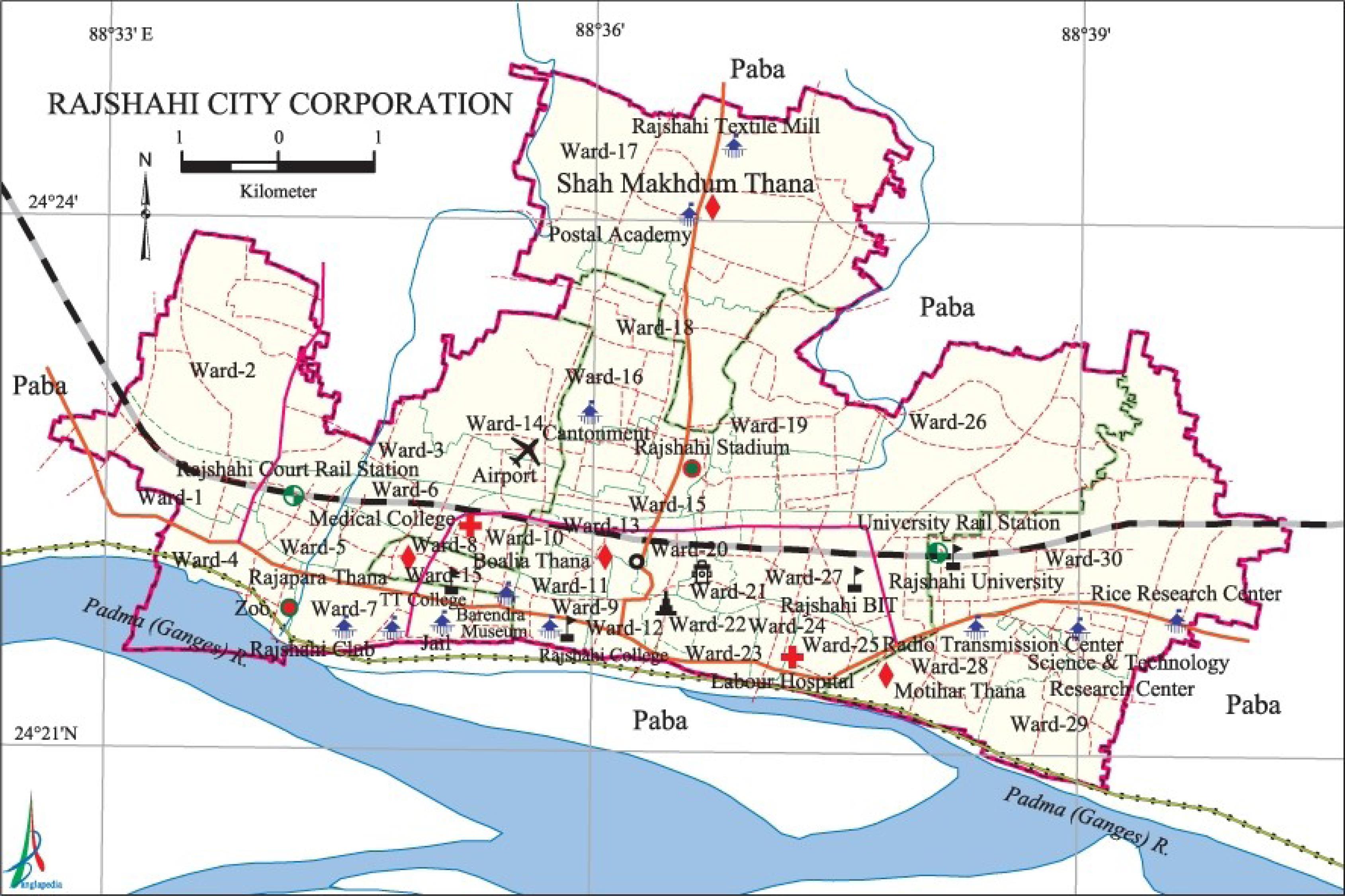
Fig. 1.
Map of Rajshahi City Corporation (Courtesy: Google)
.
Map of Rajshahi City Corporation (Courtesy: Google)
The primary focus of this two-year study was to evaluate dust particle concentrations in the air at selected sites within the Rajshahi City Corporation. In Bangladesh, the dry season typically spans from November through March, while the wet season extends from April to October. On average, Bangladesh experiences approximately 2200 mm of rainfall annually. Therefore, sampling during the dry season was conducted at the end of the dry season (March 2022) and the beginning of the dry season (November 2023). Similarly, the sampling period for the wet season was conducted in August 2022, and in April 2023, marking the peak period and the beginning of the rainy season. Maximum rainfall typically occurs in July and August in Bangladesh.
Massive road construction projects were underway across the city during the study period, contributing to a visibly significant amount of dust levels, particularly during the dry season. Therefore, three out of four sampling periods were selected to represent the beginning and end of the dry season and the beginning of the wet season. Another sampling period, the peak of the wet season, was included to evaluate the impact of heavy rainfall on PM in ambient air.
In this context, the research aimed to assess the PM2.5 and PM10 concentrations in selected locations. The findings of this study can provide valuable insights for developing effective strategies to reduce dust levels across Bangladesh. Rapid and unregulated urban expansion plays a major role in deteriorating air quality, especially in fast-growing cities. Addressing this challenge requires the implementation of robust urban planning policies with a strong emphasis on environmental protection.
2. Methods
The primary objectives of this research were to assess the levels of PM2.5 and PM10 at five specific sites in Rajshahi and to explore potential sources of dust-related air pollution. To gather reliable information on air quality in urban settings, a comprehensive literature review was conducted in alignment with the research objectives. For measuring PM2.5 and PM10 levels, a digital dust level meter, a commonly used device, was employed. Data were collected at each location over three hours, with readings taken every 30 minutes, culminating in the computation of the daily average for each site. The Dust particle meter SR-516 (Serial No. 02020299) was utilized for this study. Prior to each round of data collection, this device was verified against another dust particle sampler to ensure the accuracy and reliability of the measurements. A photograph of the dust particle counter is presented in Fig. 2.

Fig. 2.
Dust Particle Counter
.
Dust Particle Counter
The study was conducted in five important regions of Rajshahi City Corporation, one of the oldest and most prominent divisional cities in Bangladesh, founded in 1772 (21). The five sampling locations included: Talaimari (AQ1), Railgate (AQ2), BSCIC (AQ3), Laxmipur (AQ4), and Zero Point Shaheb Bazar (AQ5). Rajshahi lacks significant industrial zones; therefore, dust pollution primarily originates from unregulated construction sites. At the time of this study, construction activities were underway in the Talaimari and Railgate areas. The BSCIC zone represents an industrial region within the city, while Laxmipur serves as a medical hub, and Zero Point Shaheb Bazar is a key commercial center. The GPS coordinates of these selected locations are listed in Table 1.
Table 1.
Selected Sites for Air Quality Assessment with Corresponding GPS Coordinates
|
SN
|
Locations
|
GPS Coordinates
|
| 1 |
AQ 1 |
24°21'42.35"N |
88°37'37.41"E |
| 2 |
AQ 2 |
24°22'28.76"N |
88°36'15.14"E |
| 3 |
AQ 3 |
24°23'15.97"N |
88°36'12.41"E |
| 4 |
AQ 4 |
24°22'18.83"N |
88°34'57.03"E |
| 5 |
AQ 5 |
24°21'55.20"N |
88°36'0.58"E |
Note. AQ1: Talaimari; AQ2: Railgate; AQ3: BSCIC; AQ4: Laxmipur; AQ5: Zero Point Shaheb Bazar.
Fig. 3 illustrates all the chosen locations for assessing air quality within Rajshahi city.
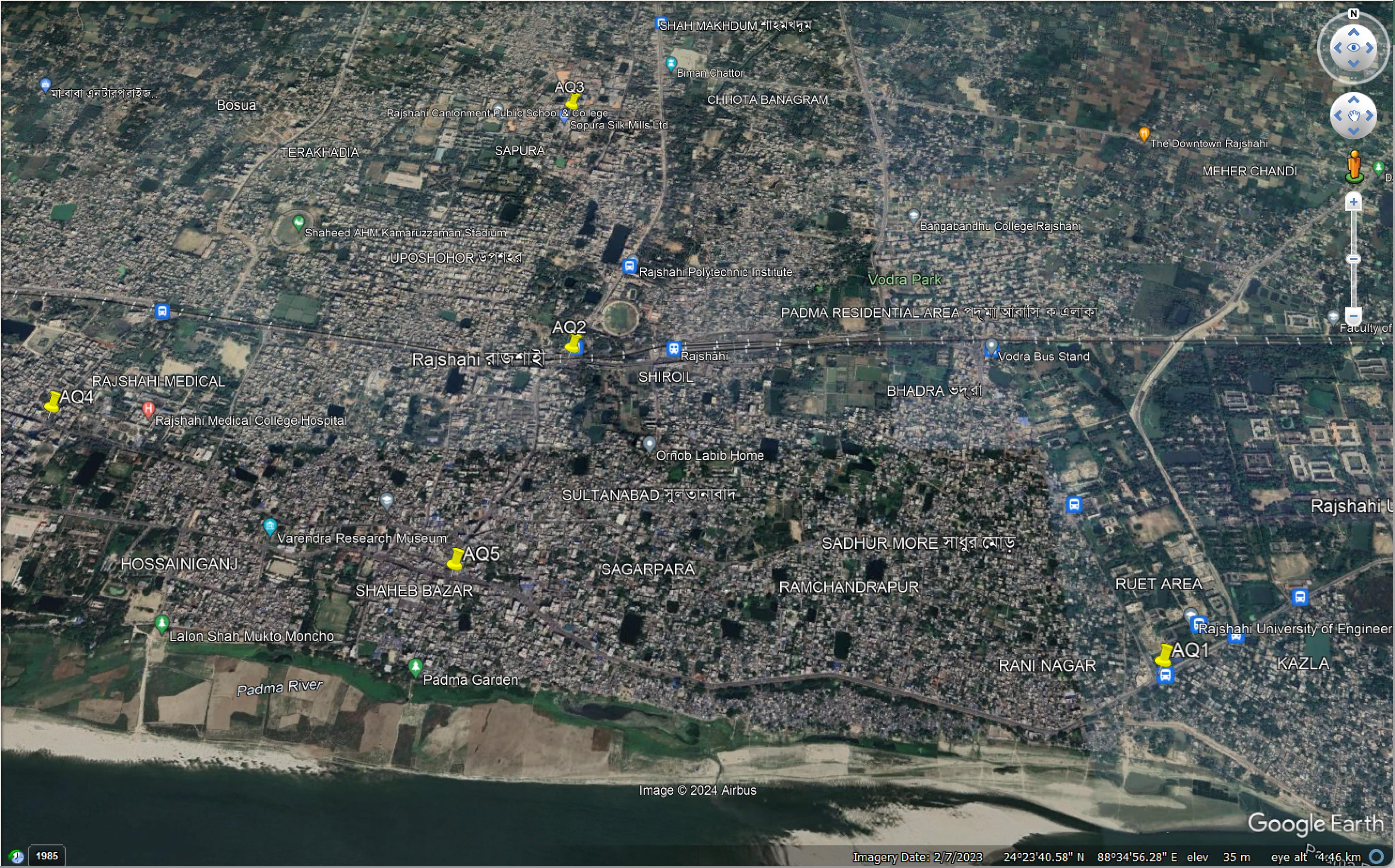
Fig. 3.
Air Quality Sampling Locations (Courtesy Google)
.
Air Quality Sampling Locations (Courtesy Google)
To examine seasonal variations in air quality, PM2.5 and PM10 concentrations were measured at all five locations during both the dry and wet seasons in 2022 and 2023. In Bangladesh, the dry season generally spans from November to March, with PM2.5 and PM10 measurements in these months representing the period. Conversely, the wet season lasts from April to October, with data collected in April and August. This study analyzed data from only four specific months, with 30-minute data collection sessions conducted at each site. The methodology was designed to evaluate the air qualityconditions in the selected sites of Rajshahi across two distinct seasons over a two-year period, ensuring that the data gathered were reliable and accurately reflected dust levels in the region. A digital dust level meter was employed for in situ data collection.
Both qualitative and quantitative data were used in this study. Quantitative data were analyzed using statistical methods to compare particulate concentrations against the Bangladesh government’s air quality standards and to evaluate seasonal variations in dry and wet seasons. Descriptive statistics analysis was used to identify significant differences and relationships among the variables. Meanwhile, qualitative data obtained through interviews were thematically analyzed to identify the causes of pollution.
3. Results and Discussion
Air quality evaluations in Rajshahi were conducted in March 2022, August 2022, April 2023, and November 2023, covering both dry and wet seasons to assess the levels of PM2.5 and PM10. These measurements reflect the levels of dust in the air over the two-year study period. Levels of both fine and coarse particulate matter (PM2.5 and PM10) were recorded at five selected locations, labeled AQ1 to AQ5, during daytime hours. AQ1 was located less than 100 meters from the perimeter of Rajshahi University of Engineering and Technology. AQ2 was located in a busy area known as Bindur Mor. AQ3 was within the BSCIC area, near the Sopura Silk Factory. AQ4 was situated in Laxmipur, where several private hospitals are located within a 100-meter radius. Lastly, AQ5 was positioned at Zero Point Shaheb Bazar, one of the busiest areas in Rajshahi. The concentrations of PM2.5 and PM10 measured at all locations are presented in Figs. 4 and 5.
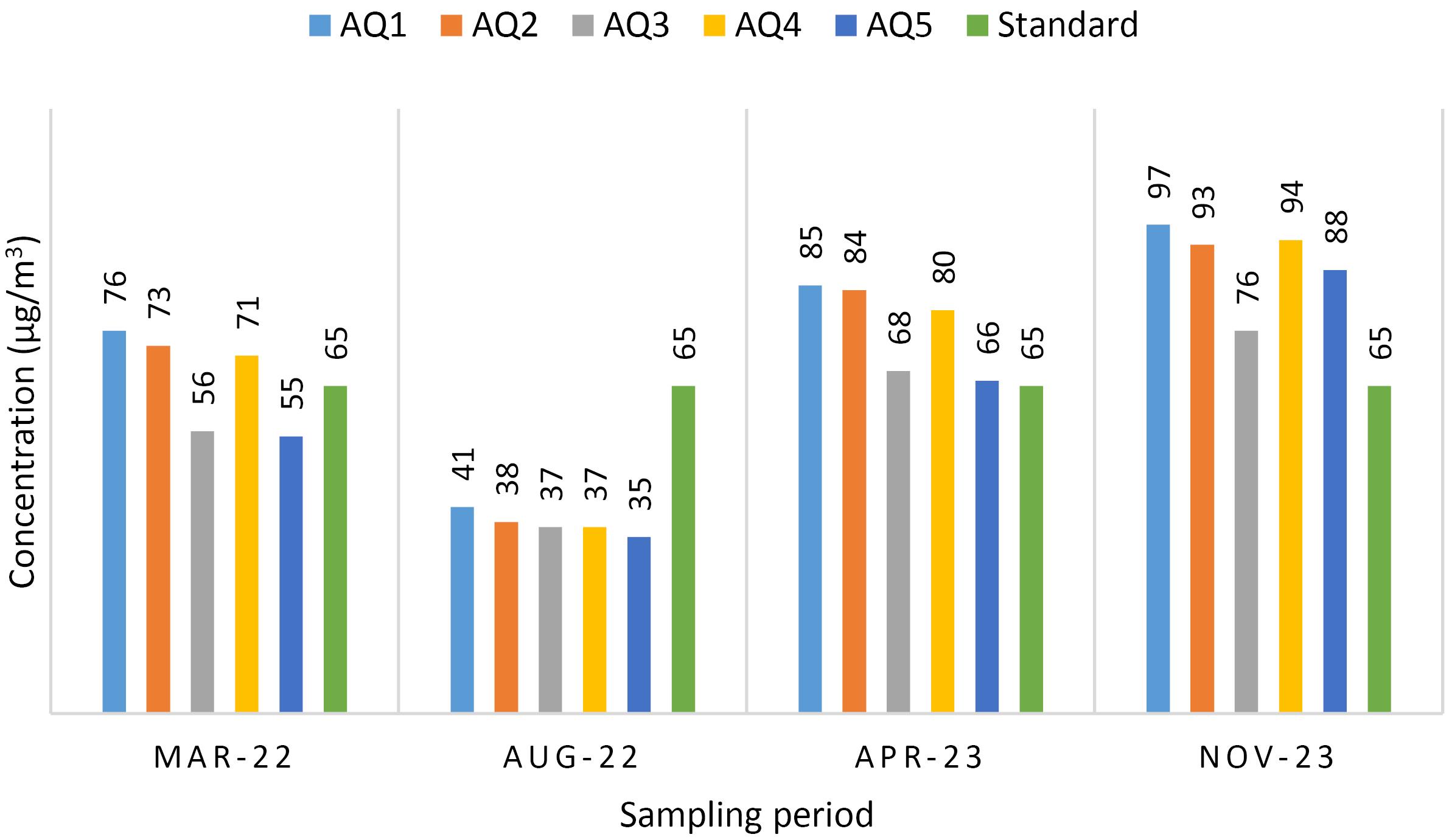
Fig. 4.
PM2.5 Concentration in Air
.
PM2.5 Concentration in Air
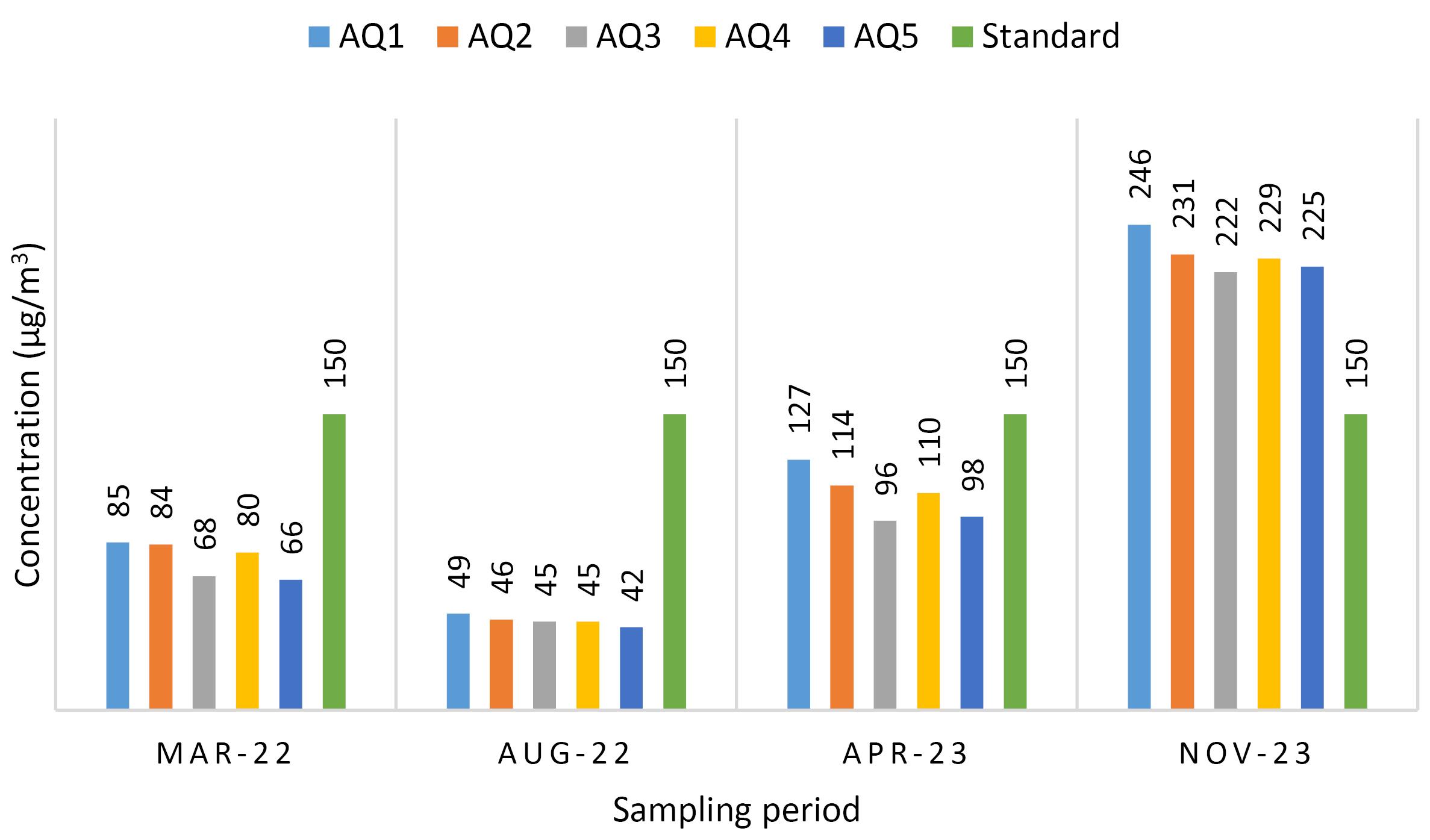
Fig. 5.
PM10 Concentration in Air
.
PM10 Concentration in Air
According to Fig. 4, PM2.5 concentrations at AQ1, AQ2, and AQ4 exceeded the Bangladesh Air Quality Standard in March 2022. In contrast, levels at AQ3 and AQ5 were slightly below the standard. The maximum concentration recorded was 76 µg/m³ at AQ1 in March 2022, followed by 73 µg/m³ at AQ2, 56 µg/m³ at AQ3, 71 µg/m³ at AQ4, and 55 µg/m³ at AQ5. The daily average standard for PM2.5 in the air, as set by Bangladesh, is 65 µg/m³.
The second measurement was conducted in August 2022 during the wet season, which coincided with rainy conditions during measurement time in August 2022. Therefore, PM2.5 concentrations of all selected locations were well below the Bangladesh Air Quality Standard 2022, ranging from 35 µg/m3 to 41 µg/m3 across all selected locations.
The third measurement, in April 2023, indicated increased PM2.5 concentration at all locations compared to the previous data. The highest concentration was recorded at AQ1 (85 µg/m3), followed by AQ2 (84 µg/m3), AQ4 (80 µg/m3), AQ3 (68 µg/m3), and AQ5 (66 µg/m3).
The final measurement in November 2023, during the dry season, revealed alarmingly high PM2.5 concentrations across all selected locations. The highest concentration of PM2.5 was 97 µg/m3 at location AQ1, followed by 93 µg/m3 at location AQ2, 76 µg/m3 at location AQ3, 94 µg/m3 at location AQ4, and 88 µg/m3 at location AQ5.
It is observed that air dust levels were significantly lower during the rainy season. Throughout the study period, ongoing construction activities were observed, with road and building projects at location AQ1 and road construction specifically at location AQ2. Construction sites are recognized for releasing a variety of pollutants into the air (22), originating from heavy machinery, vehicles, material handling, and construction activities themselves (23). Road construction and demolition work often generates significant dust, primarily due to the disruption of soil and aggregates (24).
The PM10 concentrations in Rajshahi city’s air are illustrated in Fig. 5. The Bangladesh Air Quality Standard for PM10 is 150 µg/m³ (daily average). PM10 concentrations were measured in March 2022, August 2022, April 2023, and November 2023. The results revealed that PM10 levels at all selected locations remained within the acceptable limits during March 2022, August 2022, and April 2023. In March 2022, concentrations varied between 66 µg/m³ and 85 µg/m³, while in August 2022, they were between 42 µg/m³ and 49 µg/m³. In April 2023, concentrations ranged from 96 µg/m³ to 127 µg/m³. However, PM10 concentrations rose significantly in November 2023, with the highest concentration recorded at AQ1 (246 µg/m³), followed by AQ2 (231 µg/m³), AQ4 (229 µg/m³), AQ5 (225 µg/m³), and AQ3 (222 µg/m³).
Dust emissions from activities such as excavation, demolition, and material handling are key contributors to PM10 and PM2.5 (25). Similar to PM2.5, PM10 levels are impacted by traffic emissions, industrial operations, and dust generated from construction activities. During the dry season, reduced rainfall and higher wind speeds can elevate pollutant levels, especially PM, as dust is resuspended into the atmosphere (26). The proximity of construction activities within one kilometer of the monitoring site likely contributed to the increased pollutant levels.
A considerable amount of PM2.5 was detected during this study. PM2.5 poses serious risks to both the environment and human health. Numerous studies have highlighted the detrimental effects of PM2.5 on health due to its composition, which includes various toxic metals such as lead, iron, chromium, copper, aluminum, and nickel (27-29). PM, particularly PM2.5, can deeply penetrate the respiratory system, leading to inflammation, worsening asthma and other respiratory conditions, and heightening the risk of cardiovascular issues such as heart attacks and strokes (30).
Throughout the study period, qualitative data were gathered through public interviews, which revealed several key observations, including ongoing construction activities, a reduction in water bodies, and widespread tree removal. Infrastructure projects, such as roads, massive structures, railways, and bridges, have contributed to environmental degradation, increased dust pollution, and the displacement of local communities due to insufficient safety measures and weak environmental regulations (31). Road construction projects significantly contribute to air pollutants, especially PM, during the dry season (32).
During this study, significant road constructions were underway in the Talaimari and Railgate areas. Correspondingly, a high amount of PM2.5 and PM10 was recorded during the dry season. The highest level of PM2.5 reached 97 µg/m3 in November 2023, while PM10 peaked at 246 µg/m3 during the same time. Additionally, heavy vehicle traffic was observed in both the Railgate and Laxmipur regions. In recent years, Rajshahi city has experienced extensive tree removal and growing water scarcity issues, particularly related to the Padma River. Due to the Farakka Barrage in India, the Padma River is drying up progressively, posing a serious threat to the region’s biodiversity. Furthermore, several ponds have been filled in for land development and building construction. These activities, especially uncontrolled construction activities, are among the major causes of air pollution in Rajshahi. A study on air pollution in Andimshek, Iran, noted that its air quality is influenced by proximity to Khuzestan Province, which borders Iraq and Saudi Arabia, regions characterized by their dry climates and frequent dust storms (33).
It is worth noting that the monthly average rainfall in Rajshahi was 127 mm in 2019, whereas the long-term monthly average (normal) rainfall for the period 1981-2010 was 121 mm. During this same reference period, the standard minimum and maximum normal temperatures in Rajshahi were 20.5 °C and 31.2 °C, respectively (34). These findings provided valuable insights for future initiatives and offered direction on various environmental factors influencing knowledge, attitudes, and behaviors. In addition to environmental pollution, residents in this region are at greater risk of developing lung-related diseases, including cancer and respiratory tract infections, due to significant exposure to PM2.5, a pollutant composed of suspended particles containing various harmful chemical substances.
4. Conclusion
Rajshahi is widely recognized as an educational hub, with a population growing rapidly. During the study period, extensive road and building construction projects were underway across the city, including the Rajshahi-Naogan Road and roads near RUET and the University of Rajshahi. Unfortunately, many trees were removed for aesthetic purposes, and several ponds were filled to facilitate the construction of buildings and markets. The elevated concentrations of PM2.5 pose a serious threat to public health, as PM2.5 is known to be more harmful than the larger PM10 particles. The tiny particles in the PM2.5 can penetrate deep into the respiratory system and reach the lungs, resulting in a range of health problems, including throat, lung, nose, and eye irritation, as well as symptoms such as runny nose, coughing, sneezing, and difficulty breathing. In developing countries, the health effects of PM2.5 on health are increasingly alarming and represent a significant global health concern. Thus, it is essential to effectively regulate unplanned urban development. Rajshahi City Corporation should prioritize sustainable urban planning over superficial beautification efforts. High concentrations of airborne dust were found near construction sites. Construction activities are required to strictly adhere to the BAPCR 2022 guidelines to reduce air pollution. The effective implementation of both the BAPCR 2022 and the Environmental Conservation Rules 2023 is essential for controlling urban air pollution. Incorporating green belts and designated buffer zones into city planning can significantly improve air quality and promote healthier urban environments.
Acknowledgements
The author would like to express my sincere gratitude to the Barendra Poribesh Unnayan Sechchasheby Sanghstha for their invaluable support during this study. Following the assessment of air quality in Rajshahi, the author’s interview regarding air pollution was featured in The Daily Prothom Alo on November 12, 2023. Additionally, the author’s interview on this topic was published in The Daily Star on the same date. The author also participated in televised interviews about air pollution, which were broadcast on Shomoy TV and Independent TV.
Competing Interests
None to declare.
Funding
The author received no financial support for this research.
References
- Guttikunda SK, Goel R, Pant P. Nature of air pollution, emission sources, and management in the Indian cities. Atmos Environ 2014; 95:501-10. doi: 10.1016/j.atmosenv.2014.07.006 [Crossref] [ Google Scholar]
- Rafaj P, Kiesewetter G, Krey V, Schoepp W, Bertram C, Drouet L. Air quality and health implications of 15°C–2°C climate pathways under considerations of ageing population: a multi-model scenario analysis. Environ Res Lett 2021; 16(4):045005. doi: 10.1088/1748-9326/abdf0b [Crossref] [ Google Scholar]
- Wang Y, Hu J, Huang L, Li T, Yue X, Xie X. Projecting future health burden associated with exposure to ambient PM25 and ozone in China under different climate scenarios. Environ Int 2022; 169:107542. doi: 10.1016/j.envint.2022.107542 [Crossref] [ Google Scholar]
- Lelieveld J, Evans JS, Fnais M, Giannadaki D, Pozzer A. The contribution of outdoor air pollution sources to premature mortality on a global scale. Nature 2015; 525(7569):367-71. doi: 10.1038/nature15371 [Crossref] [ Google Scholar]
- Chan CK, Yao X. Air pollution in mega cities in China. Atmos Environ 2008; 42(1):1-42. doi: 10.1016/j.atmosenv.2007.09.003 [Crossref] [ Google Scholar]
- Gozzi F, Della Ventura G, Marcelli A, Lucci F. Current status of particulate matter pollution in Europe and future perspectives: a review. J Mater Environ Sci 2017; 8(6):1901-9. [ Google Scholar]
- Balakrishnan K, Dey S, Gupta T, Dhaliwal RS, Brauer M, Cohen AJ. The impact of air pollution on deaths, disease burden, and life expectancy across the states of India: the Global Burden of Disease Study 2017. Lancet Planet Health 2019; 3(1):e26-39. doi: 10.1016/s2542-5196(18)30261-4 [Crossref] [ Google Scholar]
- Guaita R, Pichiule M, Maté T, Linares C, Díaz J. Short-term impact of particulate matter (PM25) on respiratory mortality in Madrid. Int J Environ Health Res 2011; 21(4):260-74. doi: 10.1080/09603123.2010.544033 [Crossref] [ Google Scholar]
- Halonen JI, Lanki T, Yli-Tuomi T, Tiittanen P, Kulmala M, Pekkanen J. Particulate air pollution and acute cardiorespiratory hospital admissions and mortality among the elderly. Epidemiology 2009; 20(1):143-53. doi: 10.1097/EDE.0b013e31818c7237 [Crossref] [ Google Scholar]
- Samoli E, Peng R, Ramsay T, Pipikou M, Touloumi G, Dominici F. Acute effects of ambient particulate matter on mortality in Europe and North America: results from the APHENA study. Environ Health Perspect 2008; 116(11):1480-6. doi: 10.1289/ehp.11345 [Crossref] [ Google Scholar]
- Jiang XQ, Mei XD, Feng D. Air pollution and chronic airway diseases: what should people know and do?. J Thorac Dis 2016; 8(1):E31-40. doi: 10.3978/j.issn.2072-1439.2015.11.50 [Crossref] [ Google Scholar]
- Casarett LJ. Casarett and Doull’s Toxicology: The Basic Science of Poisons. New York: McGraw-Hill; 2008. Available from: https://hero.epa.gov/hero/index.cfm/reference/details/reference_id/699255.
- Omidi Khaniabadi Y, Daryanoosh SM, Amrane A, Polosa R, Hopke PK, Goudarzi G. Impact of Middle Eastern dust storms on human health. Atmos Pollut Res 2017; 8(4):606-13. doi: 10.1016/j.apr.2016.11.005 [Crossref] [ Google Scholar]
- Avino P, Manigrasso M. Dynamic of submicrometer particles in urban environment. Environ Sci Pollut Res Int 2017; 24(16):13908-20. doi: 10.1007/s11356-016-6752-8 [Crossref] [ Google Scholar]
- Bagayev I, Lochard J. EU air pollution regulation: a breath of fresh air for Eastern European polluting industries?. J Environ Econ Manage 2017; 83:145-63. doi: 10.1016/j.jeem.2016.12.003 [Crossref] [ Google Scholar]
- Omidi Khaniabadi Y, Sicard P, Taiwo AM, De Marco A, Esmaeili S, Rashidi R. Modeling of particulate matter dispersion from a cement plant: upwind-downwind case study. J Environ Chem Eng 2018; 6(2):3104-10. doi: 10.1016/j.jece.2018.04.022 [Crossref] [ Google Scholar]
- Omidi Khaniabadi Y, Daryanoosh M, Sicard P, Takdastan A, Hopke PK, Esmaeili S. Chronic obstructive pulmonary diseases related to outdoor PM10, O3, SO2, and NO2 in a heavily polluted megacity of Iran. Environ Sci Pollut Res Int 2018; 25(18):17726-34. doi: 10.1007/s11356-018-1902-9 [Crossref] [ Google Scholar]
- Omidi Khaniabadi Y, Sicard P, Takdastan A, Hopke PK, Taiwo AM, Omidi Khaniabadi F. Mortality and morbidity due to ambient air pollution in Iran. Clin Epidemiol Glob Health 2019; 7(2):222-7. doi: 10.1016/j.cegh.2018.06.006 [Crossref] [ Google Scholar]
- Azad AK, Kitada T. Characteristics of the air pollution in the city of Dhaka, Bangladesh in winter. Atmos Environ 1998; 32(11):1991-2005. doi: 10.1016/s1352-2310(97)00508-6 [Crossref] [ Google Scholar]
- Government of the People’s Republic of Bangladesh. Bangladesh Air Pollution Control Rules, SRO No. 255 Law/2022. Available from: https://file-mymensingh.portal.gov.bd/uploads/7d7d9b9e-d66f-4811-bc8b-ebea67523468//631/04a/85d/63104a85dba60724048427.pdf. Accessed July 25, 2022.
- Bangladesh Bureau of Statistics (BBS). District Statistics 2011: Rajshahi. BBS; 2013. Available from: https://bbs.portal.gov.bd/sites/default/files/files/bbs.portal.gov.bd/page/d6de1de2_346e_4444_8302_5de47d001d52/2025-06-26-06-12-ce330727d493c2a8fe7d76cf4ff94c89.pdf.
- Wieser AA, Scherz M, Passer A, Kreiner H. Challenges of a healthy built environment: air pollution in construction industry. Sustainability 2021; 13(18):10469. doi: 10.3390/su131810469 [Crossref] [ Google Scholar]
- Sizirici B, Fseha Y, Cho CS, Yildiz I, Byon YJ. A review of carbon footprint reduction in construction industry, from design to operation. Materials (Basel) 2021; 14(20):6094. doi: 10.3390/ma14206094 [Crossref] [ Google Scholar]
- Vlasov D, Ramírez O, Luhar A. Road dust in urban and industrial environments: sources, pollutants, impacts, and management. Atmosphere 2022; 13(4):607. doi: 10.3390/atmos13040607 [Crossref] [ Google Scholar]
- Cheriyan D, Choi JH. A review of research on particulate matter pollution in the construction industry. J Clean Prod 2020; 254:120077. doi: 10.1016/j.jclepro.2020.120077 [Crossref] [ Google Scholar]
- Owolabi TO, Ajayi OO, Olofu DA. Assessment of air pollution levels from a building construction site on Lagos island. ABUAD J Eng Res Dev 2024; 7(2):229-35. doi: 10.53982/ajerd.2024.0702.22-j [Crossref] [ Google Scholar]
- Callén MS, Iturmendi A, López JM. Source apportionment of atmospheric PM25-bound polycyclic aromatic hydrocarbons by a PMF receptor model Assessment of potential risk for human health. Environ Pollut 2014; 195:167-77. doi: 10.1016/j.envpol.2014.08.025 [Crossref] [ Google Scholar]
- Kampa M, Castanas E. Human health effects of air pollution. Environ Pollut 2008; 151(2):362-7. doi: 10.1016/j.envpol.2007.06.012 [Crossref] [ Google Scholar]
- Lin H, Guo Y, Zheng Y, Zhao X, Cao Z, Rigdon SE. Exposure to ambient PM25 associated with overall and domain-specific disability among adults in six low- and middle-income countries. Environ Int 2017; 104:69-75. doi: 10.1016/j.envint.2017.04.004 [Crossref] [ Google Scholar]
- Thangavel P, Park D, Lee YC. Recent insights into particulate matter (PM25)-mediated toxicity in humans: an overview. Int J Environ Res Public Health 2022; 19(12):7511. doi: 10.3390/ijerph19127511 [Crossref] [ Google Scholar]
- Nahar N, Mahiuddin S, Hossain Z. The severity of environmental pollution in the developing countries and its remedial measures. Earth 2021; 2(1):124-39. doi: 10.3390/earth2010008 [Crossref] [ Google Scholar]
- Khandker S, Mohiuddin AS, Ahmad SA, McGushin A, Abelsohn A. Air Pollution in Bangladesh and its Consequences. Re Sq [Preprint]. May 16, 2023. doi: 10.21203/rs.3.rs-1184779/v2.
- Seihei N, Farhadi M, Takdastan A, Asban P, Kiani F, Mohammadi MJ. Short-term and long-term effects of exposure to PM10. Clin Epidemiol Glob Health 2024; 27:101611. doi: 10.1016/j.cegh.2024.101611 [Crossref] [ Google Scholar]
- Bangladesh Bureau of Statistics (BBS). Statistical Yearbook of Bangladesh 2022. 42nd ed. Dhaka: BBS; 2022. Available from: https://bbs.portal.gov.bd/sites/default/files/files/bbs.portal.gov.bd/page/b2db8758_8497_412c_a9ec_6bb299f8b3ab/2023-06-26-09-19-2edf60824b00a7114d8a51ef5d8ddbce.pdf.