Avicenna J Environ Health Eng. 11(2):63-69.
doi: 10.34172/ajehe.5492
Original Article
Decolorization of Crystal Violet Dye in an Aqueous Solution Using Peanut Hull Powder as an Eco-friendly Adsorbent
Ban H. Mshhain 1  , Haneen A. Kh. Karaghool 1, * , Nizar N. Ismaeal 1
Author information:
1Environmental Engineering Department, College of Engineering, Tikrit University, Tikrit, Iraq
Abstract
Environmental issues arising from industrialization and urbanization have grown in frequency and complexity in recent decades. The textile sector is the largest user and generator of dye-laden wastewater, despite its widespread use in several industries. The study explored the adsorption of crystal violet (CV) dye, which is typically found in textile wastewaters, onto peanut hull powder (PHP). Batch tests were done depending on the initial solution pH (2-10), contact time (10-90 min), temperature (15-40 °C), adsorbent dose (0.5-3 g), and adsorbent particle size (150-1180 µm). Depending on the point of zero charge (pHpzc), the optimum value of pH for the solution was above 4.6. The best parameters for removing CV dye using PHP were pH = 6, temperature of 25 °C, adsorbent dose of 1.5 g, and particle size of 150 µm. The highest removal percentage was 95% at a CV concentration of 20 mg/L. The study found that PHP is a viable and inexpensive adsorbent for adsorptive elimination of CV from colored wastewater.
Keywords: Adsorption, Crystal violet, Decolorization, Peanut hull powder,
Copyright and License Information
© 2024 The Author(s); Published by Hamadan University of Medical Sciences.
This is an open-access article distributed under the terms of the Creative Commons Attribution License (
https://creativecommons.org/licenses/by/4.0), which permits unrestricted use, distribution, and reproduction in any medium, provided the original work is properly cited.
Please cite this article as follows: Mshhain BH, Karaghool HAK, Ismaeal NN. Decolorization of crystal violet dye in an aqueous solution using peanut hull powder as an eco-friendly adsorbent. Avicenna J Environ Health Eng. 2024; 11(2):63-69. doi:10.34172/ajehe.5492
1. Introduction
Dyes are utilized in several industrial products, such as textiles, plastics, paper, concrete, medicines, and rubber. The textile industry is believed to be responsible for about 50% of dye-laden wastewater (1). In general, a dye is defined as a material that can bind chemically or physically to a substrate to produce color when applied (2). The dye-containing effluent contains many unconsumed dyes and surfactants. Colored effluent can impair the photosynthetic processes of aquatic plants, reducing oxygen levels and perhaps smothering flora and fauna (3). The removal of dyes from industrial waste before they get released into water bodies is therefore highly essential from the point of view of health and hygiene, as well as environmental protection. Most of the dyes used in the textile sector are primarily allergenic, carcinogenic, and mutagenic. Discharging these dyes into wastewater poses harm to aquatic life, including fish and microbial species (4). Textile industry wastewater decolorization is a global issue that has been effectively addressed by numerous treatment technologies, including adsorption. Adsorption-based techniques use low-cost readily accessible materials to effectively remove contaminants from wastewater. Many novel materials have been investigated to adsorb dyes from wastewater (5). Crystal violet (CV) is a cationic triphenylmethane dye chemically known as hexamethyl pararosaniline chloride. It is a highly sought-after industrial raw material with widespread industrial and medicinal applications. It is used as a dye in cotton and silk textiles, as well as other materials like leather and animal skin. It is utilized as an external disinfectant due to its harmful effects on cells. In medical and veterinary fields, it is utilized as the active component in Gram staining for classifying microorganisms (6). CV dye is a water-soluble, poisonous, and refractory organic dye that poses major health risks and harms the environment. Exposure to the dye may cause significant eye discomfort and unpleasant light sensitivity. In severe circumstances, it may cause breathing complications, renal failure, and lifelong blindness (7). Several dye removal procedures, including biological degradation, precipitation, photocatalytic, membrane filtration, chemical oxidation, coagulation, flocculation, ion exchange, and solvent extraction, have been tested with varying degrees of success. They have certain drawbacks, including high investment and operating costs, inefficient dye removal, and the need for effective treatment of dye wastewater (8). The treatment of dye-contaminated wastewater has been reported using a variety of advanced physicochemical processes, including coagulation/flocculation, adsorption, filtration, photocatalysis, Fenton reaction, advanced oxidation processes (e.g., ozone, hydrogen peroxide, ultraviolet [UV] radiation), and several biological processes (9). The industrial sector typically uses only a few wastewater treatment techniques due to cost and technological constraints. Adsorption is the preferred method for removing pollutants due to its cost-effectiveness, versatility, and ease of design (10). Additionally, adsorption produces no sludge (11). Adsorption with commercial activated carbon is costly due to its production from expensive precursors, despite its impressive performance. Although activated carbons and organic resins are effective adsorbents for dye removal, their high cost limits their widespread use. Researchers are looking for alternative adsorbents that can provide the same level of performance (12). In recent years, agro-industrial waste has been identified as a cost-effective and plentiful resource for waste management solutions (10). Because of their availability, high carbonaceous content, and potential to retain organic molecules, agricultural bio-wastes are continually being researched for color removal from wastewater. Furthermore, these materials have ideal physical and chemical properties for the adsorption of dye and require little or no modification before use (7). Several studies have attempted to produce low-cost activated carbons from agro-industrial waste, including orange peel, almond leaves, potato peel, water lily, oil palm empty fruit bunch, coffee husk, spent coffee grounds, and tea waste (10). The study performed by Ahamad and Abu Nasar investigated recycling artificially contaminated wastewater with CV organic dye utilizing Azadirachta indica sawdust (AISD) as a cost-effective adsorbent (13). The chestnut shell was chemically activated using H2SO4 and NaOH agents. The NaOH pretreatment resulted in the highest adsorption efficiency (99.06%), and CV adsorption reached equilibrium after 60 minutes (14). Pine cone powder (PCP) was tested for the removal of CV dye, and it achieved 99.9% removal efficiency after 120 minutes of contact (15). This study aimed to investigate the effectiveness of peanut hull powder (PHP) as an economical adsorbent in removing CV from aqueous solutions. We studied how initial pH, contact time, temperature, adsorbent dose, adsorbent particle size, and initial dye concentration affect CV removal to optimize these parameters.
2. Materials and Methods
2.1. Preparation of PHP
Waste peanut hulls were collected after separating and utilizing the fruit from the plant shell at a nearby market in Tikrit, Iraq. Suspended substances were removed by vigorously washing with tap water and sun-drying for 5 days. Dried hulls were pulverized into fine powder with a grinder before being repeatedly rinsed with distilled water. The clean powder was dried in an oven at 60 °C until it attained a constant weight, as seen in Fig. 1. The adsorbent material was sieved with standard sieves to determine particle sizes for adsorption studies (16).
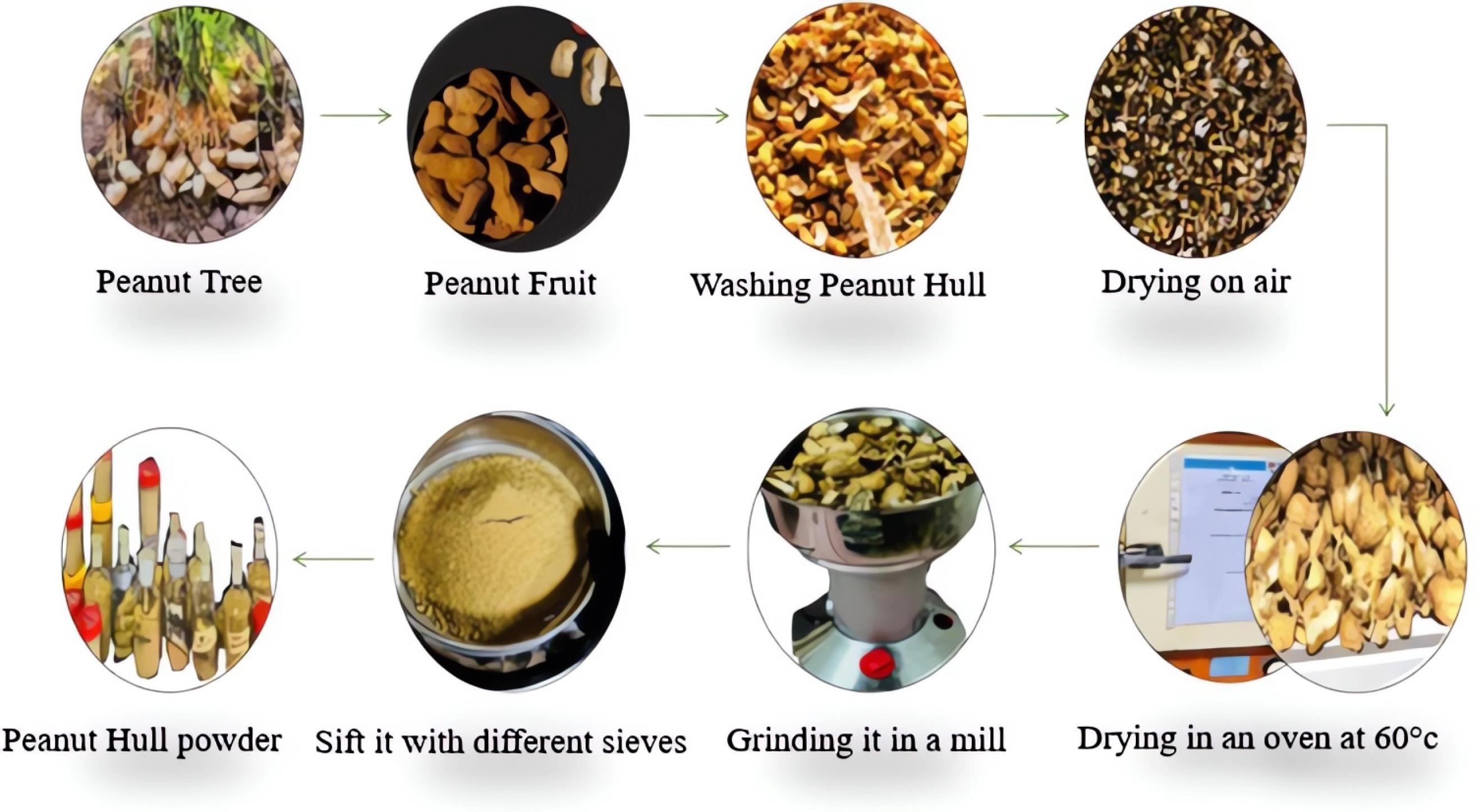
Fig. 1.
Preparation of Peanut Hull Powder for Adsorption Experiments
.
Preparation of Peanut Hull Powder for Adsorption Experiments
2.2. Preparation of Adsorbate Solution
As shown in Fig. 2, the molecular weight of CV dye (C25 H30 N3Cl) is 407.98 g/mole, and its solubility in water is 16 g/L at 25°C (17). It was purchased with a purity of 99% (Sinopharm Chemical Testing Co., Ltd., China) and utilized without additional purification. Stock solutions of the dye at a concentration of 500 mg/L were made by dissolving the required amount of the dye in distilled water. CV dye solutions for batch tests were generated by diluting the stock solution appropriately. The initial pH was changed by adding either 0.1 M NaOH or 0.1 M HCl (7).
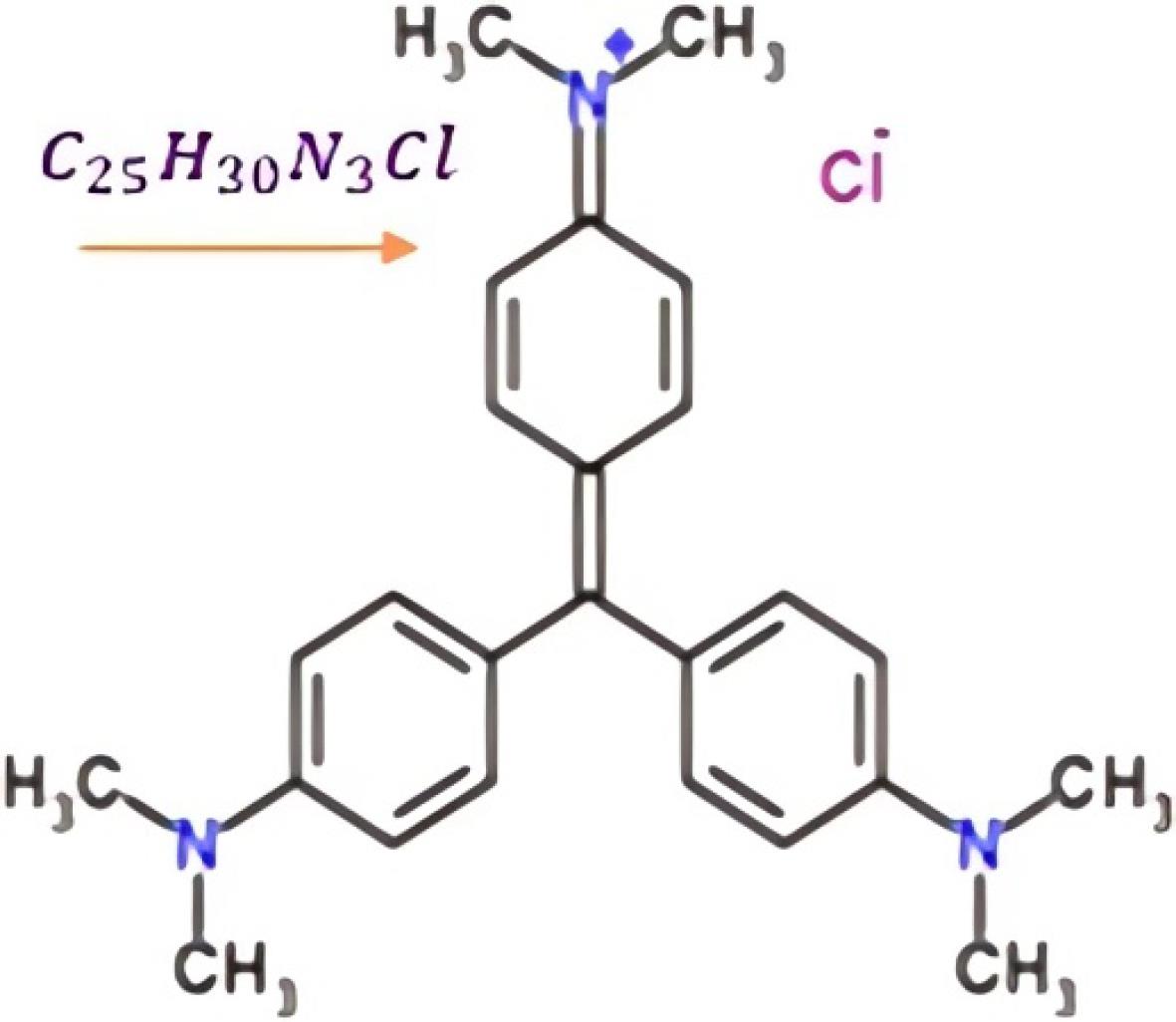
Fig. 2.
Chemical Structure of Crystal Violet (CV) Dye
.
Chemical Structure of Crystal Violet (CV) Dye
2.3. Identification of Point of Zero Charge (pHPZC)
The level of pH known as the point of zero charge (pHPZC) is the pH at which the surface charge of the particle is equal to zero at a specific temperature, dye concentration, pH, adsorbent dose, particle size, and contact time. This suggests that there are equal quantities of positive and negative charges on the surface of the particle rather than no charge at all. The speciation of dye molecules and the PHP (adsorbent) surface at the point of zero charges (pHPZC), which was ascertained using the salt titration method, provided additional support for the pH dependence on CV adsorption. The PHP surface had no potential charge when pH = pHPZC; in other words, when pH was higher than pHPZC, the PHP surface developed a negative charge, which led to electrostatic contact with the positively charged CV molecules. Then, 150 mL of distilled water was added to 250 mL Erlenmeyer flasks. The initial pH values of the solution were adjusted by adding 0.1 N HCl or 0.1 N NaOH to reach 2–12 (18). Afterwards, 1.5 g of PHP was added to each flask. The suspensions were then shaken at 150 rpm for 24 hours at 25°C. The pH values of the supernatant liquids were recorded, and the crossing point of the resulting curve corresponds to the pH at the point of zero charge (pHPZC), which was calculated to be (4.6). The pHPZC is critical for knowing how PHP interacts with other compounds in a solution. It aids in predicting the adsorption behavior and stability of the colloidal system. The pHPZC is commonly determined by altering the pH of a suspension of PHP and measuring the zeta potential at various pH levels. The pHPZC is the pH at which the zeta potential reaches zero. The zeta potential varies with pH and the point of zero charge of PHP. The pHPZC is the point where the curve crosses the line where the zeta potential equals zero (19).
2.4. Adsorption Experiments
Batch tests were carried out in a 250 mL Erlenmeyer flask with a working volume of 150 mL. The suspensions were stirred by a mechanical shaker at 120 rpm until equilibrium was obtained at 25°C. Over different time intervals, samples were obtained from the reaction mixture, and the CV dye concentrations were measured using a UV/Visible spectrophotometer at the maximum wavelength (λmax = 580 nm). The percentage removal (R) of dye was estimated using the equation below (20):
Where Ci and Ce are the initial and the equilibrium CV dye concentrations (mg/L), respectively.
CV dye adsorbed per unit mass of the adsorbent (qe) (mg/g) was calculated using the following equation (20):
Where V is the volume of aqueous solution (L) and W is the amount of PHP used (g).
3. Results and Discussion
3.1. Point of Zero Charge (pHPZC)
The study revealed that the PHP had a pHPZC value of 4.6, as shown in Fig. 3. Certain ionizable functional groups on molecules of dye undergo protonation-deprotonation reactions. The positively charged functional groups on the adsorbent surface and the positive dye molecules engaged in electrostatic competition as a result of surface functional groups such as C = O and O-H protonating in an acidic environment. Nevertheless, deprotonation generated more negatively charged sorption sites to occupy the adsorbent surface as the solution pH increased above pHPZC, the H+ions left the adsorbent surface causing a negative charge of PHP, and electrostatic interaction improved dye removal. On the other hand, when pH decreases below pHPZC, H+ions are carried to the adsorbent and combined with OH- groups (3). In this study, the pH was set to 6, which is greater than the pHPZC. As a result of the negative charge on the particle surface, the H⁺ ion detached. Comparable findings were documented for several materials. For example, the pHPZC values for untreated peanut shells (UPS), acid-treated peanut shells (APS) (21), activated carbon developed from Rumex abyssinicus plant (22), and activated carbon obtained from oil palm trunks (23) were reported to be 6.3, 3.4, 5.03, and 4.8, respectively.
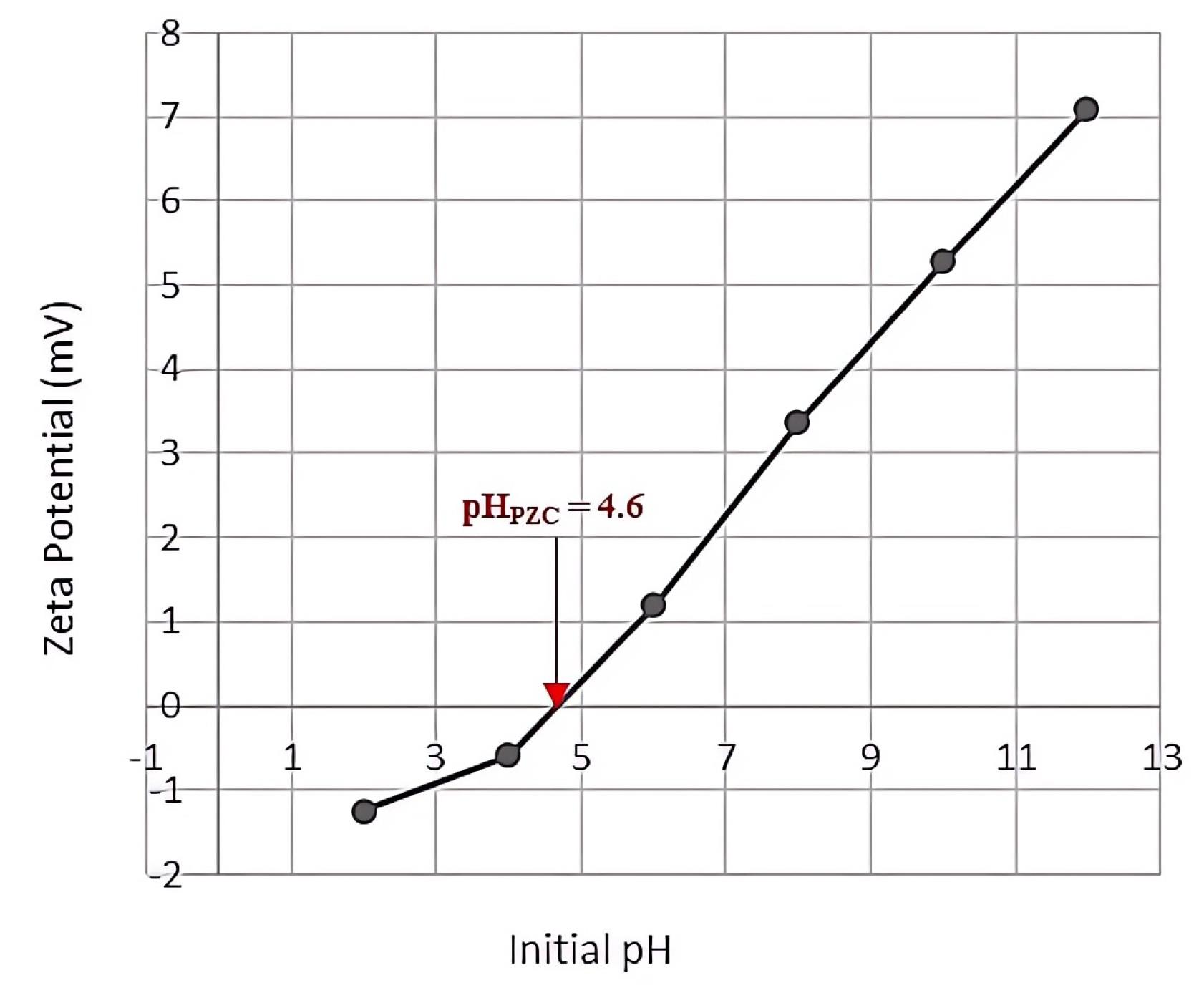
Fig. 3.
Identification of pHPZC of PHP
.
Identification of pHPZC of PHP
3.2. Optimization of pH
Adsorption studies of dyes need careful consideration of pH. Experiments were conducted with pH levels ranging from 2 to 10. To study the impact of pH (2-10), the following conditions were maintained: CV-concentration of 20 mg/L, solution volume of 150 mL, adsorbent dose of 1.5g/150 mL, particle size of 150 µm, and contact time of 60 minutes (24). The results showed that treating the aqueous solution of CV with PHP resulted in 85% removal at pH 2 and 95% removal at pH 6, respectively, as shown in Fig. 4. Results indicated a reduction in dye adsorption on PHP beyond pH 6. Therefore, the acidic pH of CV dye facilitated their adsorption on PHP, and the optimum value of pH for CV adsorption on PHP was 6. The adsorption of CV on peanut husk and pistachio shell powder followed a similar pattern of pH effect at a pH of 6 (24,25). This tendency can be explained by the greater negative charge density on the adsorbent surface in an acidic pH solution, which attracts the positively charged CV dye molecules to PHP. As the pH increased, the surface charge density of the adsorbent reduced, causing electrostatic repulsion owing to the charge of the dye molecules being positive (26).
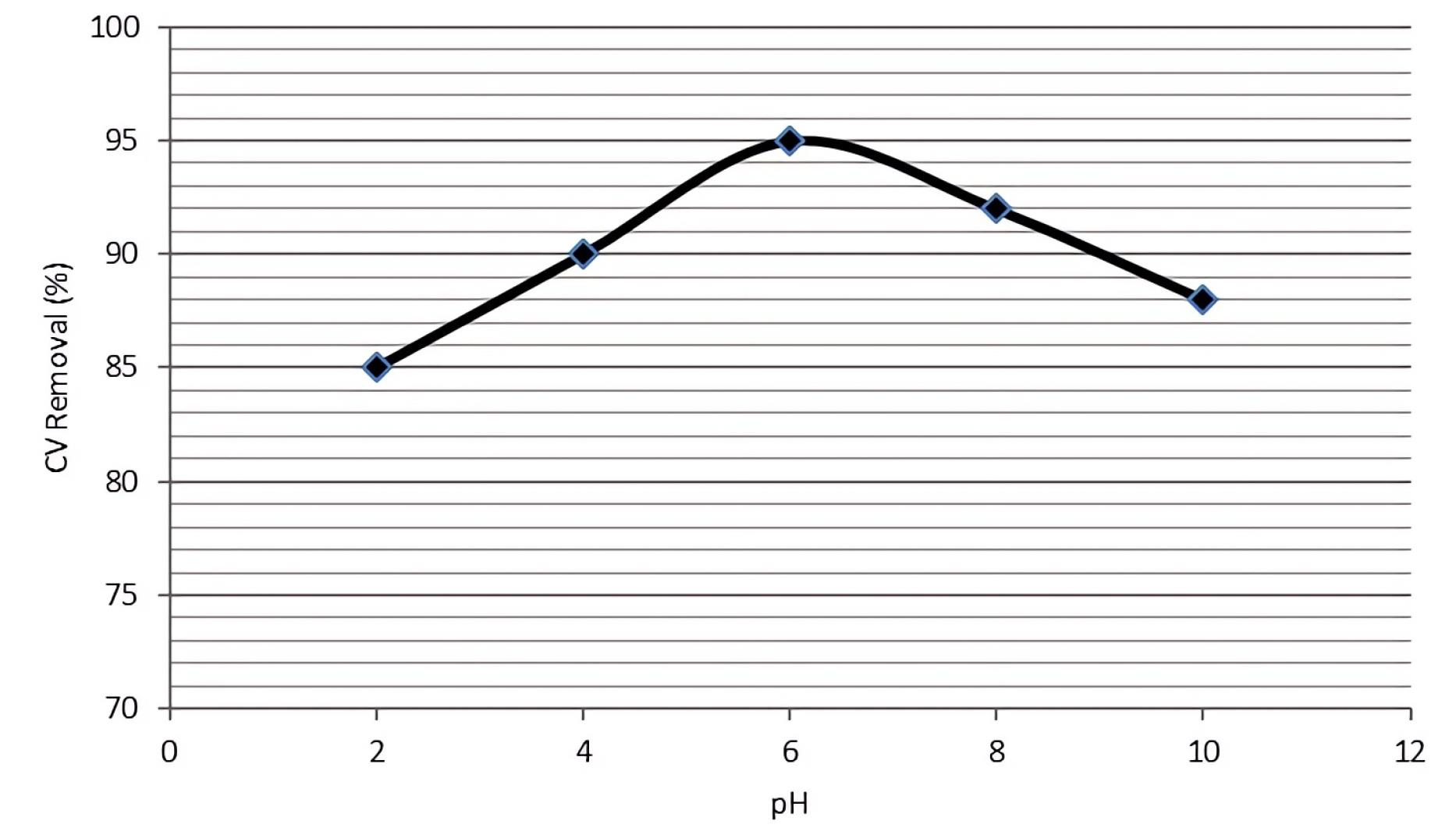
Fig. 4.
Optimization of pH for CV Adsorption by PHP
.
Optimization of pH for CV Adsorption by PHP
3.3. Optimization of the Contact Time
When developing an adsorption system for large-scale industrial applications, the time of contact between the adsorbent and adsorbate is critical in determining cost (7). To investigate the impact of contact duration on CV dye adsorption, contact time was varied between 10-90 minutes. Experiments revealed that the maximum duration for CV dye adsorption on the PHP surface was 60 minutes, with a 95% removal efficiency (Fig. 5). The optimal duration for subsequent studies was 60 minutes. Adsorption occurred quickly within the first 10 minutes, followed by a steady increase in the percentage of removal. The initially rapid reaction was caused by the existence of unoccupied adsorption sites on the adsorbent surface. As time passed, all unoccupied spots were filled, causing a little rise in dye adsorption. At saturation, dye molecules are weakly held on the adsorbent surface, referred to as the second adsorption layer (18).
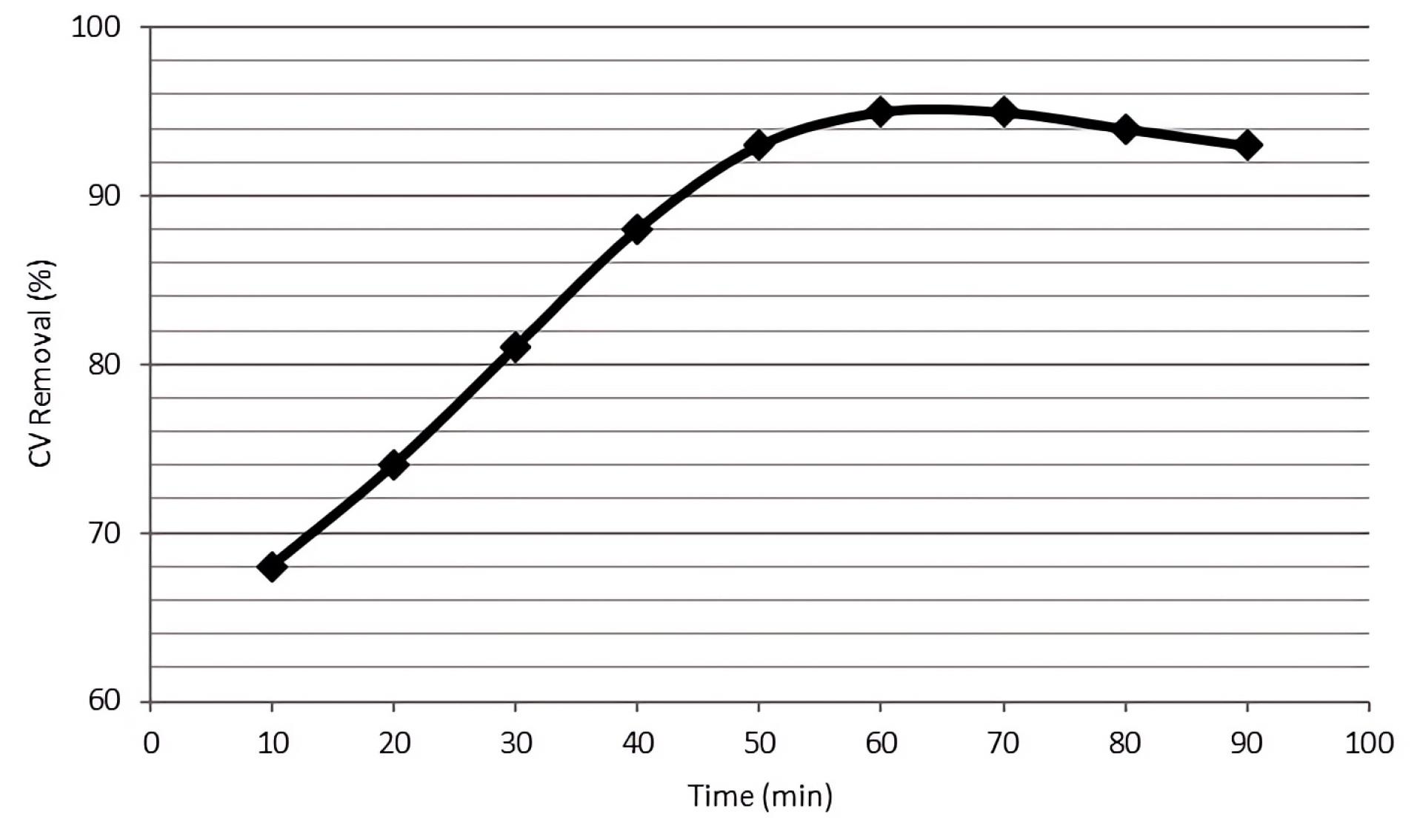
Fig. 5.
Optimization of Contact Time (min)
.
Optimization of Contact Time (min)
3.4. Optimization of the Temperature
To improve dye adsorption, the solution temperature was changed between 15 °C and 40 °C while other parameters remained fixed. The findings are shown in Fig. 6. The study discovered that increasing the temperature improved the mobility of dye ions and promoted swelling in the adsorbent, allowing bigger molecules to penetrate further. Increasing temperature may result in increased collaboration between CV dye molecules and PHP, leading to a higher percentage of removal of CV dye (5). Based on the results obtained, the optimal temperature was 25 °C. The percentage of dye removed decreased as the temperature rose over 30 °C. This could be owing to weak interactions between dye molecules and adsorbent binding sites. As temperature rose, dye removal capability decreased as illustrated in Fig. 7, indicating that adsorption of CV on PHP is regulated by an exothermic mechanism (16,27).
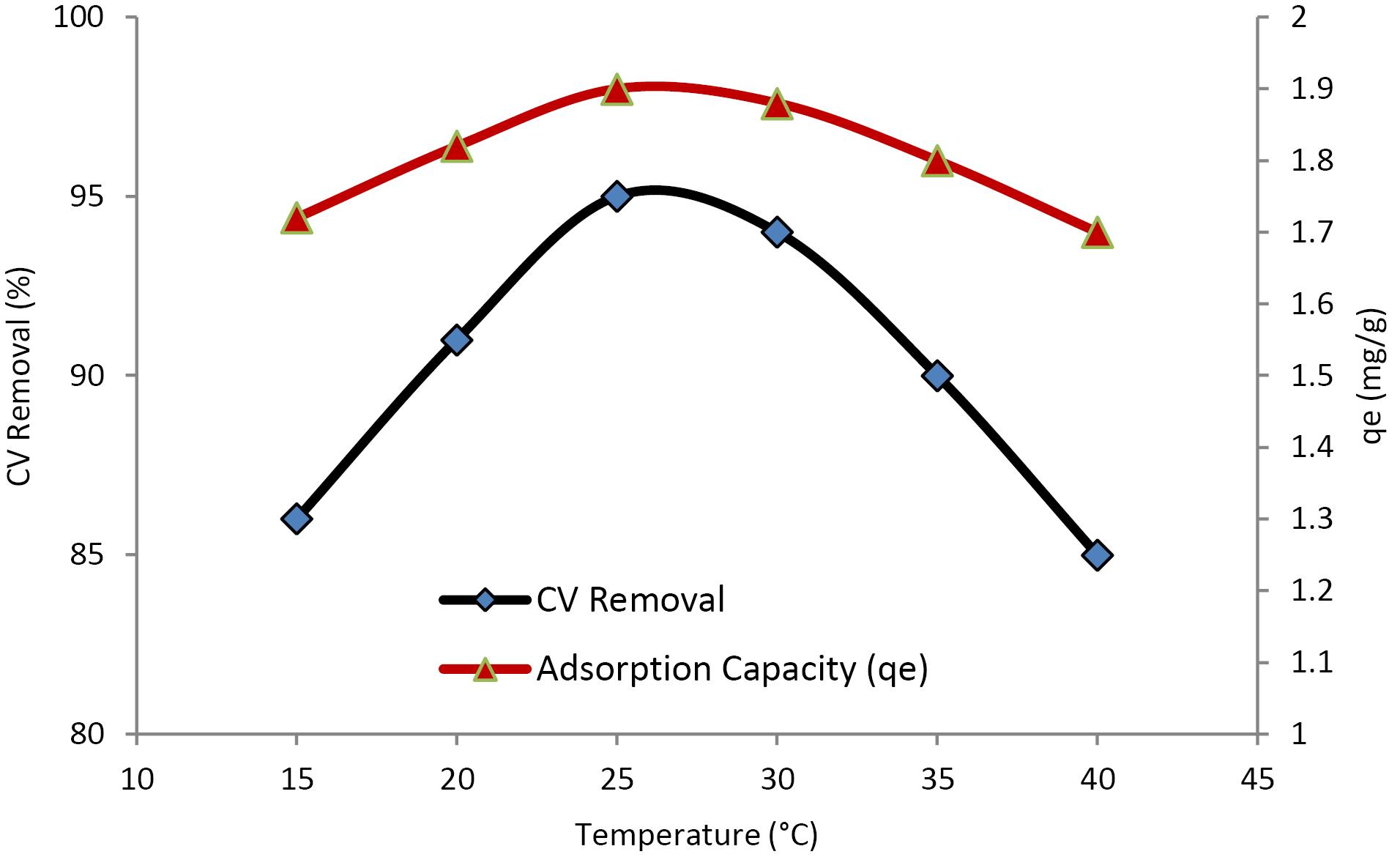
Fig. 6.
Comparison of Removal Efficiency and Adsorption Capacity of PHP as a Function of Temperature. Note: The black curve represents removal efficiency (%), and the red curve represents adsorption capacity (mg/g)
.
Comparison of Removal Efficiency and Adsorption Capacity of PHP as a Function of Temperature. Note: The black curve represents removal efficiency (%), and the red curve represents adsorption capacity (mg/g)
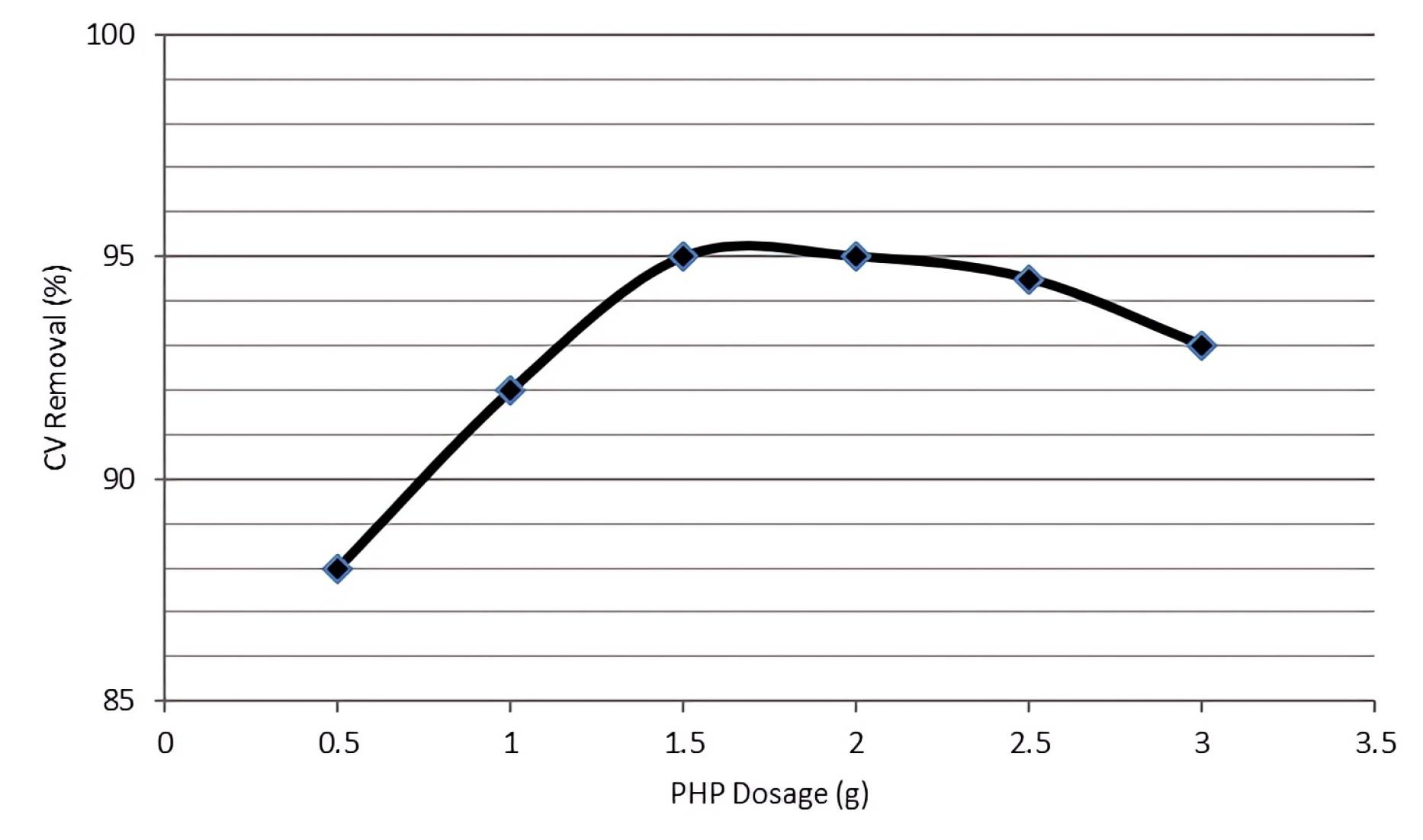
Fig. 7.
Optimization of PHP Adsorbent Dose (g)
.
Optimization of PHP Adsorbent Dose (g)
3.5. Optimization of the Adsorbent Dose
To remove CV dye from the aqueous solution, different adsorbent doses were tested while other parameters remained constant for optimal results. The dose of PHP adsorbent ranged from 0.5 to 3.5 g/150 mL. As depicted in Fig. 7, increasing the amount of adsorbent led to a steady increase in the percentage of CV dye removed up to 1.5 g (95%), after which it remained constant. Increasing the adsorbent dose resulted in a higher percentage of removal due to more accessible adsorption sites (2). Based on the results obtained, the optimum PHP dose was 1.5 g at which the dye removal was 95%. After reaching a weight of 1.5 g, the percentage of removal remained constant due to dye molecules occupying all adsorption sites. The adsorbent dose has been reported to be directly related to dye adsorption (20).
3.6. Optimization of the Adsorbent Particle Size
The percentage of dye removed from the aqueous solution is related to the adsorbent surface area (11). The effect of particle size on CV removal was studied using an initial dye concentration of 20 mg/L and varying PHP particle sizes from 150 µm to 1.18 mm. The results in Fig. 8 demonstrate that the percentage of dye adsorbed decreased with particle size. At equilibrium, the particle size of 150 µm had the highest adsorption percentage (95%). Small particle sizes have a larger surface area than big particle sizes, which results in better dye adsorption (3).
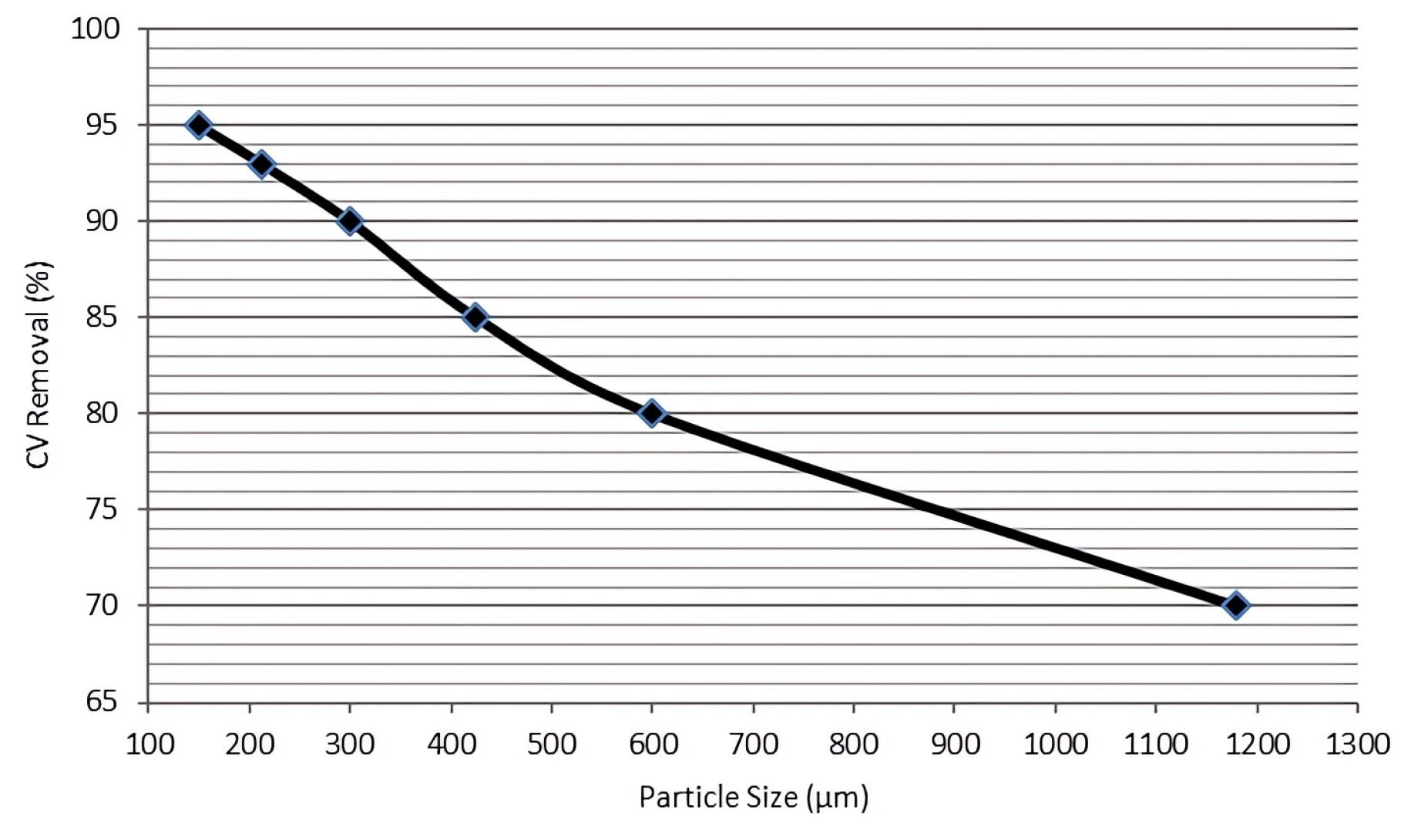
Fig. 8.
Optimization of PHP Particle Size (µm)
.
Optimization of PHP Particle Size (µm)
3.7. Effect of the Initial CV Concentration
The impact of initial CV concentration on adsorption was examined by varying it from 5 to 30 mg/L for low concentrations of dye and from 50 to 500 mg/L for relatively high initial CV concentrations. To evaluate the percentage of removal, 1.5 g of PHP was mixed with different concentrations of adsorbate for 60 minutes at 25 °C. The experiment showed that the proportion of dye removed increased as the concentration increased, reaching 95% at 20 mg/L as illustrated in Fig. 9. At initial concentrations ranging from 5 to 30 mg/L, the elimination percentage declined steadily from 100% to 89%, while the percentage of CV dye removal decreased from 80% to 55% at initial concentrations ranging from 50 to 500 mg/L. The initial increase in removal efficiency was caused by an overabundance of adsorbate (CV dye) adhering to the adsorbent surface, resulting in rapid and effective dye removal. As the dye concentration increased, the percentage of removal decreased due to the fact that the adsorbent active sites were saturated with the dye molecules. Additionally, repulsion between dye molecules contributes to lower dye removal efficiencies (1,28). The study demonstrated that CV adsorption is highly reliant on adsorbate concentration. Our findings highlight the need to optimize operating conditions to increase the efficacy of PHP as an adsorbent for CV dye removal. This study demonstrated that using less trash and energy than traditional approaches improves the sustainability and efficiency of the process as shown in Fig. 10, which illustrates the decolorization of CV dye using PHP at the optimum conditions.
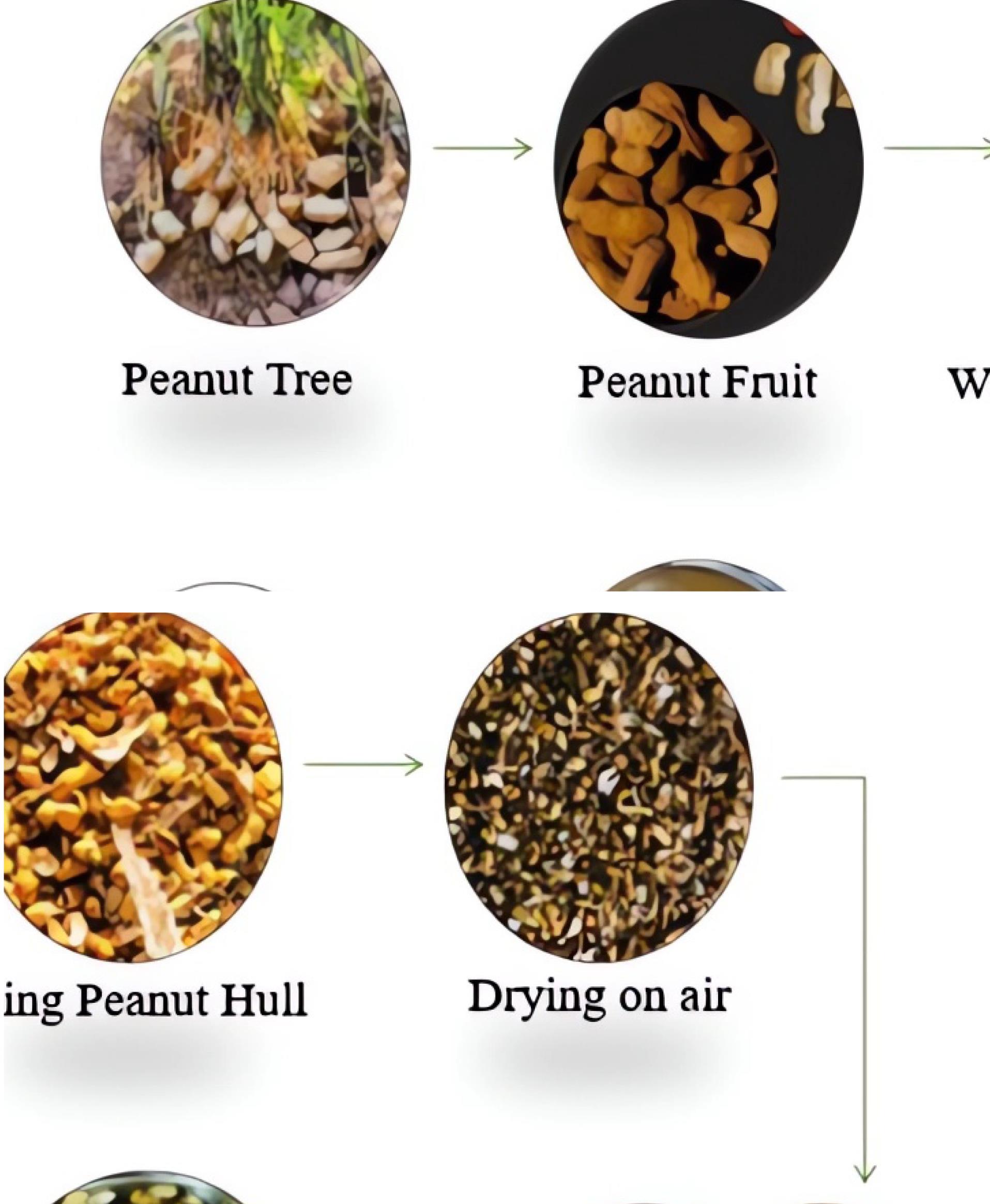
Fig. 9.
Effect of The Initial Dye Concentration; (a) CV Initial Concentration of 5-30 mg/L, (b) CV Initial Concentration of 50-500 mg/L
.
Effect of The Initial Dye Concentration; (a) CV Initial Concentration of 5-30 mg/L, (b) CV Initial Concentration of 50-500 mg/L
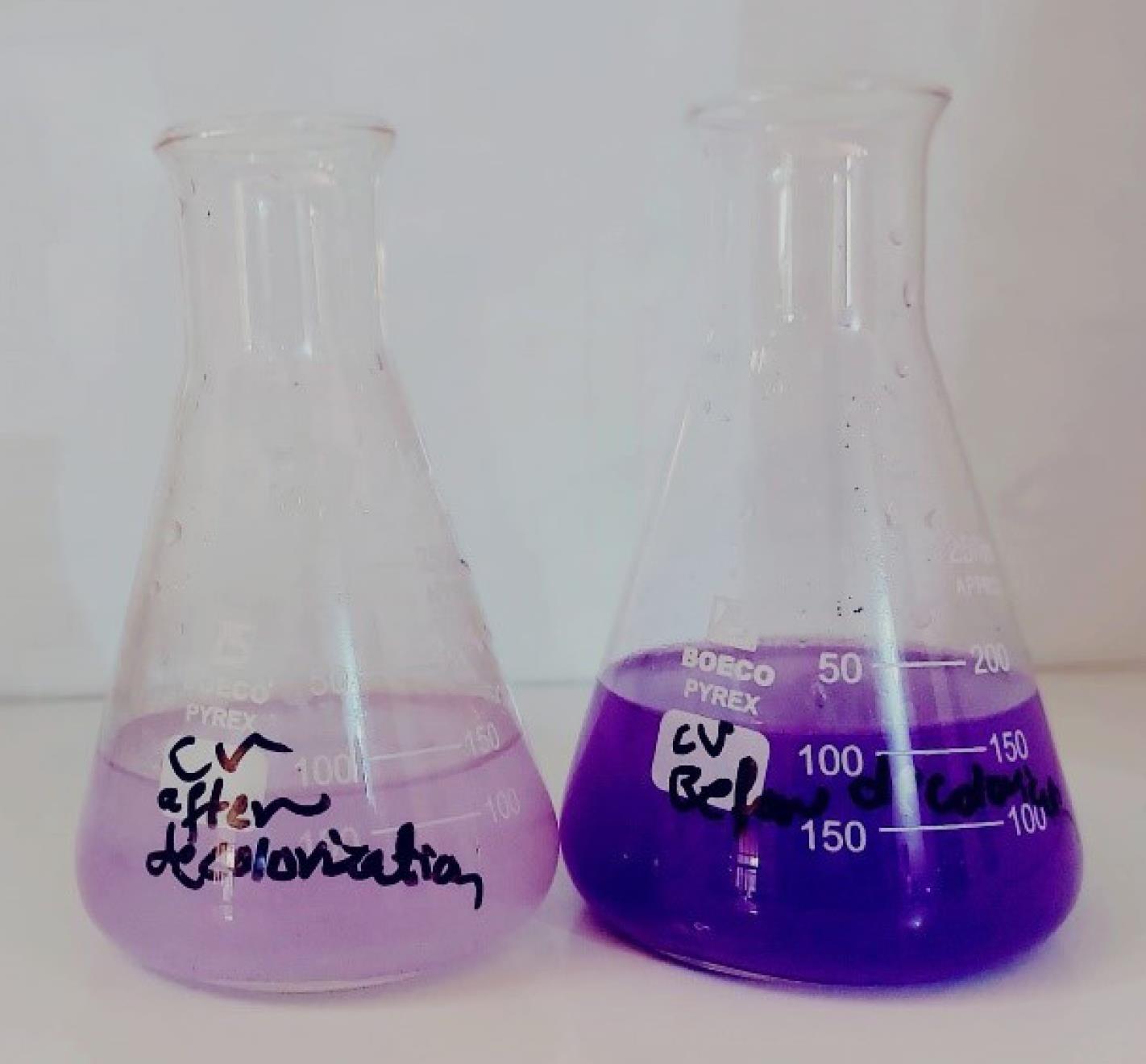
Fig. 10.
Aqueous Solutions Containing Crystal Violet Dye before and after Adsorption Process by PHP
.
Aqueous Solutions Containing Crystal Violet Dye before and after Adsorption Process by PHP
3.8. Characterization of Morphological Investigations
Scanning electron microscopy (SEM) examination was performed to confirm experimental results and help in the interpretation of observed behaviors. SEM is a useful method to characterize the surface shape and fundamental physical properties of an adsorbent. The SEM image of the adsorbent material was obtained before and after dye adsorption on PHP. Fig. 11a shows the SEM image of raw PHP, and Fig. 11b shows the SEM image of PHP after the adsorption of the dye. Fig. 11a shows that the adsorbent surface has a rough porous structure that resembles a sheet with unevenly scattered aggregates. It may have several lengthy grooves as well. Furthermore, due to its morphological characteristics, PHP has many advantages. It can provide a large surface area with many active sites for dye molecule sorption. The PHP surface shape becomes flakier, smoother, and somewhat porous after the adsorption of the CV dye (Fig. 11b). The changes indicate that a CV dye was effectively deposited onto the PHP surface, which is in line with previous investigations (29,30).
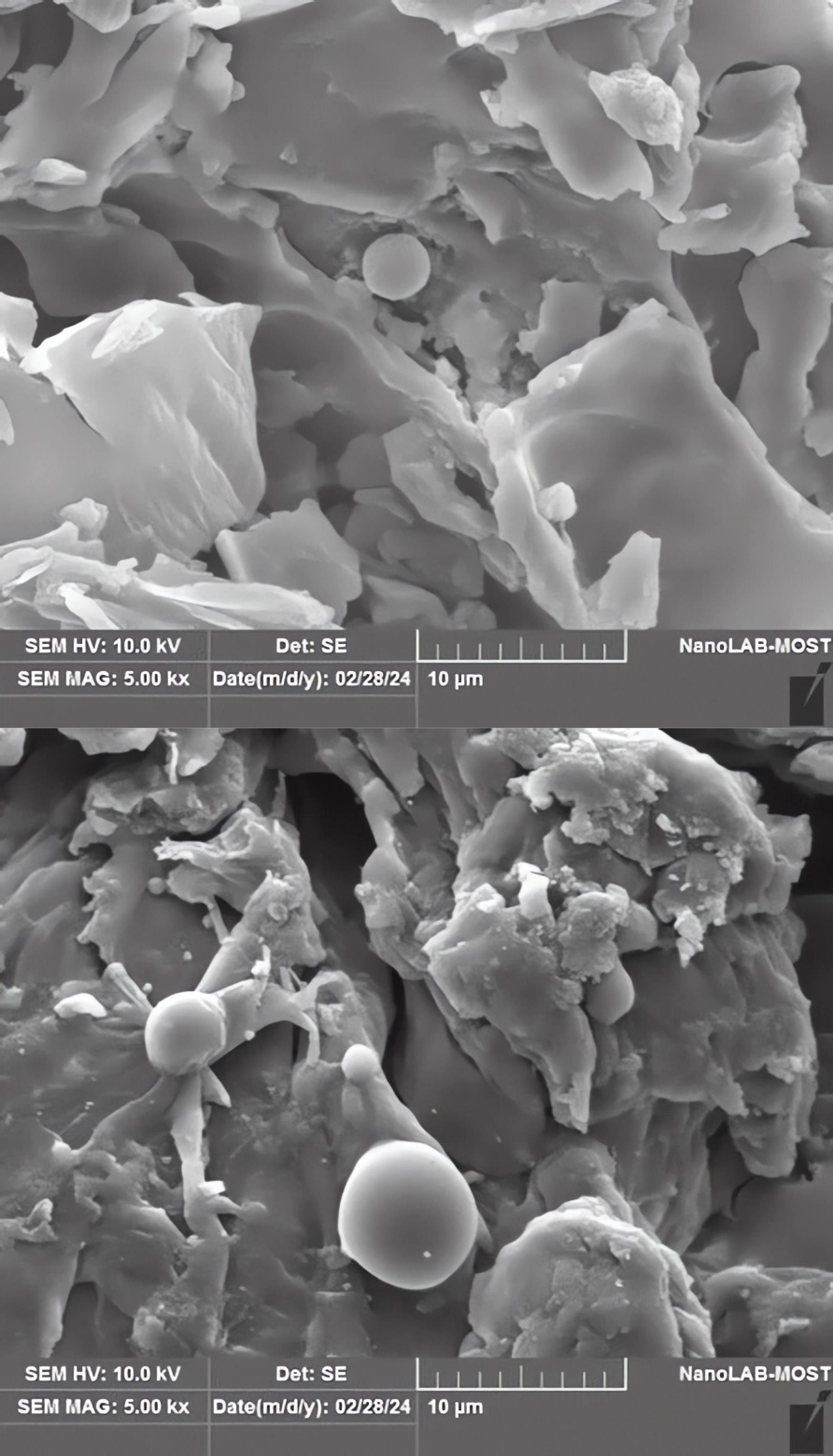
Fig. 11.
SEM Image of PHP; (a) before Adsorption and (b) after Adsorption
.
SEM Image of PHP; (a) before Adsorption and (b) after Adsorption
4. Conclusion
The study revealed that PHP is an excellent adsorbent for removing CV dye from aqueous solution. The operational parameters, including pH, contact time, temperature, adsorbent dose, and particle size, have been investigated to determine their optimum values. In addition to the initial concentration of CV, temperature and pH of the solution significantly influenced adsorption efficiencies. The dye was effectively adsorbed at pH 6. Increasing the temperature did not improve CV adsorption, with optimum removal observed at 25 °C. Moreover, the optimal particle size for PHP was 150 µm. The highest removal of CV dye occurred at a contact time of 60 minutes. In addition, the effect of CV initial concentration has been studied at 5-30 and 50-500 mg/L. PHP morphology was characterized by SEM examination, which revealed a significant fiber content that might contribute to its adsorption capabilities. The current study indicated that PHP might be used as an economical and environmentally compatible adsorbent as an alternative to current expensive procedures of dye removal from colored water. Our findings emphasize the need to improve operational conditions to increase the efficacy of peanut husk powder as an adsorbent for the removal of CV dye. This research presents a detailed evaluation of the environmental advantages, revealing a decrease in trash production and energy use when compared to traditional approaches. These unique circumstances improve the long-term viability and efficacy of the process. To further assess the efficacy of PHP in removing CV dye from wastewater, we advocate doing tests with actual industrial waste rather than model dye solutions. This method will offer a truer picture of issues and efficacy of PHP in practical real-world applications.
Acknowledgments
The researchers appreciate Environmental and Chemical Engineering Department of Tikrit University, Tikrit, Iraq, for their assistance in this work.
Authors’ Contribution
Conceptualization: Haneen A. Kh. Karaghool.
Data curation: Ban H. Mshhain.
Formal analysis: Haneen A. Kh. Karaghool.
Funding acquisition: Ban H. Mshhain.
Investigation: Ban H. Mshhain.
Methodology: Haneen A. Kh. Karaghool.
Project administration: Nizar N. Ismaeal.
Resources: Ban H. Mshhain.
Supervision: Haneen A. Kh. Karaghool.
Competing Interests
None declared.
Funding
The study was self-funded by the authors, except for the use of experimental devices in the labs of the College of Engineering, which supported the research.
References
- Karaghool HA, Hashim K, Kot P, Muradov M. Preliminary studies of methylene blue remotion from aqueous solutions by Ocimumbasilicum. Environments 2022; 9(2):17. doi: 10.3390/environments9020017 [Crossref] [ Google Scholar]
- Dutta S, Gupta B, Srivastava SK, Gupta AK. Recent advances on the removal of dyes from wastewater using various adsorbents: a critical review. Mater Adv 2021; 2(14):4497-531. doi: 10.1039/d1ma00354b [Crossref] [ Google Scholar]
- Yusuff AS, Ajayi OA, Popoola LT. Application of Taguchi design approach to parametric optimization of adsorption of crystal violet dye by activated carbon from poultry litter. Sci Afr 2021; 13:e00850. doi: 10.1016/j.sciaf.2021.e00850 [Crossref] [ Google Scholar]
- Kaur N, Kaushal J, Mahajan P. Phytoremediation of methylene blue dye (triarylmethane) and Congo red (azo) by Trachyspermumammi: kinetic studies. Res Sq [Preprint]. June 1, 2022. Available from: https://www.researchsquare.com/article/rs-1672808/v1.
- Iqbal MN, Javed T, Taj MB. Coriandrum sativum seeds as a green low-cost biosorbent for crystal violet dye removal from wastewater. Desalin Water Treat 2022; 267:186-200. doi: 10.5004/dwt.2022.28628 [Crossref] [ Google Scholar]
- Salahudeen N, Rasheed AA. Kinetics and thermodynamics of hydrolysis of crystal violet at ambient and below ambient temperatures. Sci Rep 2020; 10(1):21929. doi: 10.1038/s41598-020-78937-4 [Crossref] [ Google Scholar]
- Cheruiyot GK, Wanyonyi WC, Kiplimo JJ, Maina EN. Adsorption of toxic crystal violet dye using coffee husks: equilibrium, kinetics and thermodynamics study. Sci Afr 2019; 5:e00116. doi: 10.1016/j.sciaf.2019.e00116 [Crossref] [ Google Scholar]
- Goksu A, Tanaydin MK. Adsorption of hazardous crystal violet dye by almond shells and determination of optimum process conditions by Taguchi method. Desalin Water Treat 2017; 88:189-99. doi: 10.5004/dwt.2017.21364 [Crossref] [ Google Scholar]
- Samsami S, Mohamadizaniani M, Sarrafzadeh MH, Rene ER, Firoozbahr M. Recent advances in the treatment of dye-containing wastewater from textile industries: overview and perspectives. Process Saf Environ Prot 2020; 143:138-63. doi: 10.1016/j.psep.2020.05.034 [Crossref] [ Google Scholar]
- Loulidi I, Jabri M, Amar A, Kali A, Alrashdi AA, Hadey C. Comparative study on adsorption of crystal violet and chromium (VI) by activated carbon derived from spent coffee grounds. Appl Sci 2023; 13(2):985. doi: 10.3390/app13020985 [Crossref] [ Google Scholar]
- Foroutan R, Peighambardoust SJ, Peighambardoust SH, Pateiro M, Lorenzo JM. Adsorption of crystal violet dye using activated carbon of lemon wood and activated carbon/Fe3O4 magnetic nanocomposite from aqueous solutions: a kinetic, equilibrium and thermodynamic study. Molecules 2021; 26(8):2241. doi: 10.3390/molecules26082241 [Crossref] [ Google Scholar]
- Akter M, Rahman FB, Abedin MZ, Kabir SF. Adsorption characteristics of banana peel in the removal of dyes from textile effluent. Textiles 2021; 1(2):361-75. doi: 10.3390/textiles1020018 [Crossref] [ Google Scholar]
- Ahamad Z, Nasar A. Utilization of Azadirachta indica sawdust as a potential adsorbent for the removal of crystal violet dye. Sustain Chem 2023; 4(1):110-26. doi: 10.3390/suschem4010009 [Crossref] [ Google Scholar]
- Gemici BT. Crystal violet adsorption onto modified biosorbent prepared from agricultural waste: kinetics, isotherm and thermodynamic studies. Chem Eng Commun 2024; 211(4):582-91. doi: 10.1080/00986445.2023.2266677 [Crossref] [ Google Scholar]
- Baatache O, Derbal K, Benalia A, Aberkane I, Guizah QE, Khalfaoui A. Valorization of pine cones (pinus nigras) for industrial wastewater treatment and crystal violet removal: a sustainable approach based on bio-coagulants and a bio-adsorbent. Water 2024; 16(2):260. doi: 10.3390/w16020260 [Crossref] [ Google Scholar]
- Chakraborty S, Chowdhury S, Das Saha P. Adsorption of crystal violet from aqueous solution onto NaOH-modified rice husk. Carbohydr Polym 2011; 86(4):1533-41. doi: 10.1016/j.carbpol.2011.06.058 [Crossref] [ Google Scholar]
- Miyah Y, Lahrichi A, Idrissi M, Boujraf S, Taouda H, Zerrouq F. Assessment of adsorption kinetics for removal potential of crystal violet dye from aqueous solutions using Moroccan pyrophyllite. J Assoc Arab Univ Basic Appl Sci 2017; 23:20-8. doi: 10.1016/j.jaubas.2016.06.001 [Crossref] [ Google Scholar]
- Sultana S, Islam K, Hasan MA, Khan HM, Khan MA, Deb A. Adsorption of crystal violet dye by coconut husk powder: Isotherm, kinetics and thermodynamics perspectives. Environ Nanotechnol Monit Manag 2022; 17:100651. doi: 10.1016/j.enmm.2022.100651 [Crossref] [ Google Scholar]
- de Oliveira Primo J, Bittencourt C, Acosta S, Sierra-Castillo A, Colomer JF, Jaerger S. Synthesis of zinc oxide nanoparticles by ecofriendly routes: adsorbent for copper removal from wastewater. Front Chem 2020; 8:571790. doi: 10.3389/fchem.2020.571790 [Crossref] [ Google Scholar]
- Khadam S, Javed T, Jilani MI. Adsorptive exclusion of crystal violet dye from wastewater using eggshells: kinetic and thermodynamic study. Desalin Water Treat 2022; 268:99-112. doi: 10.5004/dwt.2022.28661 [Crossref] [ Google Scholar]
- Yasarawan N. Removal of crystal violet dye in aqueous solution by adsorption onto adsorbents derived from peanut shells. Burapha Sci J 2022; 27(1):394-413. [ Google Scholar]
- Fito J, Abewaa M, Mengistu A, Angassa K, Ambaye AD, Moyo W. Adsorption of methylene blue from textile industrial wastewater using activated carbon developed from Rumex abyssinicus plant. Sci Rep 2023; 13(1):5427. doi: 10.1038/s41598-023-32341-w [Crossref] [ Google Scholar]
- Lim A, Chew JJ, Ngu LH, Ismadji S, Khaerudini DS, Sunarso J. Synthesis, characterization, adsorption isotherm, and kinetic study of oil palm trunk-derived activated carbon for tannin removal from aqueous solution. ACS Omega 2020; 5(44):28673-83. doi: 10.1021/acsomega.0c03811 [Crossref] [ Google Scholar]
- Abbas S, Javeed T, Zafar S, Taj MB, Ashraf AR, Din MI. Adsorption of crystal violet dye by using a low-cost adsorbent–peanut husk. Desalin Water Treat 2021; 233:387-98. doi: 10.5004/dwt.2021.27538 [Crossref] [ Google Scholar]
- Kaya A. Removal of crystal violet dye from aqueous solution with pistachio shell powder: optimization of process by Taguchi method. Erzincan Univ J Sci Technol 2021; 14(1):357-69. doi: 10.18185/erzifbed.878694 [Crossref] [ Google Scholar]
- Alshabanat M, Alsenani G, Almufarij R. Removal of crystal violet dye from aqueous solutions onto date palm fiber by adsorption technique. J Chem 2013; 2013(1):210239. doi: 10.1155/2013/210239 [Crossref] [ Google Scholar]
- Saha P, Chowdhury S, Gupta S, Kumar I. Insight into adsorption equilibrium, kinetics and thermodynamics of malachite green onto clayey soil of Indian origin. Chem Eng J 2010; 165(3):874-82. doi: 10.1016/j.cej.2010.10.048 [Crossref] [ Google Scholar]
- Mulla B, Ioannou K, Kotanidis G, Ioannidis I, Constantinides G, Baker M. Removal of crystal violet dye from aqueous solutions through adsorption onto activated carbon fabrics. C J Carbon Res 2024; 10(1):19. doi: 10.3390/c10010019 [Crossref] [ Google Scholar]
- Abd-Elhamid AI, Emran M, El-Sadek MH, El-Shanshory AA, Soliman HM, Akl MA. Enhanced removal of cationic dye by eco-friendly activated biochar derived from rice straw. Appl Water Sci 2020; 10(1):45. doi: 10.1007/s13201-019-1128-0 [Crossref] [ Google Scholar]
- Alhares HS, Ali QA, Shaban MA, M-Ridha MJ, Bohan HR, Mohammed SJ. Rice husk coated with copper oxide nanoparticles for 17α-ethinylestradiol removal from an aqueous solution: adsorption mechanisms and kinetics. Environ Monit Assess 2023; 195(9):1078. doi: 10.1007/s10661-023-11689-6 [Crossref] [ Google Scholar]