Avicenna J Environ Health Eng. 11(2):70-74.
doi: 10.34172/ajehe.5478
Original Article
Use of Biotechnology for Environmental Decontamination: Isolation of Bacteria Degrading Hydrocarbons From Soil Contaminated With Diesel Oil
Zouaoui Benattouche 1, *  , Hamza Belkhodja 1, Djilali Bouhadi 1, Ahmed Hariri 1
Author information:
1Department of Biology, Faculty of Natural Sciences and Life, Mascara University, Mascara-Algeria
Abstract
To use biotechnology for environmental decontamination, the current study attempted to isolate bacterial strains capable of assimilating hydrocarbons. To this end, oil-contaminated soil samples were obtained from a gas station in Mascara (Alegria). Two bacterial strains were identified from the tainted soil. The results demonstrated the capacity of these strains to use hydrocarbon substrates as carbon sources, including diesel, benzene, naphthalene, and toluene. The strains’ capacity to break down diesel oil at 1%, 2%, 3%, and 4% (v/v) concentrations was evaluated. According to the biochemical traits identified, the isolated strains S4 and S11 were associated with the gender of Pseudomonas and Staphylococcus, respectively. Based on these findings, both strains grew best when fed a 2% diesel oil substrate. Using oil diesel, benzene, naphthalene, and toluene as substrates, the isolates’ growth measurement characteristics revealed that strain S4 degraded hydrocarbon substrates more effectively than strain S11. In summary, these bacterial strains can reduce petroleum pollution and aid in the bioremediation process.
Keywords: Decontamination, Biodegradation, Diesel oil, Soil pollution,
Copyright and License Information
© 2024 The Author(s); Published by Hamadan University of Medical Sciences.
This is an open-access article distributed under the terms of the Creative Commons Attribution License (
https://creativecommons.org/licenses/by/4.0), which permits unrestricted use, distribution, and reproduction in any medium, provided the original work is properly cited.
Please cite this article as follows: Benattouche Z, Belkhodja H, Bouhadi D, Hariri A. Use of biotechnology for environmental Decontamination: isolation of bacteria degrading hydrocarbons from soil contaminated with diesel oil. Avicenna J Environ Health Eng. 2024;11(2):70-74. doi:10.34172/ajehe.5478
1. Introduction
The needs of daily life are currently met by petroleum hydrocarbons, as a substantial energy source. The extensive contamination of water and soil during the manufacture, processing, and distribution of petroleum products is a direct result of their use. However, monoaromatic and polyaromatic compounds have a high solubility in water, making it easier for them to migrate and quickly contaminate soil and subsurface water. Even at low concentrations, these compounds can have a major negative impact on the environment and human health (1). Considering that the constituents of petroleum hydrocarbons have the potential to be toxic and carcinogenic, pollution from these energy sources, such as diesel and aromatic hydrocarbons, has major consequences (2). About 1.7-8.8 million metric tons of diesel were discharged into land and marine environments (3). Hydrocarbon-polluted soils and marine environments are frequently remedied using technologies grounded in physical, chemical, and biological principles (4). One of the main methods for removing petroleum and other hydrocarbon pollutants from the environment is biodegradation by the natural populations of microorganisms (5). Furthermore, bacteria, yeasts, and fungi are known to be the primary microorganisms that consume petroleum hydrocarbons (6). Bacteria continue to be the most active species, both qualitatively and quantitatively, among those that can thrive on hydrocarbons (7,8). Pseudomonas, Acinetobacter, Alcaligenes, Vibrio, Flavobacterium, Achromobacter, Micrococcus, Nocardia, and corynebacteria are the most common bacterial genders identified on this topic based on the frequency of isolation (9-11). Numerous significant parameters, including temperature, pollutant concentration, pH, microbe type, oxygen, nutrients, and pollutant bioavailability, have been found by researchers to influence the rates and efficiencies of the biological treatment of hydrocarbons in soils (12,13). Thus, the current study seeks to separate and identify the possible bacteria that break down diesel from the soil contaminated with diesel and assess how well they could break down hydrocarbon pollutants such as diesel oil (alkanes and aromatic compounds), monoaromatic, and polyaromatic compounds.
2. Materials and Methods
2.1. Samples and Reagents
A gas service station in the Mascara region (35° north latitude and 18° south longitude) provided the soil polluted by the petroleum derivatives used in this investigation, which was utilized to isolate hydrocarbon-degrading bacteria. Rhbal et al reported the soil preparation and sampling process (14). The sampling was performed at a depth of 0–20 cm, where biological activity is the highest, and in three distinct places. It should be noted that these three locations were two meters apart, and the samples were collected under identical physical circumstances (temperature and humidity). Using a spatula, the samples were aseptically collected and placed in sterile bottles before being brought to the laboratory. Analytical-grade benzene, toluene, naphthalene, and other chemical reagents were employed, and diesel fuel was acquired from the gas station.
2.2. Isolation and Screening of Bacteria
Briefly, 5 g of the soil sample was transferred to flasks containing 100 mL of minimal salt medium (S.M.) as described by Bushnell and Haas (15). This medium contains K2HPO4 1 g/L, KH2PO4 1 g/L, KNO3 2 g/L, and NH4NO3 1 g/L supplemented with 1% (v/v) of diesel oil. This process was followed to determine bacterial counts and isolate pure bacterial strains. For a week, the flasks were incubated at 30 °C with a pH rate of 6.5 while being shaken at 150 rpm. After finishing, the water-soil suspension was centrifuged for 15 minutes at 1500 rpm. Following the proper dilution, 0.1 of the supernatant was plated on the nutrient agar medium containing oil diesel as the only source of carbon and energy. The plate was then cultured for two weeks at 30°C to monitor the outcome. If cultures grew when diesel was present, it indicated that they had the ability to break down the diesel. Colonies were observed to track bacterial growth (16). The isolates that grew the fastest were chosen for additional examination.
2.3. Morphological and Biochemical Characteristics
The chosen bacterial isolates were described based on their biochemical and physical traits. Physiological test kits were used to test and identify bacteria in accordance with the API 20E Analytical Profile Index Micromethods (17).
2.4. Utilization of Different Hydrocarbons by the Isolate
The chosen strains’ capacity to absorb hydrocarbons as developing bacterial strains was evaluated using various hydrocarbon pollutants in different flasks, including diesel oil (alkanes and aromatic compounds), as well as monoaromatic and polyaromatic compounds such as benzene, toluene, and naphthalene. Seven 250 mL Erlenmeyer flasks (corresponding to 0 days, 3 days, 6 days, 9 days, 12 days, and 15 days of the experiment) were utilized for the biodegradation assay, which was conducted over two weeks. Each flask included 50 mL of the mineral medium and 10% of acclimated inoculums under aseptic conditions. Strains S4 and S11 were cultivated in Erlenmeyer flasks with 50 mL of S.M. with 1% hydrocarbon compounds as the only carbon and energy source for the induction and hydrocarbon degradation investigations by employing nonproliferating cells. The flasks were then incubated in a rotary shaker at 150 rpm at 30°C. A sterile pH 7 buffer was used twice to wash the cells. Growth on the individual substrate was periodically removed to compare the concentration of the following changes in optical density at 600 nm of washed cells against biotic (without substrate) and sterile (without bacteria) controls and test their bioremediation capacity (18).
2.5. Kinetic Analysis of Stains Growth on Diesel
In flasks holding 90 mL of the S.M. broth medium supplemented with diesel concentrations of 1%, 2%, 3%, and 4% (v/v), tests were conducted in triplicate under ideal growth circumstances. Following a 10-mL inoculation with one of the acclimated strains, the flasks were cultured for seven days at 30°C. The optical density at 600 nm was employed to track bacterial growth over a 24-hour incubation period. Similar preparations were made for controls devoid of diesel oil (18).
2.6. Statistical Analysis
Three replicates were used throughout the experiments, and the mean values with standard deviations were calculated using Microsoft Excel.
3. Results and Discussion
Overall, 14 strains of bacteria that break down diesel were identified from enrichment cultures. The energy sources were obtained, and diesel could be utilized as carbon by all isolates. Two isolated strains, S4 and S11, were chosen for additional research out of the isolates because they had a greater development rate. The isolated hydrocarbon-degrading strains S4 and S11 were related to the gender of Pseudomonas and Staphylococcus, respectively, according to the morphological (Fig. 1), biochemical, and physiological features (Table 1).
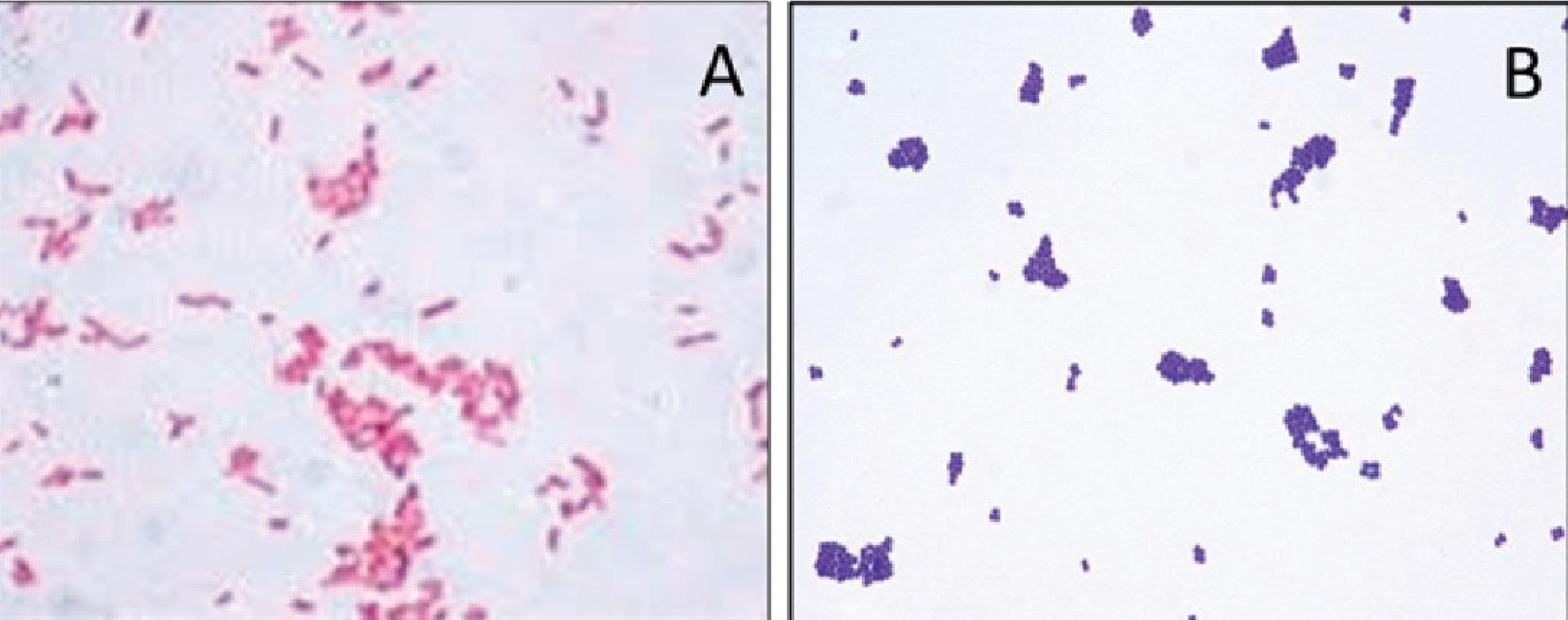
Fig. 1.
Cells Photomicrographs After Gram-Staining of Hydrocarbon-Degrading Strains S4 (A) and S11 (B) Isolated From Soil in Mascara, Algeria
.
Cells Photomicrographs After Gram-Staining of Hydrocarbon-Degrading Strains S4 (A) and S11 (B) Isolated From Soil in Mascara, Algeria
Table 1.
Biochemical and Growth Characteristics of Isolated Bacterial Cultures
|
Characteristics
|
S4
|
S11
|
| Gram coloration |
- |
+ |
| Respiratory metabolism |
Strictly aerobic |
Aerobic |
| Catalase |
+ |
+ |
| Oxidase |
+ |
- |
| Nitrate reductase |
+ |
- |
| TSI |
- |
+ |
| MR |
+ |
- |
| V.P. |
- |
+ |
| ONPG |
+ |
- |
| Mannitol |
- |
+ |
| Mobility |
+ |
+ |
| Citrate de Simons |
+ |
- |
| Urea indole |
- |
- |
| ADH |
+ |
- |
Note. ADH, Antidiuretic hormone; TSI, Triple Sugar Iron; MR, Methyl Red; VP, Voges-Pproskauer Reaction; ONPG, Ortho-Nitrophenyl-B-Galactoside
+: Gram positive
-: Gram negative
Some researchers (19,20) claimed that bacterial strains from these two genera might break down the components of hydrocarbons. The ability of the strains isolated on diesel agar plates to use various hydrocarbon compounds, including diesel (alkanes and aromatic compounds), as well as monoaromatic and polyaromatic compounds, including toluene, benzene, and naphthalene, underwent investigation. Figs. 2 and 3 show the biomass growth curves for diesel, benzene, toluene, and naphthalene for both strains.
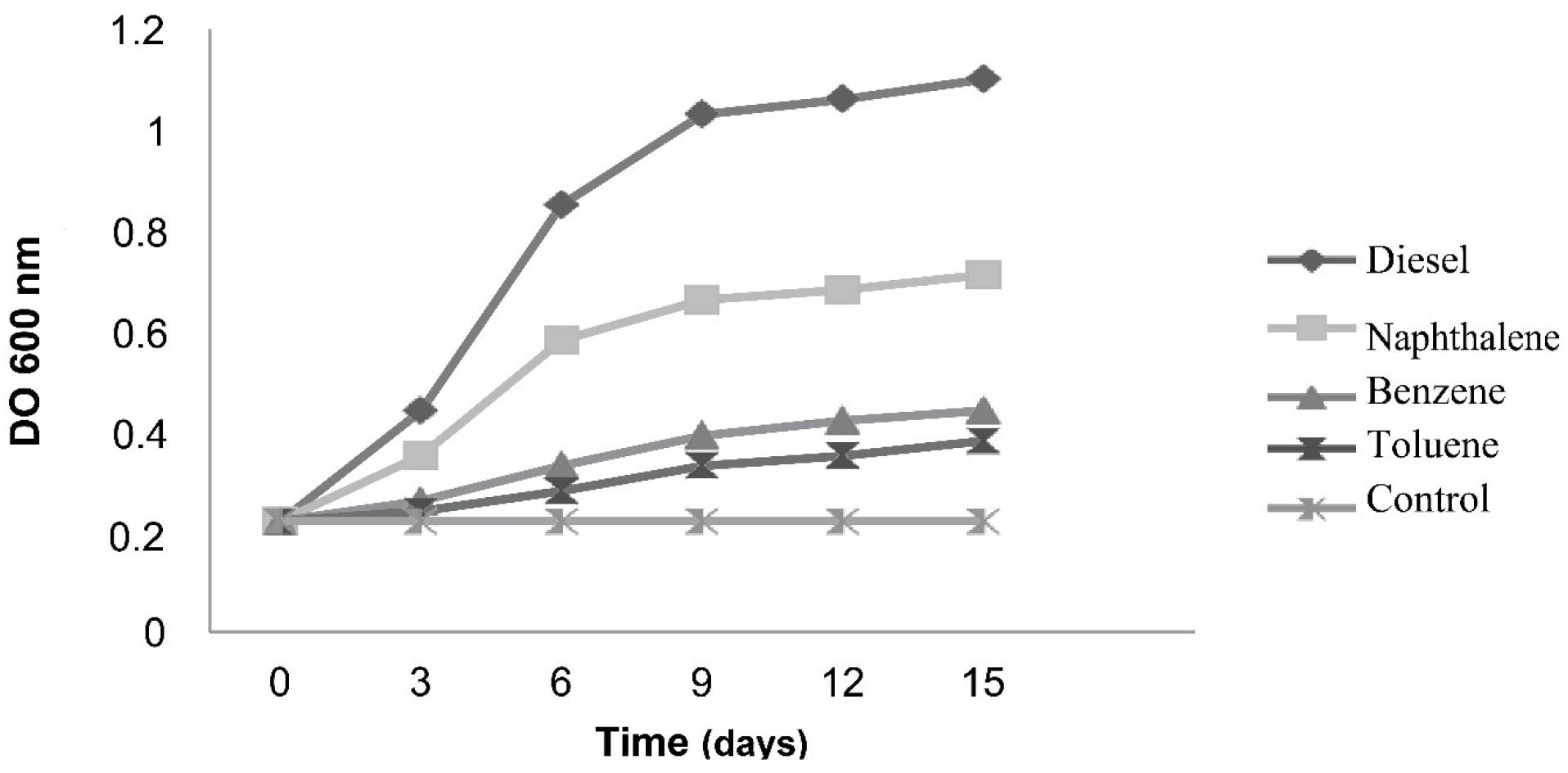
Fig. 2.
Growth of Selected Isolates on a Mineral Medium Concerning Uninoculated Controls Over 15 Days of Degradation of Pseudomonas sp.
.
Growth of Selected Isolates on a Mineral Medium Concerning Uninoculated Controls Over 15 Days of Degradation of Pseudomonas sp.
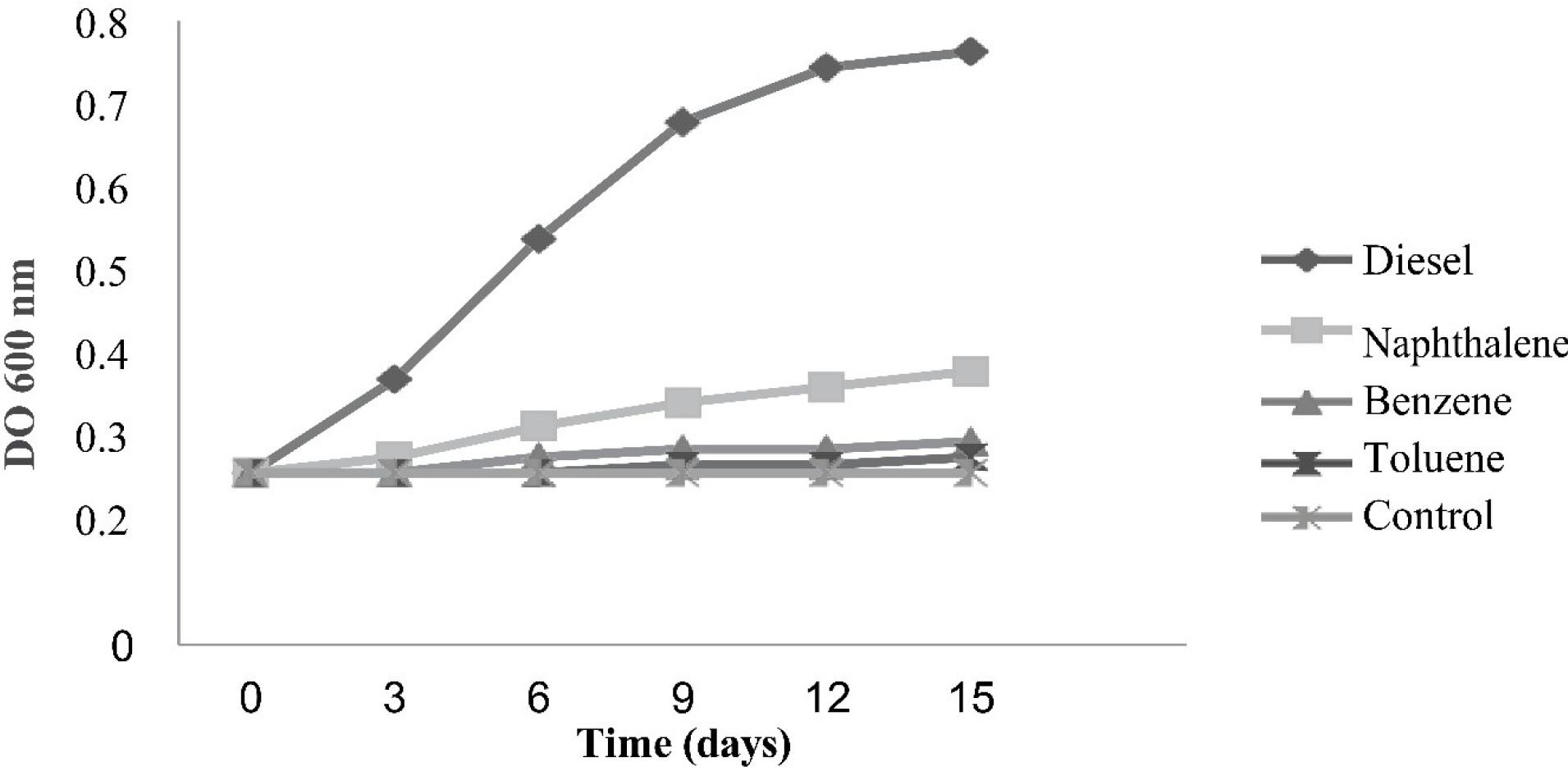
Fig. 3.
Growth of Selected Isolates on Mineral Medium With Respect to Uninoculated Controls Over 15 Days of Degradation of Staphylococcus sp.
.
Growth of Selected Isolates on Mineral Medium With Respect to Uninoculated Controls Over 15 Days of Degradation of Staphylococcus sp.
In line with the results of a previous study (21), our findings revealed that both strain isolates were capable of breaking down hydrocarbon pollutants during the 15 days of incubation and using them as the only source of carbon. With optical density values of 1.18 ± 0.12 and 0.79 ± 0.06 (Figs. 1 and 2, respectively), two isolates, Pseudomonas sp. and Staphylococcus sp., demonstrated greater activity on the degradation of diesel than aromatic compounds. This could be because the isolates have enzyme systems that can break down and use diesel as a substrate (22). Furthermore, in contrast to isolate Staphylococcus sp., isolate Pseudomonas sp. represented strong diesel degraders. According to numerous investigations, Pseudomonas sp. exhibits strong diesel degradation (23-25). Based on the findings of this study, the Staphylococcus strain was not as effective at degrading polyaromatics as the Pseudomonas strain. Numerous studies have noted that Pseudomonas sp. has the capacity to break down a wide variety of polyaromatic chemicals (26,27). Additionally, these strains grew after seven days when naphthalene was employed as a hydrocarbon source, and after fifteen days when benzene and toluene were utilized, the strains grew weakly. None of them displayed the lag phase of development, indicating that neither strain required a period of substrate adaptation for diesel, while Pseudomonas sp. did not require a period of adaptation for naphthalene.
Plotting the curve of A against time, which showed the start of the exponential development phase during the initial moments of cultivation, can demonstrate this issue. Plotting the curve of lnX against time, which, according to earlier research, marked the start of the exponential growth phase during the initial moments of cultivation, can be used to confirm this issue (28). Stepwise elimination was observed in the instance of a mixture of monoaromatic chemicals and naphthalene, with naphthalene being metabolized first, followed by toluene and benzene. Figs. 4 and 5 display the speeds at which both stains degrade in diesel oil at different diesel oil concentrations.
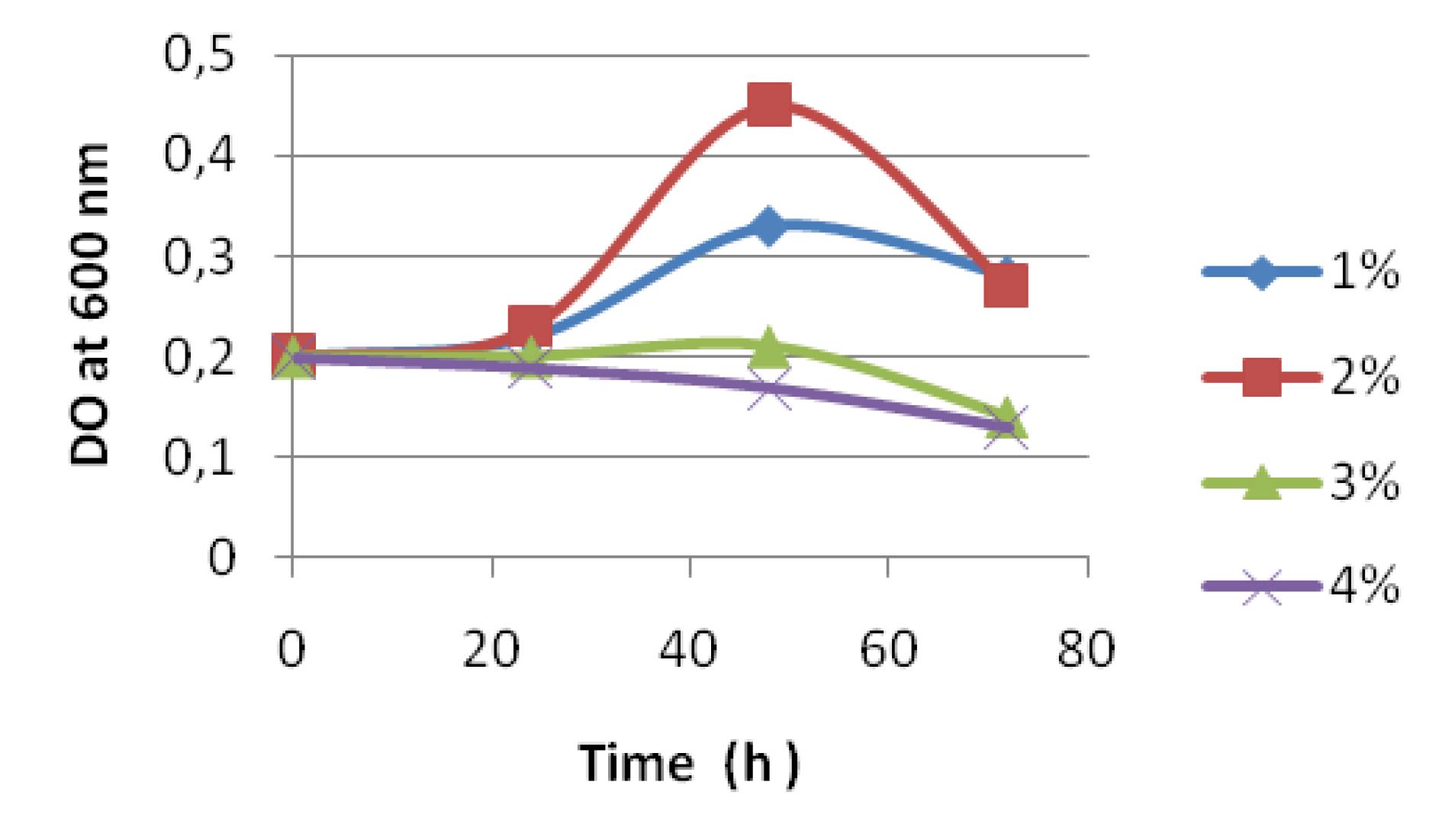
Fig. 4.
Growth of Pseudomonas sp. Using Diesel Oil as the Sole Carbon and Energy Source at Different Concentrations (1%, 2%, 3%, and 4%)
.
Growth of Pseudomonas sp. Using Diesel Oil as the Sole Carbon and Energy Source at Different Concentrations (1%, 2%, 3%, and 4%)
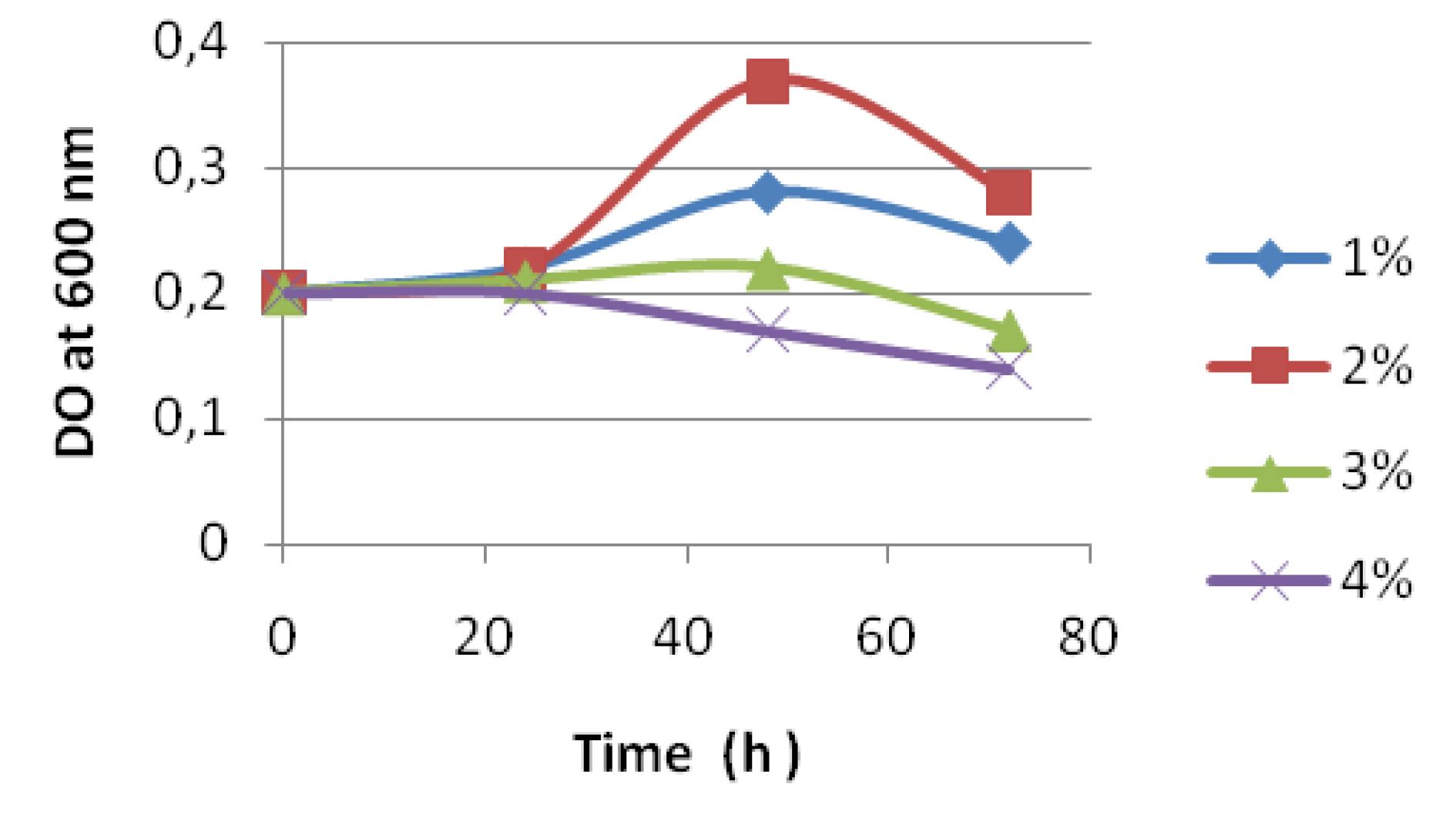
Fig. 5.
Growth of Staphylococcus sp. Using Diesel Oil as the Sole Carbon and Energy Source at Different Concentrations (1%, 2%, 3%, and 4%)
.
Growth of Staphylococcus sp. Using Diesel Oil as the Sole Carbon and Energy Source at Different Concentrations (1%, 2%, 3%, and 4%)
According to the results, the content of diesel oil affects the rates of biodegradation. The ideal diesel content was 2% (v/v) under test circumstances since the hydrocarbon-degrading strains tended to use diesel as a nutrient (Figs. 4 and 5). Palanisamy et al (18) found that Acinetobacter baumannii grew to its maximum at 4% of diesel, which contradicts our results. The rates of deterioration rose with the concentration of diesel, peaked at 2%, and then declined with an increase in the concentration. The limited growth shown at greater diesel oil concentrations was explained by Hawrot-Paw et al (29), who found that the lower concentration of diesel oil was less hazardous in terms of biomass output.
Although relatively low, 2% (v/v) of the tested diesel oil seemed to be the ideal substrate concentration, providing both strains S4 and S11 the best specific growth and biological activity against diesel oil (µ max = 0.009 h- and µ max = 0.006 h-, respectively). Earlier research on the bioremediation of petroleum-contaminated soil revealed similar findings (30,31).
It should be mentioned that both strains reached their active growth phase at 2% (v/v) of diesel oil following a brief growth lag phase that indicates a period of substrate adaption, implying that the cells have produced all the enzymes they require for growth. Conversely, the isolates needed a significantly longer lag phase at diesel oil concentrations of 1% (v/v). After 20 hours of consumption, the microorganisms’ maximum amount of substrate was used during the exponential development phase. The growth rate and biomass production decreased when the initial diesel concentration rose because it took more energy to keep the cultures alive. Nevertheless, there was no discernible variation in each strain’s development across the examined diesel oils.
According to Figs. 4 and 5, bacterial growth decreases with increasing diesel concentration in the medium. This is brought on by the toxicity of elevated diesel concentrations, which inhibit bacterial development by causing stress and shock (32). Diesel can serve as a carbon and energy source for microorganisms, thus each one has a different tolerance level. Diesel oil contains a variety of aromatic compounds in addition to linear and branched alkanes with varying chain lengths. Many of these substances are known to be easily biodegradable since they are extremely linear alkanes. However, because these chemicals are poorly soluble in water, their slow rate of dissolution, desorption, or transport frequently limits their biodegradation. Generally speaking, the transport mechanism to microbial cells, the sorption properties, and the rates of dissolution or partitioning affect the bioavailability of hydrophobic substances (33). Future research is required to elucidate parameters influencing the ability and efficiency of diesel oil degradation in order to boost the viability of bacterial isolates as possible strains with biodegradation activity. However, the findings of this study demonstrated that Pseudomonas sp. strains were suitable for the bioremediation of oil contamination close to petrol stations since they could thrive and tolerate those substrates.
4. Conclusion
The findings revealed that the isolated diesel-degrading strains S4 and S11 were associated with the genders of Pseudomonas and Staphylococcus, respectively, according to the identified biochemical and physiological traits. These findings demonstrated the viability of using contaminated petroleum oil degrader sites to break down diesel and aromatic hydrocarbons. Future research must investigate factors influencing the capacity and effectiveness of petroleum oil degradation in order to increase the viability of bacterial isolates as possible strains with biodegradation activity.
Acknowledgments
The authors would like to thank the management of Mascara University for providing laboratory facilities of the Department of Biology and constant encouragement for this research work.
Authors’ Contribution
Conceptualization: Zouaoui Benattouche, Hamza Belkhodja.
Data curation: Hamza Belkhodja, Ahmed Hariri.
Formal analysis: Ahmed Hariri.
Funding acquisition: Zouaoui Benattouche.
Investigation: Djilali Bouhadi.
Methodology: Ahmed Hariri.
Project administration: Djilali Bouhadi.
Resources: Zouaoui Benattouche.
Software: Hamza Belkhodja.
Supervision: Zouaoui Benattouche.
Validation: Ahmrd Hariri.
Visualization: Djilali Bouhadi.
Writing-original draft: Ahmed Hariri.
Writing-review & editing: Djilali Bouhadi.
Competing Interests
The authors of the study declare that there is no conflict of interests.
Funding
None.
References
- Aivalioti M, Pothoulaki D, Papoulias P, Gidarakos E. Removal of BTEX, MTBE and TAME from aqueous solutions by adsorption onto raw and thermally treated lignite. J Hazard Mater 2012; 207-208:136-46. doi: 10.1016/j.jhazmat.2011.04.084 [Crossref] [ Google Scholar]
- Ramasamy S, Arumugam A, Chandran P. Optimization of Enterobacter cloacae (KU923381) for diesel oil degradation using response surface methodology (RSM). J Microbiol 2017; 55(2):104-11. doi: 10.1007/s12275-017-6265-2 [Crossref] [ Google Scholar]
- Dadrasnia A, Agamuthu P. Potential biowastes to remediate diesel contaminated soils. Global NEST Journal 2013; 15(4):474-84. [ Google Scholar]
- Bhandari A, Surampalli RY, Champagne P, Tyagi RD, Ong SK, Lo IM. Remediation Technologies for Soils and Groundwater. Virginia: American Society of Civil Engineers; 2007. doi: 10.1061/9780784408940.
- Ulrici W. Ulrici WContaminant soil areas, different countries, and contaminant monitoring of contaminantsIn: Rehm HJ, Reed GedsEnvironmental Process II. Soil Decontamination Biotechnol 2000; 11:5-42. [ Google Scholar]
- Van Hamme JD, Singh A, Ward OP. Recent advances in petroleum microbiology. Microbiol Mol Biol Rev 2003; 67(4):503-49. doi: 10.1128/mmbr.67.4.503-549.2003 [Crossref] [ Google Scholar]
- Bertrand JC, Mille G. Future of exogenous organic matter. A model: hydrocarbons. In: Bianchi M, Marty D, Bertrand JC, Caumette P, Gauthier MJ, eds. Microorganisms in the Oceanic Ecosystems. Paris: Masson; 1989. p. 343-85.
- Brooijmans RJ, Pastink MI, Siezen RJ. Hydrocarbon-degrading bacteria: the oil-spill clean-up crew. Microb Biotechnol 2009; 2(6):587-94. doi: 10.1111/j.1751-7915.2009.00151.x [Crossref] [ Google Scholar]
- Leahy JG, Colwell RR. Microbial degradation of hydrocarbons in the environment. Microbiol Rev 1990; 54(3):305-15. doi: 10.1128/mr.54.3.305-315.1990 [Crossref] [ Google Scholar]
- Floodgate GD. Some environmental aspects of marine hydrocarbon bacteriology. Aquat Microb Ecol 1995; 9(1):3-11. doi: 10.3354/ame009003 [Crossref] [ Google Scholar]
- Adebusoye SA, Ilori MO, Amund OO, Teniola OD, Olatope SO. Microbial degradation of petroleum hydrocarbons in a polluted tropical stream. World J Microbiol Biotechnol 2007; 23(8):1149-59. doi: 10.1007/s11274-007-9345-3 [Crossref] [ Google Scholar]
- Iqbal J, Metosh-Dickey C, Portier RJ. Temperature effects on bioremediation of PAHs and PCP contaminated south Louisiana soils: a laboratory mesocosm study. J Soils Sediments 2007; 7(3):153-8. doi: 10.1065/jss2007.01.204 [Crossref] [ Google Scholar]
- Kwapisz E, Wszelaka J, Marchut O, Bielecki S. The effect of nitrate and ammonium ions on kinetics of diesel oil degradation by Gordoniaalkanivorans S7. Int Biodeterior Biodegradation 2008; 61(3):214-22. doi: 10.1016/j.ibiod.2007.08.002 [Crossref] [ Google Scholar]
- Rhbal H, Souabi S, Safi M, Terta M, Arad M, Anouzla A. Decontamination of soils polluted by hydrocarbons. Sci Stud Res Chem Chem Eng Biotechnol Food Ind 2020; 21(1):1-16. [ Google Scholar]
- Bushnell LD, Haas HF. The utilization of certain hydrocarbons by microorganisms. J Bacteriol 1941; 41(5):653-73. [ Google Scholar]
- Survery S, Ahmad S, Subhan SA, Ajaz M, Rasool SA. Hydrocarbon degrading bacteria from Pakistani soil: isolation, identification, screening and genetical studies. Pak J Biol Sci 2004; 7(9):1518-22. [ Google Scholar]
- Holmes B, Willcox WR, Lapage SP. Identification of Enterobacteriaceae by the API 20E system. J Clin Pathol 1978; 31(1):22-30. [ Google Scholar]
- Palanisamy N, Ramya J, Kumar S, Vasanthi N, Chandran P, Khan S. Diesel biodegradation capacities of indigenous bacterial species isolated from diesel contaminated soil. J Environ Health Sci Eng 2014; 12(1):142. doi: 10.1186/s40201-014-0142-2 [Crossref] [ Google Scholar]
- Das N, Chandran P. Microbial degradation of petroleum hydrocarbon contaminants: an overview. Biotechnol Res Int 2011; 2011:941810. doi: 10.4061/2011/941810 [Crossref] [ Google Scholar]
- Baghaie AH, Keshavarzi M. The effect of montmorillonite nano-clay on the changes in petroleum hydrocarbon degradation and cd concentration in plants grown in Cd-polluted soil. Avicenna J Environ Health Eng 2018; 5(2):100-5. doi: 10.15171/ajehe.2018.13 [Crossref] [ Google Scholar]
- Usharani K, Sreejina K, Sruthi T, Vineeth T. Diesel oil utilization efficiency of selective bacterial isolates from automobile workshop and Thesjaswini river of Kerala. Pollution 2016; 2(2):221-32. doi: 10.7508/pj.2016.02.010 [Crossref] [ Google Scholar]
- Chaudhary VK, Borah D. Isolation and molecular characterization of hydrocarbon degrading bacteria from tannery effluent. Int J Plant Anim Environ Sci 2011; 1(2):36-49. [ Google Scholar]
- Zafra G, Regino R, Agualimpia B, Aguilar F. Molecular characterization and evaluation of oil-degrading native bacteria isolated from automotive service station oil-contaminated soils. Chem Eng Trans 2016; 49:511-6. doi: 10.3303/cet1649086 [Crossref] [ Google Scholar]
- Jayanthi R, Hemashenpagam N. Isolation and identification of petroleum hydrocarbon degrading bacteria from oil contaminated soil samples. International Journal of Novel Trends in Pharmaceutical Sciences 2015; 5(3):102-06. [ Google Scholar]
- Varjani SJ, Upasani VN. Comparative studies on bacterial consortia for hydrocarbon degradation. Int J Innov Res Sci Eng Technol 2013; 2(10):5377-83. [ Google Scholar]
- Prakash B, Irfan M. Pseudomonas aeruginosa is present in crude oil contaminated sites of Barmer region (India). Journal of Bioremediation and Biodegradation 2011; 2(5):129-30. doi: 10.4172/2155-6199.1000129 [Crossref] [ Google Scholar]
- Mittal A, Singh P. Isolation of hydrocarbon degrading bacteria from soils contaminated with crude oil spills. Indian J Exp Biol 2009; 47(9):760-5. [ Google Scholar]
- Drakou EM, Koutinas M, Pantelides I, Tsolakidou M, Vyrides I. Insights into the metabolic basis of the halotolerant Pseudomonas aeruginosa strain LVD-10 during toluene biodegradation. Int Biodeterior Biodegradation 2015; 99:85-94. doi: 10.1016/j.ibiod.2014.10.012 [Crossref] [ Google Scholar]
- Hawrot-Paw M, Koniuszy A, Zając G, Szyszlak-Bargłowicz J. Ecotoxicity of soil contaminated with diesel fuel and biodiesel. Sci Rep 2020; 10(1):16436. doi: 10.1038/s41598-020-73469-3 [Crossref] [ Google Scholar]
- Chaîneau CH, Morel J, Dupont J, Bury E, Oudot J. Comparison of the fuel oil biodegradation potential of hydrocarbon-assimilating microorganisms isolated from a temperate agricultural soil. Sci Total Environ 1999; 227(2-3):237-47. doi: 10.1016/s0048-9697(99)00033-9 [Crossref] [ Google Scholar]
- Owsianiak M, Chrzanowski Ł, Szulc A, Staniewski J, Olszanowski A, Olejnik-Schmidt AK. Biodegradation of diesel/biodiesel blends by a consortium of hydrocarbon degraders: effect of the type of blend and the addition of biosurfactants. Bioresour Technol 2009; 100(3):1497-500. doi: 10.1016/j.biortech.2008.08.028 [Crossref] [ Google Scholar]
- Palanisamy N, Ramya J, Kumar S, Vasanthi N, Chandran P, Khan S. Diesel biodegradation capacities of indigenous bacterial species isolated from diesel contaminated soil. J Environ Health Sci Eng 2014; 12(1):142. doi: 10.1186/s40201-014-0142-2 [Crossref] [ Google Scholar]
- Sticher P, Jaspers MC, Stemmler K, Harms H, Zehnder AJ, van der Meer JR. Development and characterization of a whole-cell bioluminescent sensor for bioavailable middle-chain alkanes in contaminated groundwater samples. Appl Environ Microbiol 1997; 63(10):4053-60. doi: 10.1128/aem.63.10.4053-4060.1997 [Crossref] [ Google Scholar]