Avicenna J Environ Health Eng. 11(2):115-125.
doi: 10.34172/ajehe.5467
Systematic Review
Investigation of Heavy Metals Contamination in the Soil of Landfill Sites of Iran: A Systematic Review
Sepideh Sahragard 1  , Roqiyeh Mostafaloo 2 , Farzaneh Fanaei 3, * , Senobar Imanian 1 , Monireh Dehabadi 4 , Amir Adibzadeh 5, 6 , Negin Nasseh 7
Author information:
1Student Research Committee, Birjand University of Medical Sciences, Birjand, Iran
2Department of Environmental Health Engineering, School of Public Health and Research Center for Health Sciences, Student Research Committee, Hamadan University of Medical Sciences, Hamadan, Iran
3Department of Environmental Health Engineering, Ferdows Faculty of Medical Sciences, Social Determinants of Health Research Center, Birjand University of Medical Sciences, Birjand, Iran
4Department of Civil and Environmental Engineering, University of Vermont, Burlington, VT, USA
5Health Research Center, Lifestyle Institute, Baqiyatallah University of Medical Sciences, Tehran, Iran
6Department of Environmental Health Engineering, Faculty of Health, Baqiyatallah University of Medical Sciences, Tehran, Iran
7Department of Health Education and Promotion, School of Health, Cellular and Molecular Research Center, Birjand University of Medical Sciences, Birjand, Iran
Abstract
Heavy metals from hazardous waste, such as batteries, electronics, cleaning products, and cosmetics, can be transported to soil through landfill leachates. Due to their persistent structure, toxic metals such as chromium (Cr), cobalt (Co), lead (Pb), and cadmium (Cd) accumulate in the soil and can cause various ecological and health risks. Hence, this study aimed to assess the extent of heavy metal pollution in the soil of landfill sites in Iran. The present study reviewed previous research on the assessment of heavy metal contamination such as Pb, arsenic (As), Cr, Cd, zinc (Zn), Co, and nickel (Ni) in soils of landfill sites. For this purpose, "Magiran", "SID", «IranMedex», "Scopus», "PubMed", "ScienceDirect" and "Web of Science" databases were searched for related articles published until 2024. Persian and English keywords including heavy metals, waste disposal sites, soil, and Iran were used for search. Eventually, out of 206 articles, 21 studies met our inclusion criteria and were included in the study. The concentrations of heavy metals, including Pb, As, Cr, Cd, Zn, Co, and Ni, were found to be higher than national and international standards in some soil samples. Therefore, landfill sites, as an anthropogenic resource, have the potential to transmit pollution to the soil. Contamination levels depend on waste composition, hazardous content, leachate production and migration, landfill age and design, soil characteristics, and operating conditions. Health and ecological risks can be mitigated by reducing hazardous waste, recycling heavy metal-containing wastes, installing anti-seepage systems, and maintaining continuous monitoring.
Keywords: Soil pollution, Landfill, Heavy metals, Solid waste, Iran,
Copyright and License Information
© 2024 The Author(s); Published by Hamadan University of Medical Sciences.
This is an open-access article distributed under the terms of the Creative Commons Attribution License (
https://creativecommons.org/licenses/by/4.0), which permits unrestricted use, distribution, and reproduction in any medium, provided the original work is properly cited.
Please cite this article as follows: Sahragard S, Mostafaloo R, Fanaei F, Imanian S, Dehabadi M, Adibzadeh A, et al. Investigation of heavy metals contamination in the soil of landfill sites of Iran: a systematic review. Avicenna J Environ Health Eng. 2024;11(2):115-125. doi:10.34172/ajehe.5467
1. Introduction
The management and protection of natural resources such as air, water, and soil are vital in both developing and developed countries (1–3). Soil is undoubtedly one of the most valuable natural resources and a vital component in the environment upon which over 95% of the human food chain depends (4,5). In addition to ensuring food security, the purifying properties of the soil make it an essential compound (6,7). Therefore, any kind of soil contamination directly or indirectly affects both human health and the environment (8,9). In recent years, various environmental problems, including the generation of large amounts of waste, have emerged as a result of population growth, urbanization, changes in consumption patterns, and the development of industries, mining, and agriculture (10,11). Approximately 2.01 billion tons of municipal solid waste are annually generated worldwide (12), with an average production rate of 0.74 kg per day per capita (13). This amount of waste generation is predicted to reach 3.4 billion tons by 2050 (14). In Iran, the estimated average waste generation is 800 g per capita per day, resulting in the daily production of approximately 64 000 tons of waste. This equates to roughly 292 kg of waste per capita per year (15), more than the waste produced by other developed countries (16,17). Solid waste management is considered one of the biggest urban challenges, especially in developing countries (18,19). This is due to the high volume of waste generated and significant costs associated with its collection, transportation, and disposal. There are several ways to manage municipal solid waste, including waste reduction, recycling and reuse, energy and material recovery, incineration, and landfilling (20,21). These methods can be prioritized based on their environmental impact and effectiveness. In developed countries, municipal solid waste management includes waste reduction, segregation at the source, and recycling (22,23). However, in developing countries like Iran, landfilling is a common waste disposal way (24) that can cause the production of unpleasant odors, toxic gaseous pollutants, soil contamination, water pollution, and environmental pollution (25,26). Improper management practices of landfill sites made them significant sources of soil contamination (27,28). This adverse effect is attributed to several factors, including leachate runoff, the movement of particulate matter, contamination from non-sanitary waste transportation and disposal, as well as the co-disposal of hazardous household waste with municipal waste. Among soil pollutants, heavy metals are of utmost importance due to their stable structure, non-degradability, and high accumulation potential (8,27). Heavy metals are elements having atomic weights ranging between 63.5 and 200.6 g/mol and densities greater than 5 g/cm3 (29–31). Certain metals such as cobalt (Co), copper (Cu), chromium (Cr), iron (Fe), manganese (Mn), molybdenum (Mo), nickel (Ni), selenium (Se), and zinc (Zn) are essential for normal bodily function (32,33). Excessive intake of these elements can cause serious health problems like carcinogenicity, mutagenic effects, and so forth (34,35). In addition, some heavy metals such as mercury (Hg), lead (Pb), and cadmium (Cd) are highly toxic even at low concentrations (36,37). Their gradual accumulation in the body can cause severe long-term effects, including toxicity, carcinogenicity, and mutagenicity in both humans and other living organisms (38,39).
Numerous studies have been conducted to investigate and measure the concentrations of heavy metals in landfill soils. For instance, Shakeri and Yousefi examined soil contamination in the vicinity of Kermanshah municipal landfill and found that the average concentration of heavy metals in soil samples was higher than that in background soil, indicating the impact of leachate infiltration into the surrounding soil (40). In another study, Karimian et al assessed the ecological risk of heavy metals in landfill soils in Tehran. Results revealed that concentrations of all studied metals were above background levels (26).
Considering the diversity of landfill wastes, poor waste segregation, failure to observe sanitary protocols in waste disposal, and lack of leachate management procedures at most landfills, coupled with the importance of the issue, and the dearth of comprehensive studies in this area, we decided to undertake a systematic review of the studies conducted in Iran. Our goal was to comprehensively assess the levels of these contaminants and to identify factors affecting the leakage and dissemination of contaminants. Finally, the main purpose of this study was to assess heavy metal pollution in the soil of landfill sites in Iran and emphasize the need for continuous monitoring and management to reduce environmental and public health risks.
2. Materials and Methods
2.1. Search Strategies
In this systematic review, the Preferred Reporting Items for Systematic Reviews and Meta-Analyses (PRISMA) checklist was used to document and report the search and screening process of studies (Fig. 1) (41). Different national and international databases, including “Magiran”, “SID”, «IranMedex»,”Scopus», “PubMed”, “ScienceDirect” and “Web of Science”, were searched for studies.
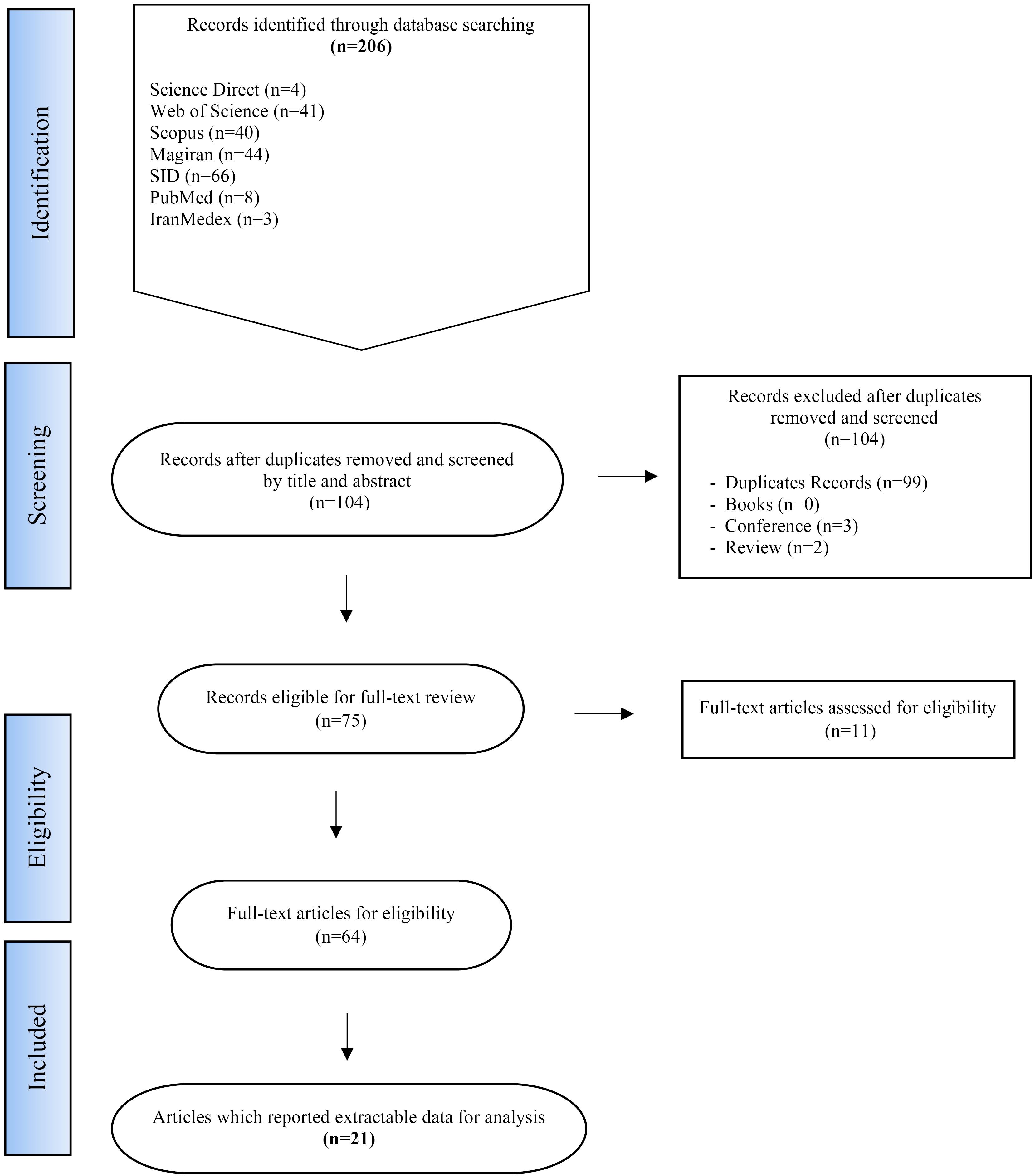
Fig. 1.
The PRISMA Flow Diagram for Identification, Screening, Eligibility, and Inclusion of Relevant Articles
.
The PRISMA Flow Diagram for Identification, Screening, Eligibility, and Inclusion of Relevant Articles
English and Persian keywords such as “Heavy Metal”, “Heavy Metals”, “Soil”, “Soils”, “Peat”, “Humus”, “Landfill”, “Waste Dump”, “Waste Disposal”, “Landfills”, and “Iran” were used to find studies relevant to the topic. These terms were searched in different databases until 11 January 2024 without applying any time limit. MESH terms and similar review articles were utilized to determine the keywords. The search results are indicated in Fig. 1.
2.2. Criteria for Eligibility and Selection of Studies
The articles retrieved from various databases were imported into EndNote version 20. The search results were then meticulously screened by one researcher (S.S.), and the titles and abstracts of the papers were reviewed separately by two researchers (S.S. and S.E.). Any discrepancies between the two researchers were resolved by a third researcher (F.F.). After eliminating duplicate articles in the EndNote software, the titles and abstracts of all the articles were evaluated. Finally, the full texts of relevant papers were reviewed, and only those meeting the inclusion criteria were selected for further analysis. The research team used the following inclusion criteria: (a) studies relevant to the study title, (b) original papers with full text available, and (c) studies performed at landfill sites in Iran. The unrelated studies, results published as books, conference papers, review articles, and dissertations, studies conducted in other countries, investigations conducted on other soil environments, and studies for which full texts were not available were excluded from the study. Table 1 also displays the inclusion and exclusion criteria for the review.
Table 1.
Inclusion and Exclusion Criteria for Screening Articles
|
Inclusion Criteria
|
Exclusion Criteria
|
| Studies relevant to the study title |
Unrelated studies |
| Original papers with full text available |
Books, conference papers, review articles, and dissertations |
| Studies performed at landfill sites in Iran |
Studies conducted in other countries |
|
|
Investigations conducted on other soil environments |
|
|
Studies for which full texts were not available |
2.3. Data Extraction
After selecting articles based on pre-defined inclusion and exclusion criteria, data were extracted from selected sources. The characteristics of articles included in the review, including article code, heavy metal type, maximum, minimum, and mean concentration of heavy metals, number of samples, sampling depth, measurement method, and city of the study, are summarized in Table 2. To reach a more robust conclusion, similar metals should be included in the study. However, due to the limited number of metals as well as the dissimilarity between them in different research works, all examined metals were incorporated in this study.
Table 2.
General Characteristics of Articles Included in the Final Review
|
No. |
Heavy Metals
|
Concentration (mg/kg soil)
|
Number of Samples
|
Sampling Depth (cm)
|
Measurement Method
|
City
|
Reference
|
|
Max
|
Min
|
Mean
|
Background
|
| 1 |
Fe |
46363.75 |
30542.5 |
38276.2 |
24492 |
24 |
0-20 |
ICP-OES |
Tehran |
(26) |
| Al |
72933.3 |
58176.3 |
66178 |
65000 |
| Mn |
1253 |
798.5 |
1005.4 |
792.9 |
| Zn |
275.6 |
59.1 |
133.9 |
31.56 |
| Co |
18 |
10.75 |
14.49 |
8.01 |
| Pb |
111.5 |
18.5 |
42.5 |
10.17 |
| Ni |
42.9 |
21.4 |
30.3 |
11.28 |
| Cu |
179.4 |
41.9 |
38.9 |
13.62 |
| Cd |
0.86 |
0.24 |
0.36 |
0.34 |
| Cr |
127.5 |
62.1 |
82.7 |
23.36 |
| As |
10.9 |
3.98 |
6.83 |
6.1 |
| 2 |
Fe |
|
- |
15200 |
40000 |
6 |
0-20 |
Atomic absorption |
GhaemShahar |
(42) |
| As |
- |
- |
41.34 |
20 |
| Pb |
- |
- |
24.10 |
50 |
| Cu |
- |
- |
56.17 |
50 |
| Zn |
- |
- |
328.80 |
88 |
| Cd |
- |
- |
0.06 |
1 |
| 3 |
As |
- |
- |
11.6 |
- |
16 |
20 |
* |
Yazd |
(43) |
| Cr |
- |
- |
72 |
- |
| Ni |
- |
- |
46 |
- |
| Co |
- |
- |
16 |
- |
| Cu |
- |
- |
39.5 |
- |
| Pb |
- |
- |
33 |
- |
| Mo |
- |
- |
1.9 |
- |
| Cd |
- |
- |
0.31 |
- |
| 4 |
Fe |
101000 |
4490 |
25088 |
- |
40 |
0-30 |
ICP |
Babol |
(44) |
| Hg |
0.12 |
0.03 |
0.03 |
- |
| Ag |
0.59 |
0.02 |
0.11 |
- |
| As |
29.8 |
2.6 |
8.20 |
- |
| Cr |
472 |
20 |
78.50 |
- |
| Mn |
2120 |
122 |
5.30 |
- |
| Co |
31.4 |
3.2 |
11.70 |
- |
| Cu |
32.3 |
4 |
16.40 |
- |
| Mo |
2.2 |
0.4 |
0.84 |
- |
| Ni |
61 |
13 |
30.60 |
- |
| Zn |
144 |
13.10 |
54.60 |
- |
| Pb |
35.40 |
3.80 |
12.10 |
- |
| 5 |
Cu |
46 |
18 |
28.72 |
- |
11 |
10-20 |
Atomic absorption |
Ardabil |
(27) |
| Co |
16 |
2 |
7.27 |
- |
| Ni |
24 |
10 |
14.81 |
- |
| Cd |
6 |
1 |
3 |
- |
| Zn |
4800 |
1260 |
2393.36 |
- |
| Pb |
82 |
32 |
52.54 |
- |
| 6 |
Pb |
60 |
20 |
38.33 |
20 |
29 |
10-30 |
ICP-MS |
Tonekabon |
(8) |
| Cd |
40 |
22 |
30.66 |
0.38 |
| As |
35 |
10 |
23.33 |
13 |
| Cr |
31 |
10 |
24.41 |
90 |
| Zn |
66 |
42 |
54.83 |
95 |
| Mo |
50 |
10 |
23.33 |
2.6 |
| 7 |
Co |
16 |
10 |
14.67 |
17.3 |
12 |
0-15 |
ICP-OES |
Behshahr |
(10) |
| Cu |
43 |
27 |
32.41 |
28 |
| Zn |
99 |
77 |
88 |
67 |
| As |
12.6 |
6.7 |
9.46 |
4.8 |
| Mo |
3.89 |
0.65 |
0.74 |
1.1 |
| Cr |
80 |
61 |
72.41 |
92 |
| Ni |
48 |
35 |
43 |
47 |
| Cd |
0.28 |
0.23 |
0.25 |
0.09 |
| 8 |
Cr |
195.100 |
122.750 |
152.48 |
- |
20 |
0-60 |
Atomic absorption |
Zahedan |
(45) |
| Cd |
0.478 |
0.010 |
0.213 |
0.23 |
| Pb |
141.350 |
6.650 |
54.50 |
34.1 |
| As |
0.659 |
0.243 |
0.34 |
- |
| 9 |
Cu |
2.375 |
5.85 |
11.49 |
- |
15 |
500 |
GC-MS |
Hamedan |
(46) |
| Pb |
32.8 |
14.975 |
22.54 |
- |
| Cd |
5.75 |
2.25 |
3.75 |
- |
| Ni |
46.85 |
15.65 |
27.53 |
- |
| 10 |
As |
13.48 |
3.11 |
7.29 |
80000 |
30 |
0-20 |
ICP-OES, ICP-MS |
Kermanshah |
(40) |
| Cd |
6.66 |
0.13 |
1.27 |
13 |
| Cr |
417.00 |
57.00 |
115.77 |
80000 |
| Cu |
255.80 |
13.70 |
57.43 |
13 |
| Ni |
681.40 |
49.80 |
131.48 |
68 |
| Zn |
6710.20 |
48.50 |
553.92 |
95 |
| Pb |
2783.10 |
5.00 |
186.43 |
20 |
| 11 |
Zn |
2375 |
55 |
404.32 |
- |
12 |
5 |
Flame atomic absorption spectroscopy |
Shahrekord |
(47) |
| Cu |
304.5 |
108.30 |
156.38 |
- |
| Cr |
77.5 |
30 |
48.95 |
- |
| 12 |
Cd |
6.5 |
0.29 |
3.98 |
- |
30 |
10-25 |
Atomic absorption spectroscopy |
Khash |
(48) |
| Pb |
162.12 |
11.38 |
114.21 |
- |
| Zn |
3113.75 |
140.75 |
1885.32 |
- |
| 13 |
Pb |
45 |
22 |
32 |
|
31 |
1300-2250 |
Atomic absorption spectroscopy |
Arak |
(25) |
| Cr |
48 |
27 |
39 |
|
| Ni |
84 |
41 |
64 |
|
| Cu |
41 |
14 |
25 |
|
| Zn |
130 |
49 |
73 |
|
| As |
49 |
0.08 |
15 |
|
| Hg |
28 |
1.65 |
6.90 |
|
| 14 |
Cr |
- |
- |
19.07 |
- |
33 |
0-15 |
ICP-MS |
Rasht |
(49) |
| Cu |
- |
- |
20.22 |
- |
| Zn |
- |
- |
28.83 |
- |
| As |
- |
- |
10.48 |
- |
| Cd |
- |
- |
0.16 |
- |
| Hg |
- |
- |
0.13 |
- |
| Pb |
- |
- |
24.95 |
- |
| 15 |
Cd |
0.80 |
0.10 |
0.37 |
0.10 |
32 |
0-20 |
Atomic absorption spectroscopy |
Gorgan |
(50) |
| Pb |
86.00 |
7.00 |
17.31 |
9.00 |
| 16 |
As |
- |
- |
6.01 |
- |
18 |
10 -30 |
ICP-OES |
Sabzevar |
(51) |
| Fe |
- |
- |
20854.49 |
- |
| Zn |
- |
- |
41.04 |
- |
| Pb |
- |
- |
6.31 |
- |
| Cr |
- |
- |
26.77 |
- |
| Cu |
- |
- |
31.45 |
- |
| Hg |
- |
- |
0.06 |
- |
| Cd |
- |
- |
0.06 |
- |
| 17 |
Cd |
- |
- |
1.748 |
- |
15 |
0-30 |
Atomic absorption (Contraa700) |
Taybad |
(52) |
| Pb |
- |
- |
52.04 |
- |
| 18 |
Cd |
- |
- |
4.08 |
- |
2 |
- |
Atomic absorption (Contraa700) |
Qayen |
(53) |
| Ni |
- |
- |
50.36 |
- |
| Pb |
- |
- |
59.55 |
- |
| Cu |
- |
- |
45.57 |
- |
| Zn |
- |
- |
101.66 |
- |
| Cr |
- |
- |
107.05 |
- |
| 19 |
As |
49.92 |
24.30 |
30.98 |
- |
29 |
0-20 |
ICP-OES |
Kazerun |
(54) |
| Cd |
2.11 |
0.75 |
1.5 |
- |
| Cu |
70.50 |
41.65 |
61.69 |
- |
| Cr |
137.50 |
99.10 |
125.41 |
- |
| Ni |
74.9 |
56.88 |
69.97 |
- |
| Zn |
136.14 |
101.86 |
125.99 |
- |
| 20 |
Pb |
1.09 |
0.71 |
0.94 |
20 |
3 |
10-50 |
Atomic absorption spectrometer |
Tehran |
(55) |
| Cd |
0.07 |
0.06 |
0.066 |
0.3 |
| Mn |
34.14 |
33.65 |
39.90 |
850 |
| Ni |
2.83 |
1.58 |
2 |
68 |
| Cu |
1.15 |
0.86 |
0.99 |
45 |
| Fe |
14.94 |
1.09 |
10.31 |
47200 |
| 21 |
Cd |
3.81 |
0.31 |
1.47 |
- |
8 |
0-10 |
Atomic absorption spectrometer |
Ilam |
(56) |
| Pb |
3257.30 |
4.90 |
442.38 |
- |
| Ni |
132.21 |
0.63 |
95.3012 |
- |
| Cr |
20.89 |
0.07 |
12.4412 |
- |
| Co |
11.49 |
2.70 |
9.18375 |
- |
3. Results and Discussion
3.1. Descriptive Statistics
This study aimed to explore all previous studies conducted on heavy metal contamination in landfill soil. Landfill soil sampling was carried out at a depth between 0 and 30 cm. The highest and lowest number of samples examined belonged to Babol and Qaem-Shahr, with 40 and 6 samples, respectively. Table 2 presents the assessment of heavy metal levels in the soil surrounding the landfills.
3.2. Heavy Metals in the Soil of Landfill Sites
Heavy metals are naturally occurring elements found in the Earth’s crust typically at low concentrations. These metals, through multiple mechanisms, cause imbalance in living organisms, especially humans, and cause a wide range of complications and disorders. Additionally, they can be carcinogenic, affect the central and peripheral nervous system, skin, hematopoietic system, and cardiovascular system, cause damage to kidneys, and accumulate in tissues (57). The observation shows that the concentration of some metals such as Pb and Cd in the soils of the burial sites of the studied cases was significantly higher than the global soil averages and the earth’s crust levels. As a result, the situation of these elements is dangerous and worrying. These results are consistent with the results of the study conducted by Alipour et al in 2023 on the Taybad landfill (52).
Nevertheless, human activities like the use of agricultural fertilizers, irrigation with wastewater, and metal mining have considerably increased the introduction of these metals into the environment (58,59). The pollution of landfill sites with heavy metals results from the rise in the production of household hazardous waste along with municipal solid waste (60). On the other hand, groundwater pollution from landfill leachate depends on different parameters such as the hydraulic conductivity of the bottom layers of the landfill site, soil depth, soil texture, hydraulic gradient of the aquifer, depth of groundwater, and the type of landfill. For example, the faults and joints in the bedrock serve as a passage for leachate penetration and groundwater pollution in the region (61).
The high concentration of heavy metals in landfill soils depends on the type of waste entering the landfill and the resulting leachate can be different. The lack of waste separation and recycling can lead to a significant amount of heavy metals entering landfills, which in turn increases their concentration in the soil and groundwater, thereby endangering human health (62).
Monavari investigated soil pollution in Isfahan urban waste landfill and reported that the concentrations of As, Co, Cr, Cu, Mn, Ni, Pb, and Zn were higher than the standard limits in most of the soil samples. The source of soil contamination in landfill areas is primarily waste leachate (63). Bahrami and Raese investigated the effect of the waste landfill in Darab city on groundwater pollution and found that the concentration of heavy metals such as antimony and Se exceeded the limits set by the American Environmental Protection Organisation and the WHO for these elements (64). According to the changes in the concentration of antimony and Se, the origin of these elements was not the leachate of the burial place, but rather the ground (53). The mean concentration of heavy metals presented in Table 2 indicates a wide range of element concentrations at the study sites. It is worth noting that the number of conducted studies was limited since no study was conducted on this topic in most provinces. Moreover, the techniques for the detection and measurement of heavy metals present in soil were not the same among the articles. Various techniques such as atomic absorption spectrometry (AAS), inductively coupled plasma optical emission spectrometry (ICP-OES), inductively coupled plasma mass spectrometry (ICP-MS), and gas chromatography-mass spectrometry (GC-MS) were used for the measurement of heavy metals in soil.
According to the conducted studies, Al was investigated in only one study, but its concentration was found to be higher compared to other metals. Then, Fe had the highest average concentration (34854.6725 mg/kg soil), while Ni had the lowest average concentration (0.1150 mg/kg soil) among the metals. The ascending order of metal concentrations was as follows: Ag < Hg < Cd < Mo < As < Co < Cu < Ni < Pb < Cr < Zn < Mn < Fe < Al.
Based on the conducted investigations (Table 2), it was observed that the mean concentrations of Cd and Zn exceeded the FAO-WHO standard limits. Cr and Zn also surpassed the national maximum permissible limits, while the mean concentration of other metals was relatively low. The mean concentration of Cd in the city of Tonkabon significantly exceeded both national and international standards. Additionally, the mean level of this metal in Khash (3.98 mg/kg) was reported to be above the national and FAO-WHO limits. On the other hand, the mean concentration of Pb in Ilam city (442.38 mg/kg) was reported to exceed all global standards. Even in Tehran, the mean concentration of Pb is approaching the national limit of 50 mg/kg. Furthermore, the mean concentration of Zn in Kermanshah (553.92 mg/kg) and GhaemShahar (328.80 mg/kg) was reported to exceed both the FAO-WHO (300 mg/kg) and national (200 mg/kg) standards, indicating a high level of contamination. The average Cr concentration in Kermanshah (115.77 mg/kg) was reported to be slightly above the FAO-WHO limit (100 mg/kg) and close to the national threshold (110 mg/kg). Additionally, compared to other standards, it can be said that the concentration of this heavy metal is within the permissible limits of the English and Chinese standards, but it is higher than the German acceptable levels. Table 2 also indicates that the mean concentration of As in Tonekabon (23.33 mg/kg) and GhaemShahr (41.34 mg/kg) exceed the FAO-WHO and Iranian standards, posing potential health risks, though they remain within German guidelines. As shown in Table 2, among the regions measured, the highest average concentration of iron was recorded in Tehran, with a level of 38276.2 mg/kg. Notably, the cities of Qaem-Shahr, Tonekabon, and Arak had greater average As concentrations than other locations, with reported values of 41.34, 23.33, and 15 mg/kg, respectively. The results of our study were consistent with the results of the study conducted by Ye et al (65).
Due to differences in sample size, sampling time, and detection methods, as well as the variety of heavy metals measured across different provinces, results were heterogeneous; thus, their analysis was a challenging task. According to the results of Table 2, it can be said that the heavy metal concentrations in several regions of Iran, especially for Cd, Pb, Zn, and As, exceed both national and international standards. Given the carcinogenic health risks of these heavy metals, appropriate remedial and management measures must be considered, particularly in polluted locations such as Tankabon, Ilam, and Kermanshah. Karimian et al evaluated the ecological risk of heavy metals in the landfill soil of Tehran. The investigation found that all metals were present at concentrations higher than the background values. Furthermore, statistical analysis revealed a significant difference in metal concentrations across sampling sites and seasons, particularly during wet seasons (66). In another study, Wang et al conducted an environmental risk assessment of heavy metals in the soil at municipal solid waste landfill sites. The findings indicated that Cr and Zn were the primary heavy metal contaminants in municipal solid waste landfill soils (67). The findings of the study indicated that Cr and Zn were the main heavy metal contaminations in MSW landfill soils. In addition, HM contamination was more obvious in non-sanitary landfills. Mer et al discovered that the high concentrations of heavy metals in the soil of landfill sites, including Cu, Pb, Cd, and Cr, were linked to landfill leachate (68). However, one should keep in mind that the high concentration of some metals in the soil can have a geological origin. For example, Bahrami and Raese investigated the effect of landfills on groundwater pollution and found that the high concentration of some metals such as antimony and Se had a geological origin (64).
Cd, Zn, Fe, and Mn concentrations were found to be high, while the concentrations of other heavy metals were moderate to low. Contamination of landfill soils with heavy metals, especially Cd, Zn, Fe, and Mn, is a serious issue and requires special management measures (69,70). The different results obtained in the present studies may be related to the differences in the sampling method, sampling depth, or the frequency of sampling at different time intervals (71,72). Heterogeneity among studies for selected samples, analytical techniques, sample processing, and presentation of results can be problematic (73). The method of collection, pretreatment, storage, and preparation of heavy metals prior to analysis varied slightly among studies, and such processes may affect the magnitude and comparability of trace metal concentrations.
3.3. Comparisons of the Heavy Metal Concentrations in Iran with the International Maximum Allowable Limits
Table 3 presents the maximum allowable limit of heavy metal concentrations in soil in Iran and other countries worldwide, including Germany, the UK, China, FAO-WHO, EU, and Africa. In general, the heavy metal concentrations in Iranian landfill soils were lower than standards in highly industrialized regions like Europe and the UK but they still exceeded global averages in some cases. This highlights the imperative need for continuous monitoring and management of heavy metal concentrations. For example, according to WHO guidelines, the maximum allowable concentrations of Cd and Zn in soil are 3 and 300 mg/kg, respectively. The comparison of the average concentrations of heavy metals (Table 2) with the standards mentioned in Table 3 shows that the mean concentration of Cd and Zn in Tonekabon and Kermanshah landfill soils significantly exceeded the WHO standard. On the other hand, the mean concentrations of some metals such as Ni, Co, and Cu were typically lower than both the national and WHO standards. The discrepancies in the average concentration of metals in different countries could be attributed to varying degrees of industrialization, differences in background concentrations, and human inputs.
Table 3.
Maximum Allowable Limit of Heavy Metal Concentrations in Soil in Different Countries (mg/kg)
|
Country
|
Heavy metals
|
Reference
|
|
As
|
Pb
|
Hg
|
Cd
|
Cr
|
Cu
|
Zn
|
Co
|
Ni
|
| Germany |
50 |
70 |
0.5 |
1 |
60 |
40 |
150 |
NA* |
50 |
(74) |
| UK |
32 |
450 |
10 |
10 |
130 |
NA |
NA |
NA |
130 |
(75) |
| China |
40 |
70 |
1.3 |
0.3 |
150 |
50 |
200 |
NA |
60 |
(76) |
| FAO-WHO |
20 |
100 |
NA |
3 |
100 |
100 |
300 |
50 |
50 |
(77) |
| EU |
NA |
300 |
NA |
3 |
150 |
140 |
300 |
NA |
75 |
(75) |
| Africa |
5.8 |
20 |
0.93 |
7.5 |
6.5 |
16 |
240 |
300 |
91 |
(75) |
| Iran |
18 |
50 |
5 |
2 |
110 |
100 |
200 |
40 |
50 |
(78) |
4. Conclusion
This study presents a systematic review of published research articles on heavy metal contamination in the soil of landfill sites in Iran to assess the extent and nature of this contamination. Based on the results, most soil samples from landfill sites contained considerable concentrations of heavy metals, including Pb, As, Cr, Cd, Zn, Co, and Ni. In other words, their concentrations were above the recommended permissible limits. Furthermore, the concentrations of most heavy metals in the studied areas were higher than their background concentration. This issue indicates that heavy metals can enter the soil as a result of anthropogenic activities in landfill sites. As a result, it can be said that the contamination of landfill soils in Iran with heavy metals presents environmental and public health concerns. This concern increases with leachate infiltrating the underground water and surrounding agricultural land and as a result the possibility of these contaminations entering the food chain. Heavy metal contamination levels in the soil are influenced by several factors, including the composition of the waste, the content of its hazardous components, the amount of production and migration of leachate, the age and design of the landfill, the soil characteristics, and operating conditions. Furthermore, as landfill sites age, the accumulation of heavy metals in the soil increases significantly. As a result, given the high concentrations of some metals in comparison to their background concentrations, as well as the cumulative effect of metal elements due to their long half-life, comprehensive planning for continuous monitoring of heavy metals in soil and agricultural products surrounding landfill sites is required. Furthermore, the long-term health and ecological risks associated with these metals can be significantly reduced by scientifically selecting landfill sites, employing sanitary landfilling technologies, establishing a leachate collection and control system, standardizing management, and separating and recycling heavy metal-containing wastes.
Authors’ Contribution
Conceptualization: Farzaneh Fanaei, Roqiyeh Mostafaloo.
Data curation: Roqiyeh Mostafaloo.
Formal analysis: Sepideh Sahragard, Senobar Emanian.
Investigation: Farzaneh Fanaei, Roqiyeh Mostafaloo, Sepideh Sahragard.
Methodology: Roqiyeh Mostafaloo.
Project administration: Farzaneh Fanaei.
Resources: Sepideh Sahragard, Senobar Emanian, Monireh Dehabadi, Amir Adibzadeh.
Supervision: Farzaneh Fanaei, Roqiyeh Mostafaloo.
Validation: Roqiyeh Mostafaloo, Monireh Dehabadi, Negin Nasseh.
Visualization: Sepideh Sahragard.
Writing-original draft: Sepideh Sahragard, Senobar Emanian, Monireh Dehabadi.
Writing-review & editing: Farzaneh Fanaei, Amir Adibzadeh.
Competing Interests
The authors declare that there is no conflict of interests.
Ethical Approval
This study was approved by the Ethics Committee of Birjand University of Medical Sciences (IR.BUMS.REC.1402.269).
Funding
The authors received no financial support for the research, authorship, and/or publication of this article.
References
- Aali R, Fahiminia M, Asadi-Ghalhari M, Fanaei F, Mostafaloo R, Kishipour A. Accomplishment of water safety plan using quality assurance tool in 2020-2021: a case study in a western city of Gilan province, Iran. Environ Health Eng Manag 2021; 8(4):287-94. doi: 10.34172/ehem.2021.32 [Crossref] [ Google Scholar]
- Eslami A, Ghaffari M, Barikbin B, Fanaei F. Assessment of safety in drinking water supply system of Birjand city using World Health Organization’s water safety plan. Environ Health Eng Manag 2018; 5(1):39-47. doi: 10.15171/ehem.2018.06 [Crossref] [ Google Scholar]
- Mortazavi M, Shahryari T, Fanaei F, Barikbin B. Safety assessment of supply and distribution management of drinking water in Torbat Jam using WSP-QA TOOL software. J Res Environ Health 2019; 5(3):230-8. [ Google Scholar]
- Fanaei F, Moussavi G, Shekoohiyan S. Enhanced treatment of the oil-contaminated soil using biosurfactant-assisted washing operation combined with H2O2-stimulated biotreatment of the effluent. J Environ Manage 2020; 271:110941. doi: 10.1016/j.jenvman.2020.110941 [Crossref] [ Google Scholar]
- Fanaei F, Moussavi G, Shekoohiyan S. Enhanced bioremediation of oil-contaminated soil in a slurry bioreactor by H2O2-stimulation of oil-degrading/biosurfactant-generating bacteria: performance optimization and bacterial metagenomics. Biodegradation 2023; 34(1):83-101. doi: 10.1007/s10532-022-10008-z [Crossref] [ Google Scholar]
- Karimi H, Mahdavi S, Asgari Lajayer B, Moghiseh E, Rajput VD, Minkina T. Insights on the bioremediation technologies for pesticide-contaminated soils. Environ Geochem Health 2022; 44(4):1329-54. doi: 10.1007/s10653-021-01081-z [Crossref] [ Google Scholar]
- Fanaei F, Shahryari T, Mortazavi M, Nasseh N, Pourakbar M, Barikbin B. Hazard identification and integrated risk assessment of drinking water supply system from catchment to consumer based on the World Health Organization’s water safety plan. Desalin Water Treat 2023; 286:257-73. doi: 10.5004/dwt.2023.29330 [Crossref] [ Google Scholar]
- Seyed Asri SF, Tavana A. Monitoring toxic and nontoxic metals contamination of soil in landfill of Tonekabon in Iran. J Environ Sci Stud 2019;4(4):2082-92. [Persian].
- Eslami A, Barikbin B, Ghaffari M, Fanaei F. Assessment of water safety plan (WSP) implementation and risk management in Sarayan city. Zanko J Med Sci 2017;18(57):81-95. [Persian].
- Hosseinzadeh F, Momeni AA, Bagheri R. Assessment of heavy metals pollution in soils around Behshahr landfill. New Findings in Applied Geology 2018; 12(24):77-88. doi: 10.22084/nfag.2018.13976.1262.[Persian] [Crossref] [ Google Scholar]
- Al-Dailami A, Ahmad I, Kamyab H, Abdullah N, Koji I, Ashokkumar V, et al. Sustainable solid waste management in Yemen: environmental, social aspects, and challenges. Biomass Convers Biorefin. 2022. doi: 10.1007/s13399-022-02871-w.
- Imanian S, Mostafaloo R, Fanaei F, Sahragard S. Investigation of type and frequency of microplastics in municipal solid waste landfills soil: a systematic review. J Health Res Commun 2024; 10(1):95-108. [ Google Scholar]
- Fan YV, Jiang P, Tan RR, Aviso KB, You F, Zhao X. Forecasting plastic waste generation and interventions for environmental hazard mitigation. J Hazard Mater 2022; 424(Pt A):127330. doi: 10.1016/j.jhazmat.2021.127330 [Crossref] [ Google Scholar]
- Masnavi M, Goli Talari S. Developing strategies for landfill landscape environmental design through ecological approach, the case of landfill adjacent to Talar river-Ghaemshahr. J Environ Stud 2021; 47(2):223-43. doi: 10.22059/jes.2021.327885.1008207 [Crossref] [ Google Scholar]
- Molayzahedi SM, Abdoli MA. A new sustainable approach to integrated solid waste management in Shiraz, Iran. Pollution 2022; 8(1):303-14. doi: 10.22059/poll.2021.330183.1175 [Crossref] [ Google Scholar]
- Karimi J, Sadeghi M, Fadaie E, Mehdinejad MH. The effect of intervention through both face to face training and educational pamphlets on separation and recycling of solid waste in the Kalaleh city. Iran J Health Environ 2015; 8(3):275-84. [ Google Scholar]
- Moradi F, Yousefzadeh S, Nabizadeh R, Alimohammadi M, Yaghmaeian K. Quantifying and qualifying hospital pharmaceutical waste: a case study in Tehran, Iran. J Environ Health Sci Eng 2022; 20(1):431-41. doi: 10.1007/s40201-022-00790-6 [Crossref] [ Google Scholar]
- Kumar S, Smith SR, Fowler G, Velis C, Kumar SJ, Arya S. Challenges and opportunities associated with waste management in India. R Soc Open Sci 2017; 4(3):160764. doi: 10.1098/rsos.160764 [Crossref] [ Google Scholar]
- Khan S, Anjum R, Raza ST, Ahmed Bazai N, Ihtisham M. Technologies for municipal solid waste management: current status, challenges, and future perspectives. Chemosphere 2022; 288(Pt 1):132403. doi: 10.1016/j.chemosphere.2021.132403 [Crossref] [ Google Scholar]
- Allesch A, Brunner PH. Assessment methods for solid waste management: a literature review. Waste Manag Res 2014; 32(6):461-73. doi: 10.1177/0734242x14535653 [Crossref] [ Google Scholar]
- Wikurendra EA, Abdeljawad NS, Nagy I. A review of municipal waste management with zero waste concept: strategies, potential and challenge in Indonesia. Int J Environ Sci Dev 2023; 14(2):147-54. doi: 10.18178/ijesd.2023.14.2.1427 [Crossref] [ Google Scholar]
- Norouzian Baghani A, Dehghani S, Farzadkia M, Delikhoon M, Emamjomeh MM. Comparative study of municipal solid waste generation and composition in Shiraz city (2014). J Qazvin Univ Med Sci 2017;21(2):57-65. [Persian].
- Hosseini Bamakan SM, Malekinejad P, Ziaeian M. Towards blockchain-based hospital waste management systems; applications and future trends. J Clean Prod 2022; 349:131440. doi: 10.1016/j.jclepro.2022.131440 [Crossref] [ Google Scholar]
- Kazemi Z, Jonidi Jafari A, Kazemnezhad Leyli E, Kazemi Z. Analysis of management costs of waste organization and identification of factors affecting them with a factor analysis model in one of the northern cities of Iran. J Hazard Toxic Radioact Waste 2022; 26(2):04021062. doi: 10.1061/(asce)hz.2153-5515.0000678 [Crossref] [ Google Scholar]
- Ghadimi F, Mirzaei M. Investigation of pollution and depth profiles of heavy metals in sediments around Arak landfill. Quaternary Journal of Iran 2019; 5(4):560-79. doi: 10.22034/irqua.2020.702343 [Crossref] [ Google Scholar]
- Karimian S, Shekoohiyan S, Moussavi G. Health and ecological risk assessment and simulation of heavy metal-contaminated soil of Tehran landfill. RSC Adv 2021; 11(14):8080-95. doi: 10.1039/d0ra08833a [Crossref] [ Google Scholar]
- Jafari K. Investigation of heavy metals contaminant in downstream landfilling site of Ardebil municipal waste. J Environ Stud 2016; 42(3):489-506. doi: 10.22059/jes.2016.60062 [Crossref] [ Google Scholar]
- Masalegooyan Z, Piadeh F, Behzadian K. A comprehensive framework for risk probability assessment of landfill fire incidents using fuzzy fault tree analysis. Process Saf Environ Prot 2022; 163:679-93. doi: 10.1016/j.psep.2022.05.064 [Crossref] [ Google Scholar]
- Fan M, Li T, Hu J, Cao R, Wei X, Shi X. Artificial neural network modeling and genetic algorithm optimization for cadmium removal from aqueous solutions by reduced graphene oxide-supported nanoscale zero-valent iron (nZVI/rGO) composites. Materials (Basel) 2017; 10(5):544. doi: 10.3390/ma10050544 [Crossref] [ Google Scholar]
- Yaashikaa PR, Kumar PS, Jeevanantham S, Saravanan R. A review on bioremediation approach for heavy metal detoxification and accumulation in plants. Environ Pollut 2022; 301:119035. doi: 10.1016/j.envpol.2022.119035 [Crossref] [ Google Scholar]
- Baghaie AH. Effect of organic nano-materials on heavy metals concentration of wheat plants inoculated with Piriformospora indica fungus and irrigated with wastewater of plating industry. Avicenna J Environ Health Eng 2020; 7(1):20-8. doi: 10.34172/ajehe.2020.04 [Crossref] [ Google Scholar]
- Bhattacharya PT, Misra SR, Hussain M. Nutritional aspects of essential trace elements in oral health and disease: an extensive review. Scientifica (Cairo) 2016; 2016:5464373. doi: 10.1155/2016/5464373 [Crossref] [ Google Scholar]
- Munir N, Jahangeer M, Bouyahya A, El Omari N, Ghchime R, Balahbib A. Heavy metal contamination of natural foods is a serious health issue: a review. Sustainability 2021; 14(1):161. doi: 10.3390/su14010161 [Crossref] [ Google Scholar]
- Shayeste K, Behboody G. Methods for removing heavy metals from water and wastewater: a review study. J Res Environ Health 2020; 6(2):145-60. doi: 10.22038/jreh.2020.46594.1352 [Crossref] [ Google Scholar]
- Zaynab M, Al-Yahyai R, Ameen A, Sharif Y, Ali L, Fatima M. Health and environmental effects of heavy metals. J King Saud Univ Sci 2022; 34(1):101653. doi: 10.1016/j.jksus.2021.101653 [Crossref] [ Google Scholar]
- Eslami A, Ghafari M, Sohbatloo V, Fanaei F. Safety assessment of Zanjan drinking water system using water safety plan. J Hum Environ Health Promot 2017; 2(3):138-46. doi: 10.29252/jhehp.2.3.138 [Crossref] [ Google Scholar]
- Kumari P, Gupta NC, Kaur A. A review of groundwater pollution potential threats from municipal solid waste landfill sites: assessing the impact on human health. Avicenna J Environ Health Eng 2017; 4(1):e11525. doi: 10.5812/ajehe.11525 [Crossref] [ Google Scholar]
- Pournia M, Moosavi MH, Jassemi Z. Survey of heavy metals pollution in surface soils around the industrial town of Ahvaz 2. J Environ Sci Technol 2016;17(4):23-32. [Persian].
- Shahjahan M, Taslima K, Rahman MS, Al-Emran M, Alam SI, Faggio C. Effects of heavy metals on fish physiology - a review. Chemosphere 2022; 300:134519. doi: 10.1016/j.chemosphere.2022.134519 [Crossref] [ Google Scholar]
- Shakeri A, Yousefi F. Source and health risk assessment of potentially toxic elements in the unengineered landfills soil of Kermanshah province. J Eng Geol 2018; 12(1):63-84. doi: 10.18869/acadpub.jeg.12.1.63 [Crossref] [ Google Scholar]
- Moher D, Shamseer L, Clarke M, Ghersi D, Liberati A, Petticrew M. Preferred reporting items for systematic review and meta-analysis protocols (PRISMA-P) 2015 statement. Syst Rev 2015; 4(1):1. doi: 10.1186/2046-4053-4-1 [Crossref] [ Google Scholar]
- Soleimannejad Z, Abdolzadeh A, Sadeghipour HR. Heavy metal concentrations in industrial area soils and landfill site, Ghaemshahar, Iran. J Mazandaran Univ Med Sci 2016;26(136):196-201. [Persian].
- Gilvari S, Mazloumi Bajestani AR, Kashfi SA, Rahim Del HR. Investigating the pollution of heavy metals at the bottom of solid waste landfill in Yazd. J Environ Geol 2020;13(49):21-35. [Persian].
- Rahmani M, Azari T, Mollaaghajanzadeh S. Effects of heavy metal contamination caused by residual leachate on forest soil in Babol Anjilsi region, Iran. Geogr Res 2020;35(1):31-42. [Persian].
- Bazzi F, Rezaei MR, Sayadi Anari MH. Assessing soil pollution with heavy metals using contamination factor index at Zahedan municipal landfill. J Environ Water Eng 2017;3(2):170-80. [Persian].
- Kakaei K, Riyahi Bakhtiari A. Investigating the impact of Hamedan landfill on groundwater and soil. J Water Soil Sci 2018;22(1):87-97. [Persian].
- Hatami-Manesh M, Mirzaei M, Gholamalifard M, Riyahi Bakhtiari AR, Sadeghi M. Evaluation of copper, zinc, and chromium concentration in landfill soil and hospital waste ash of Shahrekord municipal solid waste landfill. Iran J Health Environ 2015;8(1):57-66. [Persian].
- Mirkazehi Z, Rezaee M. The study of heavy metals deposited dust binding and soil surface Khash city landfill. J Environ Sci Stud 2019;4(2):1208-15. [Persian].
- Sadeghi Poor Sheijany M, Shariati F, Yaghmaeian Mahabadi N, Karimzadegan H. Evaluation of heavy metal contamination and ecological risk of soil adjacent to Saravan municipal solid waste disposal site, Rasht, Iran. Environ Monit Assess 2020; 192(12):757. doi: 10.1007/s10661-020-08716-1 [Crossref] [ Google Scholar]
- Jawed Pazhmaan A, Ebrahimi S, Kiani F, Rashidi H. Pollution assessment, spatial distribution and exposure of Cd and Pb in surface soils of abandoned landfill site in Gorgan, north of Iran. Environ Resour Res 2021; 9(1):69-78. [ Google Scholar]
- Kowsari MH, Saghi M, Rastegar A, Sotude S. Investigation of heavy metals in the soil around municipal waste landfill. J Sabzevar Univ Med Sci 2022;29(1):65-76. [Persian].
- Alipoor MJ, Ghafoori M, Ghorbani A. Investigation of the amount of cadmium and lead in the soil of the Taybad landfill downstream. J Environ Res Technol 2023;8(13):11-21. [Persian].
- Sayadi MH, Rezaei MR, Rezaei A. Fraction distribution and bioavailability of sediment heavy metals in the environment surrounding MSW landfill: a case study. Environ Monit Assess 2015; 187(1):4110. doi: 10.1007/s10661-014-4110-1 [Crossref] [ Google Scholar]
- Rouhani A, Shadloo S, Naqibzadeh A, Hejcman M, Derakhsh M. Pollution and health risk assessment of heavy metals in the soil around an open landfill site in a developing country (Kazerun, Iran). Chem Afr 2023; 6(4):2139-49. doi: 10.1007/s42250-023-00616-4 [Crossref] [ Google Scholar]
- Hosseini Beinabaj SM, Heydariyan H, Mohammad Aleii H, Hosseinzadeh A. Concentration of heavy metals in leachate, soil, and plants in Tehran’s landfill: investigation of the effect of landfill age on the intensity of pollution. Heliyon 2023; 9(1):e13017. doi: 10.1016/j.heliyon.2023.e13017 [Crossref] [ Google Scholar]
- Rostaminya M, Jamzadeh S, Mehrab N, Mousavi SR, Valizadeh-Kakhki F, Chabok A. Assessment of heavy metal accumulation using soil pollution indices in an industrial town, landfill, and wastewater treatment plant of Ilam city, Iran. Eurasia Soil Sci 2023; 56(10):1544-56. doi: 10.1134/s106422932360029x [Crossref] [ Google Scholar]
- Zheng K, Zeng Z, Tian Q, Huang J, Zhong Q, Huo X. Epidemiological evidence for the effect of environmental heavy metal exposure on the immune system in children. Sci Total Environ 2023; 868:161691. doi: 10.1016/j.scitotenv.2023.161691 [Crossref] [ Google Scholar]
- Abbasitabar H, Solgi E, Shayesteh K, Mortazavi S. Resources and chemical structure of heavy metals in soil and its effect on human health and the environment. Human & Environment 2022;20(1):63-76. [Persian].
- Chen H, Wang L, Hu B, Xu J, Liu X. Potential driving forces and probabilistic health risks of heavy metal accumulation in the soils from an e-waste area, southeast China. Chemosphere 2022; 289:133182. doi: 10.1016/j.chemosphere.2021.133182 [Crossref] [ Google Scholar]
- El-Saadony MT, Saad AM, El-Wafai NA, Abou-Aly HE, Salem HM, Soliman SM. Hazardous wastes and management strategies of landfill leachates: a comprehensive review. Environ Technol Innov 2023; 31:103150. doi: 10.1016/j.eti.2023.103150 [Crossref] [ Google Scholar]
- Zhang L, Nai C, Xu Y, Yao G, Lin T, Liu Y. Dynamic evolution and response strategy of demand in buffer zone between scattered groundwater sources and hazardous waste landfill. Waste Manag 2023; 167:13-21. doi: 10.1016/j.wasman.2023.03.046 [Crossref] [ Google Scholar]
- Zhang J, Qin Q, Li G, Tseng CH, Fang G. Assessing the impact of waste separation on system transition and environmental performance through a city-scale life cycle assessment. Ecol Econ 2023; 211:107886. doi: 10.1016/j.ecolecon.2023.107886 [Crossref] [ Google Scholar]
- Monavari M. Investigation of soil pollution at Isfahan waste disposal site using cluster analysis. In: International Conference on Iran’s Environmental Crisis and its Improvement Solutions; 2013.
- Bahrami S, Raese E. The impact of Darab city landfill on groundwater contamination. Scientific Quarterly Journal of Geosciences 2015;24(95):151-6. [Persian].
- Ye M, Zhu L, Li X, Ke Y, Huang Y, Chen B. Estimation of the soil arsenic concentration using a geographically weighted XGBoost model based on hyperspectral data. Sci Total Environ 2023; 858(Pt 1):159798. doi: 10.1016/j.scitotenv.2022.159798 [Crossref] [ Google Scholar]
- Zhang L, Nai C, Xu Y, Yao G, Lin T, Liu Y. Dynamic evolution and response strategy of demand in buffer zone between scattered groundwater sources and hazardous waste landfill. Waste Manag 2023; 167:13-21. doi: 10.1016/j.wasman.2023.03.046 [Crossref] [ Google Scholar]
- Wang S, Han Z, Wang J, He X, Zhou Z, Hu X. Environmental risk assessment and factors influencing heavy metal concentrations in the soil of municipal solid waste landfills. Waste Manag 2022; 139:330-40. doi: 10.1016/j.wasman.2021.11.036 [Crossref] [ Google Scholar]
- Mer F, Ramazani T, Rastmanesh F. Investigation of Heavy Metal Contamination in the Soil Around Urban Waste Sites in Hormozgan Province. In: The Sixth National Conference and the First International Conference on Waste Management; 2011.
- Javanmardi Z, Alighadri M, Parastar S, Sadeghi T. Effects of the municipal solid waste landfill on the quality of water resources in Khalkhal: a case study. Avicenna J Environ Health Eng 2022; 9(1):25-34. doi: 10.34172/ajehe.2022.04 [Crossref] [ Google Scholar]
- Balali A, Gholami S, Javanmardi M, Valipour A, Yunusa-Kaltungo A. Assessment of heavy metal pollution in the soil of a construction and demolition waste landfill. Environ Nanotechnol Monit Manag 2023; 20:100856. doi: 10.1016/j.enmm.2023.100856 [Crossref] [ Google Scholar]
- Wang Y, Zou B, Zuo X, Zou H, Zhang B, Tian R. A remote sensing analysis method for soil heavy metal pollution sources at site scale considering source-sink relationships. Sci Total Environ 2024; 946:174021. doi: 10.1016/j.scitotenv.2024.174021 [Crossref] [ Google Scholar]
- Xiang S, He X, Yang Q, Wang Y. Migration and natural attenuation of leachate pollutants in bedrock fissure aquifer at a valley landfill site. Environ Pollut 2024; 362:124963. doi: 10.1016/j.envpol.2024.124963 [Crossref] [ Google Scholar]
- Oluyinka OA, Pedavoah MM, Abugri J, Oyelude EO, Mosobil R, Amos K. Soil quality and heavy metal contamination in an open dumpsite in Navrongo, Ghana. Environ Monit Assess 2024; 196(9):781. doi: 10.1007/s10661-024-12930-6 [Crossref] [ Google Scholar]
- Lee DY, Lee CH. Regulatory Standards of Heavy Metal Pollutants in Soil and Groundwater in Taiwan. Taipei, Taiwan: National Taiwan University; 2011.
- Kamunda C, Mathuthu M, Madhuku M. Health risk assessment of heavy metals in soils from Witwatersrand Gold Mining Basin, South Africa. Int J Environ Res Public Health 2016; 13(7):663. doi: 10.3390/ijerph13070663 [Crossref] [ Google Scholar]
- Su C, Meng J, Zhou Y, Bi R, Chen Z, Diao J. Heavy metals in soils from intense industrial areas in south China: spatial distribution, source apportionment, and risk assessment. Front Environ Sci 2022; 10:820536. doi: 10.3389/fenvs.2022.820536 [Crossref] [ Google Scholar]
- Chiroma TM, Ebewele RO, Hymore FK. Comparative assessment of heavy metal levels in soil, vegetables and urban grey waste water used for irrigation in Yola and Kano. International Refereed Journal of Engineering and Science 2014; 3(2):1-9. [ Google Scholar]
- Iranian soil quality standard. DOE. (2021) [Online]. DoE. Available from: https://wsm.doe.ir/portal/home/ [Accessed May,21 2024].