Avicenna J Environ Health Eng. 12(2):97-107.
doi: 10.34172/ajehe.5425
Original Article
Classification of Household and Similar Waste With the Perception of Their Management in three Inland Localities of Annaba District: El Hadjar, Berrahal, and Ain Berda (North East Algeria)
Rafik Kebbab Conceptualization, Methodology, Writing – original draft, 1, * 
Amina Tania Dahel Formal analysis, Writing – review & editing, 1, 2
Amine Bey Djebar Conceptualization, Methodology, Writing – original draft, 1
Kaouther Lebdjiri Formal analysis, 1
Said Belbacha Writing – review & editing, 1
Rachid Amara Supervision, 3
Borhane Abdallah Djebar Supervision, 1
Author information:
1Ecobiology Laboratory for Marine Environments and Coastal Areas (EMMAL), Department of Marine Sciences, Badji Mokhtar University, Annaba, Algeria
2Laboratory of Biodiversity and Pollution of Ecosystems, Chadli Bendjedid University, El Tarf, Algeria
3Université du Littoral Côte d’Opale ULCO, Dunkerque, France
Abstract
The lack of recycling facilities and low sorting practices at the source pose challenges in developing countries, including Annaba, Algeria. In 2022, a study was conducted to evaluate household solid waste (HSW) management practices in three localities, including El Hadjar, Berrahal, and Ain Berda. This study involved the analysis of waste from 36 bins and a survey aimed at exploring public attitudes and behaviors toward waste disposal. A significant portion of HSW was found to be organic, while certain recyclable materials, such as paper, cardboard, plastics, and metals, have been informally recycled for over two decades. The majority of respondents were male, but women showed greater involvement in waste sorting activities. Active participation in sorting was more common among small households and residents living in terraced houses or single-family homes. Although a strong sense of civic responsibility was observed, revealed by widespread membership or expressed willingness to join an association, the ‘Not in My Backyard’ (NIMBY) effect was still apparent. Although many participants supported financial contributions to waste management, few participants were comfortable with the idea of sorting bins being located near their homes. Principal component analysis (PCA) highlighted differences between urban El Hadjar and peri-urban Berrahal and Ain Berda. Proposed solutions include composting, source sorting, environmental education, and adjustments to waste collection taxes to improve HSW management.
Keywords: Household waste, Management, Recycling, Sorting, Algeria
Copyright and License Information
© 2025 The Author(s); Published by Hamadan University of Medical Sciences.
This is an open-access article distributed under the terms of the Creative Commons Attribution License (
https://creativecommons.org/licenses/by/4.0), which permits unrestricted use, distribution, and reproduction in any medium, provided the original work is properly cited.
Please cite this article as follows: Kebbab R, Dahel AT, Djebar AB, Lebdjiri K, Belbacha S, Amara R, et al. Classification of household and similar waste with the perception of their management in three inland localities of Annaba District: El Hadjar, Berrahal, and Ain Berda (North East Algeria). Avicenna J Environ Health Eng. 2025;12(2):97-107. doi:10.34172/ajehe.5425
1. Introduction
Globally, 2.01 billion tonnes of municipal solid waste are produced each year, a volume that is expected to increase by 70% over the next 30 years. The current production in the North African region is estimated to be about 43 million tonnes per year, and this figure is projected to double by 2050 (1). In Algeria, the total quantity of household solid waste (HSW) produced in 2020 is estimated to be around 13.5 million tonnes, and it is expected to reach nearly 27 million tonnes by 2050 if current trends continue (2). As a universal issue, waste management is everyone’s responsibility, without exception, and effective and appropriate activities should be carried out to achieve sustainable development goals. In the Algerian context, HSW encompasses the waste stream from households, small shops, markets, restaurants, administrations, and certain industrial activities (3). Rapid urbanization, population growth, and economic development have resulted in the collection of around 15 million tonnes of waste in 2022 for a population of 46 million inhabitants. Recovery and recycling have not exceeded 10%, although they are likely to generate some 92 billion DZD (about US$700 million) annually (4). Annaba, a coastal city in north-eastern Algeria, is fully committed to improving the quality of the environment and the quality of life of its citizens through Law 01-19 (5), which establishes procedures for the management, control, and treatment of waste. Great efforts have been made to achieve integrated and efficient waste management. The shortcomings observed on the ground, combined with the lack of effective recycling activities, show that the resources deployed must urgently be accompanied by increased citizen participation in order to continue the environmental transition towards a circular economy, a production and consumption model based on waste reduction, reuse, repair, and recycling of existing materials, in order to extend the product lifecycle and minimize environmental impact (6). The novelty of this study lies in its dual approach, combining a detailed physical characterization of solid household waste with an in-depth survey of residents’ attitudes and perceptions towards waste management, providing a socio-environmental analysis for the first time to support local circular economy strategies in the Annaba region. With this in mind, we conducted fieldwork that included both a characterization of the collected waste and a survey of the residents to examine their opinions and perceptions on the practices of municipal solid waste disposal in three inland localities of the wilaya of Annaba: El Hadjar, Berrahal, and Ain Berda.
2. Materials and Methods
2.1. Description of the Study Area
The Wilayah (district) of Annaba covers an area of 1439 km2 with a population of more than 609500 inhabitants. It is bordered by the Mediterranean Sea to the north and the wilayas of Skikda to the west, El Tarf to the east, and Guelma to the south (Fig. 1). Annaba is a tourist destination with 122.5 km of coastline and is administratively divided into 6 localities, three on the coast (Annaba, Chetaibi, and El Bouni) and three inland localities (El Hadjar, Berrahal, and Ain Berda, where our study took place). The collection of HSW was organized and carried out by Public Industrial and Commercial Establishments. These entities are responsible for waste management and improvement of the quality of life of citizens. More specifically, since 2009, the public establishment for the management of technical landfill centers has been responsible for this mission.
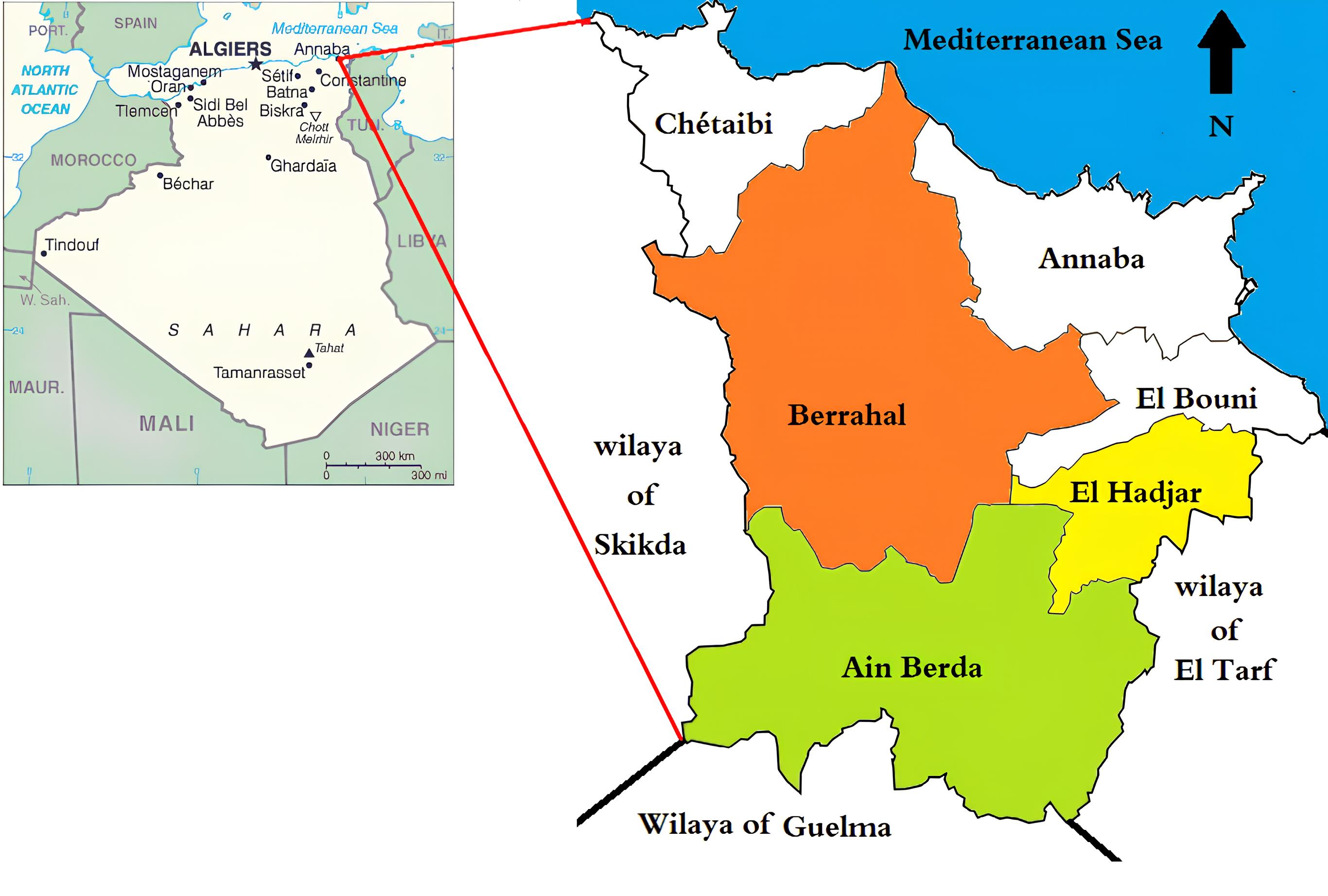
Fig. 1.
Location of the Study Area in Annaba District, North-East Algeria, Highlighting the Three Inland Localities Surveyed (El Hadjar, Berrahal, and Aïn Berda)
.
Location of the Study Area in Annaba District, North-East Algeria, Highlighting the Three Inland Localities Surveyed (El Hadjar, Berrahal, and Aïn Berda)
2.2. Technique for Quantifying the Contents of Dustbins
To analyze the HSW for the year 2022, a stratified random sampling approach was used to ensure the representativeness of the data. Specifically, a total of 36 waste bins were randomly selected across the three study sites (El Hadjar, Berrahal, and Ain Berda), at a rate of 3 bins per month. A total of 1440 kg of household waste was manually sorted from these bins. To classify the waste, the MODECOM (MODe de Caractérisation des Ordures Ménagères/Household waste characterization method) method, proposed by the French Waste Management Guide (7), was applied, with specific adaptations to reflect the local Algerian context. The waste was sorted into 6 main categories based on its composition: organic matter, plastics, paper and cardboard, glass, metals, and complex compounds.
2.3. Survey Methodology and Data Collection
From January to March 2023, an anonymous survey in the localities of El Hadjar, Berrahal, and Ain Berda was conducted to understand residents’ perceptions of HSW management. A random sample of 210 households was selected, with 70 samples per locality. Respondents were interviewed using a questionnaire (8) (Table S1), but modified to collect information on their socio-demographic profiles, their perception of HSW management, and their sorting practices (9). The survey protocol included 19 variables grouped into 3 series. The first set aimed to determine the sociodemographic profile of the respondents by asking 7 questions on gender (GE), age (AG), number of people in the household (NPH), level of education (LVE), occupation (PRF), type of house (TOH), and monthly income (MIC) in Algerian dinar (DZD). The second set of questions focused on households’ perception of waste management, with 4 questions: quality of the HSW service (QWS), knowledge of the existence of an illegal dump in the municipality (KUDC), acceptable distance to build a dump in relation to the house (ADWD), and distance residents are willing to travel to deposit their bottle waste in a specific sorting container (DTTSS). The third set aimed to understand the relationship between the socio-demographic characteristics of the respondents and their sorting practices, with 8 questions: purchase of bottled water and/or drinks in plastic bottles (WBPW), reasons for purchasing bottled water in plastic bottles (WBPB), willingness to sort waste (RSW), membership of an association or willingness to join in the near future (MBA), willingness to pay an extra dinar for a bottle of water (P1ED), willingness to contribute financially to waste collection (APFCW), maximum amount they are willing to pay per year (MWP/Y), and preference to include this amount in their electricity/water bill or as a separate payment (PAI) (Table S2).
The sample size was determined to be 210 respondents based on several criteria. First, representativeness was ensured by selecting a sample that reflects the population of the studied localities (El Hadjar, Berrahal, and Ain Berda), including various socio-demographic categories such as age, gender, and type of housing. Second, the minimum size required for statistical analyses, such as Cronbach’s alpha test (10) and principal component analysis (PCA), was taken into account, with recommendations suggesting at least 5 to 10 observations per variable. The chosen sample size of 210 respondents exceeded these guidelines, providing greater reliability and statistical validity. Finally, the reliability of the survey was confirmed through Cronbach’s Alpha test, which yielded a highly satisfactory result (α = 0.8986), demonstrating strong internal consistency in the responses.
2.4. Statistical Analysis
The Rcmdr and FactoMineR packages in the R software version 4.1.2 (11) were used to analyze data collected during a survey on HSW management. Descriptive analyses were conducted to provide insights into socio-demographic characteristics, waste management practices, and household perceptions of waste management. The chi-square goodness-of-fit test was used to assess relationships between categorical variables in order to detect any significant dependencies between these factors. Factor loadings of 0.7 or higher were considered significant for selection and interpretation. PCA was used to identify groupings of variables and interdependencies within specific concepts, determine the main variables contributing to the differences observed between the localities studied (El Hadjar, Berrahal, and Ain Berda), and reduce the dimensionality of the data while retaining the most significant information. The presentation begins with descriptive statistics for all variables, followed by an exploration of correlation analysis between socio-demographic factors and respondents’ backgrounds, as well as their practices and perceptions regarding HSW management. Finally, the results of the PCA are presented.
3. Results and Discussion
Our results indicated the growth in the number of inhabitants and the quantities of HSW discharged in the 3 inland localities of the wilaya of Annaba, namely El Hadjar, Berrahal, and Ain Berda. In 2022, these 3 localities had more than 262327 inhabitants, who generated a total of 58153 tonnes of residual waste. This corresponds to an average of 159 tonnes/day, with a ratio of 0.61 kg/inhabitant/day (Table 1). These values reached a peak between April and May, a period that coincides with Ramadan, which typically generates more household waste due to increased consumption. On average, a family of 3 to 4 people produces between 2 and 3 kg of HSW every day. The composition of this waste varies considerably. Organic matter dominates the waste stream, representing 57%of the total, followed by complex compounds (21%) and plastics (15%). Paper and cardboard account for 5%, while metals and glass represent less than 1% each (Fig. 2).
Table 1.
Demographic Data and Quantities of HSW Generated
|
Localities (Daira)
|
Population
|
Waste generated
|
|
Tonnes/year
|
Tonnes/day
|
Kg/inhab/day
|
| El Hadjar |
145763 |
28014 |
77 |
0.53 |
| Berrahal |
66381 |
16568 |
46 |
0.68 |
| Ain Berda |
50183 |
11711 |
32 |
0.64 |
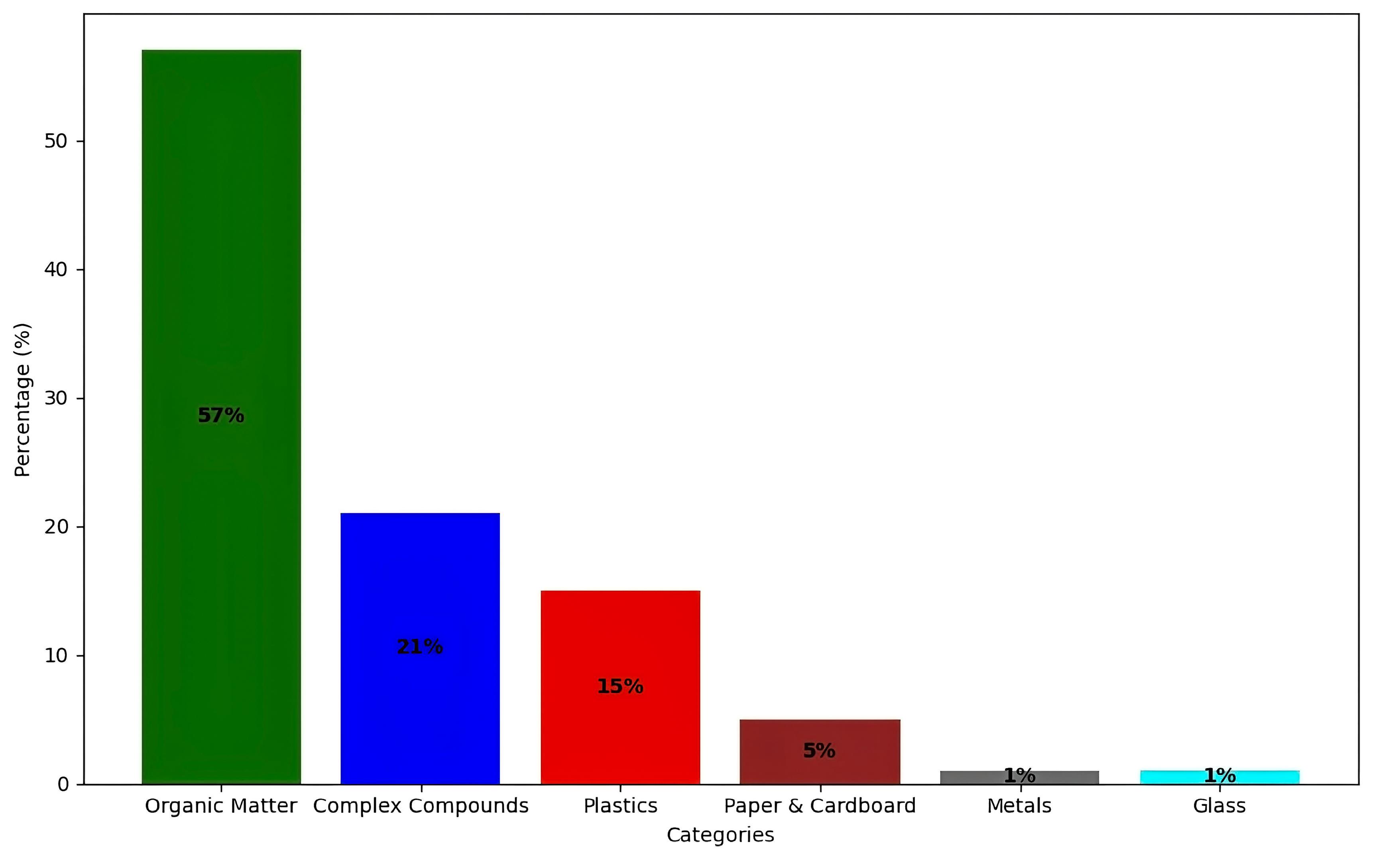
Fig. 2.
Composition of Municipal HSW Generated by the Populations of the Three Inland Localities of Annaba District: El Hadjar, Berrahal, and Ain Berda in 2022
.
Composition of Municipal HSW Generated by the Populations of the Three Inland Localities of Annaba District: El Hadjar, Berrahal, and Ain Berda in 2022
3.1. Data Analysis
3.1.1. Sociodemographic Characteristics and Background of Respondents (N=210)
Analysis of the data reveals the socio-demographic characteristics of the surveyed inhabitants, with 210 participants taken into account. Respondents were predominantly male, representing 76% of the sample (N = 160), while women accounted for only 24% (N = 50). It should be noted that the locality of El Hadjar has twice as many women (N = 17) as Ain Berda (N = 8). The majority were married (32 women, 130 men) and 42% were in the age range of 25-35 years. Around 30% of the participants worked in the civil service and 46% lived in blocks of flats where each family was composed of 2 (35%) or 3 (32%) individuals. In terms of education, high school students (N = 67) and people with secondary education (N = 48) together accounted for 55% of respondents, while 22% had a university degree. Additionally, the majority (N = 90; 43%) earned between 21,000 and 40,000 DZD/month.
Statistical analysis using the Chi-square test showed a very highly significant difference between the three localities in gender (χ2 = 11.39; P = 0.00), a highly significant difference in occupation (χ2 = 26.76; P = 0.001), and a significant difference in educational level (χ2 = 17.17; P = 0.002), as shown in Table 2.
Table 2.
Correlation between Socio-demographic Characteristics and Survey Background
|
Variable
|
Description
|
Interior localities
|
F. (N)
|
%
|
χ2 (
P
value)
|
|
El hadjar
|
Berrahal
|
Ain Berda
|
| GE |
Male |
53 (M32) |
45 (M40) |
62 (M58) |
160 |
76 |
11.39 (0.00) *** |
| Women |
17 (M11) |
25 (M18) |
8 (M3) |
50 |
24 |
| AG |
25-35 |
31 |
27 |
31 |
89 |
42 |
11.32 (0.18) |
| 35-45 |
18 |
10 |
15 |
43 |
20 |
| 45-55 |
12 |
22 |
11 |
45 |
21 |
| 55-65 |
04 |
10 |
10 |
24 |
11 |
| 65-75 |
05 |
01 |
03 |
09 |
04 |
| NPH |
1 |
13 |
08 |
03 |
24 |
11 |
16.28 (0.176) |
| 2 |
25 |
23 |
26 |
74 |
35 |
| 3 |
22 |
25 |
21 |
68 |
32 |
| 4 |
04 |
07 |
15 |
26 |
12 |
| 5 |
05 |
04 |
03 |
12 |
06 |
| 6 |
01 |
02 |
01 |
04 |
02 |
| 7 and + |
00 |
01 |
01 |
02 |
01 |
| PRF |
Public function |
31 |
12 |
19 |
62 |
30 |
26.72 (0.001)** |
| Liberal profession |
14 |
09 |
09 |
32 |
15 |
| Trader |
12 |
13 |
12 |
37 |
18 |
| Farmer |
02 |
12 |
09 |
23 |
11 |
| Worker |
07 |
08 |
11 |
26 |
12 |
| Retirement |
03 |
11 |
05 |
19 |
09 |
| Unemployed |
01 |
05 |
05 |
11 |
05 |
| TOH |
Individual house |
21 |
24 |
29 |
74 |
35 |
5.98 (0.20) |
| Building |
36 |
37 |
25 |
98 |
46 |
| Traditional house |
13 |
09 |
16 |
38 |
18 |
| LVE |
University and + |
24 |
10 |
12 |
46 |
22 |
17.17 (0.02) * |
| High school student |
19 |
27 |
21 |
67 |
32 |
| Secondary |
18 |
12 |
18 |
48 |
23 |
| Primary |
08 |
13 |
12 |
33 |
16 |
| Others |
01 |
08 |
07 |
16 |
08 |
| MIC |
- 20 000 DZD |
16 |
8 |
8 |
32 |
15 |
14.00 (0.59) |
| 21 to 40 000 |
31 |
32 |
27 |
90 |
43 |
| 41 to 60 000 |
14 |
12 |
20 |
46 |
22 |
| 61 to 80 000 |
05 |
09 |
04 |
18 |
09 |
| 81 to 100 000 |
01 |
03 |
03 |
07 |
03 |
| 101 to 120 000 |
01 |
02 |
03 |
06 |
03 |
| 121 to 140 000 |
00 |
02 |
03 |
05 |
02 |
| 141 to 160 000 |
01 |
01 |
01 |
03 |
01 |
| + 161000 |
01 |
01 |
01 |
03 |
01 |
F: frequency, *Significant difference, ** Highly significant, *** Very highly significant.
Gender was strongly correlated with 7 variants, including the quality of the municipal waste management service (r = 0.89), the purchase of water and/or soft drinks in plastic bottles, the willingness to sort waste and the willingness to contribute financially to waste management collection, with the same value (r = 0.88), the distance to travel to deposit bottle waste in a specific sorting bin (r = 0.84), age (r = 0.81), and the maximum amount accepted to pay/year (r = 0.79). This variable was strongly negatively correlated with two variables, the number of persons in the household (r = -0.94) and occupation (r = -0.72) (see Supplementary file).
Age was very highly correlated with occupation (r = 0.91), while it was strongly correlated with 8 variables: the distance travelled to deposit bottle waste in a specific sorting bin (r = 0.88), the purchase of water and/or soft drinks in plastic bottles, the willingness to sort waste and the willingness to contribute financially to the collection of HSW with the same value (r = 0.84), the quality of the HSW service in the municipality (r = 0.79), and the maximum amount accepted to pay/year (r = 0.76). The variables: being a member of an association or willing to join one in the near future, and the preference for financial contribution to be included in the electricity bill or in a special payment had the same value (r = 0.72). On the other hand, age was negatively correlated with monthly income (r = -0.80) and the number of people in the household (r = -0.72) (see Supplementary file).
The number of persons in the household was positively correlated with monthly income (r = 0.75), it was negatively well correlated with 8 variables: the purchase of water and/or soft drinks in plastic bottles, the willingness to sort waste, the willingness to contribute financially to the collection of HSW, and gender with the same value (r = -0. 94), the distance of willing to travel to deposit bottle waste in a specific sorting bin (r = -0.89), the quality of the municipal HSW service (r = -0.84), age (r = -0.72), and the maximum amount of willing to pay/year (r = -0.70).
Occupation was correlated with age (r = 0.91) and the distance travelled to deposit bottle waste in a specific sorting bin (r = 0.70). It was negatively correlated with gender (r = -0.72). The type of residence was correlated with the distance accepted for the construction of a waste depot from home (r = 0.79) and with the monthly income (r = 0.75). It was negatively correlated with two variables: being a member of an association or wishing to join one in the near future, and the preference for this financial contribution to be included in the electricity bill or in a special payment (r = -0.82).
Level of education was correlated with monthly income (r = 0.75), while it was negatively correlated with the distance travelled to deposit bottle waste in a specific sorting bin (r = -0.72).
Monthly income was correlated with the number of persons per household, the type of residence, and the level of education (r = 0.75). The latter was negatively correlated with 9 variables: the distance to travel to deposit bottle waste in a specific sorting bin (r = -0.88), the purchase of water and/or soft drinks in plastic bottles, the willingness to sort waste, and the willingness to contribute financially to the collection of HSW (r = -0.81), age (r = -0. 80), the quality of the municipal HSW service (r = -0.79), membership of an association or the desire to join one in the near future and the preference for this amount to be included in the electricity bill or in a special payment (r = -0.75), and the maximum amount accepted to pay/year (r = -0.71) (see Supplementary file).
These findings highlight the importance of addressing cultural and economic differences to improve waste management practices. Tailored awareness campaigns targeting different demographic groups can bridge gaps in engagement and participation.
3.1.2. Household Practices and Perceptions of HSW Management
We examined household practices and perceptions of HSW management, selecting 2 key practices and 2 key perceptions. The results show that half of the residents were not aware of the existence of uncontrolled waste dumps in their respective locality, and more than half of the households (N = 107; 51%) considered the quality of the HSW service to be good, especially in the localities of Ain Berda (N = 41) and El Hadjar (N = 38). In addition, 45% of respondents accepted the construction of a landfill 5 km from their homes, while 56% did not want to travel more than 100 m to deposit their bottles in a specific sorting bin. Only 6% of respondents were willing to travel more than 1 000 m to do so.
As shown in Table 3, the chi-square test showed 2 significant differences between the inland localities in the distance accepted for the establishment of a waste depot from home and the quality of the waste collection service in the commune (P< 0.05) (Table 3).
Table 3.
Correlation between Household Waste Management Practices and Perceptions (N = 210)
|
Variable
|
Description
|
Interior localities
|
F. (N)
|
%
|
χ2 (
P
-value)
|
|
El hadjar
|
Berrahal
|
Ain Berda
|
| QWS |
Good |
38 |
28 |
41 |
107 |
51 |
12.85 (0.01)* |
| Average |
25 |
26 |
26 |
77 |
37 |
| Bad |
07 |
16 |
03 |
26 |
12 |
| KUDC |
Yes |
31 |
31 |
42 |
104 |
50 |
4.60 (0.09) |
| No |
39 |
39 |
28 |
106 |
50 |
| ADWD |
1 Km |
23 |
22 |
36 |
81 |
39 |
12.96 (0.043)* |
| 5 Km |
37 |
36 |
22 |
95 |
45 |
| 10 Km |
05 |
10 |
10 |
25 |
12 |
| + 10 Km |
05 |
02 |
02 |
09 |
04 |
| DTTSS |
- 100m |
31 |
42 |
45 |
118 |
56 |
9.60 (0.29) |
| 100 to 300m |
14 |
11 |
11 |
36 |
17 |
| 300 to 500m |
13 |
06 |
08 |
27 |
13 |
| 500 to 1000m |
08 |
05 |
03 |
16 |
08 |
| + 1000m |
04 |
06 |
03 |
13 |
06 |
Knowledge of an unauthorized landfill was only correlated with the distance accepted for the construction of a landfill from the home (r = 0.81).
The quality of the municipal HSW service was strongly correlated with 9 variables: gender (r = 0.89), the maximum amount to be paid per year (r = 0.89), membership of an association or the desire to join in the near future and the preference for the financial contribution to be included in the electricity bill or in a special payment (r = 0.81), age (r = 079), the distance one is willing to travel to deposit bottle waste in a specific sorting bin (r = 0.76), the purchase of water and/or soft drinks in plastic bottles, the fact of being willing to sort waste, and the acceptance of making a financial contribution to the collection of HSW (r = 0.75). On the other hand, this variable was negatively correlated with the number of persons in the household (r = -0.84) and the monthly income (r = -0.79) (see Supplementary file).
The distance accepted for the construction of a waste collection facility was highly correlated with knowledge of an unauthorized dump (r = 0.81) and the type of dwelling (r = 0.79).
The use of a specific sorting bin for bottled water was highly correlated with the purchase of bottled water and/or soft drinks (r = 0.98), age (r = 0.88), gender (r = 0.84), the quality of the municipal waste management service and the willingness to sort waste (r = 0.76), the use of a specific sorting bin (r = 0.81), and the type of dwelling (r = 0.79).
The use of a special sorting bin for bottles was highly correlated with the purchase of water and/or soft drinks in plastic bottles (r = 0.98), age (r = 0.88), gender (r = 0.84), the quality of the municipal waste management service and the willingness to sort waste (r = 0.76), and occupation (r = 0.70). However, there was a strong negative association with the number of persons in the household (r = -0.89), monthly income (r = -0.88), and educational level (r = -0.72) (see Supplementary file).
The results emphasize the need for accessible sorting facilities and improved communication about waste management. These measures can increase participation and overcome reluctance to engage in sustainable practices.
3.1.3. Relationship Between Socio-demographic Characteristics, Origin of Respondents, and Household Practices (Waste Sorting Practices)
The data analyzed highlight a strong relationship between socio-demographic characteristics, the origin of the respondents, and household practices in relation to the management of HSW. According to our results, 91% of respondents (N = 191) purchased water and/or soft drinks in plastic bottles, mainly because of their perception of tap water contamination. The majority of residents (75%, N = 158) were willing to sort their waste, while 70% were members of an association or planned to join one in the near future.
As shown in Table 4, 89% of respondents from El Hadjar, Berrahal, and Ain Berda declared a willingness to pay an additional 1 to 2 Algerian dinars (DZD) per plastic bottle. Furthermore, 77% of the participants said that they were prepared to contribute financially to waste collection, 86% were prepared to pay up to 1000 DZD per year, and 76% liked this contribution to be included in their water or electricity bill for practical reasons.
Table 4.
Correlation between Socio-demographic Characteristics of Respondents and HSW Management Practices (Waste Sorting Practices)
|
Variable
|
Description
|
Interior localities
|
F. (N)
|
%
|
χ2 (
P
value)
|
|
El hadjar
|
Berrahal
|
Ain Berda
|
| BPW |
Yes |
58 |
65 |
68 |
191 |
91 |
9.14 (0.01)* |
| No |
12 |
05 |
02 |
19 |
09 |
| WBPB |
Have a baby |
08 |
09 |
15 |
32 |
15 |
14.65 (0.00)*** |
| Have a sick child |
10 |
5 |
18 |
33 |
16 |
| Polluted tap water |
52 |
56 |
37 |
145 |
69 |
| RSW |
Yes |
51 |
52 |
55 |
158 |
75 |
0.66 (0.71) |
| No |
19 |
18 |
15 |
52 |
25 |
| MBA |
Yes |
55 |
47 |
46 |
148 |
70 |
3.34 (0.18) |
| No |
15 |
23 |
24 |
62 |
30 |
| P1ED |
1DZD |
44 |
22 |
37 |
103 |
49 |
16.64 (0.02)* |
| 2 |
24 |
39 |
22 |
85 |
40 |
| 5 |
02 |
9 |
11 |
22 |
10 |
| APFCW |
Yes |
49 |
52 |
60 |
161 |
77 |
5.16(0.07) |
| No |
21 |
18 |
10 |
49 |
23 |
| MWP/Y |
1000 DZD |
65 |
58 |
58 |
181 |
86 |
2.91 (0.57) |
| 2000 |
04 |
10 |
10 |
24 |
11 |
| + 2000 |
01 |
02 |
02 |
05 |
02 |
| PAI |
Electricity or water bills |
66 |
50 |
44 |
160 |
76 |
20.37 (0.00)*** |
| Special payment |
04 |
20 |
26 |
50 |
24 |
* Significant difference, *** Very highly significant.
The purchase of water and/or lemonade in plastic bottles was correlated almost perfectly with willingness to sort waste (r = 0.99), willingness to contribute financially to HSW collection (r = 0.99), and the distance to be travelled to deposit bottle waste in a specific sorting bin (r = 0.98) (Table 4). This correlation remained strong with gender (r = 0.88), age (r = 0.84), and the quality of the municipal HSW service (r = 0.75). However, this variable was highly negatively correlated with the number of people in the household (r = -0.94) and monthly income (r = -0.81). No correlation was found for the reason for buying bottled water. Willingness to sort waste was almost perfectly correlated with the purchase of water and/or lemonade in plastic bottles and the willingness to contribute financially to the collection of HSW (r = 0.99), gender (r = 0.88), age (r = 0.84), the distance to be travelled to deposit bottle waste in a specific sorting bin (r = 0.76), and the quality of the HSW service in the municipality (r = 0.75). However, this correlation was strongly negative with the number of people in the household (r = -0.94) and monthly income (r = -0.81) (see Supplementary file). Being a member of an association or willing to join one in the near future was strongly correlated with the preference for the financial contribution to be included in the electricity bill or in a special payment (r = 0.99), the maximum amount accepted to pay/year (r = 0.97), the quality of the municipal HSW service (r = 0.81), and age (r = 0.72). On the other hand, it was strongly negatively correlated with the type of dwelling (r = -0.82) and monthly income (r = -0.75). The willingness to contribute financially to waste collection was very strongly correlated with the willingness to sort waste (r = 0.99), the purchase of water and/or soft drinks in plastic bottles (r = 0.99), the distance one is willing to walk to deposit bottle waste in a specific sorting bin (r = 0.98), gender (r = 0.88), age (r = 0.84), and the quality of HSW service (r = 0.75). However, this variable was strongly negatively correlated with the number of persons in the household (r = -0.94) and monthly income (r = -0.81) (see Supplementary file). The willingness to pay 1 extra DZD for a bottle of water showed no correlation with the 8 selected variables.
The maximum amount one would be willing to pay per year was very highly correlated with membership of an association or the desire to join one in the near future and the preference for this amount to be included in the electricity bill or in a payment of the same value (r = 0.97). The same applies to the quality of the municipal waste management service (r = 0.89), gender (r = 0.79), and age (r = 0.76). However, this correlation was strongly negative for monthly income (r = -0.71) and number of persons in the household (r = -0.70). The preference for this amount to be included in the electricity bill or in a special payment was almost perfectly correlated with membership of an association or the wish to join one in the near future (r = 0.99), the maximum amount accepted to pay per year (r = 0.97), the quality of the municipal waste management service (r = 0.81), and age (r = 0.72). This variable was strongly negatively correlated with the type of dwelling (r = -0.82) and monthly income (r = -0.75) (see Supplementary file).
The strong willingness to contribute financially and to sort waste highlights the potential for community-led initiatives. Programs should focus on addressing the logistical challenges faced by larger households and ensuring that payment systems are inclusive to maximize participation. However, the location of waste treatment facilities near residential areas can be a significant challenge. Early community involvement in planning, ensuring the cleanliness and safety of facilities and offering appropriate compensatory measures could help overcome opposition and promote greater public acceptance.
3.2. Principal Component Analysis (PCA) of the Localities of El Hadjar, Berrahal, and Ain Berda
The factorial design of the first two principal axes clearly shows the variation between the localities, with the two axes together explaining 68.63% of this total variation. The first axis explains 43.79% of the total variation; it is positively correlated with the variables GE (r = 0.92), AGE (r = 0.60), PFE (r = 0.48), DTTSS (r = 0.76), BPW (r = 0.94), MBA (r = 0.93), RSW (r = 0.95), APFCW (r = 0.93), PAI (r = 0.86), and MWP/Y (r = 0.92). This axis is also negatively correlated with NPH (r = -0.49) (Fig. 3). The second axis explains 24.84% of the total variation; it is correlated with the variables ADWD (r = 0.86), QWS (r = 0.64), TOH (r = 0.83), P1ED (r = 0.75), MIC (r = 0.60), LVE (r = 0.59), and KUDC (r = 0.26). On the other hand, this axis is negatively correlated with WBPB (r = -0.78) (Fig. 3).
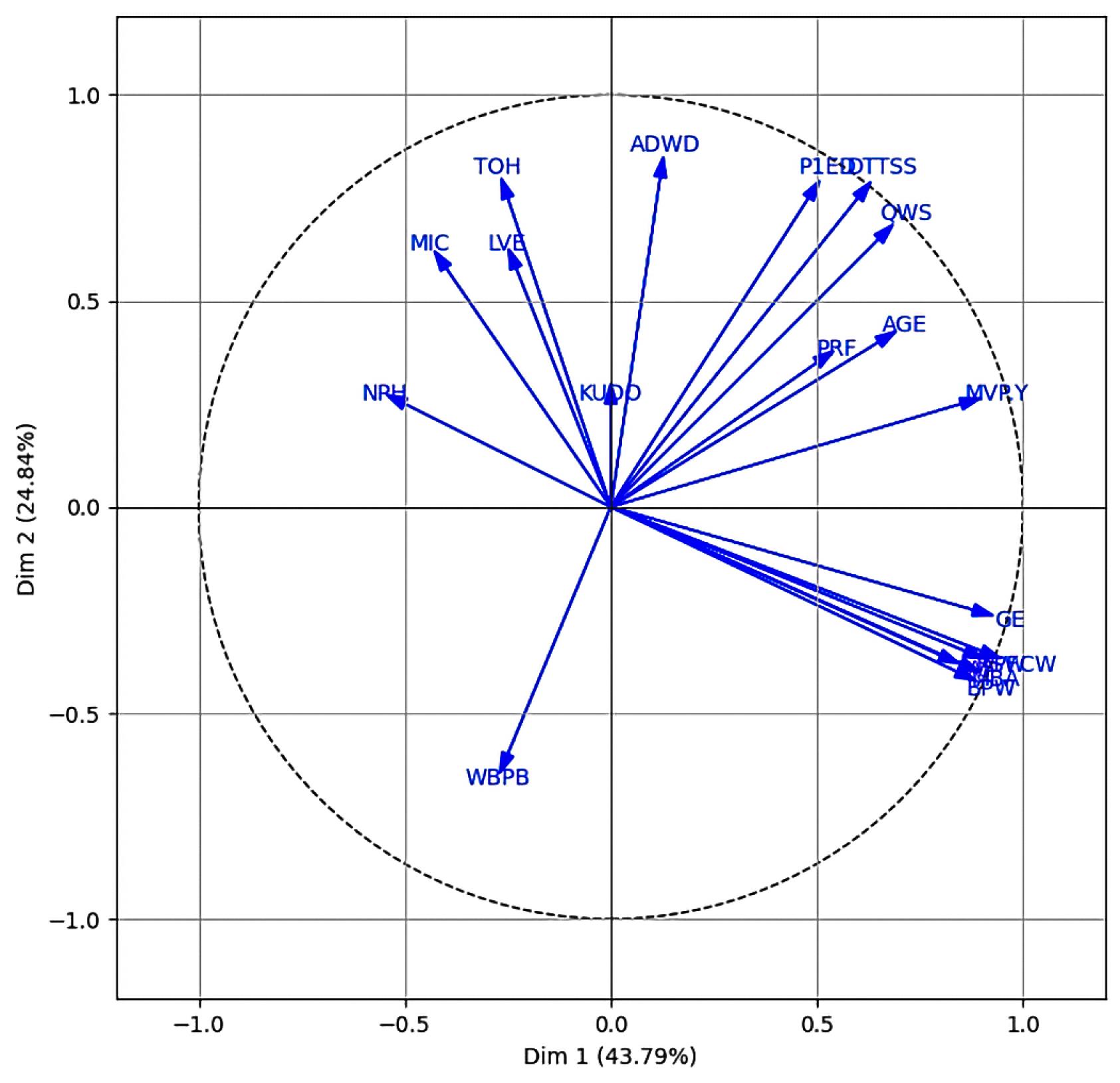
Fig. 3.
Principal Component Analysis (PCA) Plot of the Three Inland Localities of Annaba: El Hadjar, Berrahal, and Ain Berda
.
Principal Component Analysis (PCA) Plot of the Three Inland Localities of Annaba: El Hadjar, Berrahal, and Ain Berda
The PCA shows a clear difference between Ain-Berda, Berrahal, and El Hadjar (Fig. 4).
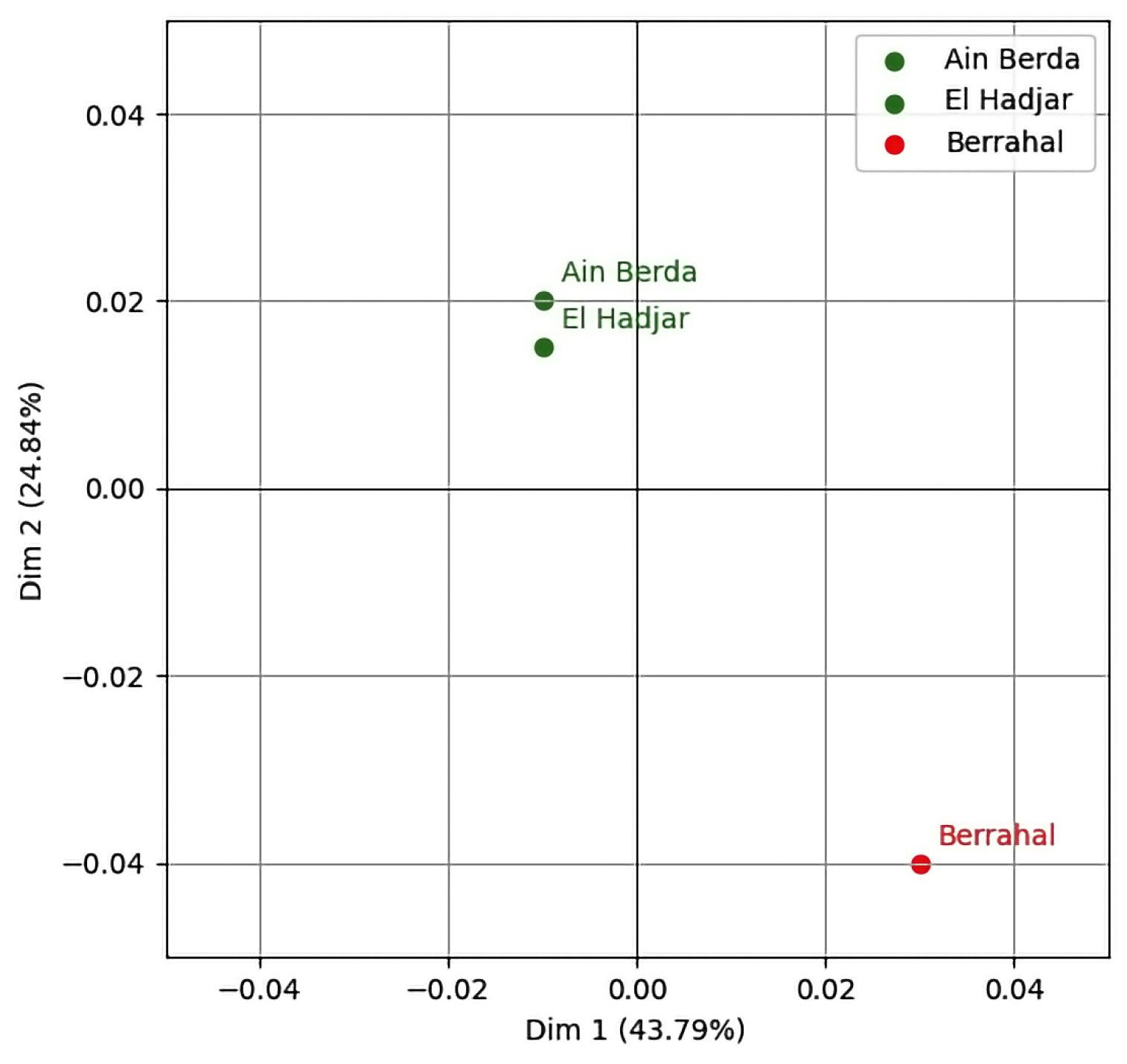
Fig. 4.
Factorial Plot Showing differences between the Three Inland Localities of Annaba: El Hadjar, Berrahal, and Aïn Berda
.
Factorial Plot Showing differences between the Three Inland Localities of Annaba: El Hadjar, Berrahal, and Aïn Berda
The PCA results highlight the importance of addressing structural barriers, such as household size, while promoting individual awareness to optimize waste management strategies. The results presented herein provide a comprehensive overview of the sociodemographic characteristics, household practices, and perceptions of waste management in the studied localities. These findings highlight key challenges, such as limited awareness and infrastructural gaps, as well as opportunities for targeted interventions. The following discussion will delve deeper into the implications of these results, compare them with existing literature, and propose actionable recommendations to enhance waste management practices in similar contexts.
The eradication of unauthorized landfills and the organization of waste collection, transport, and disposal should be carried out taking into account not only the technical and economic efficiency and sustainability of management methods but also, above all, the awareness and participation of users. In Algeria, this integrated, progressive, and gradual approach is a real social project. It invites us to rethink our lifestyles and invent new and more sustainable ways of producing and consuming.
With this in mind, an in-depth analysis was carried out in the localities of El Hadjar, Berrahal, and Ain Berda in the district of Annaba. Our study focused on the quality and quantity of HSW discharged, as well as the behavioral perspective of the residents, which were explored through 19 questions. This survey aimed to understand how residents individually perceive their waste management, a perception that is influenced by their past and current situation and is shaped by values, moods, social circumstances, and individual expectations (12). It was found that organic waste is the main category of waste disposed of in the three localities, representing 57%. This fact has been highlighted by many authors, especially in developing countries (13-16). These studies confirm that organic materials such as food scraps and garden waste dominate household waste composition, supporting our observation and reinforcing the relevance of promoting household composting systems in similar socio-economic contexts. It is essential to raise people’s awareness of the pedological (compostable and non-compostable organic waste), environmental (improvement of the physico-chemical and biological properties of soils), ecological (natural fertilizers), and economic (job creation) aspects of composting. Lessons can be learned from successful experiences in comparable regions: decentralized composting initiatives in Tunisia have significantly reduced pressure on landfill sites while creating local jobs, and Morocco’s “National Waste Recovery Programme” has effectively integrated informal waste pickers into formal recycling chains, thereby increasing recovery rates and promoting socio-economic inclusion. These examples demonstrate that with the right mix of policies, Algeria could leverage its waste composition and community structures to achieve higher recycling performance and greater economic returns.
Future investors in the sector should also be financially supported, and national regulations and standards for composting should be introduced. Results showed correlations between the socio-demographic characteristics of the respondents, their practices, and their perceptions of HSW management. It is crucial to take into account differences, especially between the genders, in order to promote household participation in HSW management in Algeria. Traditional roles play an important role, with women in charge of sorting at source and men in charge of binning outside the home (17,18). For HSW management initiatives to be successful, it is imperative to develop a viable economic model, potentially by adapting the model proposed earlier (19), and provide financial incentives, including a special fee (household waste collection tax) (20). Localities must be able to meet the costs associated with waste management. Technical training and regulation are also essential to support the recycling industry in Algeria. Most of the respondents did not sort their waste. According to previous findings (21), it is important to note that some respondents were already members of associations, but it is encouraging that 75% of the 210 residents were willing to do so in the future. Although awareness of the importance of source separation may not be very high at present, there is openness to environmental improvements, which may contribute to increased awareness (22).Education seems to play a positive role in the decision to contribute financially to waste management. Individuals with a certain level of education are more aware of the negative externalities caused by waste (23,24). In addition, monthly income had a significant impact on the perception of HSW management practices. Respondents were willing to contribute financially, especially those with higher incomes, as previously suggested (25). However, lower payment amounts had a negative impact on perceptions and attitudes.
The average age of respondents was around 50, but this did not appear to have a major impact on waste management practices and perceptions. However, it is interesting to note that the elderly seemed to be more inclined to participate in waste sorting activities, as shown formerly (26). Household size showed an interesting correlation, with smaller households of 2 to 3 people engaging in more environmentally responsible behavior than larger households, a trend consistent with earlier studies (27). These results suggest that awareness and education play an important role in the adoption of more responsible waste management practices. In addition, income level influenced the willingness to contribute financially to waste management. Household age and size also had an impact on waste management behavior. These findings can guide awareness raising and policy efforts to promote more sustainable waste management practices among the study population.
Based on the results, 86% of the participants reported having a job. Of these, civil servants, who represented only 28.69% of the Algerian population in 2012, reached 30% in the three localities the unemployed represented only 5% of the respondents, compared to 9.43% in Algeria in 2012 (28). It should be noted that most of the unemployed had an undeclared (informal) activity, which provided them with a more or less stable income. According to previous findings (29), people living in apartment blocks (46%) and detached houses (35%) were more likely to sort their waste. Both of these housing types were home to respondents for whom waste collection services were only moderately available.Half of the respondents considered the quality of the waste management service in their locality to be good. However, the same population was aware of the existence of illegal dumps in their commune. Rather than reporting this to the authorities, some residents dump their waste in these dumps, thus increasing the volume.Almost all respondents (91%) purchased water in plastic bottles, and the vast majority (69%) associated this with the poor quality of tap water. They were prepared to dispose of these bottles in a dedicated bin located within 100 m of their homes. Additionally, 84% preferred the landfill to be located between 1 and 5 km from their homes in order to facilitate the transport of household waste (30), where the choice of landfill site was systematically rejected and contested by local residents. Therefore, local waste management policies can no longer be limited to collection and transport to landfills. It is crucial to focus on understanding, initiating, and involving the population and associations in sorting and collecting waste at sources. PCA showed a clear difference between the localities of El Hadjar, Berrahal, and Ain Berda in terms of household practices and perceptions of waste management. Economic activities were mainly concentrated in the urban areas of El Hadjar, while they were much less concentrated in rural areas such as Berrahal and Ain Berda. This result is in line with the report on the state of waste management in Algeria (2). The average collection rate was 87% in urban areas and 67% in rural areas, making it necessary to adapt collection specifications and equipment to local conditions.
4. Conclusion
The analysis of household and similar waste in El Hadjar, Berrahal, and Ain Berda highlights the predominance of organic waste, underscoring its potential for recovery through composting. However, achieving this requires robust collection systems, adequate infrastructure, and public awareness campaigns. Informal recycling efforts for plastics, paper, cardboard, and metals have proven effective and should be reinforced through financial incentives. The socio-demographic survey revealed fragmented waste management practices, gender-based roles in household waste sorting, and a limited influence of socio-economic factors on perceptions of waste management. These findings align with the Ministry of Environment’s 2035 strategy for integrated waste management, which emphasizes improving infrastructure, strengthening public participation, promoting environmental education, sustainable waste recovery, and addressing behavioral barriers through better service accessibility. In this context, targeted awareness campaigns, integration of environmental education into school and university curricula, and collaboration between authorities, educational institutions, and businesses, such as workplace-based waste sorting pilot programs, can contribute to a more circular economy. The success of these measures will depend on overcoming systemic challenges, including inadequate infrastructure, resistance to behavioral change, and the financial constraints of large-scale implementation. Further research is recommended to evaluate the long-term feasibility and scalability of these interventions.
Acknowledgments
The authors are grateful to the technical services of the Public Industrial and Commercial Establishment Annaba Propre and the staff of the Environmental Department of the Wilaya of Annaba for their assistance. Gratitude is also given to Prof Hamid Boudjelida for reading the manuscript.
Competing Interests
The authors declare that there is no conflict of interests.
Funding
None.
Supplementary Files
Table S1. The Questionnaire Used in the Study. Table S2. Matrix of correlations r of sociodemographic variables and household practices and perceptions.
(pdf)
References
- Kaza S, Yao L, Bhada-Tata P, Van Woerden F. What a Waste 2.0: A Global Snapshot of Solid Waste Management to 2050. Washington, DC: World Bank Publications; 2018.
- Report on the State of Waste Management in Algeria. Fiscal year 2020. National Waste Agency; 2021.
- Guermoud N, Ouadjnia F, Abdelmalek F, Taleb F, addou A. Municipal solid waste in Mostaganem city (Western Algeria). Waste Manag 2009; 29(2):896-902. doi: 10.1016/j.wasman.2008.03.027 [Crossref] [ Google Scholar]
- Report on the State of Waste Management in Algeria. Fiscal year 2020–2021. National Waste Agency; 2021; p. 152.
- Law No. 01-19, promulgated on Ramadan 27, 1422, corresponding to 12 December 2001. Concerns the management, control, and elimination of waste.
- Cheniti H, Serradj T, Brahamia K. Generation and physical characterization of household waste in Annaba city. Environ Eng Manag J 2020; 19(4):713-20. [ Google Scholar]
- Waste Management Guide: Guide for Public Higher Education or Research Establishments. 2002. Available from: www.sdfp.Lnet.fr.
- Asante KP, Kinney P, Zandoh C, Vliet EV, Nettey E, Abokyi L. Childhood respiratory morbidity and cooking practices among households in a predominantly rural area of Ghana. Afr J Infect Dis 2016; 10(2):102-10. doi: 10.21010/ajid.v10i2.5 [Crossref] [ Google Scholar]
- Dlamini BR, Rampedi IT, Ifegbesan AP. Community resident’s opinions and perceptions on the effectiveness of waste management and recycling potential in the Umkhanyakude and Zululand district municipalities in the KwaZulu-Natal province of South Africa. Sustainability 2017; 9(10):1835. doi: 10.3390/su9101835 [Crossref] [ Google Scholar]
- Cronbach LJ. Coefficient alpha and the internal structure of tests. Psychometrika 1951; 16(3):297-334. doi: 10.1007/bf02310555 [Crossref] [ Google Scholar]
- Rcmdr and FactoMineR from R software (4.1.2). R Core Team. A Language and Environment for Statistical Computing. Vienna: R Foundation for Statistical Computing; 2020.
- Kaoje AU, Sabir AA, Yusuf S, Jimoh AO, Raji MO. Residents’ perception of solid waste disposal practices in Sokoto, Northwest Nigeria. Afr J Environ Sci Technol 2017; 11(2):94-102. doi: 10.5897/ajest2014.1791 [Crossref] [ Google Scholar]
- Campuzano R, González-Martínez S. Characteristics of the organic fraction of municipal solid waste and methane production: a review. Waste Manag 2016; 54:3-12. doi: 10.1016/j.wasman.2016.05.016 [Crossref] [ Google Scholar]
- Fadhullah W, Imran NIN, Ismail SNS, Jaafar MH, Abdullah H. Household solid waste management practices and perceptions among residents in the east coast of Malaysia. BMC Public Health 2022; 22(1):1. doi: 10.1186/s12889-021-12274-7 [Crossref] [ Google Scholar]
- Report on the Solid Waste Management in Algeria (RSWMA). Deutsche Gesellschaft für Internationale Zusammenarbeit (GIZ) GmbH. Agence Nationale de Gestion des Déchets (ANGed); 2014.
- Kumari P, Gupta NC, Kaur A. A review of groundwater pollution potential threats from municipal solid waste landfill sites: assessing the impact on human health. Avicenna J Environ Health Eng 2017; 4(1):e11525. doi: 10.5812/ajehe.11525 [Crossref] [ Google Scholar]
- Ehrampoush MH, Baghiani Moghadam MH. Survey of knowledge, attitude and practice of Yazd University of Medical Sciences students about solid wastes disposal and recycling. Irani J Environ Health Sci Eng 2005; 2(2):26-30. [ Google Scholar]
- Bhawal Mukherji S, Sekiyama M, Mino T, Chaturvedi B. Resident knowledge and willingness to engage in waste management in Delhi, India. Sustainability 2016; 8(10):1065. doi: 10.3390/su8101065 [Crossref] [ Google Scholar]
- Wertz KL. Economic factors influencing households’ production of refuse. J Environ Econ Manag 1976; 2(4):263-72. doi: 10.1016/s0095-0696(76)80004-6 [Crossref] [ Google Scholar]
- Legislative Decree No. 93-01 of January 19, 1993. Relating to the finance law for 1993. Official Journal, No. 04. Concerns household waste collection tax.
- Saphores JD, Ogunseitan OA, Shapiro AA. Willingness to engage in a pro-environmental behavior: an analysis of e-waste recycling based on a national survey of US households. Resour Conserv Recycl 2012; 60:49-63. doi: 10.1016/j.resconrec.2011.12.003 [Crossref] [ Google Scholar]
- Boussatla I. Les déchets ménagers et le rôle des associations dans leur gestion. J Chercheur Social 2020;16(1):173-82. Available from: https://www.asjp.cerist.dz/en/article/143709.
- Walsh RA, Greenley DA, Young RA, McKean JR, Prato AA. Option Values, Preservation Values and Recreational Benefits of Improved Water Quality: A Case Study of the South Platte River Basin, Colorado. EPA-600/5-78-00. Socioeconomic Environmental Studies Series. 1978. p. 60.
- Gramlich FW. The demand for clean water: the case of the Charles river. Natl Tax J 1977; 30(2):183-94. doi: 10.1086/ntj41862128 [Crossref] [ Google Scholar]
- Parfitt JP, Flowerdew R. Methodological problems in the generation of household waste statistics: an analysis of the United Kingdom’s National Household Waste Analysis Programme. Appl Geogr 1997; 17(3):231-44. doi: 10.1016/s0143-6228(96)00031-8 [Crossref] [ Google Scholar]
- Fan B, Yang W, Shen X. A comparison study of ‘motivation–intention–behavior’ model on household solid waste sorting in China and Singapore. J Clean Prod 2019; 211:442-54. doi: 10.1016/j.jclepro.2018.11.168 [Crossref] [ Google Scholar]
- Addo HO, Dun-Dery EJ, Afoakwa E, Elizabeth A, Ellen A, Rebecca M. Correlates of domestic waste management and related health outcomes in Sunyani, Ghana: a protocol towards enhancing policy. BMC Public Health 2017; 17(1):615. doi: 10.1186/s12889-017-4537-8 [Crossref] [ Google Scholar]
- Djemaci B. La gestion des déchets municipaux en Algérie: analyse prospective et éléments d’efficacité. Université de Rouen; 2012. p. 284. Available from: https://theses.hal.science/tel-00804063.
- Vassanadumrongdee S, Kittipongvises S. Factors influencing source separation intention and willingness to pay for improving waste management in Bangkok, Thailand. Sustain Environ Res 2018; 28(2):90-9. doi: 10.1016/j.serj.2017.11.003 [Crossref] [ Google Scholar]
- Béhar L, Simoulin V. The NIMBY (Not in My Backyard) stigma: a localism denunciation that maintains the illusion of the local dimension. Polit Public Manag 2014; 31(2):151-67. [ Google Scholar]